I’ve been around pools across the Southwest for years, and I can tell you exactly which chemical problem makes pool owners want to pull their hair out: you test the pH, it reads low at 6.8, you add pH increaser, it climbs to 7.6, and two days later—boom—it’s back down at 7.0 again. So you add more. And more. And then you start wondering if your test kit is broken or if your pool is somehow defective. The frustrating part? The real problem isn’t what you think it is, and you’ve probably been treating the wrong thing all along. The reason your pool pH won’t stay up isn’t that you need more pH increaser. It’s that your water has almost no buffering capacity, and you’re throwing pH increaser at a symptom instead of the root cause.
Before you add anything: follow the dose on the label, add one chemical at a time, and never mix them — not in a bucket, not in the skimmer, not back to back in the same spot. Chlorine and acid together give off chlorine gas, which is the one mistake in pool care that puts people in hospital. Always add chemical to water, never water to chemical, and let the pump turn the water over between doses.
After dozens of frustrated conversations with pool owners chasing low pH, I realized most people don’t understand the relationship between total alkalinity and pH stability. pH isn’t a quantity you top up—it’s a reading that sits wherever your water’s buffering capacity allows it to sit. When that buffer is gone, no amount of chemical adjustment can hold pH in place. In this post, I’m going to explain why won’t pH stay up in pool, walk you through the actual mechanism, show you which chemical fixes the real problem, and give you a step-by-step fix that actually works.
Why This Problem Is Worse Than You Think
Most pool owners treat low pH as a minor inconvenience—a chemistry reading that needs adjustment but isn’t urgent. That’s a mistake. Pool pH will not stay up when total alkalinity is low, and ignoring that situation causes real, cumulative damage to your pool and equipment.
Here’s what happens when your water stays acidic: plaster surfaces begin to etch. This isn’t cosmetic. Acidic water dissolves the calcium carbonate matrix that holds your pool finish together, and once that process starts, it accelerates. I’ve seen plaster that should last 15–20 years deteriorate visibly in 5 because the owner was fighting chronic low pH for years without understanding why. Resurfacing a 20,000-gallon pool runs $3,000–$8,000 depending on your region and finish type. Prevention is far cheaper than repair.
The corrosion damage spreads beyond the plaster. Your heater’s copper heat exchanger corrodes. Ladder anchors and steel reinforcement start to dissolve. Metal leaches into the water, which is the starting point for the iron and copper staining problem that becomes nearly impossible to reverse. Vinyl liners degrade faster, and their seams become brittle. Even your equipment—pumps, filters, return fittings—ages faster in low-pH water.
And then there’s the comfort and safety side: acidic water irritates eyes and skin far more than neutral or slightly basic water. Over a swim season, bathers notice the difference. More importantly, low pool pH causes aggressive water chemistry that works against everything else you’re trying to maintain—it interferes with how chlorine works, destabilizes calcium, and creates an environment where metals dissolve and stains form.
The real problem underneath all of this: most pool owners don’t know the difference between raising pH and raising total alkalinity. They’re two different chemicals doing two different jobs, and using the wrong one is why your pH keeps dropping in the first place.
What to Look For in a Total Alkalinity Increaser
Before I explain which product fixes the real problem, you need to understand why the two chemicals are different and why most pools fighting low pH need the one that’s not labeled “pH Increaser.”
The Chemical Distinction (This Matters): There are two sodium-based chemicals that move pH in the basic direction, but they work very differently:
- Sodium Bicarbonate (Alkalinity Increaser, baking soda): Raises total alkalinity significantly and pH only slightly. This is your buffer builder. One pound per 10,000 gallons raises TA roughly 10 ppm and pH only about 0.1–0.2 units.
- Sodium Carbonate (Soda Ash, pH Increaser): Raises pH sharply and TA more modestly. One pound per 10,000 gallons raises pH about 0.3–0.5 units but TA only about 3–4 ppm.
The reason most people end up in the cycle of “add pH increaser, pH spikes, pH drops again” is they reach for the product labeled “pH Increaser” because the name matches the problem. But if your pool pH keeps dropping because total alkalinity is low, you’re addressing the symptom, not the cause. You get a temporary pH bump, but the water still has no buffer, so pH drifts back down within days. Meanwhile, the soda ash you used added just enough alkalinity to feel like you’re making progress while actually solving nothing.
What to Actually Buy: If TA is below 80 ppm and pH won’t stay up, you need sodium bicarbonate—the one sold as “Alkalinity Increaser,” not “pH Increaser.” The label matters.
When you’re shopping, look for these features:
- 100% Sodium Bicarbonate composition: Some products mix filler or other ingredients. You want pure sodium bicarbonate so your dosing math is predictable. Check the label and make sure it says sodium bicarbonate, not a blend.
- Fine granule size: It should dissolve quickly once broadcast over the deep end with the pump running. Lumpy or coarse products take longer and dissolve unevenly.
- Proper packaging: Buy bags that are sealed and haven’t sat in a warehouse for months. Sodium bicarbonate absorbs moisture from air, and if it’s clumped up before you open it, it’s older stock or was stored poorly.
- Clear dosing information: The bag should tell you how much raises TA by how much per 10,000 gallons. If it doesn’t, that’s a red flag.
The Product I Recommend: When you’re ready to raise TA and fix the “pH will not stay up” cycle, Leslie’s Soda Ash pH Up (100% Sodium Carbonate, 50 Pounds) at $60.49 is actually the companion product you’ll use after TA is restored. But let me explain the sequence, because this is crucial:
For a 20,000-gallon pool with TA at 40 ppm (dangerously low) and pH at 6.9, your play is: (1) Buy sodium bicarbonate (alkalinity increaser) first—that’s your immediate fix. (2) Raise TA to the 80–120 ppm range in stages. (3) Re-test after a full circulation and let pH stabilize. (4) Only if pH is still below 7.4 after TA is corrected should you then reach for the soda ash pH increaser to finish the job. Most of the time, pH comes up on its own once TA is restored, and you never need the soda ash at all. When you do need to boost pH on top of good TA, the Leslie’s product is reliable, dissolves clean, and doesn’t introduce unnecessary filler.
One Honest Limitation: Sodium bicarbonate products are bulky relative to how much they dissolve. A 50-pound bag raises TA in a 20,000-gallon pool by about 50 ppm, so you’re moving slowly if you have very low alkalinity and a large pool. That’s not a flaw—it’s just why you dose in stages and re-test rather than dumping all 50 pounds in at once. Patience here prevents overshoot and the need to drain and start over.
How to Use It Like a Pro
The mechanics of raising total alkalinity are straightforward, but the sequencing is what separates a successful correction from a frustrating cycle of chasing your tail.
Step 1: Test Both pH and TA Together
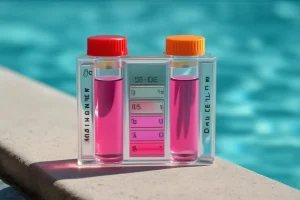
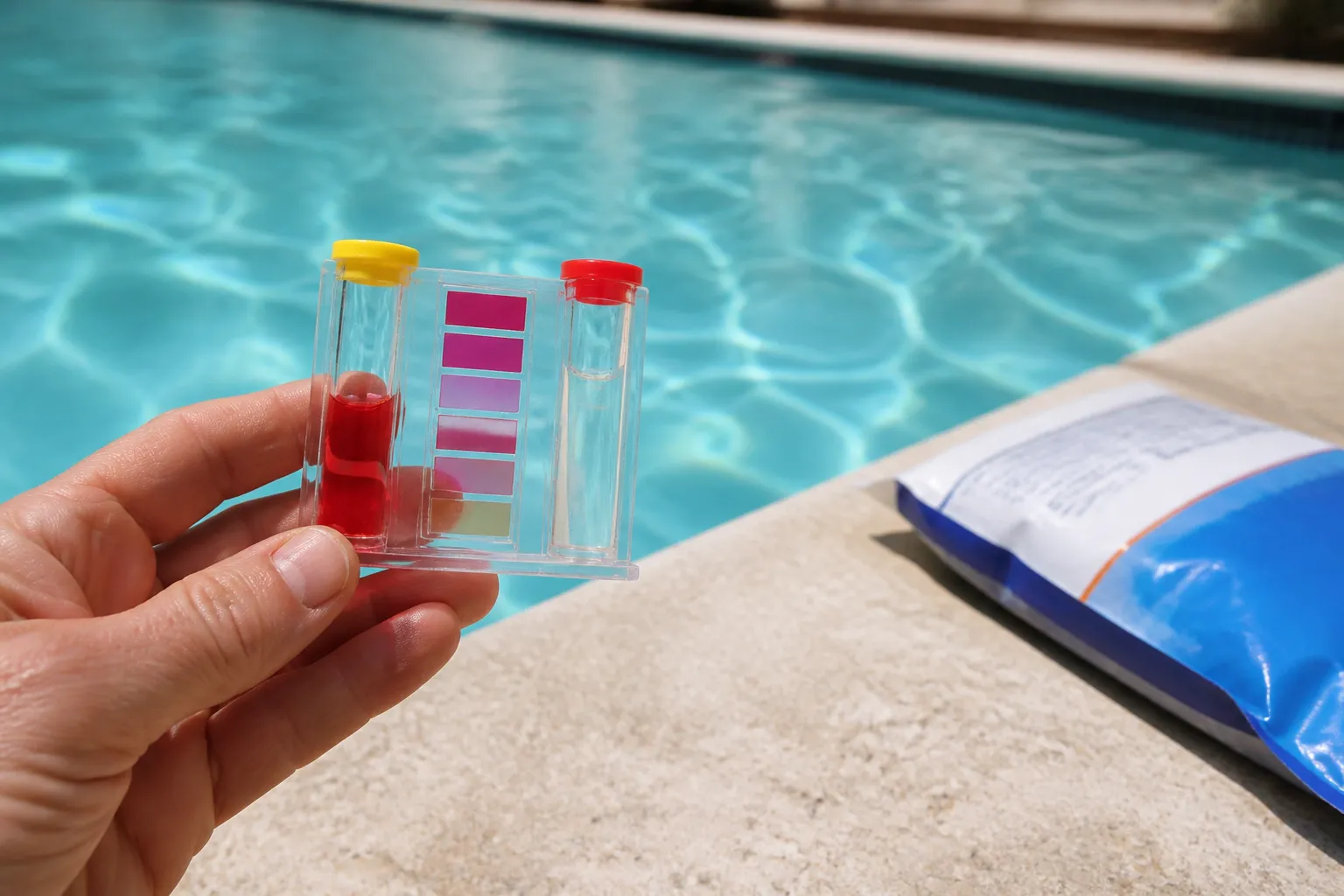
This is non-negotiable. A pH reading without a TA reading is not actionable. You need both numbers to know what’s actually wrong. If you’re testing pH alone and it reads 6.8, you might add pH increaser thinking you’ve fixed something. But if TA is 30 ppm, that pH increaser is wasted—the water has no buffer to hold pH at all, and you’ll be back where you started in 48 hours. Test TA and pH together, every time.
Step 2: Calculate Your Dose (But Dose in Stages)
Rough rule of thumb: 1.5 pounds of sodium bicarbonate per 10,000 gallons raises TA roughly 10 ppm. If your pool is 20,000 gallons and TA is 40 ppm, and you’re targeting 100 ppm, you need to raise TA by 60 ppm, which is about 9 pounds total.
But here’s the pro move: divide that into portions. Add 4 pounds now, not all 9. Wait for a full circulation (4–6 hours depending on your turnover rate), re-test, add another 3 pounds, wait again, re-test, then add the final 2 pounds if needed. Why? Because overshooting TA creates a different problem—water that’s too buffered and pH that’s hard to adjust in either direction. Staging doses lets you land in the sweet spot.
Step 3: Broadcast Over the Deep End with the Pump Running
Don’t dump powder into the skimmer. Walk over to the deep end, turn your circulation pump to high, and spread the powder over the surface in a wide pattern so it dissolves evenly as it sinks. This distributes the alkalinity throughout the water column and prevents localized concentration spikes.
Step 4: Wait a Full Turnover Before Re-Testing
Your filter needs to cycle the entire pool volume at least once for the chemicals to distribute evenly. Testing 30 minutes after dosing will give you a false reading. Wait 4–6 hours (for a typical residential system) before testing again. This is when you’ll see the real pH response too—very often it rises on its own once TA is restored, and you’re done. No pH increaser needed.
Step 5: Once TA Is in Range, Only Then Adjust pH If Needed
If TA is now 85–120 ppm and pH is still below 7.2, then use soda ash (pH increaser) to bring pH to 7.4–7.6. Use much smaller doses—0.5 pounds per 10,000 gallons, broadcast the same way, wait a full turnover, and re-test. The difference between this scenario and the frustrating cycle you were in before is that now you have a buffer, so pH will actually stay where you put it.
Pairing It With the Rest of Your Routine
Raising TA and fixing low pH is a tactical move, but it’s part of a larger strategy for keeping your water stable and preventing the problem from recurring.
Find and Fix the Acidic Input
Once TA is restored and pH is stable, you need to identify why pH was dropping in the first place. The most common culprit—by far—is trichlor tablets (chlorine floaters or inline chlorinators). Trichlor is strongly acidic and continuously dosing acid into your water. If you’re running tablets and your pH keeps dropping despite good alkalinity, the tablets are pulling pH down faster than you can raise it. This is especially obvious in swim season when tablet consumption spikes with temperature and UV load.
If tablets are the problem, your choices are: (1) switch to a salt chlorine generator, which removes the continuous acid input entirely, or (2) pair tablets with more frequent TA monitoring and acceptance that you’ll dose alkalinity more often. Many pool owners who discover they’re stuck in the trichlor + low-pH trap decide that season is the time to switch to salt, because the math never works—you’re always chasing alkalinity.
Other common acidic inputs: rainwater (which is naturally acidic and dilutes TA), soft fill water (many regions have low-TA tap water), or acid overshoot (chasing a high pH with muriatic acid can easily go too far and grind TA down over time). If you’re in a soft-water region, test your tap water for TA so you know what you’re adding during top-ups.
Include Calcium Hardness in Your Regular Testing
Water that’s low in both total alkalinity and calcium hardness is aggressive on multiple fronts—it’s looking for minerals to dissolve, and it will take them from your plaster, grout, and equipment. When you’re correcting low pH, also check calcium hardness. If it’s below 200 ppm (soft water), you have a compounding problem that makes the plaster and equipment corrosion worse. Address both at once so you’re not setting yourself up for a different problem in three months.
Monitor Weekly for a Month After the Correction
After you’ve raised TA to the target range, test TA weekly for the next month rather than forgetting about it for a few weeks. If TA is sliding back down despite no active correction, it means the acidic input (tablets, fill water, something) is still working against you, and you need to address the cause rather than treating the symptom forever. If TA holds steady, you’ve found the right balance and can return to your normal testing schedule.
The Bottom Line
If your answer to “why won’t pH stay up in pool” is that you keep adding pH increaser and it keeps dropping, you’ve been treating a symptom, not the disease. The real problem in the vast majority of these cases is low total alkalinity, and the fix is sodium bicarbonate (alkalinity increaser), not more soda ash (pH increaser).
The sequence is: (1) Test TA and pH together, not pH alone. (2) If TA is below 80 ppm, raise it with sodium bicarbonate in stages. (3) Let pH stabilize after a full circulation—it will often rise on its own. (4) Only use Leslie’s Soda Ash pH Up if pH is still low after TA is restored. (5) Identify the acidic input and fix it—if it’s trichlor tablets, that’s a sanitizer decision that might mean switching to salt. (6) Re-test weekly to confirm the buffer is holding.
This isn’t complicated chemistry. It’s a different way of thinking about pH—not as a quantity to chase, but as a reading that’s only stable when the buffer underneath it is strong. Fix the buffer first, and pH takes care of itself.
About This Article
Written by Nadia Caldwell. Backyard pool owner and water chemistry nerd. After years of chasing down cloudy water and algae blooms on my own pool and my neighbors', I now write about pool maintenance, water treatment, and everything chlorine-related for everyday pool owners. More about this site.
Scope and limits. Nadia is a pool owner who reads chemistry, not a certified pool professional. Follow label directions on every chemical, never mix them, and use a certified pool operator for equipment and sanitizer system work.
Verify this against a primary source
Specifics change, and your situation may differ from the one described here. These are the authorities worth checking directly:
- World Health Organization — guidelines for safe recreational water environments
- Pool & Hot Tub Alliance — water chemistry and pool operation standards