Two competing pieces of advice circulate constantly around pool decks and online forums, and they directly contradict each other. One says “pH drops naturally over time, so you shouldn’t add acid unless it gets above 8.0.” The other insists “high alkalinity causes everything, lower it first and pH will follow.” One of these is wrong — and more importantly, it’s costing you money and frustration every single week. The second one is correct, and here’s why it matters so much for your water balance.
Read this before you open a bottle of muriatic acid.
Muriatic acid is hydrochloric acid. It is the most dangerous thing most pool owners keep in the garage, and it earns real respect. The rules below are not optional.
- Never mix muriatic acid with chlorine of any kind. Liquid chlorine, cal hypo, trichlor tabs, dichlor, or salt-cell water — acid plus chlorine releases chlorine gas, which can put you in the hospital or kill you in an enclosed space. This includes mixing them in the same bucket, pouring one on top of the other in the pool, and adding both to the water on the same pass.
- Never mix it with anything else either — not algaecide, not dry acid, not household cleaners, and never ammonia or bleach.
- Always add acid to water, never water to acid. Water poured into concentrated acid can boil and spit acid back at your face.
- Never pour acid into the skimmer, the pump basket, or a chlorine feeder. Concentrated acid destroys the heater core and pump internals, and if it reaches chlorinated water inside a feeder it can generate gas under pressure.
- Wait at least 30 minutes between adding different pool chemicals, with the pump running, so each one disperses before the next goes in. If you are adding both acid and chlorine, do them on separate days when you can.
PPE — wear all of it, every time: chemical splash goggles (not everyday safety glasses, and not sunglasses), acid-resistant gloves (nitrile or neoprene), long sleeves, long pants, and closed shoes. Skip the flip-flops.
Work outdoors and upwind. Never open or pour acid in a pump house, shed, garage, or any enclosed equipment room. Stand so the breeze carries fumes away from your face, and do not lean over the bottle as you pour.
If something goes wrong: flush skin or eyes with running water for at least 15 minutes and keep flushing on the way to help. Do not induce vomiting if it is swallowed. Call Poison Control at 1-800-222-1222 (US, free, 24/7), or 911 if there is trouble breathing or a large exposure. If you smell a sharp, bleach-like odor after adding chemicals, leave the area immediately and do not go back for the bottle.
That Scottsdale HOA client I worked with last summer had been stuck in exactly this cycle. Every Friday her numbers looked solid. Come Monday morning, her pH was back at 8.2. When she sent me her full test results, I found the real problem sitting at 180 ppm: her total alkalinity was running the entire show. This pattern — and the frustration behind it — shows up constantly across the Southwest, where municipal water already arrives loaded with minerals. But it’s not regional. Heated pools amplify it. Waterfalls accelerate it. High-traffic pools see it regularly. Once you grasp how pH and alkalinity actually interact, everything changes. Let me walk you through exactly what’s happening in your water and how to genuinely fix it.
Understanding pH and Alkalinity: How They’re Connected (and How They Aren’t)
pH is a measure of how much acid or base exists in your water, expressed on a scale running from 0 to 14. Swimming pools should operate between 7.4 and 7.6, with 7.5 as the gold standard. The CDC and APSP (Association of Pool and Spa Professionals) both define 7.2 to 7.8 as acceptable. Dip below 7.2 and your pool starts corroding metal equipment and making skin feel raw. Go above 7.8 and chlorine loses its bite — at 8.0, you’re down to about 20 to 30 percent sanitizing power.
Total alkalinity is something else entirely. Rather than measuring acid and base, it measures the dissolved buffer compounds — mostly bicarbonates — that resist pH swings. Imagine TA as a shock absorber for your pH. A well-buffered pool doesn’t wildly shift. But here’s the piece most people overlook: when TA gets too high, it doesn’t just hold pH steady. It actively shoves pH upward and creates a situation where ordinary acid doses barely make a dent.
The sweet spot for TA sits between 80 and 120 ppm in standard chlorine pools. Saltwater chlorine generators work better closer to 80 to 100 ppm because those electrochemical systems naturally drive pH higher on their own. Once TA climbs into the 150 to 180 ppm zone, you’re essentially pushing a boulder uphill week after week. That was exactly what the Scottsdale HOA was experiencing.
Why Your Pool’s pH Keeps Climbing (Beyond Just High Alkalinity)
High alkalinity is the single most common reason pH refuses to budge downward, but it’s not the only force at play. Understanding where else pH spikes come from helps you target the actual problem instead of repeatedly dosing acid and watching the problem return.
Water Movement Releases Dissolved Carbon Dioxide
Whenever water gets splashed, tumbled through a feature, or churned by return jets, it degasses carbon dioxide. CO₂ naturally suppresses pH. The moment it escapes into the air, pH climbs. In my experience managing resort pools with substantial water features, a sheer descent waterfall running six hours daily can push pH from 7.4 all the way to 7.8 within 48 hours — even when alkalinity sits perfectly balanced.
Salt Chlorine Generation Systems Produce Caustic Byproducts
Salt generators are excellent, but they’re pH-raising machines. The electrolysis that turns salt into chlorine also produces sodium hydroxide, which is strongly basic. Depending on your cell configuration and output settings, a saltwater pool can see pH drift 0.2 to 0.4 units higher per day during heavy operation. I oversee multiple salt systems at Arizona resorts, and nearly every single one demands weekly acid treatment to stay within range.
Different Chlorine Products Have Opposite pH Effects
Trichlor tablets shift pH downward over their lifespan. But calcium hypochlorite shock and liquid chlorine (sodium hypochlorite) move in the opposite direction — they’re highly alkaline. Liquid chlorine straight from the jug sits around pH 12 to 13. If you’re shocking with liquid chlorine every week while simultaneously fighting upward pH creep, your shock routine is actively making your problem worse. Switching to dichlor or trichlor-based shock products can help rebalance this, though you’ll need to monitor your cyanuric acid since these introduce stabilizer.
How to Actually Solve This: The Alkalinity-First Strategy
This is the exact methodology I apply with my client pools. It’s systematic, it’s proven, and it works — but sequence matters. Do not skip around.
Step 1 — Establish Your Current Chemistry With a Real Test
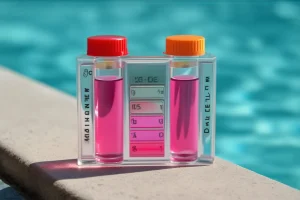
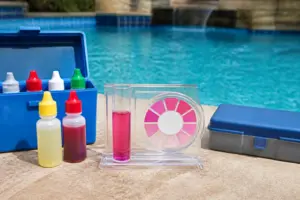
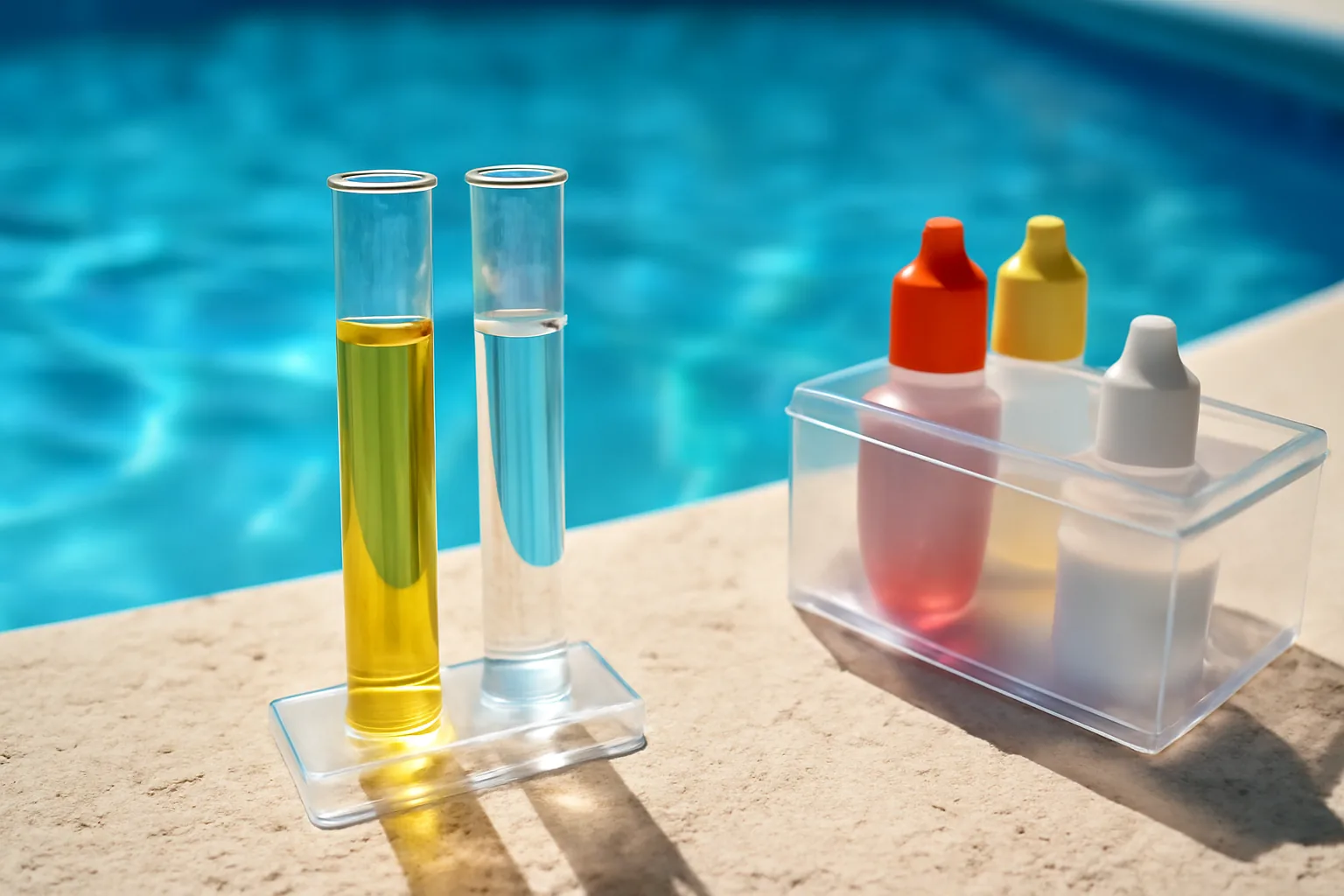
Never add chemicals based on guesswork or strips. You need solid numbers: pH, total alkalinity, calcium hardness, and cyanuric acid minimum. I rely on the Taylor K-2006C reagent kit — digital readers are convenient, but reagent tests don’t drift or need calibration. Get your baseline numbers written down. Treating without knowing what you’re treating is how pools get damaged and money gets wasted.
Step 2 — Attack Your Alkalinity Directly (This Is Where Safety Becomes Critical)
This is the center of your fix, and it’s also the step where those safety protocols above aren’t just suggestions — you’re working with concentrated acid. Dress completely: goggles (not regular safety glasses), acid-resistant gloves, long sleeves, long pants, closed-toe shoes, outside, positioned so wind moves fumes away from you.
Calculate your dose, then dilute it in a fresh plastic bucket of water — acid into water, always — before pouring it slowly along the deep end perimeter with circulation running. Distribute as you pour; don’t let it pool in one spot. Never send it down the skimmer, into the pump strainer, or into a feeder. Keep back from the stream and stop immediately if you inhale fumes. Run the system for at least 30 minutes post-dose to fully circulate the chemical; a localized acid pocket etches plaster. Retest before attempting another dose. Space treatments out across multiple days. Repeat until TA lands in the 80 to 120 ppm window.
I need to correct something you’ll read repeatedly on pool forums: turning your pump off doesn’t drive out CO₂. Degassing requires agitation — moving, splashing water. That’s Step 3, coming up. Sitting still does nothing.
Standard dosing: roughly 1.5 quarts of muriatic acid per 10,000 gallons reduces TA by approximately 10 ppm. Adjust for your actual pool volume. A 20,000-gallon pool with TA at 180 ppm needs around 9 quarts (2.25 gallons) distributed over several days to hit 80 ppm. Never exceed 1 quart per 10,000 gallons in a single application.
Proper acid storage is as important as proper dosing. Keep it sealed in its original labeled container, standing upright, shaded and cool, away from children and animals. Position it as far from your chlorine supply as possible — separate shelf, ideally separate enclosure, and never stacked with acid above chlorine where drips become a hazard. A slow leak dripping onto calcium hypochlorite in an unventilated space fills that space with chlorine gas in minutes. Buying in bulk is budget-smart only when you have safe, ventilated storage.
Step 3 — Allow pH to Normalize Through Natural Water Agitation
Immediately after acid treatment, pH dips. Activate your jets, run your waterfall, or allow swimmers in. Movement and splashing restore pH without pushing alkalinity higher — it’s literally the only mechanism that does this. This is actually valuable in your situation. You want TA low and pH correct. Aerating accomplishes both faster than any additive can.
Step 4 — Verify Stability at 24 and 48 Hour Intervals
Test your water the next morning and the morning after that. Document whether pH continues rising. Once TA settles between 80 and 120 ppm, you should notice pH stabilizing considerably better. If it still climbs 0.2 to 0.3 units daily, examine your chlorine source and identify major water features driving excessive off-gassing.
Muriatic Acid: The Tool That Actually Breaks the Alkalinity Trap
After you recognize that alkalinity is truly your bottleneck, you need an acid compound potent enough to move the needle without consuming bottles of weak reducer that barely register on your test kit. Muriatic acid delivers the heavy lifting that mild pH-down products simply cannot achieve against entrenched high alkalinity.
Where it wins
- Reduces alkalinity with visible results inside 24 hours rather than weeks of watching a stubbornly resistant 180+ ppm plateau
- Bulk container sizing — four gallons at once — eliminates mid-treatment reordering or dose rationing when you’re fighting serious buildup
- Superior strength means minimal liquid volume added to your pool — a major consideration if you’re monitoring water level during treatment
Where it demands respect
- Demands far stricter measurement and technique than dry pH adjusters — a single overdose can swing your pH dangerously low overnight
- This is hydrochloric acid, far stronger than a simple pH powder. It requires safety glasses, acid gloves, and open-air handling every single time, and it absolutely cannot touch chlorine in any concentration — that combination produces chlorine gas. Always apply in the evening or early morning with the pool area empty, and store it well separated from chlorine products
I’ll be honest — the first time I used muriatic acid I second-guessed myself halfway through measuring, convinced I was about to ruin my water chemistry. But after watching my Scottsdale client’s pool finally hold a stable pH for two weeks straight, I knew it was the right call. CPDI Champion 4-Pack Acidblue Muriatic Acid for Swimming Pools & Spas, 1 Gallon Each is the tool that makes alkalinity feel manageable instead of inevitable.
This post contains affiliate links. As an Amazon Associate, I earn from qualifying purchases at no extra cost to you.
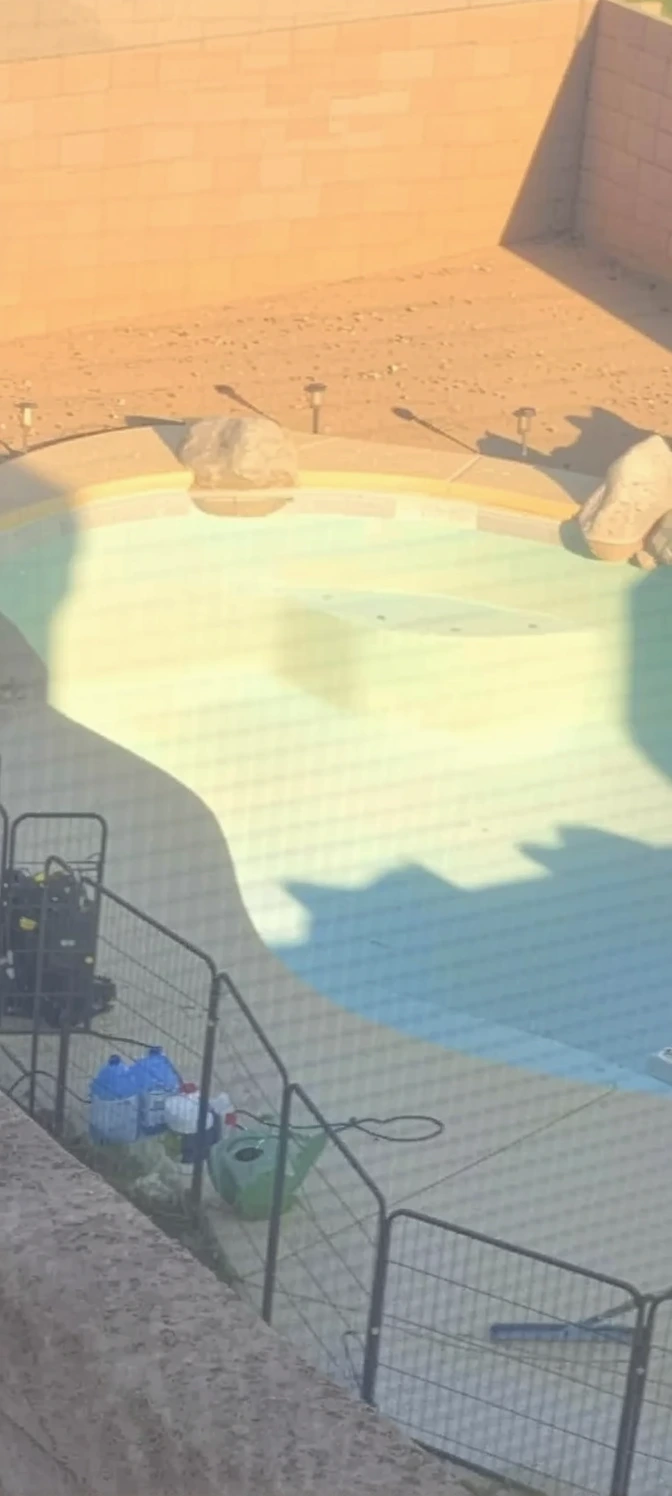
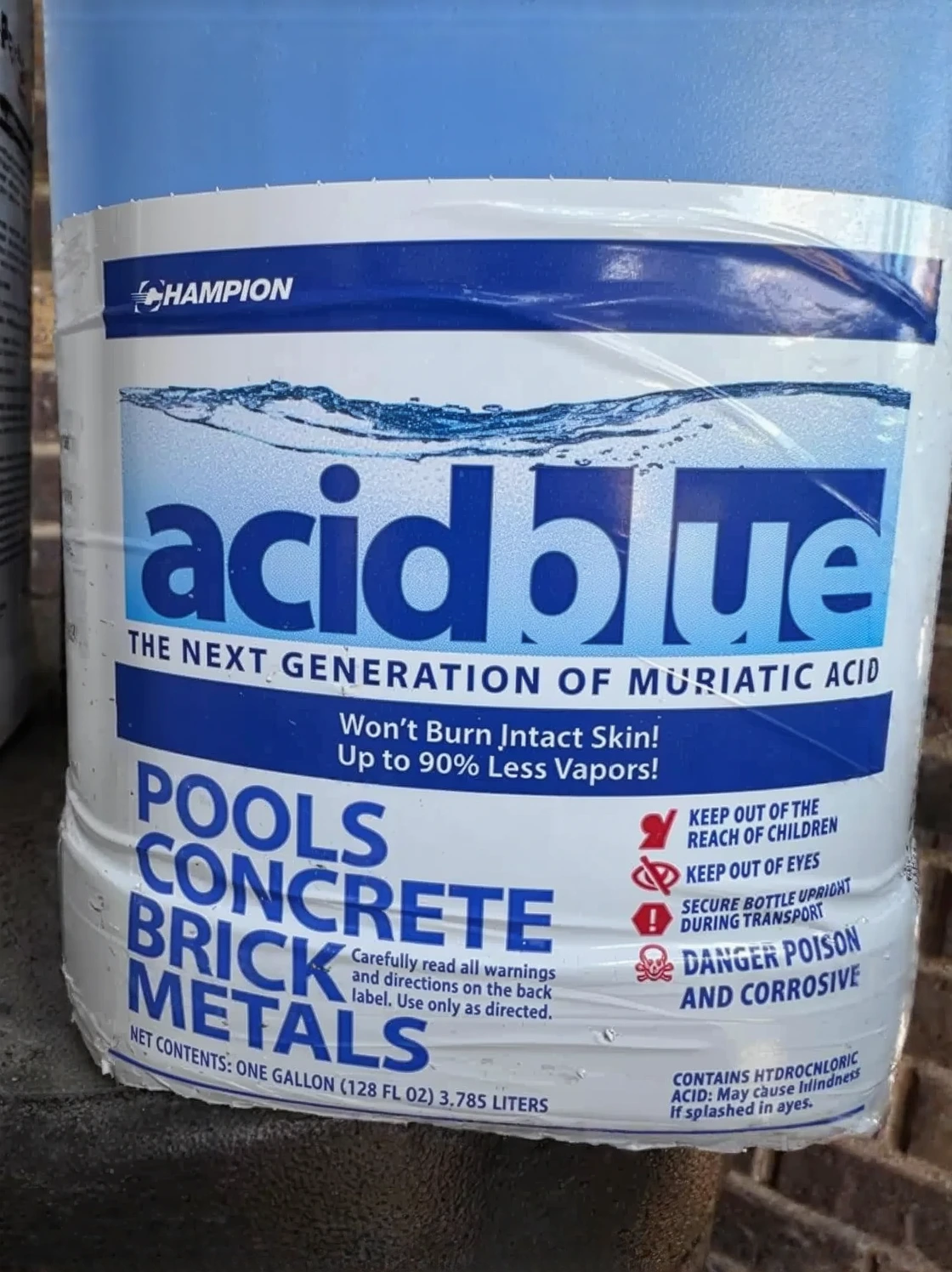
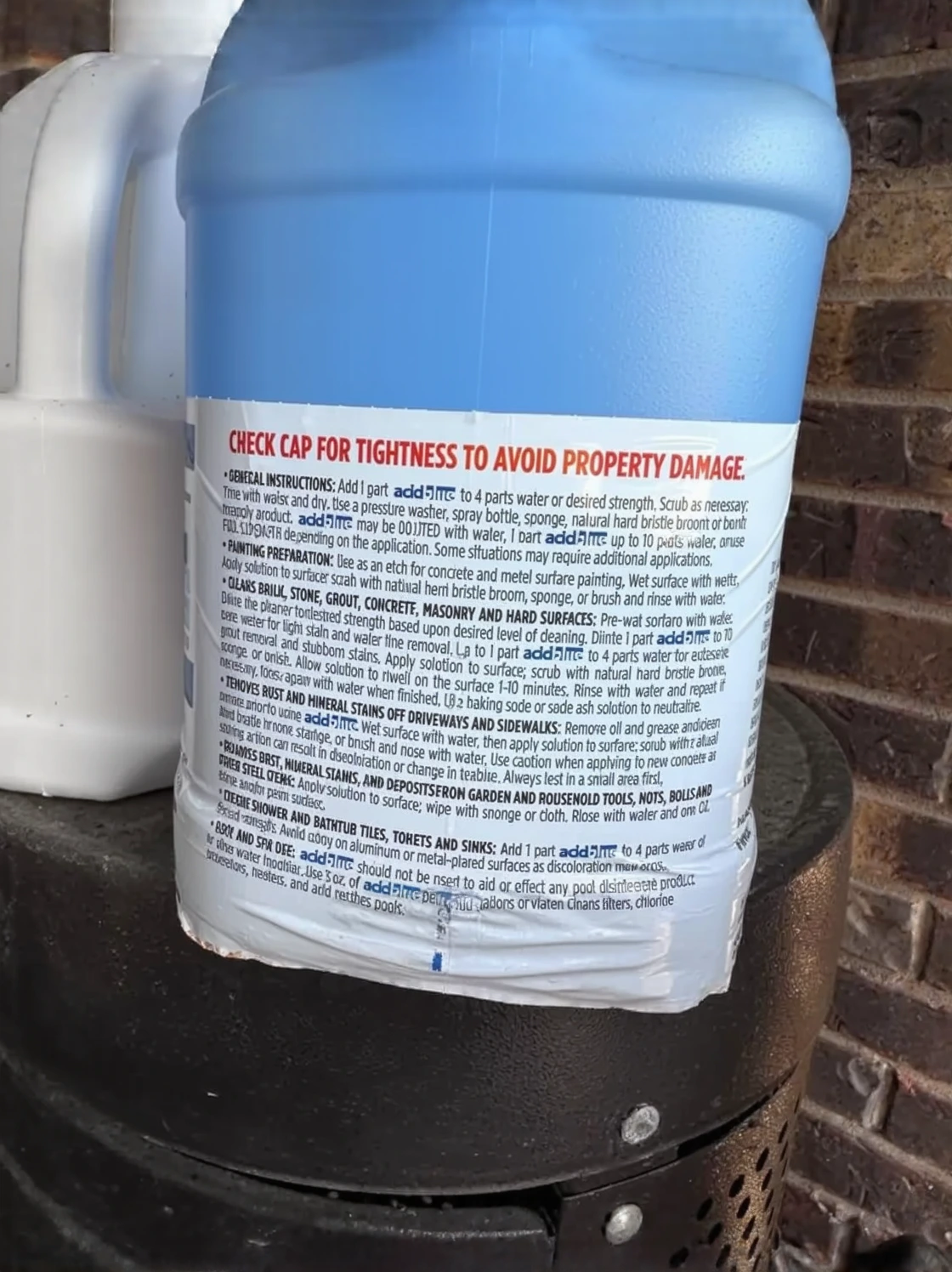
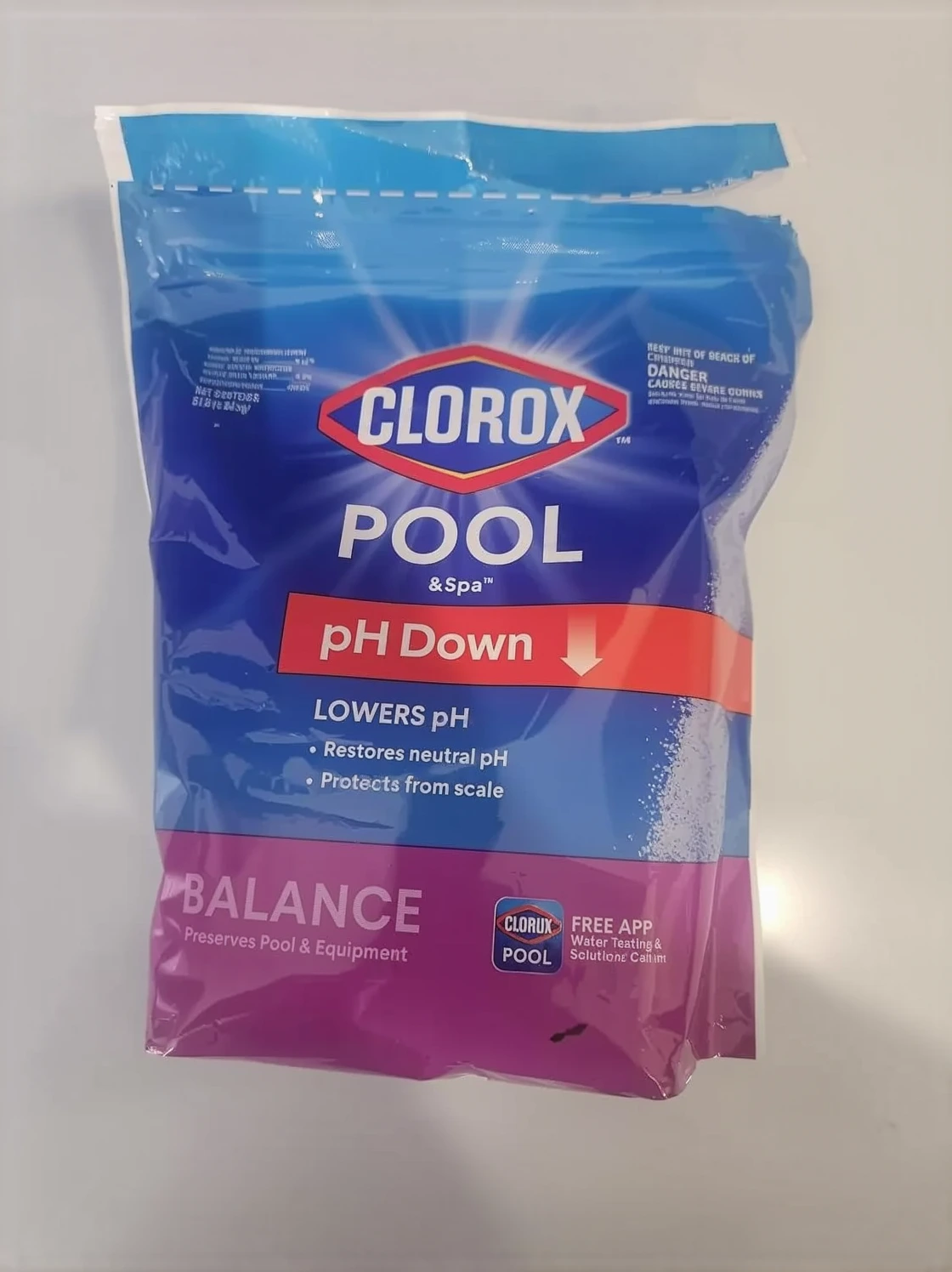
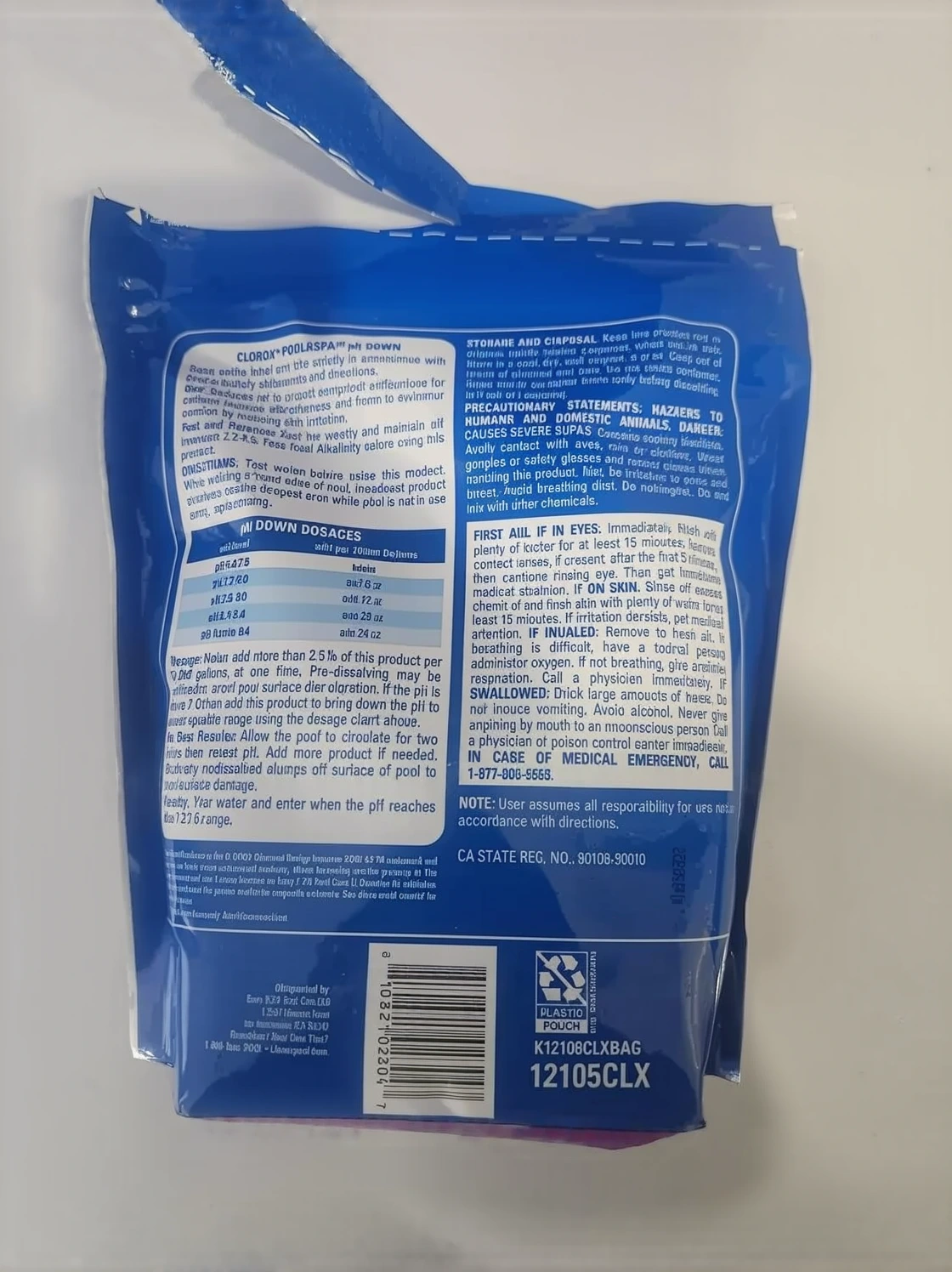
CPDI Champion 4-Pack Acidblue Muriatic Acid for Swimming
I stopped rationing acid doses once I had four gallons on hand to finish the job right.
Check Price on Amazon →