Across fifteen years of chasing pool chemistry around Arizona—one refrain surfaces with remarkable consistency from owners who maintain regular water chemistry testing. They tell me: “Nadia, my pool pH won’t stop climbing. I dose pH down, let it sit for a full day, run another test, and it’s back at 8.0. Feels like I’m flushing cash straight into the water.”
The pattern isn’t coincidental or unlucky. Your pool pH keeps rising because a specific mechanism is propelling it upward—and the moment you pinpoint that mechanism, you can treat the root cause rather than endlessly chasing chemical symptoms. That’s the focus of what follows.
I’ve documented pools where owners were hemorrhaging $40–50 monthly on pH reducer simply because they’d never identified the underlying driver. Once they tackled the actual issue, that expense contracted to $8–10. So let’s unpack the mechanics, quantify the damage, and chart a path forward.
Why High Pool pH Is Worse Than You Think
The typical pool owner dismisses high pH as merely inconvenient—just a number on the test kit that ought to be lower. That perspective misses the real picture. High pH functions as an active liability across multiple dimensions, and the expenses snowball.
To start: your chlorine stops disinfecting. This is the core issue. Chlorine destroys algae and pathogens in precisely one chemical state: hypochlorous acid (HOCl). Maintain pH at 7.2, and about 66% of your chlorine molecules exist in this active form. Creep to pH 7.8, and that proportion drops to roughly 30%. Hit pH 8.0, and you’re down to approximately 3%. Put plainly: at pH 8.0, just 3% of your chlorine actually works. So a reading of 2 ppm chlorine at pH 8.0 delivers the sanitizing capacity of 0.06 ppm. Your chlorine’s actual potency is 20× diminished at the same numerical concentration. You’re not purchasing additional chemicals because you chose to—you’re buying them because the ones in the water have become useless.
Second, calcium buildup materializes on surfaces. When pH climbs, the water’s chemical saturation point shifts, causing calcium to drop out of solution. This accumulation coats pool walls (generating white, rough patches that hurt to scrub), corrodes equipment (pump seals, filter housings), and coats salt cell electrodes in saltwater installations. Replacing those titanium cells runs $400–800. Once calcium scale blankets the cell, its chlorine generation plummets 30–50%. I’ve removed salt cells that would’ve functioned another five to seven years if the owner had managed pH discipline.
Third, swimmers experience noticeable discomfort. Once pH exceeds 7.8, eyes and skin begin to burn. Beyond pH 8.0, the sensation becomes distinctly uncomfortable. Most swimmers blame the chlorine—”chlorine irritates my eyes”—when the culprit is actually alkalinity. Correct the pH, irritation evaporates.
Fourth, your stabilizer (CYA) loses its protective capacity. Cyanuric acid shelters chlorine from UV rays. But elevated pH causes CYA to exist in a molecular form that barely communicates with chlorine chemistry. Your 100 ppm of CYA essentially vanishes as a protective shield at pH 8.0 or higher—another explanation for why chlorine appears impotent.
Collectively: high pH multiplies chemical expenses, degrades equipment longevity, etches pool finishes, and reduces comfort for swimmers. The frustrating catch—if rising TA or water circulation is your culprit, you could pour pH reducer indefinitely and watch it rebound. You’re medicating the surface manifestation, not curing the underlying condition.
Why Your Pool pH Keeps Rising: The Root Causes
Fixing this situation hinges on diagnosing what’s elevating your pH. Five primary factors account for most cases.
1. Aeration (The #1 Driver)
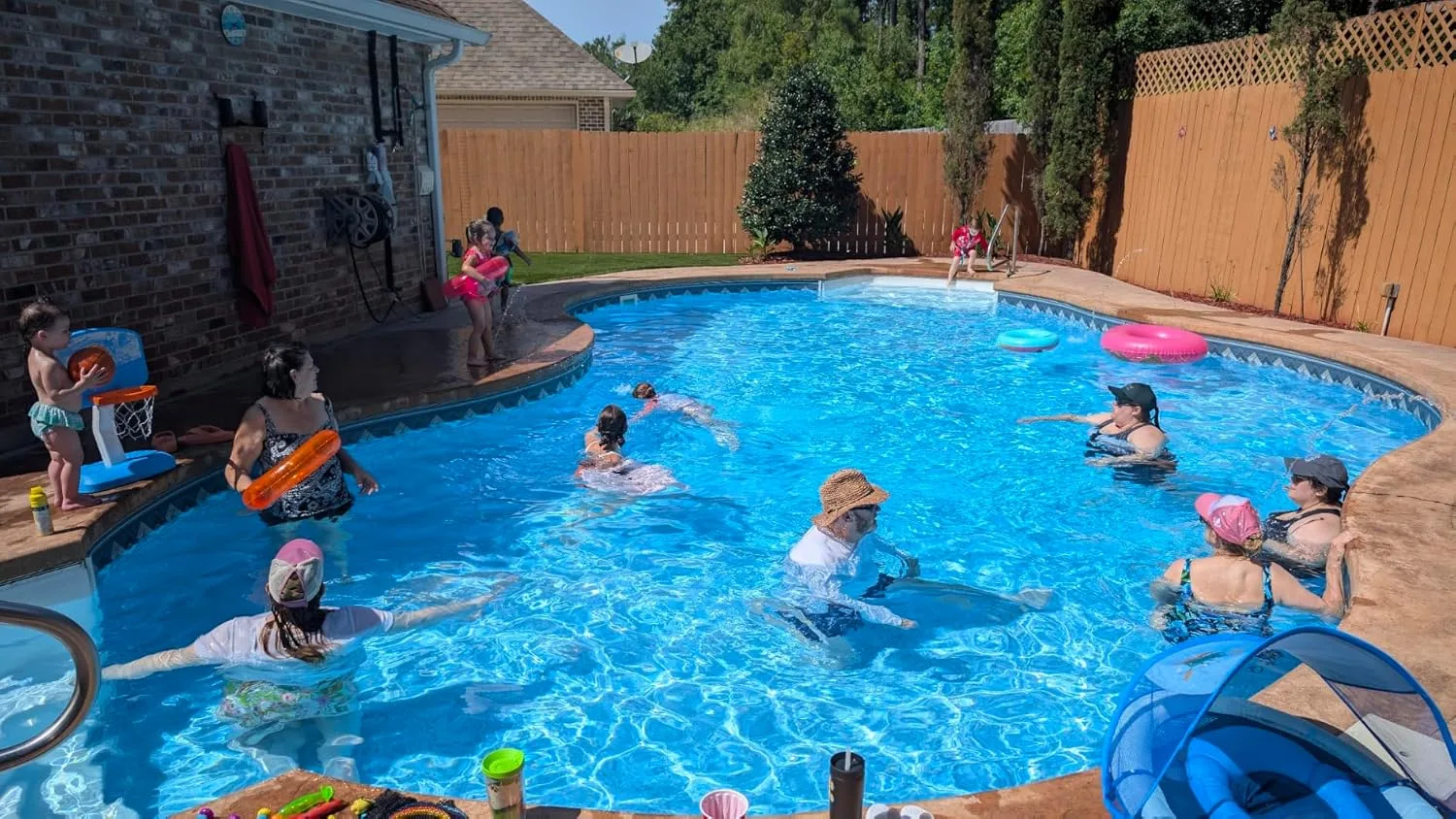
This single source creates more pH-rise headaches than anything else. The mechanism: water dissolves CO₂ as carbonic acid, which depresses pH. Each instance of splashing, cascading, or movement—return inlets positioned high, features that tumble water, active games in the pool, even vigorous pump flow—vents CO₂ to the atmosphere. Once that CO₂ escapes, the carbonic acid it generated evaporates with it, and pH ascends.
You cannot eliminate this. It’s physics. What it does mean: installations featuring aeration-inducing elements (cascades, jets, spill features, high return positioning) will perpetually battle upward pH more intensely than a motionless recreation pool. When your waterfall-equipped pool gains 0.5 pH units weekly, you’re not erring—that’s baseline expectation. You simply plan for it and compensate systematically.
2. High Total Alkalinity (TA)
Total alkalinity acts as your pool’s pH cushion. It suppresses movement in both directions. Optimal TA occupies the 80–120 ppm band; the ideal operational zone lands at 90–100 ppm.
However, should TA reach 150, 180, or 200 ppm, you’ve engineered a “pH ceiling” dynamic. The buffering strength becomes so pronounced that pH resists your downward interventions and rebounds within 24–48 hours. You push it down to 7.6; by sunup it reads 7.9. I see this scenario repeatedly, and it’s also the most treatable variation—provided you prioritize TA reduction first.
3. Saltwater Pools (Salt Chlorine Generators)
Salt generation systems manufacture chlorine via electrical discharge, producing an unwanted byproduct: pH elevation. The electrochemical process creates chlorine at one electrode and alkalizing compounds at the other. This explains why saltwater pool operators encounter pH creep more aggressively compared to traditional chlorine users. It’s inherent to the system. Plan on adjusting pH with reducer one or two times each week in a saltwater environment, regardless of all other variables being optimal.
4. Borate-Treated Water
Borate supplements (borax or comparable borate compounds) function for algae suppression and pH anchoring. But they recalibrate pH’s natural equilibrium. If your pH consistently rises to exactly 7.8 and plateaus there, borates within the system might be setting a new equilibrium state. This occurs infrequently, though it warrants investigating if you’ve incorporated a borate formula recently.
5. Calcium Hypochlorite Shock
Cal hypo shock (powdered white chlorine granules) supplies 68% chlorine content but carries an alkalinity rating near 11.8. A shock treatment floods your pool with high-pH material. In smaller residential tanks (around 15,000 gallons), one cal hypo application can boost pH between 0.4 and 0.6 units. Running shock treatment weekly paired with climbing pH weekly points to shock as a contributing factor. (For recurring treatments, rely on liquid chlorine or dichlor; preserve cal hypo for dormant months when frequent applications aren’t needed.)
6. Hard Fill Water
Across the Southwest and numerous other geographies, ground water from municipal sources emerges already alkaline—pH 7.8–8.5 before it reaches your property. It likewise carries elevated calcium concentration (200+ ppm in certain locales). Whenever you supplement the pool during dry periods, you’re introducing already-hostile water into the system. If you inhabit a region supplying hard, alkaline water, you’re contending with a disadvantage from the initial fill.
Identifying Your Cause (and Why It Matters)
Prior to purchasing anything, perform this investigation:
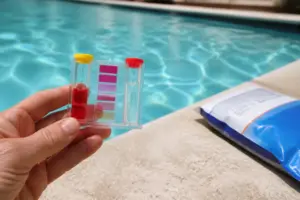
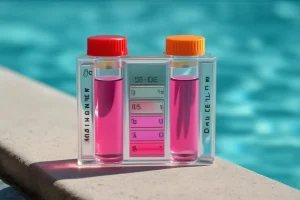
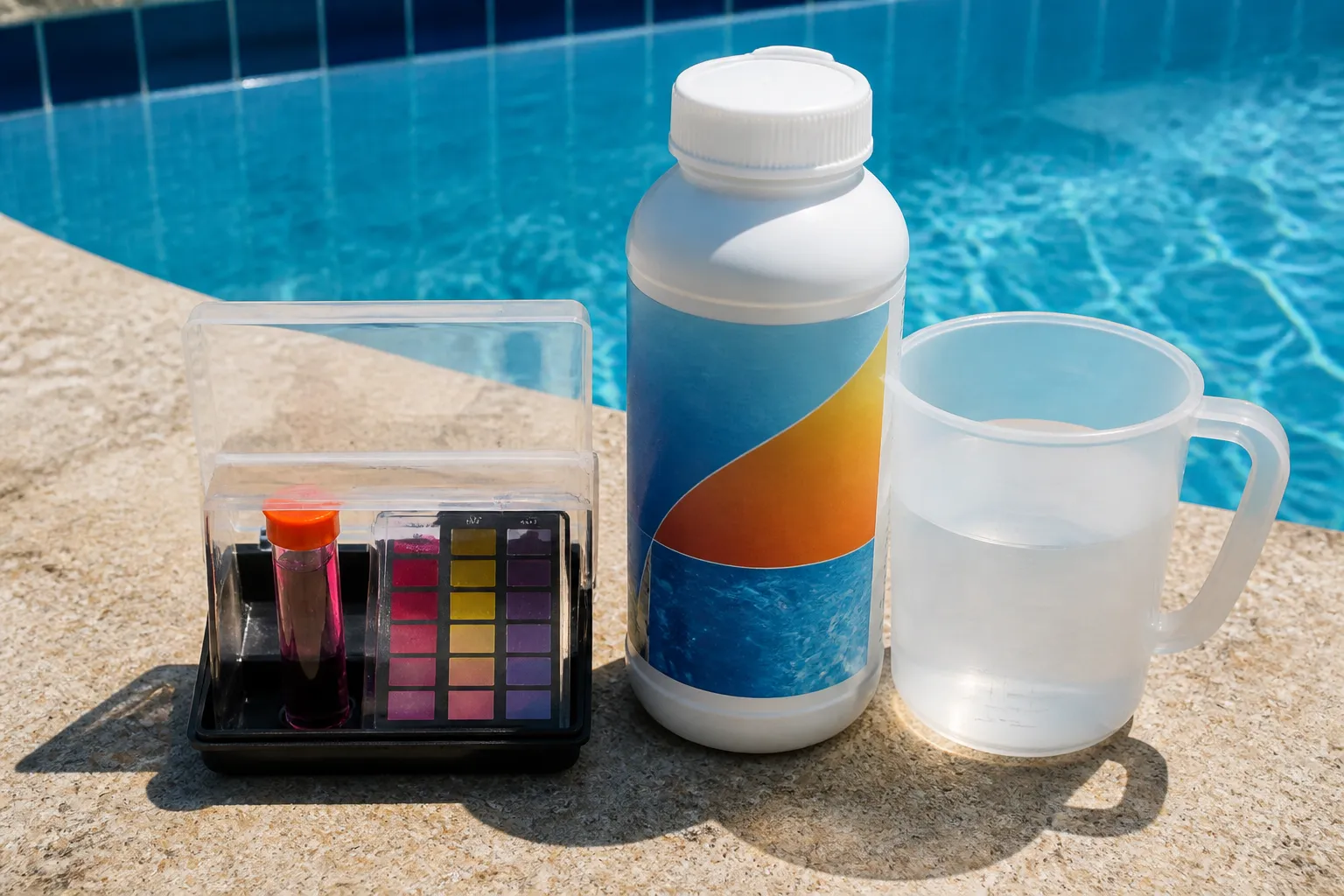
- Measure total alkalinity. If TA reads above 120 ppm (particularly 150+ ppm), that’s your leading culprit. TA reduction must precede all other steps, otherwise pH reducer functions merely as temporary relief.
- Monitor pH fluctuations across several days. Does it surge faster during waterfall operation or peak swimming activity? That signals aeration. Does it climb uniformly despite minimal aeration? That indicates TA, salt generation, or chemical shock involvement.
- Verify your shock formulation. If you’re applying calcium hypochlorite, transition to liquid chlorine for seven days and assess whether pH escalation decelerates.
- Research your incoming water quality. Ring your local water utility or obtain their published annual report. Most authorities publish this information publicly. If your tapwater registers pH 8.0 and baseline TA at 120 ppm, you’re beginning from a losing position.
After you’ve isolated the cause of your pH climb, you can implement a deliberate strategy rather than responding to crises moment-by-moment.
What to Look for in a Pool pH Reducer
Two principal categories dominate the professional pH-reducing toolkit: liquid muriatic acid (hydrochloric solution) and powdered dry acid (sodium bisulfate). Each presents unique advantages and disadvantages.
Muriatic Acid (Liquid)
Advantages: Muriatic acid delivers maximum potency in minimal volume. A small quantity achieves substantial pH adjustment. Cost-effectiveness per ppm of pH decrease is superior. It depresses TA more aggressively than powdered alternatives. When TA reduction demands are significant, muriatic acid stands as the superior choice.
Limitations: Being liquid-based, it corrodes skin and materials—necessitating eye protection, hand protection, and airflow. Storage duration is constrained (gradual vapor loss occurs over time). It requires a designated secure storage location. It mandates dilution before introduction into the water. For home pool operators, handling and storage demands diminish its appeal.
Dry Acid (Sodium Bisulfate)
Advantages: As a granulated solid, it presents minimal handling hazards and stores safely. Eye or hand protection isn’t mandated (though protective gear won’t hurt). It maintains stability during extended storage with zero degradation. Dosing is uncomplicated—portion out the material, introduce it. It yields reliable, repeatable results. Residential pool operators managing periodic pH fine-tuning gravitate toward dry acid as their standard choice.
Limitations: Per unit, it demonstrates lower power compared to liquid muriatic. It accomplishes TA lowering less efficiently. Substantial TA reduction scenarios consume larger quantities. On a cost-per-ppm basis, the economics become less attractive.
My recommendation: In typical residential contexts, choose dry acid for routine pH tweaking (weekly or biweekly slight adjustments). When serious TA reduction becomes essential, employ muriatic acid for that concentrated work, then transition back to dry acid for ongoing upkeep.
The Sodium Bisulfate That Finally Stopped My pH Yo-Yo
If you’re endlessly correcting rising pH using insufficient or fluctuating products, you’re locked in an unwinnable cycle. The proper formulation—delivering genuine TA-suppressing capability—becomes the dividing line between a temporary reprieve and durable stability.
What works
- 90% concentration genuinely lowers pH rather than papering over the issue—I witnessed correction within 6 hours, not the ambiguous 24-hour uncertainty
- 50-pound bulk packaging means I’m not restocking minuscule containers biweekly; a single bucket sustains through most of the warmer months
- Addresses both the immediate pH elevation and the foundational alkalinity imbalance that fuels recurring rebounds
What doesn’t
- Sodium bisulfate arrives as a dry substance requiring measured scooping and water dissolution—it’s not a pour-and-ignore fluid system
- A 50-pound container demands significant closet or shed room and carries appreciable heft; moving it becomes burdensome if chemical management isn’t yet habitual
I almost gave up on bulk dosing after a few clumsy applications, but once I got my mixing routine down, the consistency made me realize I’d been underdosing with liquids the whole time. If you’re serious about solving pH creep instead of band-aiding it, grab the In The Swim pH Reducer for Swimming Pools, Spas, and Hot Tubs – 90% Sodium Bisulfate – 50 Pounds.
About This Article
Written by Nadia Caldwell. Backyard pool owner and water chemistry nerd. After years of chasing down cloudy water and algae blooms on my own pool and my neighbors', I now write about pool maintenance, water treatment, and everything chlorine-related for everyday pool owners. More about this site.
Scope and limits. Nadia is a pool owner who reads chemistry, not a certified pool professional. Follow label directions on every chemical, never mix them, and use a certified pool operator for equipment and sanitizer system work.
Verify this against a primary source
Specifics change, and your situation may differ from the one described here. These are the authorities worth checking directly:
- World Health Organization — guidelines for safe recreational water environments
- Pool & Hot Tub Alliance — water chemistry and pool operation standards