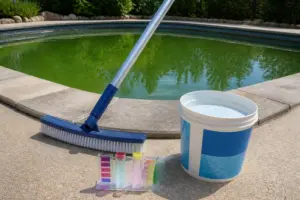
I’ve been managing pools long enough to know the particular dread that sets in when you walk out to the equipment pad, glance at the waterline, and think — didn’t I just fill that two days ago? Over the years running pools for resorts and HOA communities across Arizona and Nevada, I’ve seen this exact moment play out hundreds of times. The pool owner stands at the edge, mentally calculating gallons, wondering whether they’re dealing with normal evaporation in the brutal desert heat or a slow, expensive leak quietly undermining their shell, their plumbing, or both. It’s a genuinely stressful situation, and what makes it worse is the uncertainty. A 20,000-gallon pool is a big place to go looking for a problem you can’t see. The good news? Learning how to find a pool leak doesn’t require tearing up your deck or calling a professional on day one. With a five-gallon bucket, a little patience, and the right dye testing tool, you can diagnose the problem yourself — often in a single weekend — before spending a single dollar on professional services. Let me walk you through exactly how I do it.
Why a Dropping Water Level Is Worse Than You Think
Most pool owners assume a slow leak is just a nuisance — a little extra water bill, a little extra time with the hose. After managing commercial pools where a missed leak cost a resort HOA over $4,000 in a single summer, I can tell you that framing is dangerously wrong. Here’s what’s actually happening when your pool is losing water and you’re not addressing it.
First, there’s the water cost. In the Southwest, water rates can run $0.005 to $0.008 per gallon depending on your municipality. A pool losing half an inch per day beyond normal evaporation — which is roughly 125 gallons for a standard 16×32 pool — can cost you an extra $150 to $300 per month just in refill water. Over a summer, that’s real money.
Second — and this is the one most people don’t think about — constantly topping off your pool with fresh water dilutes your chemistry. Every gallon of tap water you add introduces fresh calcium, carbonates, and whatever your municipal supply contains. You’ll find yourself burning through more chlorine trying to maintain 2–4 ppm in water that keeps cycling fresh. Your cyanuric acid (CYA) levels will fluctuate unpredictably. Your pH will drift. I’ve seen pools with undetected leaks develop chronic algae problems that their owners blamed on bad chlorine, when the real culprit was chemistry that never had a chance to stabilize.
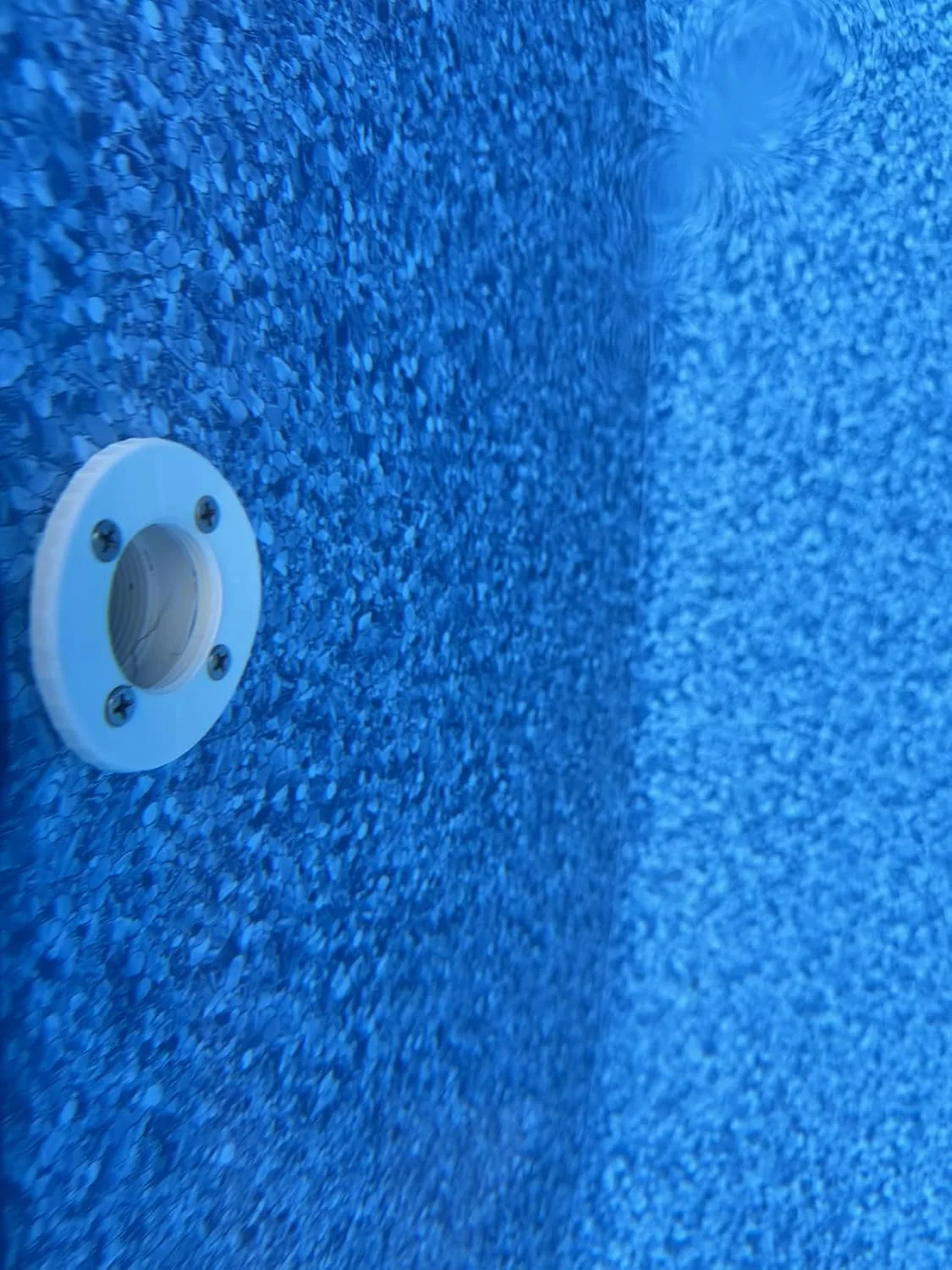
Third, a structural leak — particularly around the skimmer throat or light niche — can erode the surrounding soil over time, creating voids beneath your pool deck. I’ve inspected decks with soft spots directly over plumbing that had been leaking undetected for two or more seasons. That’s a safety issue, not just a repair bill. Underground plumbing leaks saturate soil, which can shift and settle, and in extreme cases destabilize surrounding hardscape.
Finally, running your pump and filter with a low water level puts the skimmer at risk of pulling air — which causes your pump to run dry, overheat, and fail. Pump replacement runs $400 to $1,200 depending on size and variable-speed configuration. That’s an expensive outcome for a problem that started as a drip.
What to Look For in a Pool Leak Detection Dye Kit
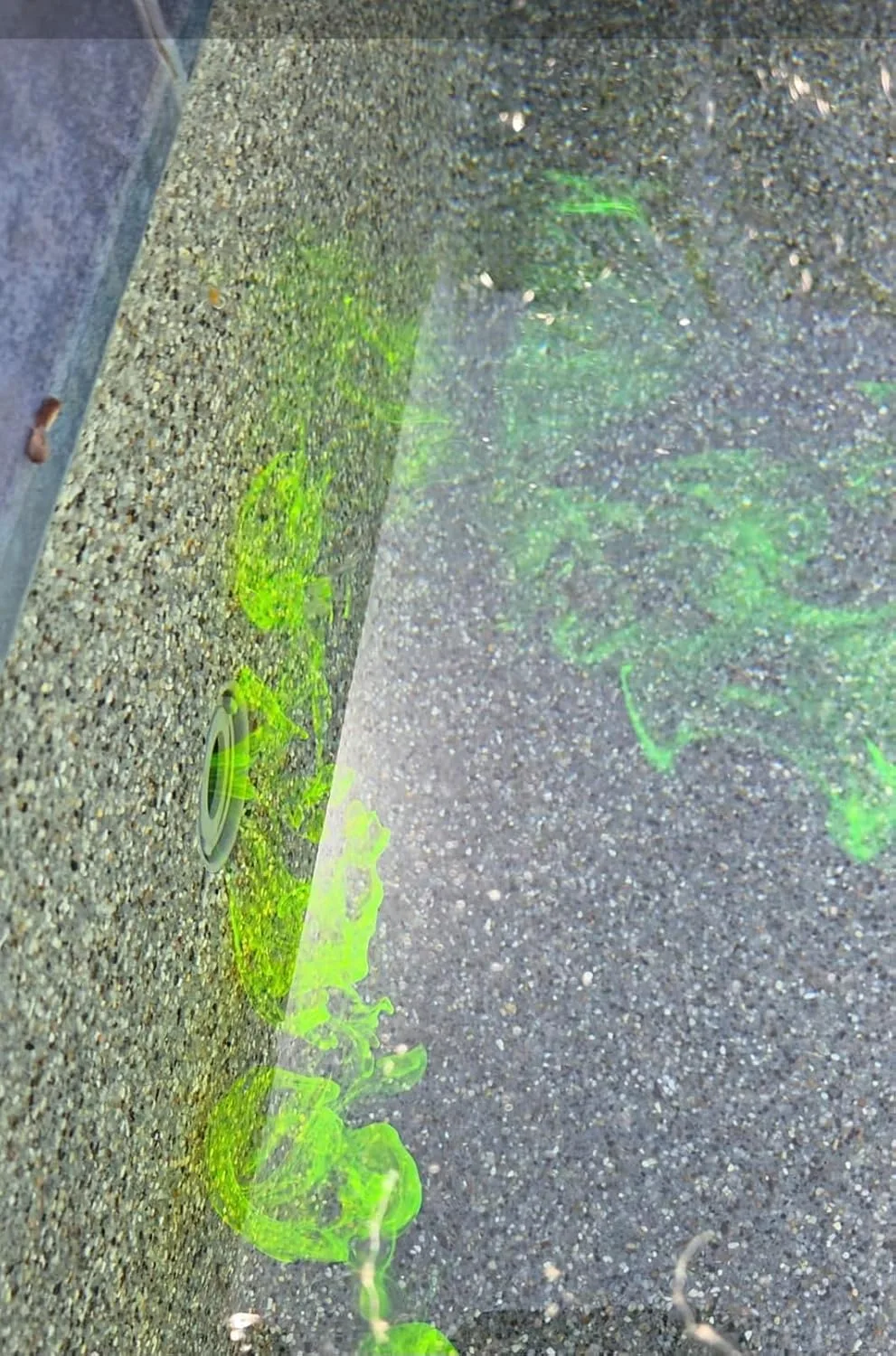
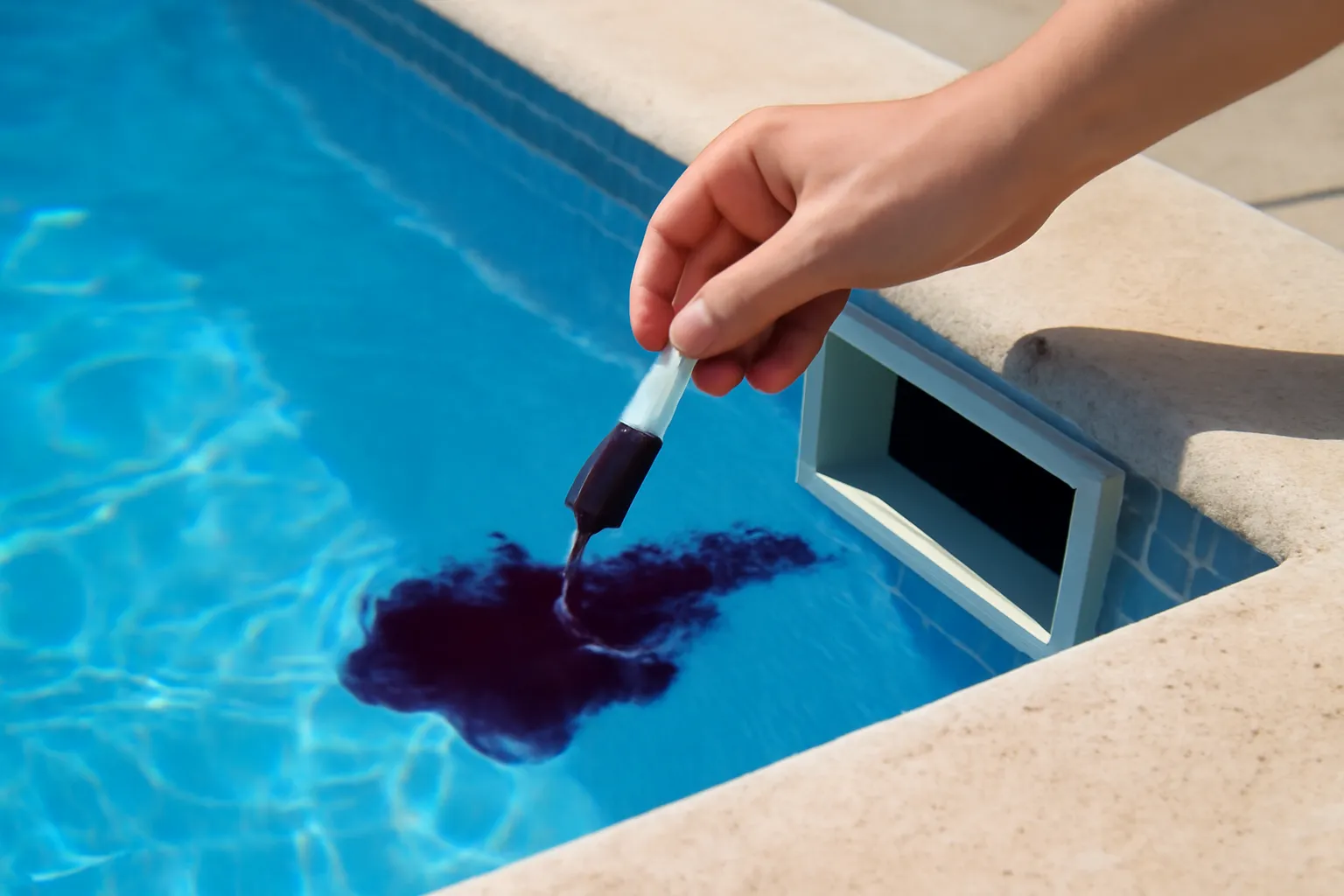
Before I get into the diagnostic steps, let’s talk tools — specifically the dye test kit, which is the single most useful instrument in a DIY leak investigation. The concept is simple: you release a small amount of highly concentrated, water-soluble dye near a suspected leak point with the pump off and the water completely still. If there’s a leak, the water movement created by it — imperceptible to the naked eye but absolutely real — will pull the dye toward the opening and you’ll see it stream in that direction. It’s elegant, it’s inexpensive, and when it works, it’s almost satisfying.
Not all dye kits are created equal, though. Here’s what actually matters when you’re choosing one.
Dye Concentration and Visibility
The dye needs to be dense enough to remain coherent in the water column for several seconds — long enough to visibly stream toward a leak rather than just dispersing in a cloud. Thin, diluted dye tests will give you false negatives because the dye dissipates before you can track its movement.
Applicator Precision
This is where most budget kits fall apart. If your applicator releases too much dye at once or does it too aggressively, you’ll create water turbulence yourself — which defeats the entire purpose of a still-water test. You need a precision applicator that lets you release a slow, controlled stream of dye, ideally right at the surface of a fitting or crack without disturbing the water.
The Dye Kit That Finally Let Me Stop Guessing Between Evaporation and a Real Leak
The hardest part of a dropping water level isn’t the math—it’s knowing whether you’re looking at a slow leak that’ll cost you hundreds in wasted water, or just the desert doing what it does best. That uncertainty is what keeps pool owners topped off and anxious, or worse, ignoring the problem until it’s too late.
What works
- The dye disperses exactly where the leak is—I’ve used this around skimmer seams, pump connections, and returns, and it pinpoints the problem in seconds instead of hours of watching and guessing.
- You get multiple tests per kit, so you can check suspected problem areas without spending $200 on a professional leak detector the first time you see the water line drop.
- The bright color reads instantly even in Arizona sun—no squinting, no second-guessing whether you actually saw movement or just wanted to see it.
What doesn’t
- It only works if you can physically access the suspected leak area—underground plumbing or leaks in buried lines won’t show up, and you’ll still need a professional.
- You need relatively calm water to see the dye travel; if your pool is in full circulation or you’re testing on a windy day, the results get muddled fast.
I almost made the mistake of calling in a leak specialist for what I suspected was a $2,000 equipment pad repair—until I grabbed this kit and watched the dye get pulled straight into a loose return fitting I could tighten myself in five minutes. Pool Leak Detection Dye Kit from Vibrant Blue
This post contains affiliate links. As an Amazon Associate, I earn from qualifying purchases at no extra cost to you.