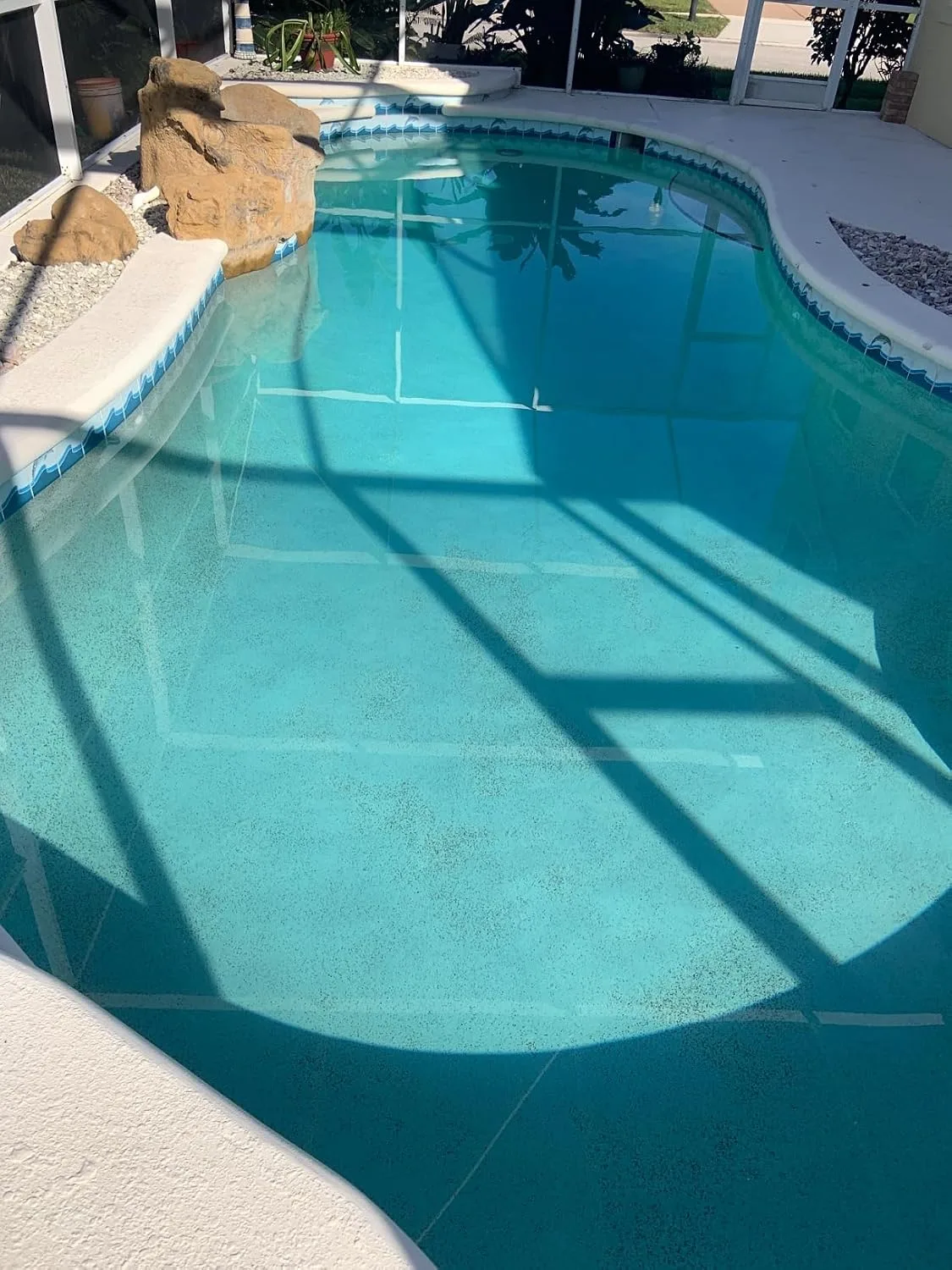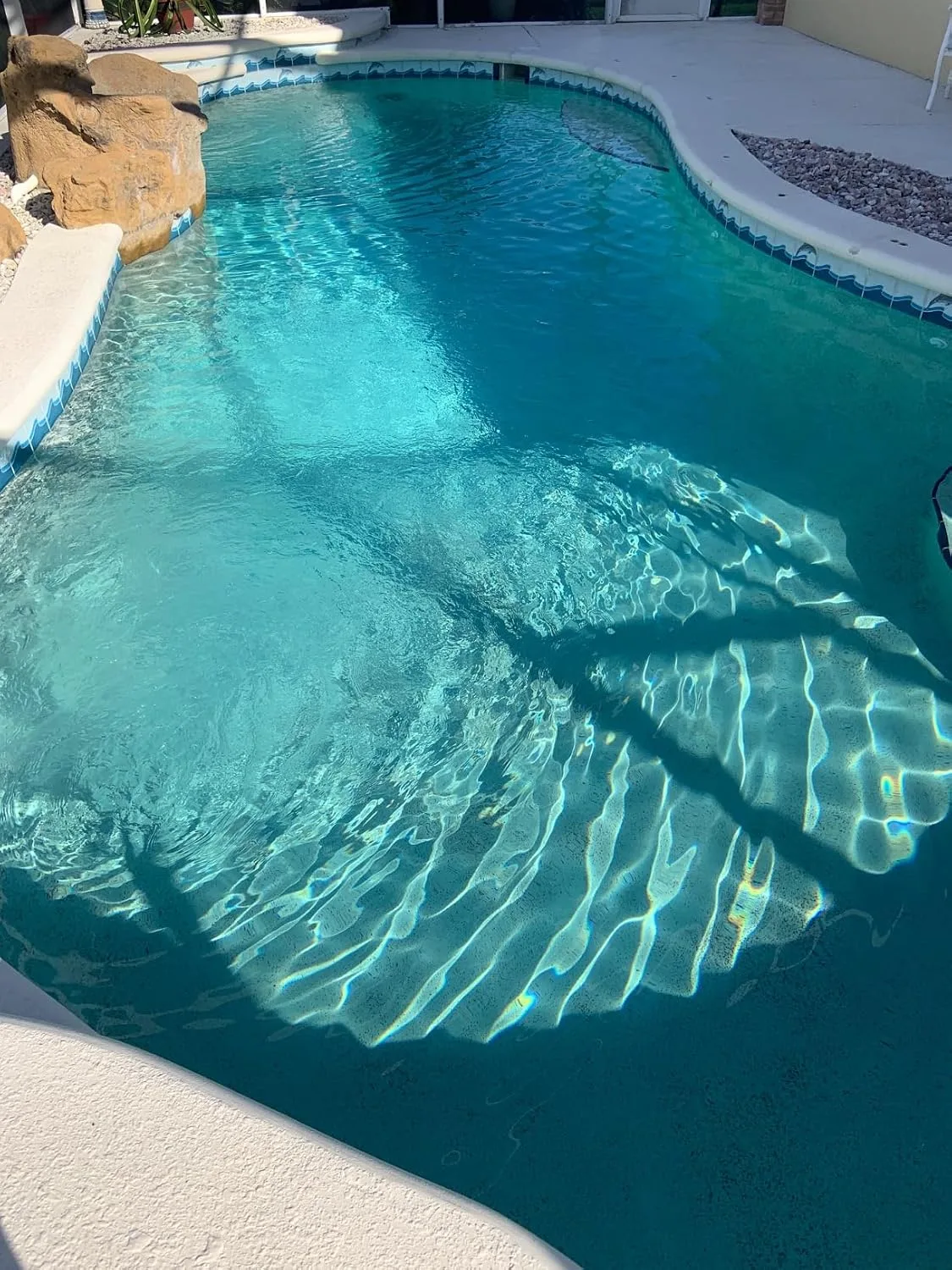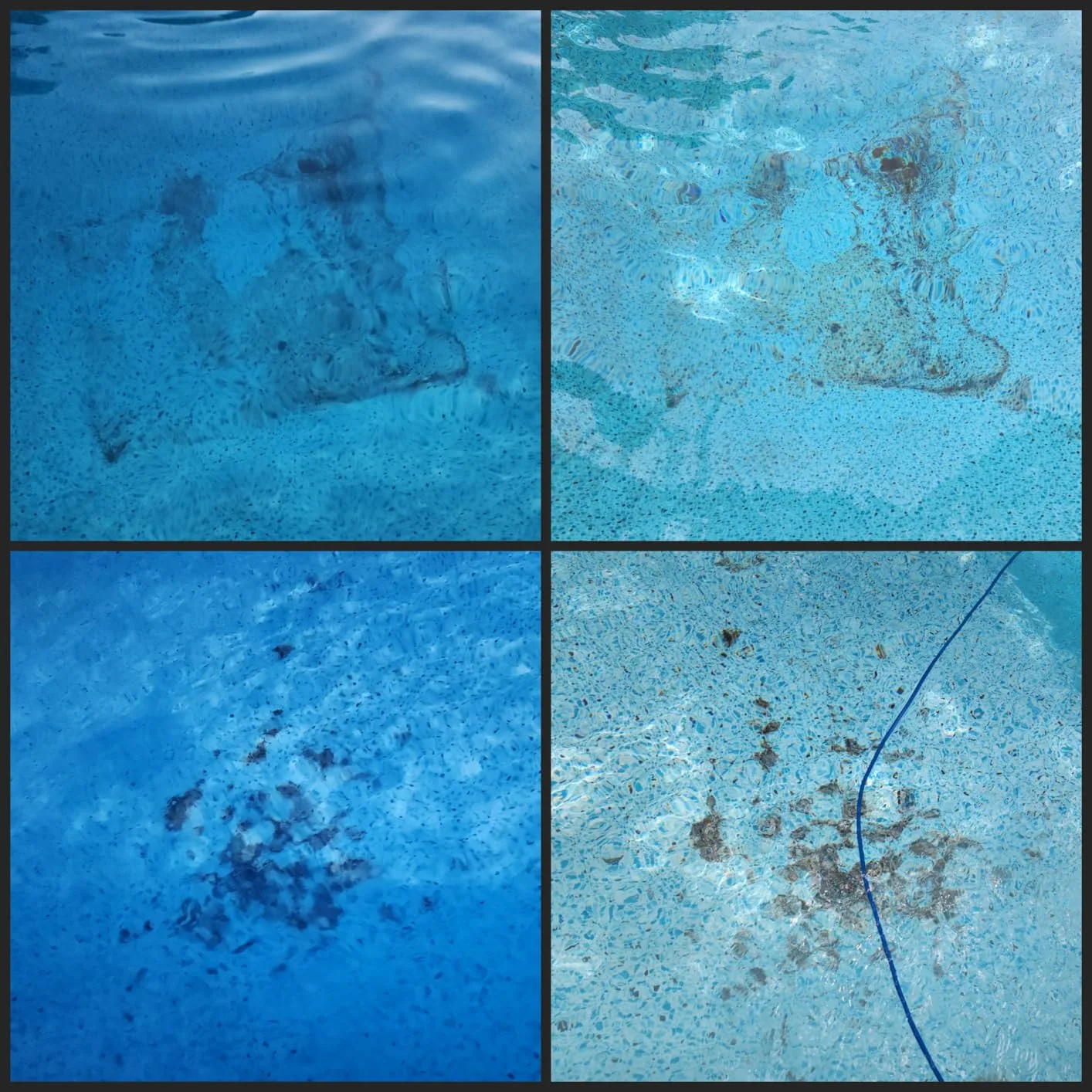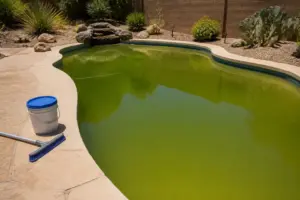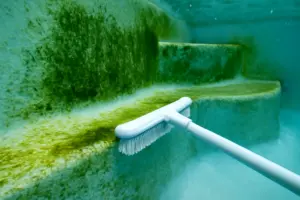
I’ve been managing pools for over fifteen years — resort pools in Arizona, HOA community pools in Nevada, aquatic centers that never close — and I can tell you that the panicked phone call I get most often sounds exactly like this: “Nadia, I shocked the pool last night like I always do, and this morning there are these disgusting brown and green stains all over the floor and walls. I’ve been scrubbing for two hours and nothing is happening. What did I do wrong?” If that sounds familiar, you’re in the right place. Pool stain identification removal is one of those topics that sounds simple until you’re standing at the edge of your pool at 7 a.m. with a brush in your hand and absolutely nothing to show for it. The good news: you almost certainly didn’t break your pool. The better news: this is fixable without draining a single drop of water. Let me walk you through exactly what happened and exactly how to fix it.
Why This Problem Is Worse Than You Think
Here’s the part most pool owners don’t realize: those stains that appeared overnight after shocking aren’t just an aesthetic problem. They’re a symptom of a larger chemistry issue happening in your water right now, and if you don’t address the root cause, those stains will come back within days of removing them — every single time you shock the pool.
When you add a chlorine shock to your pool, you’re introducing a powerful oxidizer. That oxidizer does its job on bacteria and algae, but it also reacts with dissolved metals that were floating invisibly in your water. Metals like iron, copper, and manganese were in solution — meaning they were dissolved at a molecular level, completely invisible. The chlorine oxidizes them, they lose their solubility, and they precipitate out of the water and onto whatever surface they’re closest to: your plaster, your vinyl liner, your tile grout. That’s what those stains are. Dissolved metals that your shock treatment just made solid.
Why does this matter beyond the ugly appearance? A few reasons that I’ve seen cause real damage in commercial pool settings:
- Etching and surface degradation. Metal deposits that sit on plaster surfaces for weeks begin to embed themselves into the surface structure. What starts as a surface stain can become a permanent discoloration that requires acid washing or even replastering — a job that runs $3,000 to $10,000 depending on pool size.
- pH instability. High dissolved metal content in pool water makes pH management erratic. You’ll chase your pH numbers constantly without understanding why they won’t hold.
- Equipment corrosion. The same metals staining your pool floor are running through your pump, heater, and filter. Iron and copper at elevated concentrations accelerate corrosion in heat exchangers and pump housings. A replacement pool heater runs $1,500 to $3,500 installed.
- Wasted chemical costs. I’ve worked with HOA pools where maintenance teams were dumping extra chlorine every week trying to “burn off” stains that chlorine was actually making worse. One community was spending an extra $400 per season on chlorine that was doing nothing except darkening the stains further.
The other stain category — organic stains from leaves, berries, and plant debris — carries its own consequences. Tannins from decomposing leaves begin staining plaster surfaces within just a few hours of contact. Leave a pile of oak leaves on your pool floor for a weekend, and you’ll be looking at a brown shadow that takes serious work to remove. Beyond the staining, decomposing organic material feeds algae and drives up your chlorine demand significantly. I’ve tested pools with heavy leaf debris sitting on the floor and found the combined chlorine spiking above 3 ppm — a sign that your sanitizer is being consumed by organic waste instead of doing its actual job.
Pool Stain Identification Removal: Know What You’re Fighting Before You Treat It
This is the step most pool owners skip, and it’s why they end up making the problem worse. Treating a metal stain with chlorine is like throwing gasoline on a fire. Treating an organic stain with ascorbic acid is just wasting product. Before you do anything, you need to figure out which category your stain falls into — and the identification process takes about thirty seconds.
Identifying Metal Stains
Metal stains fall into three main types based on color, and each color tells you which metal you’re dealing with:
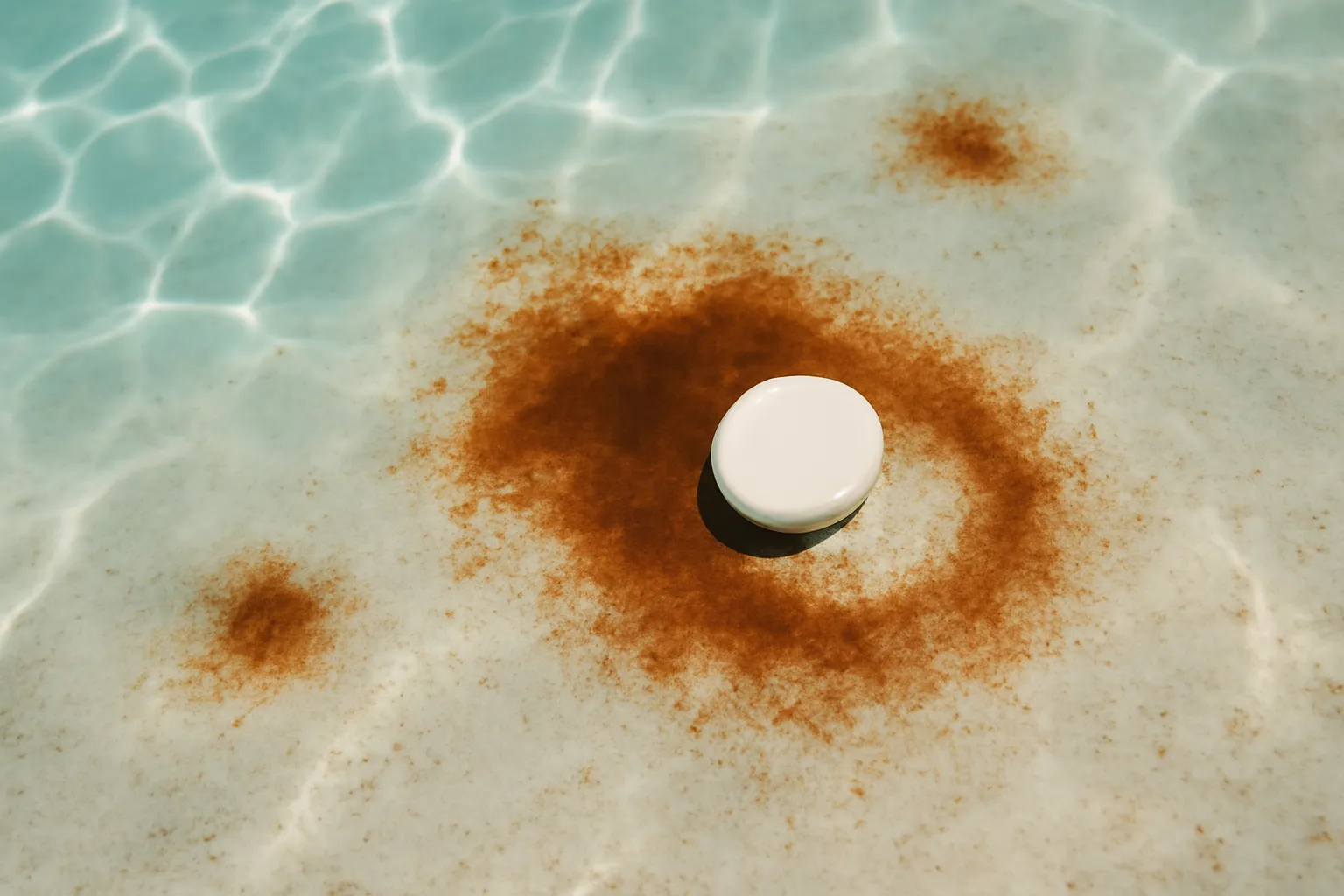
- Brown, rust, or reddish-brown stains — This is iron. It’s the most common metal stain I see, and it’s almost always tied to well water as the source water for filling the pool, or to aging iron-based pool equipment. If you’re in a rural area and your pool is filled from a private well, iron staining is almost a given without preventive treatment.
- Blue-green, teal, or turquoise stains — This is copper. The usual culprits are corroding copper heat exchangers (especially when pH runs low — below 7.2 — for extended periods), copper-based algaecides that were added at too high a concentration, or low-pH water slowly attacking copper plumbing.
- Purple, dark brown, or black stains — This is manganese. Less common than iron or copper, but dramatic when it shows up. Almost always sourced from well water in certain geographic regions. Manganese stains look alarming — they can appear nearly black on white plaster — but they respond to the same treatment as other metal stains.
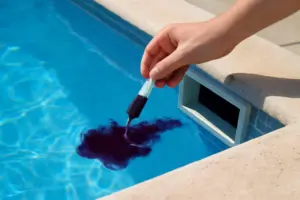
The Vitamin C Test: Take a plain ascorbic acid tablet — any vitamin C supplement from a drugstore works — and hold it directly against the stain for 30 seconds. Press it firmly to the surface. If the stain lightens or disappears where the tablet touched, you have a metal stain. This works because ascorbic acid reduces oxidized metals back into soluble form, temporarily lifting them from the surface. It’s the definitive field test for metal stain identification, and I use it on every commercial pool I assess.
Identifying Organic Stains
Organic stains have a different visual signature. Brown or tan stains that follow the outline of a leaf are almost always tannin deposits. Green staining that isn’t metallic-looking is usually algae residue or decomposed plant matter. Pink or reddish stains near the waterline in late summer are often from berries or certain flowering plants that drop petals onto the water surface.
The Chlorine Test: Place a chlorine tablet directly on the stain and hold it there for 30 seconds. If the stain fades, you’re dealing with an organic stain — chlorine is your treatment. If it doesn’t fade (or gets darker), stop immediately and treat it as a metal stain.
The Ascorbic Acid Solution That Finally Stopped Me From Draining the Pool
Metal stains after shocking are stubborn precisely because the shock oxidizes dissolved copper and iron — and once they’re bonded to the plaster, scrubbing alone won’t touch them. Ascorbic acid (vitamin C) is one of the few tools that actually dissolves those metal oxides without requiring you to drain thousands of gallons.
What works
- Dissolves brown and green metal stains within hours of application — I’ve watched heavy copper stains vanish in a single afternoon without any scrubbing.
- 100% ascorbic acid means no mystery additives or dyes that cloud the water or interfere with your chemistry balance.
- Works while the pool stays full and swimmable — no downtime, no draining, no replastering fears.
What doesn’t
- It lowers pH as it works, so you’ll need to monitor alkalinity and pH closely for a day or two afterward — not hard, but easy to overlook.
- On very deep or stubborn stains (old iron deposits), a single dose might require a second application a few days later.
I was genuinely skeptical the first time I used this — I’d already mentally prepared to drain the pool and start over — but the moment I saw those brown streaks fade, I stopped second-guessing myself. In The Swim A+ Pool Stain Remover — 100% Ascorbic Acid is now the first thing I reach for when metal stains appear after shocking.
This post contains affiliate links. As an Amazon Associate, I earn from qualifying purchases at no extra cost to you.