A 500-watt draw on a circuit that should only handle intermittent underwater loads—that’s what I see when I test the existing setup at pools I take over, and it never stops bothering me. The fixture sits submerged in your backyard, running on the same voltage as your kitchen counter, surrounded by children on summer evenings. Converting a 120-volt pool light to 12-volt isn’t something I recommend casually; it’s something I’ve made non-negotiable at every property where I found one of these aging fixtures still in service. The safety argument alone justifies the work. But once you add in the electricity costs, the replacement bulb expenses, and the seal degradation that comes with incandescent heat, the financial case becomes just as compelling. By the time you’re done reading this, you’ll see why this upgrade belongs at the top of your maintenance list, not the bottom.
Why This Problem Is Worse Than You Think
Voltage in a swimming pool context isn’t abstract. A 120-volt fixture is delivering the same electrical potential as the wall outlets where you charge your phone or plug in a hair dryer—except it’s sitting in conductive saltwater underneath your family. When these lights were first installed, sometimes three decades ago, this approach met code. The assumed safety layer was the GFCI breaker: a device engineered to sense ground faults and interrupt power before current can reach a swimmer.
The catch: GFCIs deteriorate. Older units sitting in electrical panels without regular testing—and I’ve never met a homeowner who tests theirs on schedule—can lose responsiveness over time. By the time you actually need one, it might not trip at all. The National Electrical Code mandates GFCI protection on every pool lighting circuit, but a regulation on paper and a working safety device in your panel are not the same thing. I’ve tested breakers on a few pools I’ve helped neighbours and relatives with, and I’ve come across units that looked fine but provided zero protection.
The financial drain is substantial. Standard 120V incandescent pool bulbs draw between 300 and 500 watts and burn out after 2,000 to 5,000 hours of use. Most pool owners replace at least one bulb annually, sometimes twice. Factor in the $30–$60 replacement cost per bulb, plus the labor of extracting the fixture from its niche and reinstalling it, and you’re looking at persistent expenses that compound year after year. Additionally, the intense heat these incandescent bulbs generate accelerates deterioration of the sealing gasket—cracks develop, water penetrates the fixture housing, and suddenly you’re facing corrosion or worse, a potential electrical hazard. You end up in a loop of ongoing costs punctuated by crisis repairs.
Switching from 120 to 12 volts fundamentally rewrites this risk profile. At 12 volts, a worst-case failure—the fixture cracks, water breaches the seal, current leaks into the pool—cannot generate enough electrical force to cause serious harm. Twelve volts lacks the capability to drive lethal current through a human body. That’s not a sales pitch; that’s applied electrical science. You shouldn’t become careless about it, but the failure mode shifts from potentially life-threatening to electrically inert. When swimmers include children, that distinction matters enormously.
What to Look For in a 12V LED Pool Light Bulb
Not every 12V LED pool light bulb performs identically, and my hands-on experience with numerous units has exposed real performance gaps. When evaluating a low-voltage pool light upgrade LED, these factors determine success:
Fixture Compatibility
Compatibility with your existing fixture is the deciding factor. Numerous legacy Pentair and Hayward niche housings—the recessed mounting points built into your pool structure—accept both 120V and 12V bulbs through the same base configuration. If your niche fits this category, you can accomplish a simple bulb substitution without dismantling or rewiring the fixture itself, keeping expenses modest and the installation straightforward. Prioritize bulbs featuring an E26 base (the common screw-mount standard) to maximize your options across different fixture types. Should your fixture be custom-designed, outdated, or damaged, a full replacement becomes necessary—expect $150–$400 for parts plus mandatory involvement of a licensed electrician.
Wattage and Lumen Output
Pool illumination needs adequate intensity to serve its purpose after dark, not deliver a faint residual glow. A 40-watt LED operating at 12 volts produces brightness equivalent to a 300-watt incandescent—the efficiency premium of contemporary LED tech in action. Resist marketing that pushes minimal wattage without backing it up with actual lumen specifications. Submerged lighting has to cut through water column and still cast usable light across a 15,000-plus-gallon basin.
Color-Changing Capability and Remote Control
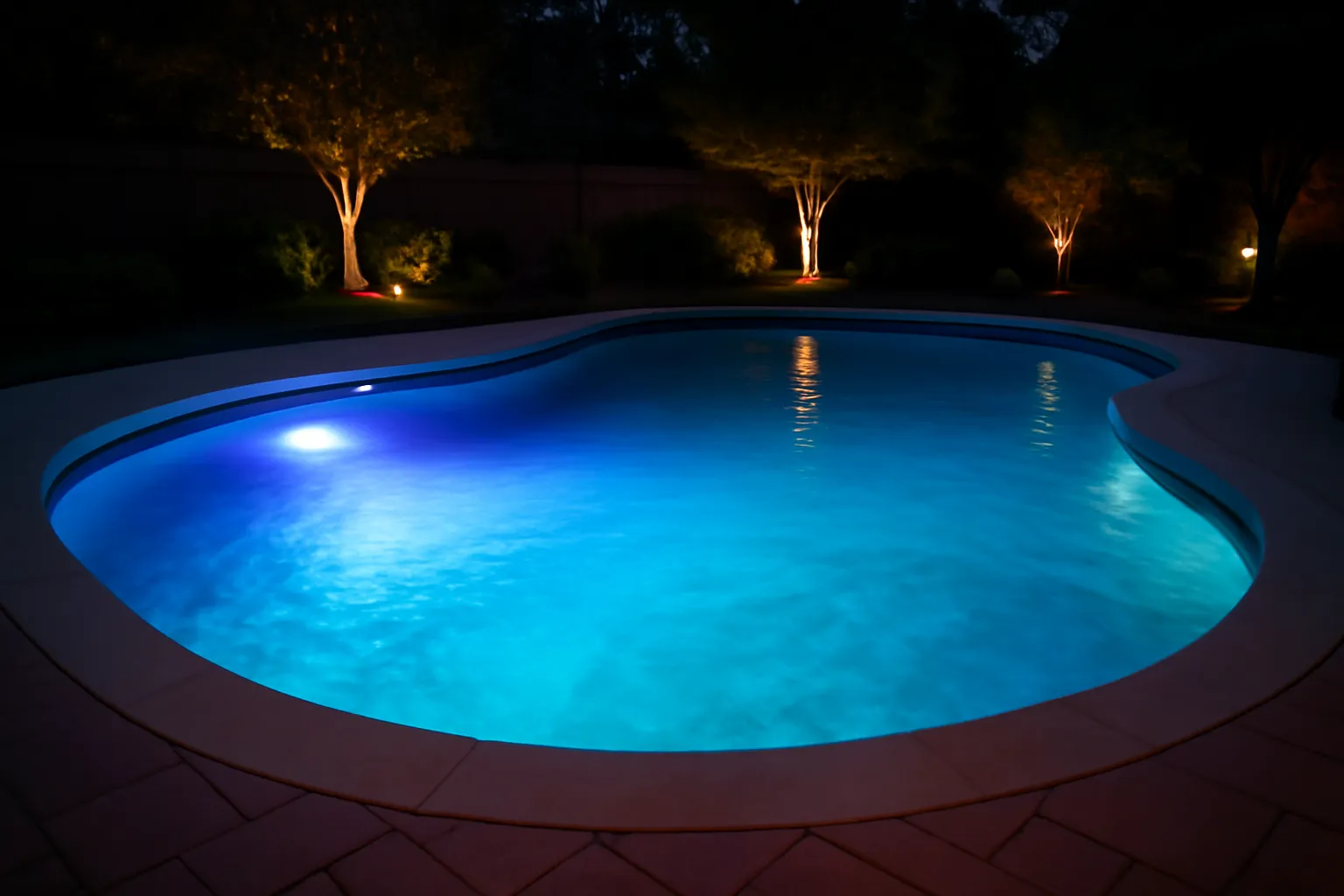
Since you’re committing to an upgrade anyway, RGB functionality is worthwhile. Color-shifting LED fixtures transform evening swims from functional illumination into an atmospheric element. Gatherings, celebrations, childhood memories in the water—the experiential gap is substantial. A wireless remote is non-negotiable; you need the ability to shift colors from poolside without sprinting to an app or wall control panel every time someone requests a different mood.
The RGB Light That Finally Made Me Stop Worrying About Fixture Compatibility
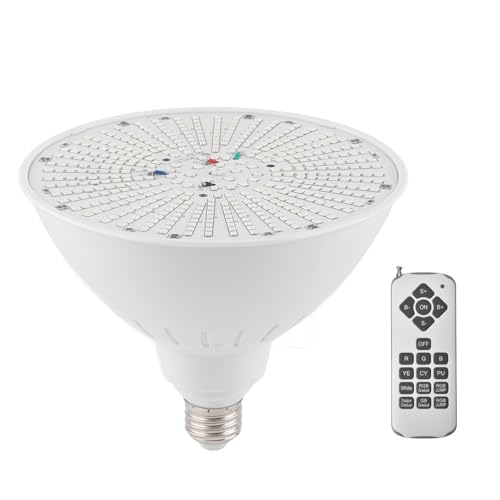
The toughest challenge in upgrading to 12V centers on sourcing a replacement bulb that integrates seamlessly into your current Pentair or Hayward fixture without a complete disassembly. This particular RGB LED bulb slots directly into the standard E26 socket and operates smoothly with conventional older housings.
What works
- Plug-and-play E26 replacement eliminates the need to reconfigure the fixture’s internal wiring—simply remove the old bulb and install the new 12V unit with full safety margins intact
- The 40W specification delivers brightness suitable for nighttime use while eliminating the thermal hazard signature associated with vintage 120V incandescent designs, particularly important in households with young swimmers
- RGB wireless remote grants you control over color selection from the deck without entering the pool area, adding a genuine quality-of-life benefit for entertaining and turning your lighting setup into something deliberate rather than “whatever the builder chose decades ago”
What doesn’t
- Installing this bulb alone cannot make your existing 120V circuit safe—you absolutely must complete the full conversion with a proper 12V transformer and low-voltage wire runs, or this upgrade fails its core purpose
- The wireless remote’s operating distance maxes out around 50 feet, acceptable for most residential backyards but insufficient if you’re attempting to manage the light from indoors
I almost talked myself out of the RGB version thinking it was overkill, but the ability to switch from white to soft blue for a late-night soak changed how often we actually use the pool at night. Pool Lights, 12V 40W RGB Color Changing Underwater LED Pool Light for Inground Pool with Remote Control, E26 Replacement Bulb Fit in for Pentair and Hayward Pool Light Fixtures (AC/DC 12 Volt)
About This Article

Written by Nadia Caldwell. Backyard pool owner and water chemistry nerd. After years of chasing down cloudy water and algae blooms on my own pool and my neighbors', I now write about pool maintenance, water treatment, and everything chlorine-related for everyday pool owners. More about this site.
Scope and limits. Nadia is a pool owner who reads chemistry, not a certified pool professional. Follow label directions on every chemical, never mix them, and use a certified pool operator for equipment and sanitizer system work.
Verify this against a primary source
Specifics change, and your situation may differ from the one described here. These are the authorities worth checking directly:
- World Health Organization — guidelines for safe recreational water environments
- Pool & Hot Tub Alliance — water chemistry and pool operation standards