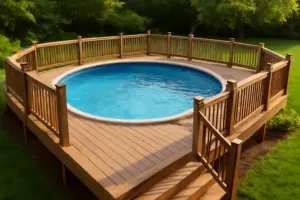
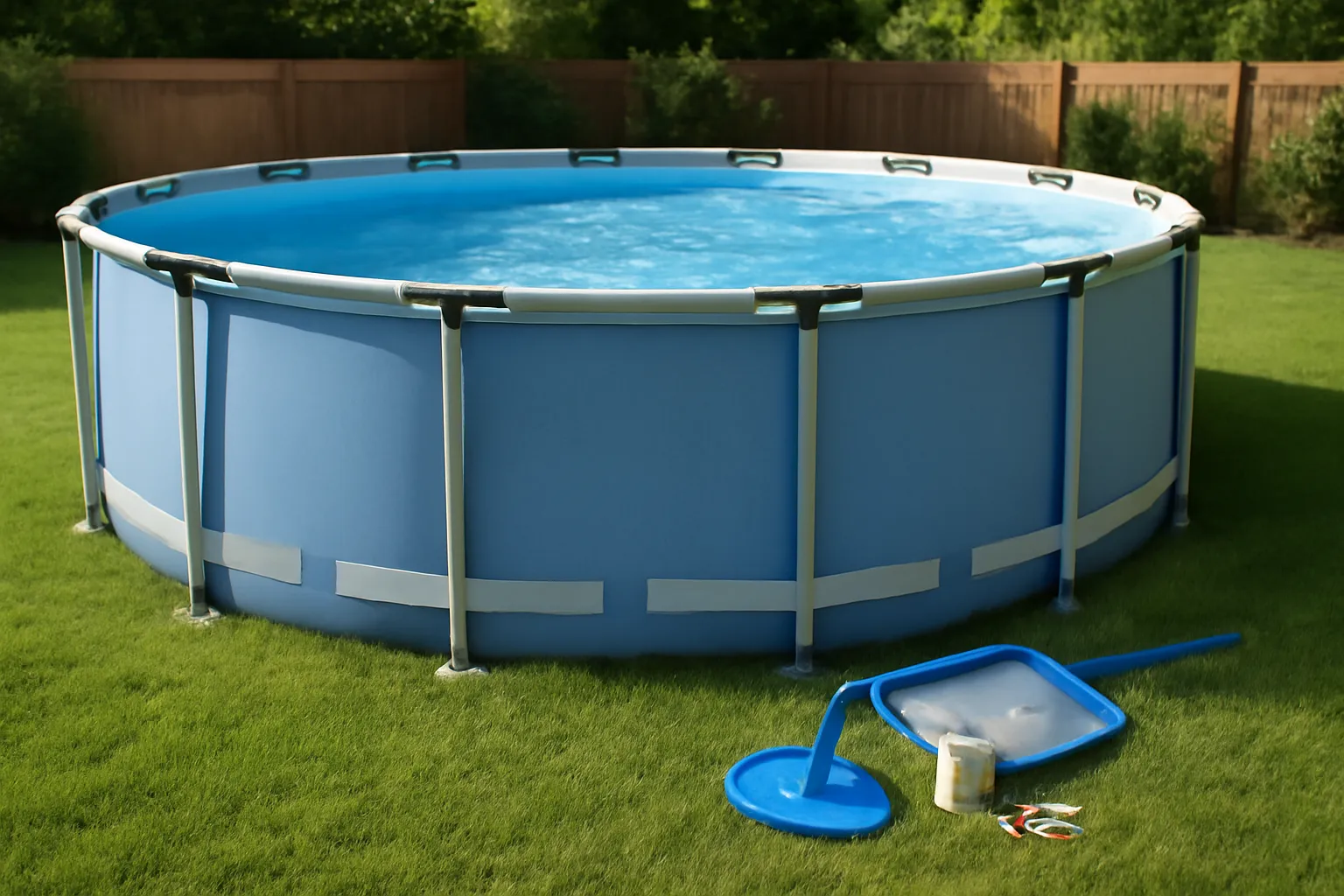
Every spring, I get some version of the same call from a homeowner who bought an above-ground pool the previous summer. The conversation usually starts with “I thought it was supposed to be easy” and ends with me talking them through a swamp-green water crisis, a liner that looks like it aged ten years in one season, or a steel frame that’s quietly turning into rust sculpture art at the base. I’ve managed pools for resorts and HOA communities across the Southwest for over a decade, and I can tell you with complete confidence: the biggest myth in backyard recreation is that above ground pool maintenance is just a smaller, simpler version of caring for an in-ground pool. It is not. The water chemistry behaves differently. The liner is fragile in ways no one warns you about. The frame has vulnerabilities that in-ground pools literally cannot have. And almost every guide you’ll find online was written with a 20,000-gallon gunite pool in mind. If you’ve been following that advice for your 5,000-gallon vinyl-sided pool, you’ve probably already paid for that mistake — or you’re about to.
Why Above-Ground Pool Problems Are Worse Than You Think
Let me put some numbers behind this. The average above-ground pool holds somewhere between 3,500 and 8,000 gallons of water. The average in-ground pool holds 15,000 to 25,000 gallons. That volume difference isn’t just a trivia fact — it fundamentally changes how water chemistry works in your pool. In a large in-ground pool, a handful of kids swimming on a hot afternoon barely registers as a chemical load. In a 5,000-gallon above-ground pool, that same afternoon can drop your free chlorine from a healthy 3 ppm down to 0.5 ppm in a matter of hours. At 0.5 ppm, you’re no longer sanitizing. Algae and bacteria don’t wait for you to notice.
This is why the “test once a week” advice you’ll see on most pool care sites is genuinely dangerous for above-ground pool owners. I recommend testing every two to three days during swim season — more often if it’s above 90°F outside or you had a pool party. High temperatures accelerate chlorine burn-off, and small water volumes mean those swings are steep and fast. Your target ranges don’t change — free chlorine at 1–3 ppm, pH between 7.4 and 7.6, total alkalinity at 80–120 ppm — but how quickly you can fall out of those ranges absolutely does.
Then there’s the liner. Vinyl liners for above-ground pools typically cost $150 to $400 to replace, and that’s before you factor in the labor headache of draining, removing, reseating, and refilling. I’ve watched homeowners shorten a liner’s lifespan from ten years down to three because of one avoidable mistake: dropping trichlor pucks directly into the pool or into a skimmer basket without a floating dispenser. Trichlor sits at a pH of around 2.8 to 3.0. When an undissolved puck rests against a vinyl liner, it bleaches and degrades the material at the contact point. That spot becomes thin, brittle, and prone to tearing. One localized chemical burn can compromise an otherwise healthy liner.
And the frame. Steel-framed above-ground pools are especially vulnerable at the base rail — the section sitting closest to the ground. Wet grass, morning dew, and irrigation spray keep that metal in a near-constant cycle of moisture exposure. Surface rust starts invisible, works its way inward, and by the time you notice orange streaking, you may already have structural compromises. I’ve seen pools with frames that looked fine from five feet away and were actually a season away from wall failure. A collapsing above-ground pool wall releases thousands of gallons of water in seconds. Beyond the obvious property damage, that’s a serious safety hazard for anyone nearby.
What to Look For in an Above-Ground Pool Maintenance Starter Kit
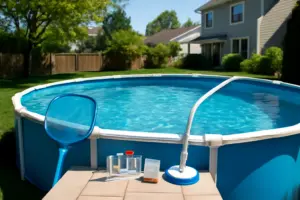
If you’re going to do above ground pool maintenance right, you need tools that are actually designed for the job — not whatever was on sale at a big-box store and marketed vaguely toward “all pools.” Here’s what matters and why.
Telescoping Pole
A good telescoping pole should extend to at least 8 feet and lock securely at each length setting. Cheap poles telescope in theory but flex badly under load, which makes vacuuming near impossible. For above-ground pools, you also want a pole that’s lightweight enough to maneuver without putting pressure on the liner walls — leaning a heavy pole against the side of an above-ground pool and pushing is a fast way to stress the wall structure.
Vacuum Head
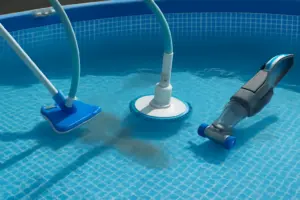
This is the detail that kills more above-ground pool liners than almost anything else: using a vacuum head with hard plastic or metal wheels. Those wheels roll directly on the liner surface and will eventually scuff, scratch, or puncture it — especially in areas where the liner has any age-related stiffness. Look for a vacuum head specifically designed for vinyl liners, ideally with soft brushes or no wheels at all.
Floating Chlorinator
As I mentioned, you should never drop trichlor pucks directly into an above-ground pool. A floating chlorinator keeps the puck suspended in the water column, disperses chlorine gradually as it circulates, and prevents any concentrated contact with the liner. This one piece of equipment alone can meaningfully extend liner life.
The Kit That Finally Stopped Me From Playing Chemistry Guessing Games
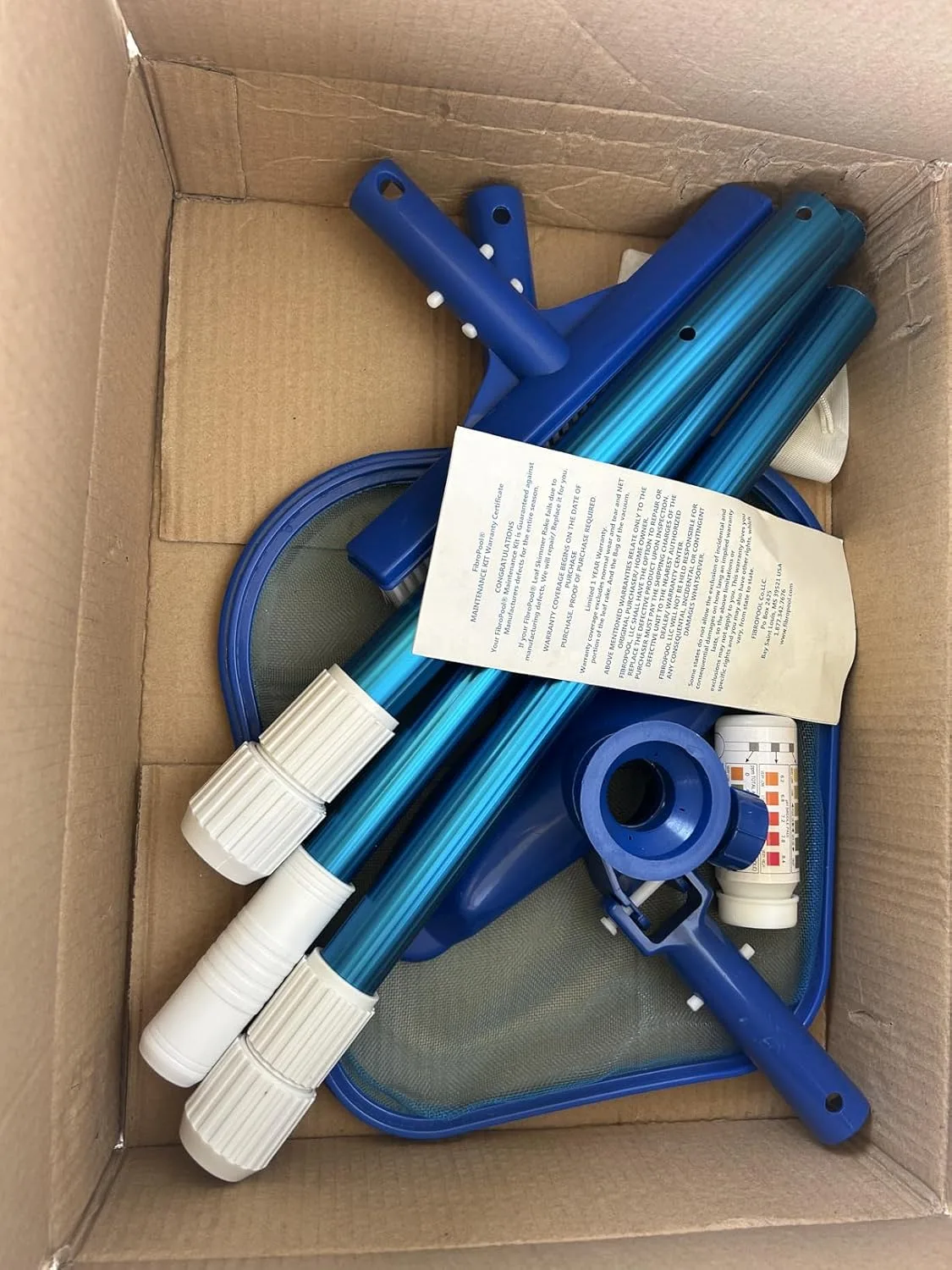
Above-ground pools demand consistent maintenance, but most new owners don’t realize how quickly chemistry spirals without the right tools. A bundled maintenance kit takes the guesswork out of testing, balancing, and treating—which is exactly what prevents that swamp-green water crisis I see every spring.
What works
- Everything you need for weekly testing and balancing comes in one place—no more buying individual bottles and forgetting which chemical does what.
- The included test strips or kit make it possible to catch pH and chlorine drift before they become liner-killing problems.
- Clear instructions mean a first-time pool owner can actually complete water maintenance in under 20 minutes instead of researching Reddit at midnight.
What doesn’t
- The chemical quantities are designed for average-sized above-ground pools; if you have an oversized model or live in extreme heat, you’ll burn through supplies faster than expected.
- Test strips aren’t as precise as liquid test kits, so if your water is already in trouble, you might need to graduate to more detailed testing.
I almost skipped buying a dedicated kit my first season, thinking I could mix and match cheaper products—then I watched my water turn cloudy in three days because I’d added chlorine without checking alkalinity first. That’s when I grabbed the FibroPool Above Ground Pool Maintenance Kit, and I’ve recommended it to every new above-ground pool owner I’ve talked to since.
This post contains affiliate links. As an Amazon Associate, I earn from qualifying purchases at no extra cost to you.