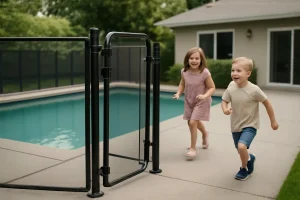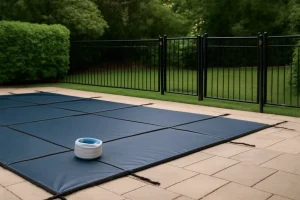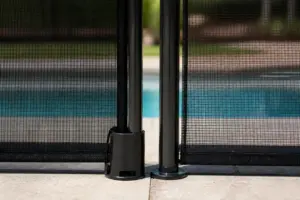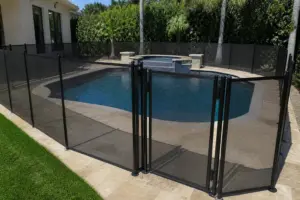
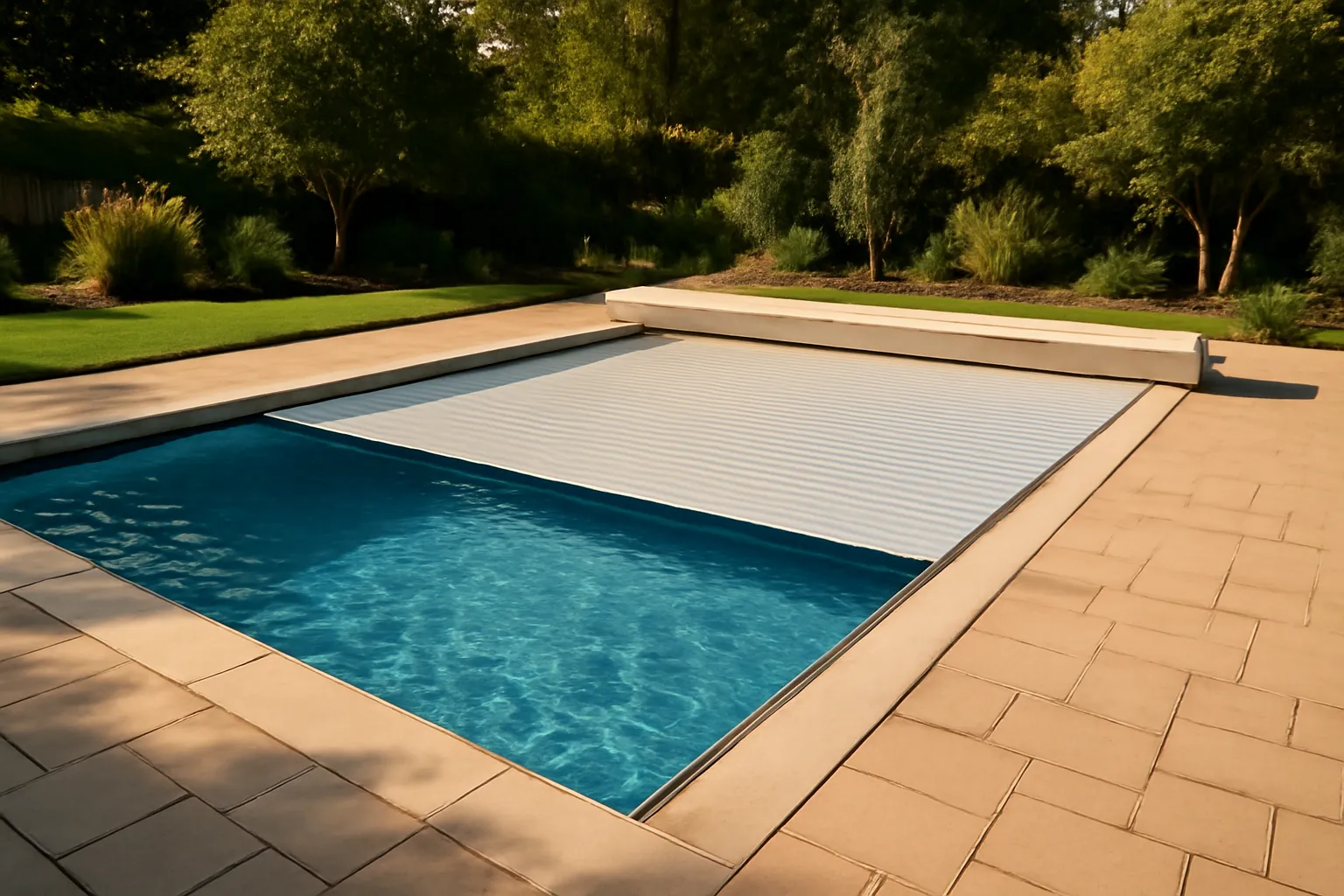
Pitch a question my way about pool covers, and odds are high it’ll sound something like this: “The cover I inherited with the property—a blue solar blanket—should handle the safety side of things, correct?” The frustration kicks in every single time, because the answer demands some patient unpacking. That floating solar cover isn’t a safety device. Not remotely. Over years of chasing water chemistry around the Southwest, I’ve watched parents confidently lay a thermal blanket across their pool and assume a toddler underneath is protected. Those children aren’t. The moment weight lands on a floating cover, it surrenders. A young child or small animal steps onto it, penetrates the surface, and goes under—cut off from air. Understanding this gap between what a thermal or decorative cover can do and what an actual safety cover accomplishes is the single most valuable lesson I can share with any residential pool operator. So let’s examine the two legitimate paths forward: motorized automatic covers or traditional manual safety covers. Each has the potential to prevent tragedy. One demands considerably more money. Understanding which fits your situation requires looking at both angles.
Why the “Any Cover Will Do” Mindset Is More Dangerous Than You Think
I’ll cut to the chase: across the entire United States, unintentional drowning remains the top cause of death for children between ages 1 and 4, according to consistent CDC documentation spanning decades. What compounds this tragedy is that a pool displaying a cover can generate false confidence in parents—and that confidence may actually be riskier than having no cover at all. A parent sees something draped across the water and mentally checks “hazard addressed” when, in reality, no actual protection exists.
The ASTM F1346 standard defines what makes a pool cover genuinely protective. Insurance companies use this certification. Municipal code enforcement references it. It’s the metric that carries real weight in legal and safety contexts. Per ASTM F1346, a safety cover must bear at least 485 pounds without allowing a child or animal to slip beneath it when weight is distributed appropriately across a defined section. You should be able to stand on it. It functions as an authentic structural barrier, not merely a thin layer covering open water.
Thermal blankets that float, decorative covers pulled on in winter, or mesh leaf strainers don’t satisfy this standard. Period.
Beyond the life-safety consideration—which is unquestionably paramount—wrong cover choices generate serious financial repercussions. The pools I’ve helped with have experienced measurable losses from inadequate or missing covers:
- Chlorine destruction from ultraviolet rays: A pool left exposed to sunlight burns through 30–50% of its chlorine supply on a single bright day. Tallied across an entire season, that translates to spending hundreds of dollars unnecessarily.
- Water disappearing through evaporation: Across the Southwest region, unshielded pools shed anywhere from ¼ inch to ½ inch of depth every 24 hours when summer peaks. On a standard 15,000-gallon pool, that amounts to losing 500–1,000 gallons weekly.
- Green water issues during closed seasons: The combination of sun exposure, residual warmth, and an unprotected surface triggers algae growth that can transform clear water to murky green by early spring. Restoring such pools has required expenditures of $400–600 for shock treatments and algae fighters, all because someone substituted a mesh leaf collector for a legitimate protective cover in the off-season.
- Filter strain from accumulated organic matter: Fallen leaves and natural debris that decompose in unprotected water elevate phosphate concentrations and overwhelm filtration systems. I’ve discovered pump intake baskets stuffed completely solid following a single windy evening with the pool uncovered.
An authentic safety cover tackles the life-safety issue while simultaneously resolving the majority of these operational challenges. This makes it one of the smartest, most cost-effective enhancements any pool proprietor can authorize.
Automatic Pool Cover vs Manual Safety Cover: A Straight-Shooting Comparison
Two categories of ASTM-certified covers exist, and the differences separating them touch on practicality, price, and your willingness to commit effort long-term. I walk through this side-by-side breakdown with property owners I meet fairly regularly, and here’s the framework I use when we’re discussing options at the pool’s edge.
Manual Safety Covers
A manual safety cover consists of tough material—either woven mesh or solid vinyl—that stretches taut across your pool and secures to the deck boundary using spring-loaded anchoring rods that slot into brass fixtures cemented into your concrete or stone decking. When correctly fitted and pulled tight, the fabric holds up under the load of a full-grown person. It qualifies as a true protective mechanism.
The mesh-versus-solid question: Your first choice within the manual realm involves selecting between these two fabric types. Mesh material permits water from rain or melted snow to flow straight through the weave, so standing water buildup never becomes an issue. Solid covers provide total light blockage—significantly superior for halting algae development when pools are shuttered—but they demand a motorized pump to extract water that pools on the surface; without it, the weight of accumulated water places stress on anchor hardware and itself becomes a safety concern.
In my experience working across Southwest properties, mesh covers work best for winter deployment because our precipitation pattern is scattered throughout the season, and the drainage advantage outweighs the modest algae possibility—provided your chemistry is dialed in when you close the facility. Solid covers earn preference in regions experiencing sustained wet seasons where year-round algae suppression matters more.
What you’ll pay: Budget somewhere between $1,200 and $3,500 based on your pool’s dimensions and the grade of fabric selected. Installing the anchor hardware is a single one-time installation task most homeowners tackle independently over roughly 2–4 hours using a rotary drill. Rolling the cover on and off requires perhaps 10–20 minutes with assistance from another person.
How long it lasts: Premium mesh safety covers typically remain serviceable for 10–15 years, delivering remarkable long-term value for your dollars spent.
Automatic Safety Covers
Motorized track-and-reel setups form the backbone of automatic covers, with vinyl sheeting wound onto a powered mechanism positioned alongside your pool’s perimeter. Switch on the control, and the material unfurls across the entire water surface within roughly 30 seconds—accomplished by a solitary individual requiring minimal physical strain. For pools that can support the linear track configuration this system needs, nothing beats the convenience of this approach.
What you’ll pay: Expect an investment ranging from $8,000 up to $20,000 for complete installation, with brand-new pool installations toward the lower threshold and retrofitting existing facilities toward the upper. Vinyl replacement occurs every 5–7 years at approximately $2,000–$4,000 per replacement. Regular servicing of mechanical components typically runs between $200–$500 annually.
Where it falls short: Debris lodged in track channels causes jamming. Electrical components wear out. Geometric constraints make retrofitting on curved, kidney-shaped, or non-rectangular pools impossible. And unlike a manual system where you handle your own repairs, mechanical failure requires calling a repair specialist, bringing labor costs into play.
My candid perspective: Assuming you have the capital available and your pool geometry suits the linear track design, an automatic cover represents the superior single investment option for any homeowner. The convenience aspect creates a behavioral incentive—you’ll deploy it on a daily basis rather than reserving it for season-end shutdown. Daily deployment translates to concrete advantages: chlorine consumption can drop by 30–40%, heat dissipation decreases by as much as 70%, and you essentially eliminate debris entering the water. Still, the $10,000–$15,000 price difference between an automatic installation and a manual cover presents a genuine financial obstacle for most of the property managers and owners I consult with; when that gap is insurmountable, a mesh safety cover delivers equivalent protective effectiveness without the premium expense.
The Anchor System That Finally Kept My Safety Cover From Shifting Mid-Season
Your safety cover’s performance hinges entirely on how securely the anchoring hardware holds it in position—and I discovered this reality through trial and error when environmental factors and foundation movement turned what should have been stable coverage into a drooping, gapped-up mess partway through the year. Absent robust brass fixtures that maintain their grip on concrete and decorative stone pavers, even a premium-grade cover will wrinkle, migrate, and generate openings that render the whole system pointless.
What works
- Brass material withstands oxidation significantly better than ferrous metals, preventing corrosion and structural weakening through repeated monsoon cycles typical of Southwest climates.
- The expanding anchor design creates a firm hold on both smooth concrete surfaces and textured pavers alike, eliminating uncertainty about whether you’re using the appropriate fastener style for your specific deck composition.
- A ten-anchor bundle covers most typical residential installations without requiring you to purchase additional packs, and sourcing replacement anchors becomes simple if one eventually fails due to wear.
What doesn’t
- Setting the anchors properly requires power-tool work and careful attention to detail—this isn’t accomplished in mere minutes, and skipping steps during setup undermines everything you’re trying to accomplish.
- These are mounting hardware only; you must separately purchase an ASTM-compliant safety cover matched to your pool’s tonnage limits and dimensions, so treat this as a standalone expense in your budget.
I’ll admit I almost skipped the anchor upgrade after my first cover installation, thinking the basic straps would hold through off-season. One windy week later, I was re-tensioning the cover and seeing water pooling in the sagging center — that’s when I realized a safety cover with weak anchors is worse than no cover at all, because it creates a false sense of security. Poolzilla Pool Safety Cover Brass Anchors for Concrete and Pavers — 10 Pack solved that problem and gave me one less thing to worry about each season.
About This Article
Written by Nadia Caldwell. Backyard pool owner and water chemistry nerd. After years of chasing down cloudy water and algae blooms on my own pool and my neighbors', I now write about pool maintenance, water treatment, and everything chlorine-related for everyday pool owners. More about this site.
Scope and limits. Nadia is a pool owner who reads chemistry, not a certified pool professional. Follow label directions on every chemical, never mix them, and use a certified pool operator for equipment and sanitizer system work.
Verify this against a primary source
Specifics change, and your situation may differ from the one described here. These are the authorities worth checking directly:
- World Health Organization — guidelines for safe recreational water environments
- Pool & Hot Tub Alliance — water chemistry and pool operation standards