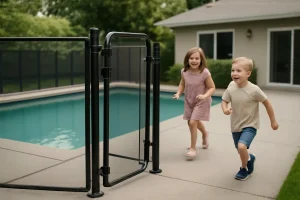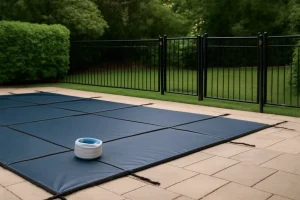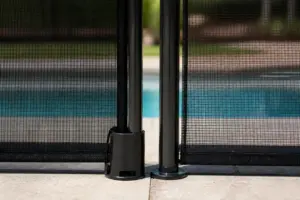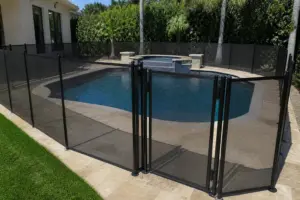
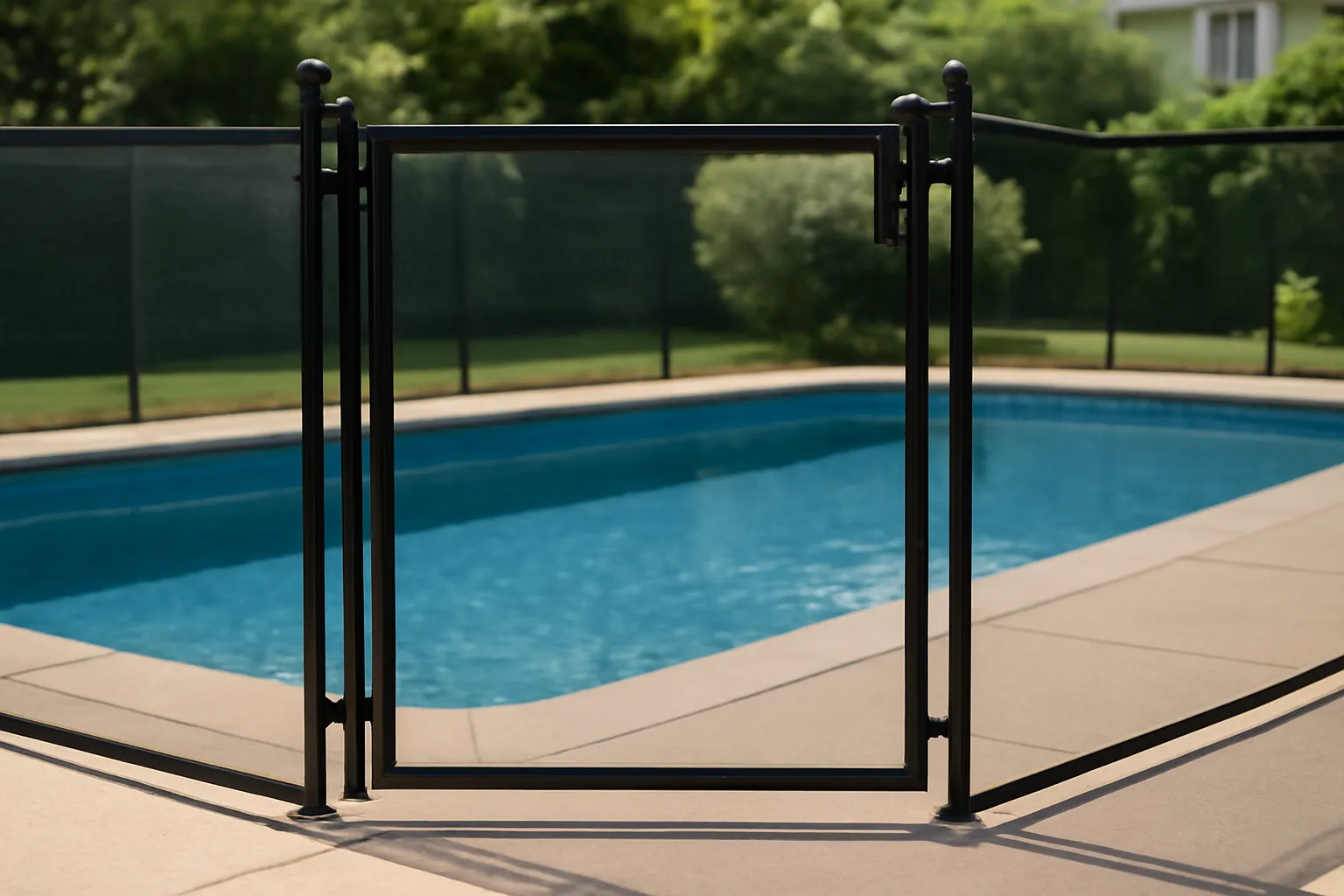
Dose 20 ppm of calcium hypochlorite shock at a CYA level of 50 ppm, and you’re managing chemistry. Install a gate that doesn’t self-latch, and you’re gambling with a child’s life. Over the past fifteen years I’ve chased water chemistry on my own pool and plenty of others. It boils down to variations on this anxious question: “My grandson will be here in a few days. How do I make sure he stays safe around the water?” What they’re really expressing — what keeps them up at night — is the knowledge that every sliding door, every gate latch, every gap in the perimeter is a vulnerability. They understand that a toddler can move with startling speed. They understand that catastrophe takes seconds, sometimes less. I’ve fitted countless properties with diy pool baby gate systems, and I’ve stood poolside with that same tight feeling in my chest watching a small child near open water without proper barriers in place. If you’re facing this same situation, this piece is written for you. Let’s walk through the absolute cornerstone of pool safety — it’s not the fence itself, not an alarm system, it’s the gate mechanism �� and how to get it installed so it actually works when it matters.
The Reality of How Quickly This Becomes Tragedy
Consider this statistic until it sits with you: drowning ranks as the leading cause of accidental death among children ages 1 to 4 across the United States. It outpaces vehicle accidents. It outpaces falls. It outpaces everything else. And here’s the fact that troubles water safety professionals most deeply — the vast majority of child drowning incidents in residential settings occur in the family’s own pool, and the tragedy unfolds during what felt like continuous watching that was interrupted for just a moment. A text message arrives. Another child needs something. You step inside for thirty seconds. The mathematics of tragedy are brutally unforgiving.
What makes this a technical safety problem — not just an emotional one — is how toddlers, especially those between 12 and 36 months old, relate to water. There is no risk calculation happening in their minds. There is no hesitation. A child in that age range can reach the deck’s edge and slip into the water before an adult standing thirty feet away registers that movement has happened. The timeline is that compressed.
My field experience reveals something most property owners never confront directly: a fence, standing alone, doesn’t cut it. A fence with a gate propped open, a gate that doesn’t catch securely, or a gate constructed to swing inward toward the pool is barely safer than no gate whatsoever. I’ve walked through neighborhoods where someone used a rock to wedge a pool gate open “just while we’re using it.” I’ve documented gates where the latch hardware sat at waist height — well within the operational range of an inquisitive five-year-old. I’ve seen installations featuring decorative vertical railings that serve as a climbing apparatus for any determined young climber.
According to the Consumer Product Safety Commission, installation of proper four-sided pool fencing paired with a code-meeting, self-latching gate system could avert approximately 50 to 90 percent of residential drowning deaths in swimming pools. That’s not a marginal safety gain. That’s a dramatic intervention. The gate represents the failure point in any barrier system — and it’s where most homeowners scrimp on quality or install without rigor. Making the gate installation airtight matters profoundly.
Understanding Code Requirements for a Genuinely Safe Gate
Before diving into specific gate designs and mechanical components, we need to pin down what “code-compliant” actually means in practice — because the phrase “self closing pool gate for toddlers” gets marketed casually, and many products bearing that label don’t satisfy the actual standard. The majority of municipalities adopt ASTM F1346, the Standard Performance Specification for Safety Covers and Labeling Requirements for All Covers for Swimming Pools. These are the mandatory characteristics a compliant gate must possess:
- Self-closing action: The gate must return to fully closed position automatically from any degree of opening — even when barely pushed ajar. A gate that self-closes only when opened substantially doesn’t meet the requirement.
- Self-latching mechanism: Latch engagement must happen automatically, requiring zero manual intervention. When a gate closes but demands a person to lean back and engage the latch by hand, it’s not truly self-latching by any safety standard.
- Latch positioned at least 54 inches high: The catching mechanism must be positioned so children cannot access it. A latch sitting at 40 inches is within the reach of a determined three-year-old pushing a toy to gain height.
- Swings outward from the pool: When a child presses against the pool-facing surface, the gate should not open. The structure must pivot away from the water entirely.
- Absence of climbing or grasping features: Horizontal bars, ornamental cross-pieces, or any structural ledges a child could scale. This eliminates decorative wrought-iron designs commonly sold at mass-market retailers.
Reach out to your local building authority ahead of any installation. Certain states — Arizona, Florida, California, and Texas included — operate under their own pool barrier mandates extending past ASTM F1346 standards. Some counties demand a building permit even for removable fencing systems with gates. A $50 permit fee buys you inspector verification that everything is done to code.
Pool Gate Designs Available for DIY Installation
Mesh Removable System Gates
These pair with removable mesh barrier systems you’ve observed at high-end resorts and established HOA properties. Each gate component uses the identical mesh material with an engineered self-closing hinge and a catch mechanism that works magnetically or by gravity. The installation process leans heavily toward the DIY end of the spectrum — fence posts slip into cavities cut into your deck surface, eliminating the need for concrete work. Typical gate pricing falls between $150–$300, while a complete fence perimeter system ranges from $1,200–$2,500 based on total linear distance. This approach works best if you want to take down the entire structure when family gatherings occur and active grown-up supervision is happening.
Aluminum Fence Gates
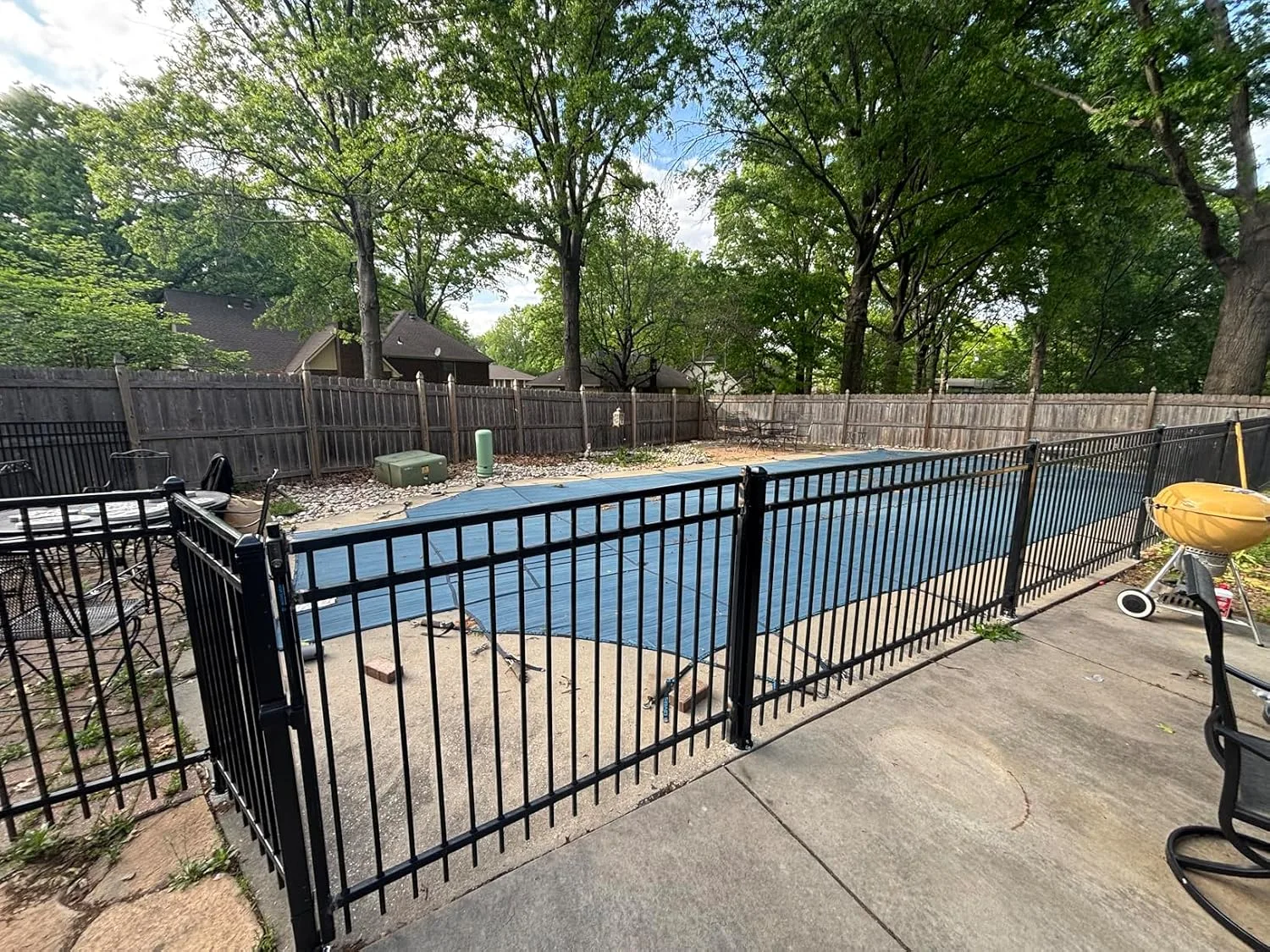
These pair with permanent aluminum barrier installations and represent the default selection among homeowners preferring something that reads as permanent instead of provisional. Self-closing hinges come integrated into the design, and the catch mechanism — often a MagnaLatch or keyed release — sits mounted at the top of the structure. Getting this installed means anchoring posts using concrete, which demands real effort — plan a full afternoon and source quality post-setting material. Gate pricing: $200–$500 per unit.
Glass Panel Gates
The top-tier selection. Frameless tempered glass fitted with spring-tension hinges and a top-positioned magnetic catch. Appearance-wise, these are striking alongside contemporary pools, and functionally they’re uncompromising — glass provides no climbing surface and gives small hands nothing to grip. The expense is the downside ($400–$800 for a single gate) plus the installation demands precision. Glass panel gates demand absolutely plumb posts and exacting hinge setup. Miss the vertical by even a degree or two and self-closing function suffers. Unless you’re completely confident about your post installation abilities, outsource this one.
Swing Gates Secured to Deck
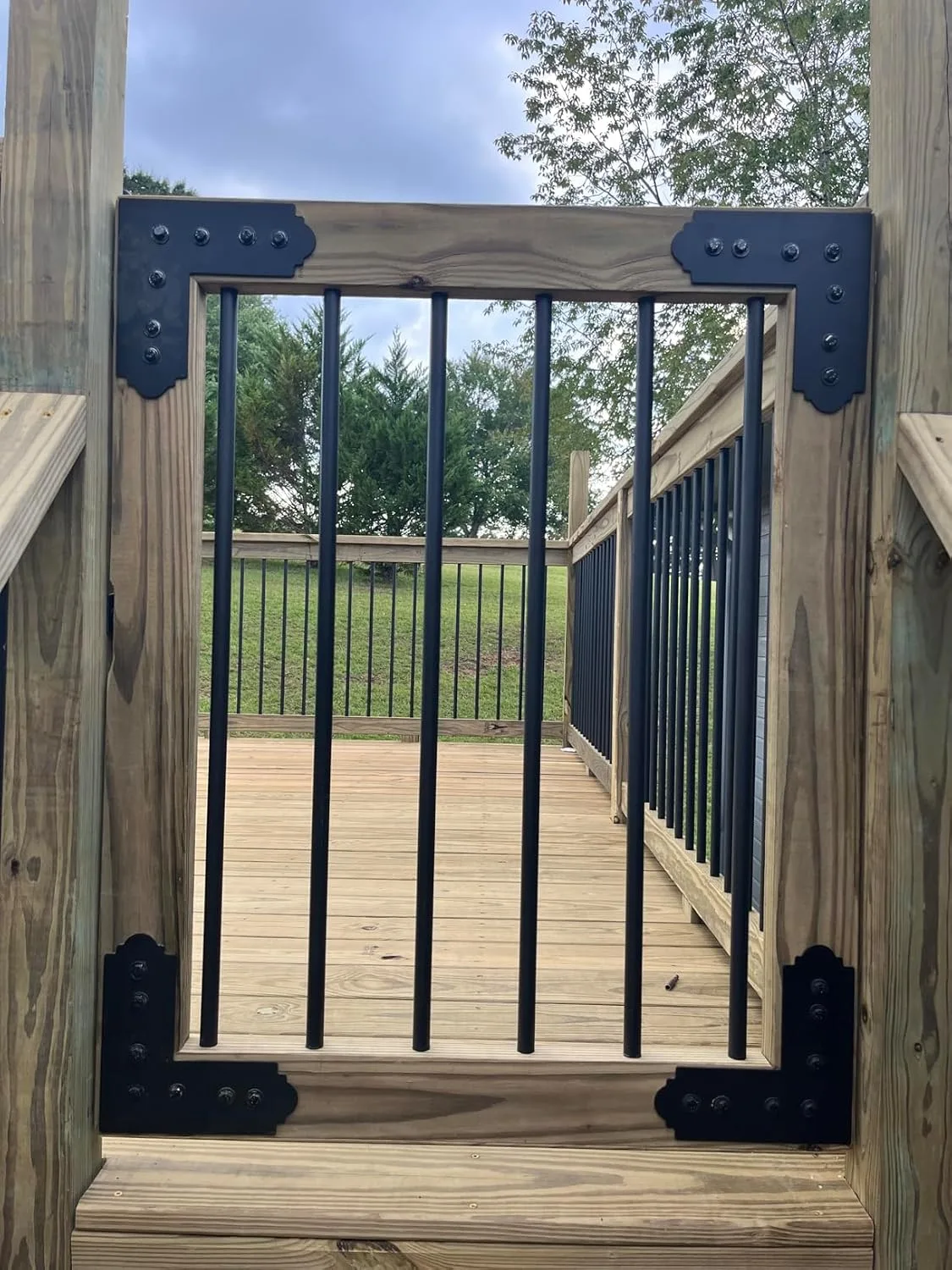
This option applies most directly to the baby proof pool gate installation situation where the pool deck is already partially secured — perhaps a structure wall on one side, perimeter barriers on two sides — and only one passage route like a deck opening or narrow space between structures requires gating off. The gate hardware bolts straight to the existing structure or to deck surfaces without need for independent posts. This configuration is precisely where the D&D Technologies hardware kit demonstrates its greatest utility and best performance.
Hardware That Transformed My Confidence Around Young Visitors
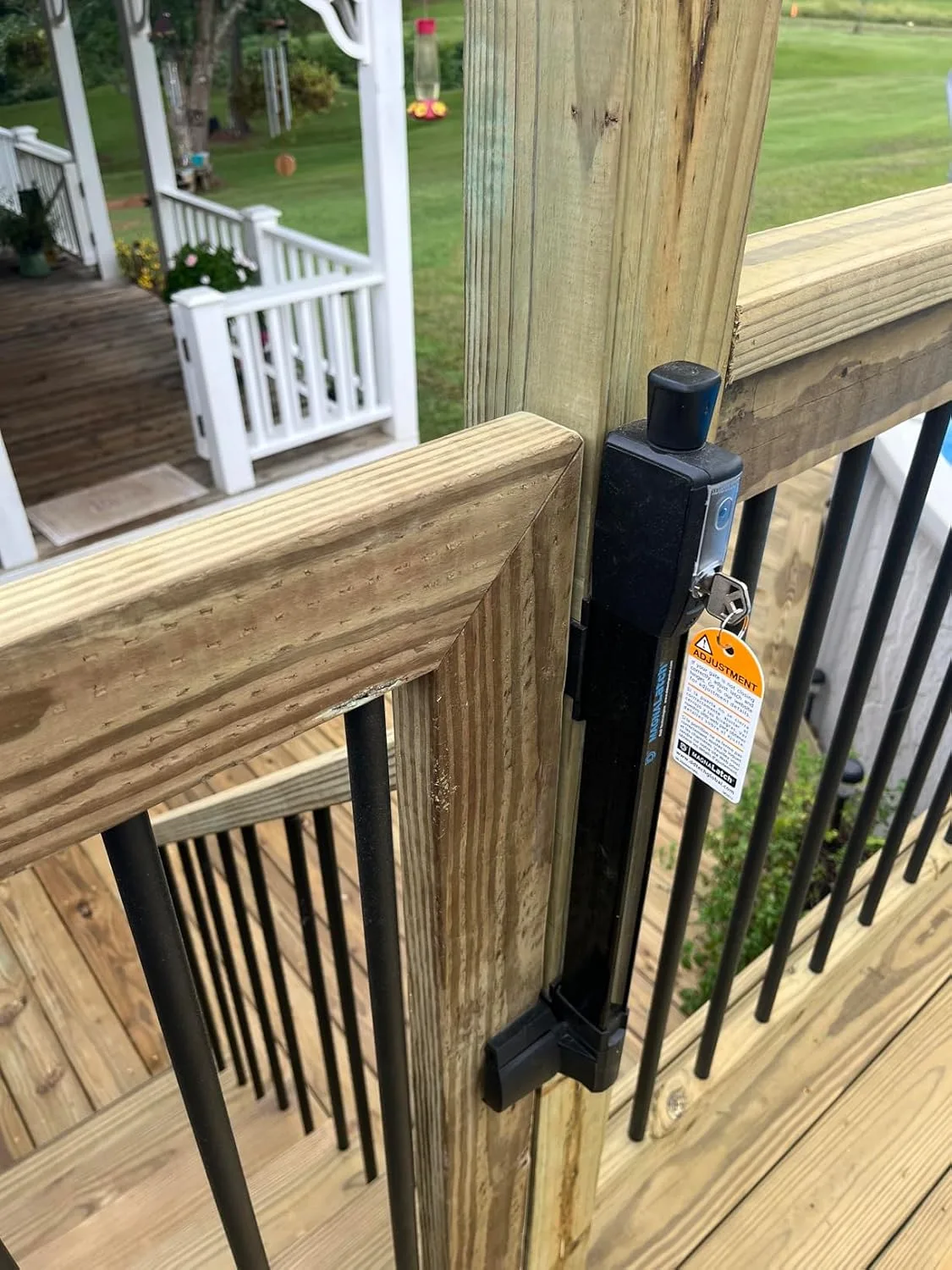
Proper gate hardware implementation means converting an anxious pool space into somewhere you can actually breathe around young visitors. The MagnaLatch mechanism gives you mechanical reliability that operates the way you actually need it to — consistently, mechanically, without exception.
Where it performs
- TruClose spring hinges perform the closing action on their own — pushing the gate shut doesn’t require extra force, and you’re never left questioning whether closure was complete.
- The MagnaLatch top-mounted catch operates beyond toddler capability; the mechanical action resists small fingers in ways a lever never could, and engagement is flush without dangerous gaps for pinching.
- The spacing correction kit solves the standard 2-inch clearance issue that appears in most commercial frames — you’re working within specification, not inventing workarounds.
Where it shows limitations
- The installation process demands drilling and fastening to your current structure; if your living situation is temporary or you need to leave everything unchanged, this kit demands commitment.
- This kit handles the mechanical layer only — you must provide or construct the actual gate structure itself — this isn’t an all-in-one gate assembly kit.
I’ll admit: I second-guessed the installation cost and complexity the first time I priced it out, wondering if a simpler latch would do. But once I watched that gate close and latch itself after my neighbor’s son ran through, I understood why this hardware costs what it does. If you’re serious about pool safety and toddler visits, grab the D&D Technologies MLTPTCA1CAPSPKA Pool Safety Gate Hardware Kit with MagnaLatch Top Pull 20-inch Gate Latch, Self-Closing TruClose Hinges and Safety Cap for Child Protection & Spacer for 2″ Gate Gaps.
About This Article

Written by Nadia Caldwell. Backyard pool owner and water chemistry nerd. After years of chasing down cloudy water and algae blooms on my own pool and my neighbors', I now write about pool maintenance, water treatment, and everything chlorine-related for everyday pool owners. More about this site.
Scope and limits. Nadia is a pool owner who reads chemistry, not a certified pool professional. Follow label directions on every chemical, never mix them, and use a certified pool operator for equipment and sanitizer system work.
Verify this against a primary source
Specifics change, and your situation may differ from the one described here. These are the authorities worth checking directly:
- World Health Organization — guidelines for safe recreational water environments
- Pool & Hot Tub Alliance — water chemistry and pool operation standards