It’s Wednesday, and the water still looks brilliant — until you notice them. Three palm fronds clustered near the deep end, maybe a scatter of dirt. Two minutes with the wrong equipment turns into thirty. You weigh the options: hunt down the skimmer basket, thread the vacuum hose, bleed air from the line while your socks get soaked, run the pump for a few seconds, then disassemble the whole rig. Or just leave it. Across my years of looking after my own pool and helping out with friends’ and relatives’ pools in Arizona, Nevada, and Utah, I’ve watched this exact standoff play out dozens of times — including with the people who did the work on those pools. What should take 120 seconds consumes half an hour in setup and teardown. Most people skip it. They pencil it in for next week’s full vacuum cycle. That’s precisely when the damage accelerates.
Why Skipping Small Messes Is Worse Than You Think
The convenience argument for postponing spot cleaning makes sense on the surface. But I’ve documented what actually happens on pools where minor debris removal gets deferred repeatedly — and the outcomes aren’t minor at all.
First comes the staining cascade. Leaves, sediment, and spore matter resting directly against plaster or vinyl will begin etching permanent discoloration within 24 to 48 hours, particularly when water temps exceed 80°F — which describes basically every summer day in the Southwest. Removing those marks requires enzyme treatments, sometimes ascorbic acid applications, and occasionally paid professional restoration running anywhere from $150–$300 based on how deep the damage goes. That little handful of debris just multiplied in cost.
Then there’s the chlorine depletion effect. Decomposing plant material and organic particles chew through available free chlorine ferociously. A few wet fronds sitting stationary can tank your chlorine reading from a solid 3.0 ppm down to 1.0 ppm or less over 24 hours when outside temps are warm, contingent on your CYA concentration and UV exposure. That dip creates opportunity for algae colonization — and once algae takes hold, you’re dosing 2–4 gallons of liquid chlorine or several pounds of dry chlorine, plus vigorous brushing, extended filtration cycles, and repeated water testing across multiple days. What could have been a $30–$60 prevention cost becomes a $200+ remediation project because you ignored a debris pile for a week.
Third, there’s the toll on your filtration system. Material accumulating on the floor or drifting toward return lines gets pulled through your sand filter or cartridge system repeatedly, accelerating filter clogging. Backwashing frequency climbs, consuming 200–300 gallons per cycle, and your equipment ages faster overall due to the added strain.
The financial equation is straightforward: two minutes of cleanup now against a potential $50–$300 expense later. The barrier isn’t logic — it’s friction. Eliminate the setup hassle, and people actually perform the cleaning. That’s precisely what a quality cordless handheld pool vacuum delivers.
What to Look For in a Handheld Rechargeable Pool Vacuum
Battery-operated handheld pool vacuums vary dramatically in their actual usefulness, and I’ve evaluated enough models across commercial and residential installations to recognize which ones genuinely earn their shelf space versus which ones get abandoned after the second use. Here’s what genuinely separates capable equipment from the rest.
Suction Power — The Spec That Actually Matters
Surface-level debris is trivial to handle. Nearly any motorized unit can extract a drowned insect from the water’s edge. The authentic capability test is extracting compacted sand, clay particles, and small gravel from the floor itself. Seek out units delivering 15 gallons per minute or beyond for meaningful bottom-surface capability. Drop below that number, and you’ll find yourself stirring particles up rather than capturing them, particularly on rough plaster finishes.
Battery Life and Runtime
Solid handheld units typically deliver 45 to 90 minutes of operation between charges. For targeted debris removal, that window far exceeds what you’ll actually consume — your sessions will rarely stretch beyond 5–10 minutes. Battery becomes a real consideration only when you’re attempting to deploy one of these tools as your main vacuuming solution for smaller pools. It’s achievable, but recognize the limits: with 60 minutes available, you can work through a 12×24 above-ground pool methodically. Anything considerably larger, and this functions as an auxiliary device paired with your primary system.
Filter Type — Reusable Mesh Beats Disposable Every Time
Throwaway filter cartridges create an illusion of simplicity until you’re cycling through new ones weekly and burning through $15–$20 monthly in replacement costs. Mesh filter bags designed for rinsing and reinstallation offer far better long-term economics and environmental impact. Choose one featuring dense mesh weave that captures sand particles while maintaining adequate flow rates.
Reach and Ergonomics
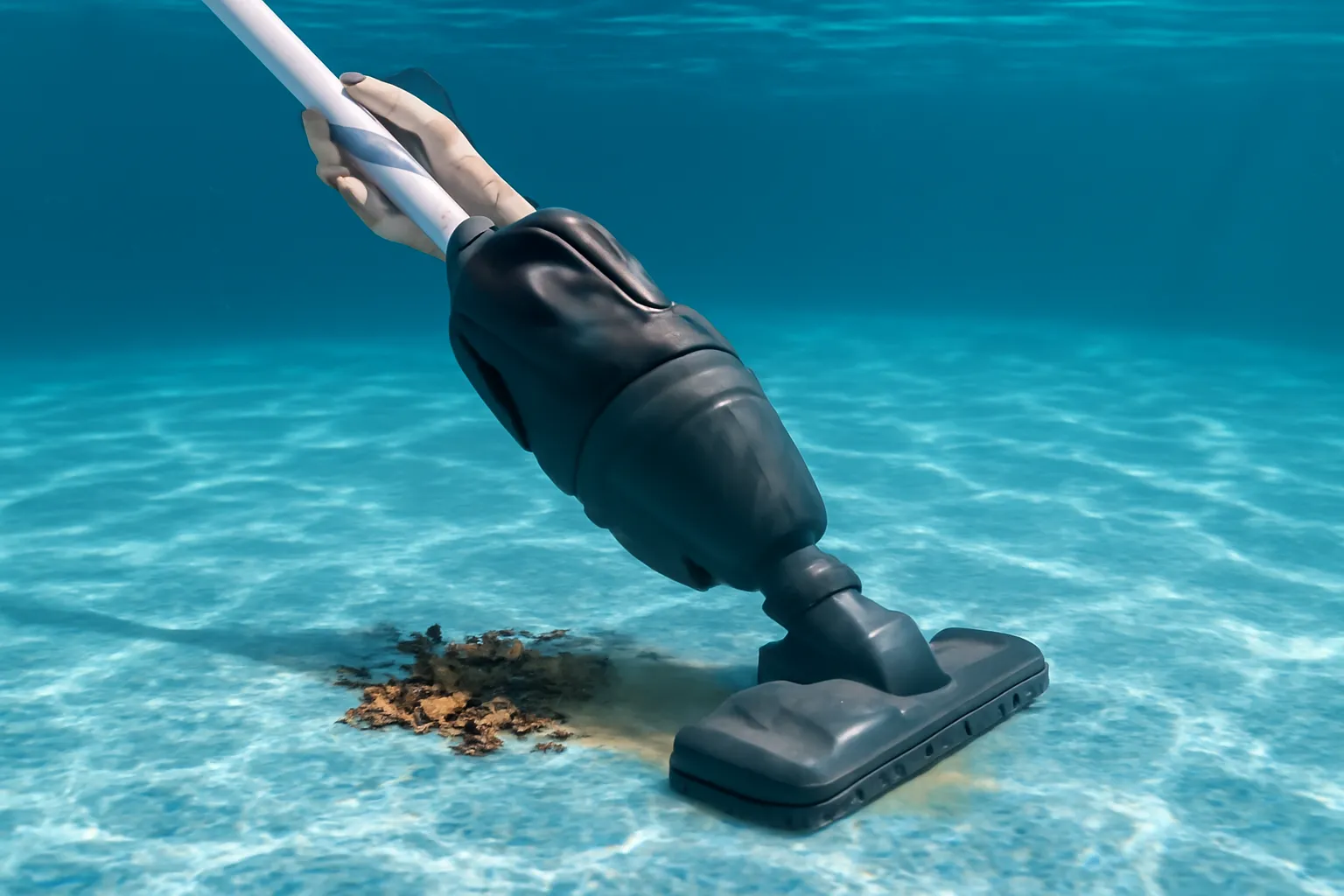
Three primary designs dominate the market: compact trigger-grip units (ideal for accessing steps, crevices, and corners), elongated pole-style wands (suited for methodical floor sweeping), and moderately-sized cordless vacuums equipped with adjustable poles that grant access to the deepest sections without requiring you to enter the water. That final category represents where I consistently direct pool owners toward recommendations when they’re seeking genuine multi-purpose capability.
The Vacuum That Actually Fits Before the Staining Starts
Small debris accumulations don’t stay small. That pile sits untouched another day, becomes tomorrow’s permanent mark, and suddenly you’re confronting plaster deterioration that demands substantial repair expenditure. The debris itself isn’t the real issue — the issue is that most pool owners lack a vacuum solution that’s fast and accessible enough to deploy for those quick intervention windows.
What works
- Adjustable poles deploy and retract swiftly enough that you can genuinely handle five-minute cleanups without the entire operation feeling tedious and burdensome
- Small footprint positions it in a visible poolside location or storage corner instead of getting buried beneath yard tools, ensuring genuine availability when you detect unwanted material
- Handles above-ground pools where people ordinarily overlook serious maintenance instruments, stopping issues from developing into wall and floor complications
What doesn’t
- Manual debris bag emptying falls entirely on you — no self-clearing technology exists, placing the onus of commitment on your shoulders for those quick maintenance sessions
- Tiny suspended particles can escape filtration if your basket doesn’t get inspected consistently, potentially requiring increased backwash frequency than anticipated
I’ll be honest: the first time I used one of these on my own pool, I almost talked myself out of it because dragging anything out still felt like overkill for “just a couple leaves.” But that’s the exact moment the staining actually happens—when you wait one more day to decide it’s “worth it.” Grab the Pool Vacuum for Above Ground Pool with Telescopic Pole (PC10) and stop letting small messes turn into real problems.
About This Article
Written by Nadia Caldwell. Backyard pool owner and water chemistry nerd. After years of chasing down cloudy water and algae blooms on my own pool and my neighbors', I now write about pool maintenance, water treatment, and everything chlorine-related for everyday pool owners. More about this site.
Scope and limits. Nadia is a pool owner who reads chemistry, not a certified pool professional. Follow label directions on every chemical, never mix them, and use a certified pool operator for equipment and sanitizer system work.
Verify this against a primary source
Specifics change, and your situation may differ from the one described here. These are the authorities worth checking directly:
- World Health Organization — guidelines for safe recreational water environments
- Pool & Hot Tub Alliance — water chemistry and pool operation standards