It was a Tuesday morning in October at a 48-unit HOA community I managed in Scottsdale — three mature sycamores hanging directly over the pool deck, dropping leaves like they had a personal vendetta against my pump basket. I had cleaned the skimmer basket at 7 a.m. By 9:30, the pump was cavitating. By noon, I’d made four trips poolside and the homeowners were already texting me. Sound familiar? If you’ve ever dealt with a pool surrounded by mature trees in the fall, you already know the misery I’m describing. The standard skimmer basket simply was not designed to handle that volume of debris. And if you’re running a suction-side cleaner on top of it, you’re basically asking your pump to sip water through a clogged straw. That’s exactly the problem a pool leaf canister inline skimmer was built to solve — and once I started using one consistently on high-debris pools, I genuinely don’t know how I managed without it.
Why This Problem Is Worse Than You Think
I’ve talked to a lot of pool owners who treat a clogged skimmer basket as a minor annoyance — something to deal with when they get around to it. After years of managing resort and HOA pools in the desert Southwest, I can tell you it’s anything but minor. Let me walk you through what’s actually happening when that basket fills up and you don’t catch it in time.
First, there’s the pump. When your skimmer basket fills with leaves, water flow to the pump drops. When flow drops below a critical threshold, the pump starts pulling air instead of water — a condition called cavitation. Cavitation creates destructive pressure fluctuations inside the pump housing that, over time, damage the impeller, the seal, and the volute. A quality pool pump costs anywhere from $400 to $900 installed. I’ve seen pumps fail before their fifth season simply because they spent too many fall days running dry. That’s an expensive price to pay for not emptying a basket.
Second, there’s your water chemistry. Decomposing leaves release tannins and organic compounds into the water that chew through your free chlorine fast. A pool that normally holds a steady 2–3 ppm of free chlorine can drop below 1 ppm within 24 hours of a heavy leaf fall if you’re not compensating. Below 1 ppm, you’re creating conditions where algae can establish a foothold in as little as 48 hours at water temperatures above 70°F. Suddenly you’re not just dealing with leaves — you’re dealing with a green pool that needs shocking, clarifiers, and possibly an algaecide treatment. That’s an extra $50–$100 in chemicals and a week of remediation.
Third, there’s your time. Let’s be real: walking out to clean a basket four or five times a day is not why you bought a pool. At five minutes per trip — disconnect the cleaner hose, lift the skimmer lid, pull the basket, dump it, rinse it, replace it, reattach — that’s 20 to 25 minutes a day, every day, for the six to eight weeks of peak fall season. That adds up to somewhere between 10 and 14 hours of your life spent cleaning a basket. Or, you could use a pool leaf trap canister and cut that number down dramatically. The math isn’t complicated.
What to Look For in a Pool Leaf Canister Inline Skimmer
Not all inline leaf canisters are created equal. I’ve tested several over the years on commercial pools, and there are a few key features that separate the products worth buying from the ones that end up in a storage cabinet after one season.
Capacity
This is the whole point of the device, so don’t compromise here. A quality inline leaf catcher pool pump canister should hold three to five times the debris volume of a standard skimmer basket. Look for a large-diameter housing — at least 6 inches — with a generous mesh bag that can expand to hold a meaningful load of wet leaves. Wet leaves are heavy and compress easily; a small bag fills up just as fast as your skimmer basket.
Mesh Bag vs. Hard Basket
Some canisters use a rigid plastic basket; others use a mesh bag. For leaf volume, I strongly prefer a mesh bag. It allows water to pass through with less restriction even as it fills, and it’s far easier to empty — you just pull the bag out, invert it over the trash, and you’re done. Hard baskets have more rigid openings that can get clogged with leaf stems and smaller debris that’s harder to rinse out.
Connection Compatibility
The canister needs to connect inline between your suction-side cleaner hose and your skimmer port. Look for universal 1.5-inch hose connections that fit standard pool hose fittings. Most quality canisters include adapters for compatibility with the major suction cleaner brands. If you’re using a leaf canister for pool vacuum with a dedicated cleaner like a Polaris 65, Pentair Kreepy Krauly, or Hayward Navigator, confirm compatibility before you buy.
The Inline Canister That Finally Stopped My Pump From Cavitating on Leaf Days
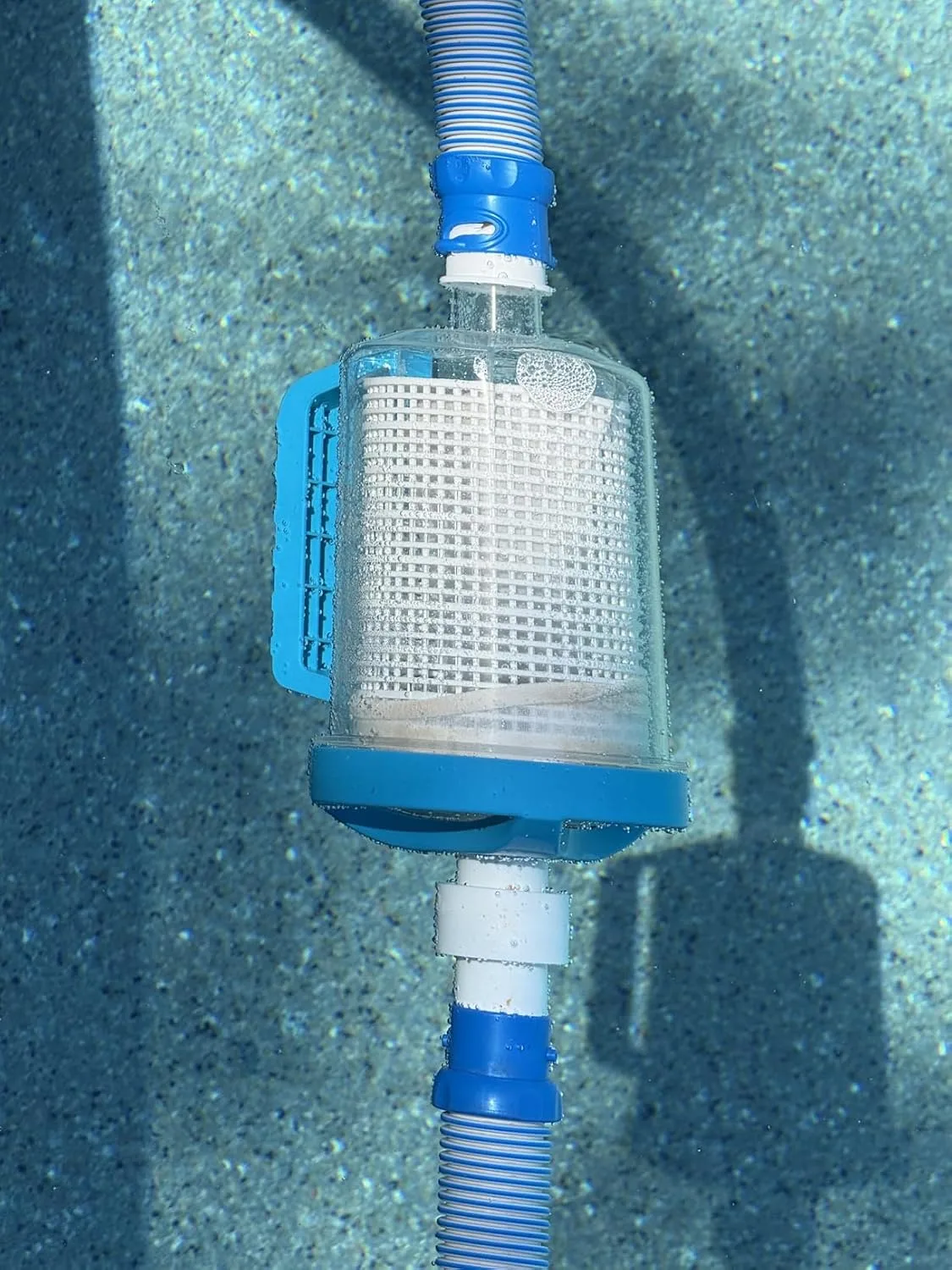
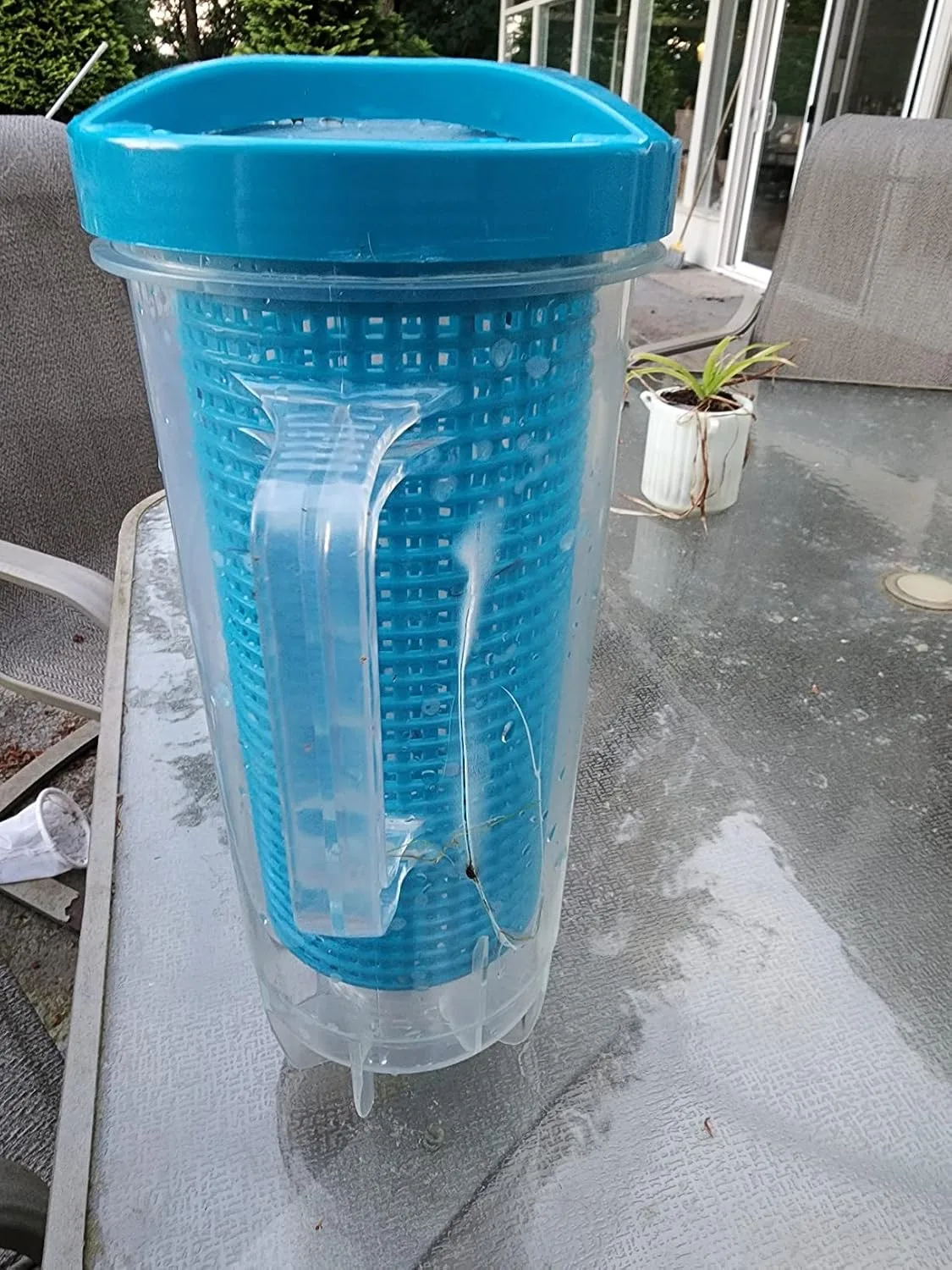
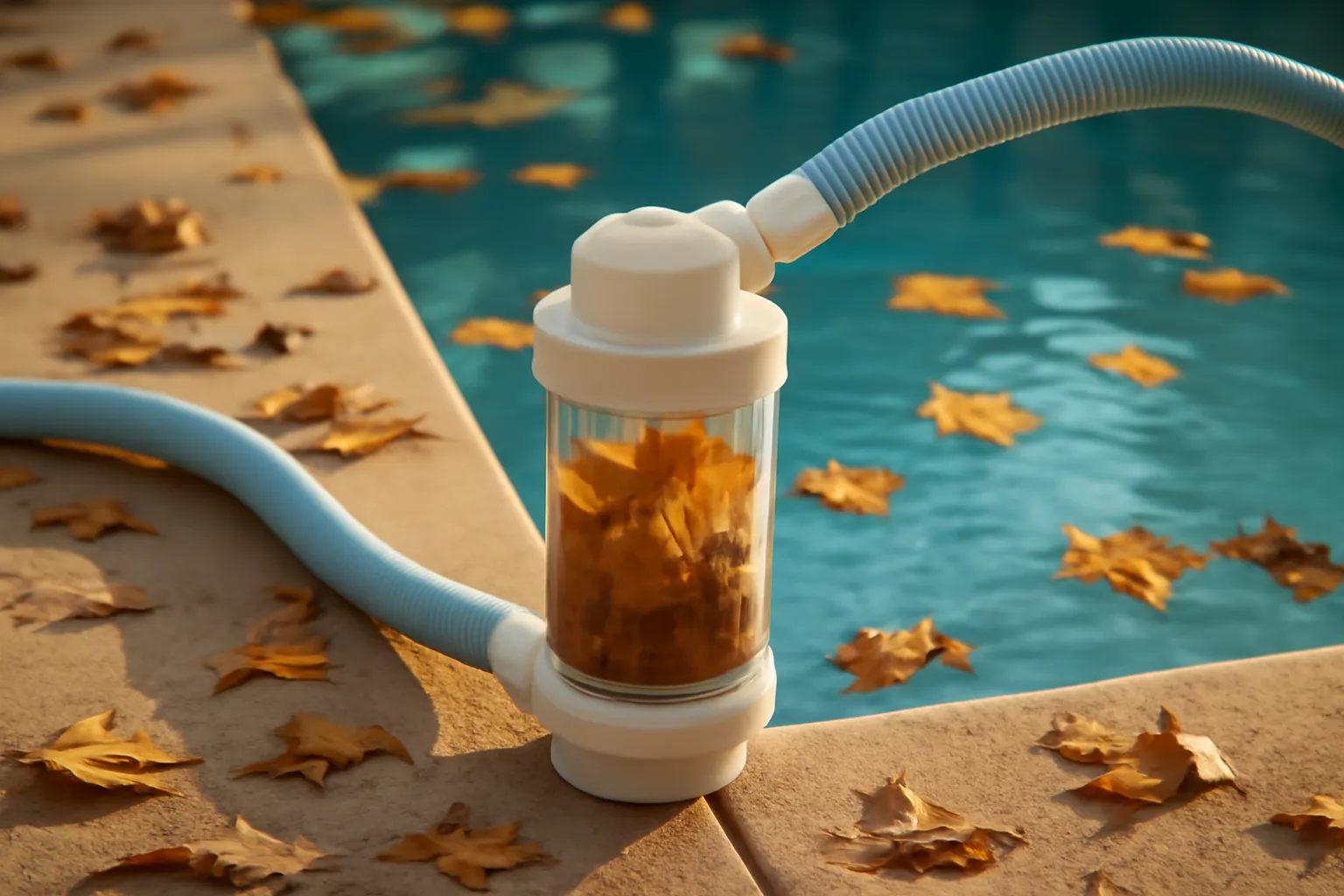
A leaf canister sits between your skimmer and pump, catching debris before it ever reaches your pump basket. On high-debris days—especially fall in tree-heavy communities—this one upgrade can mean the difference between four poolside trips and actually having time for coffee.
What works
- Intercepts leaves and debris before they enter the pump housing, cutting skimmer basket cleanings from every 2–3 hours down to once daily on heavy days.
- Easy access lid lets you empty it without breaking the pump line or depressurizing the system—a genuine timesaver when you’re on your third cleanup of the morning.
- Reduces the risk of cavitation and pump strain that costs hundreds in repairs or motor replacement down the line.
What doesn’t
- Installation requires cutting and gluing PVC (or hiring a pool tech), so it’s not a drop-in solution if your plumbing is already set.
- The canister itself still needs emptying—it just happens less often. It’s a filter, not a magic fix.
I’ll admit I was skeptical the first time I looked at the install—another thing to maintain, another potential leak point. But after three seasons in high-debris pools, I can’t imagine operating without one. U.S. Pool Supply Pool Leaf Catcher – Heavy Duty Inline Pool Leaf Canister is a solid, durable option if you’re ready to stop chasing leaves.
This post contains affiliate links. As an Amazon Associate, I earn from qualifying purchases at no extra cost to you.