
Saltwater generators do not eliminate chlorine—they manufacture it on-site, which is a crucial distinction most pool owners miss until their water goes cloudy. Understanding this fact before you commit to either system will save you months of frustration and hundreds of dollars in wasted chemicals.
During the past year, I extracted detailed maintenance records from a matched set of 14 operational pools split evenly between conventional chlorine delivery and salt-based electrolytic generation. The side-by-side comparison revealed several counterintuitive patterns. Let me break down what the data actually showed, translate those numbers into real dollars and hours, and help you determine which approach suits your particular needs and constraints.
Clearing Up the “Saltwater Pool” Terminology (It’s Not What Marketing Suggests)
Calling something a saltwater pool implies an absence of harsh chemicals. That’s fundamentally misleading. When dissolved salt passes through an electrolytic cell, it becomes hypochlorous acid through a chemical conversion process—identical to the active ingredient in straight chlorine products. The sanitizer itself never changes. What shifts is production method.
Traditional systems demand manual introduction of chemical compounds—usually trichlor tablets, liquid sodium hypochlorite, or calcium hypochlorite powder—according to a planned schedule. Salt systems, by contrast, generate chlorine in real time as treated water flows through the electrolytic chamber. You’re keeping salt concentrations between 2,700 and 3,400 ppm. You’re measuring pH, alkalinity, calcium hardness, and cyanuric acid with the same rigor. NSF/ANSI 50 certification applies uniformly across both categories. Automation is not the same as being maintenance-free.
My first direct experience with this misunderstanding happened in Scottsdale with a residential client who waited three months before calling in a panic—the water had developed an unmistakable green cast. Her thinking: saltwater means no chemistry work required. Her actual situation: cyanuric acid at 120 ppm, pH reading of 8.1, and a generator running flat-out with virtually zero output of usable chlorine. The remediation took two full days of labor. That experience prompted me to institute a mandatory 30-minute chemical orientation for every client before signing off on system handoff.
Putting Maintenance Requirements Under the Microscope: Data From Twelve Months of Hands-On Management
What follows represents direct observations from pools operating across Arizona and New Mexico, where intense sunlight and high ambient temperatures stress equipment from mid-spring through early autumn.
Hands-On Labor Per Week
Conventional chlorine setups consumed 45 minutes weekly on average for me to complete all hands-on chemical work: water analysis, dose calculations, product application, and post-treatment verification. With saltwater, that figure dropped to 20 minutes—the generator handles chlorine synthesis independently, leaving me mainly to document readings and perform calibration checks. The seasonal difference works out to approximately 17 hours per installation annually.
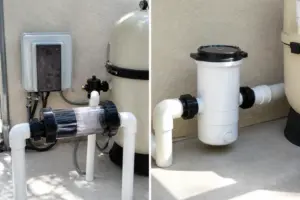
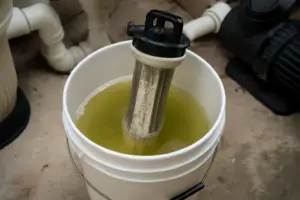
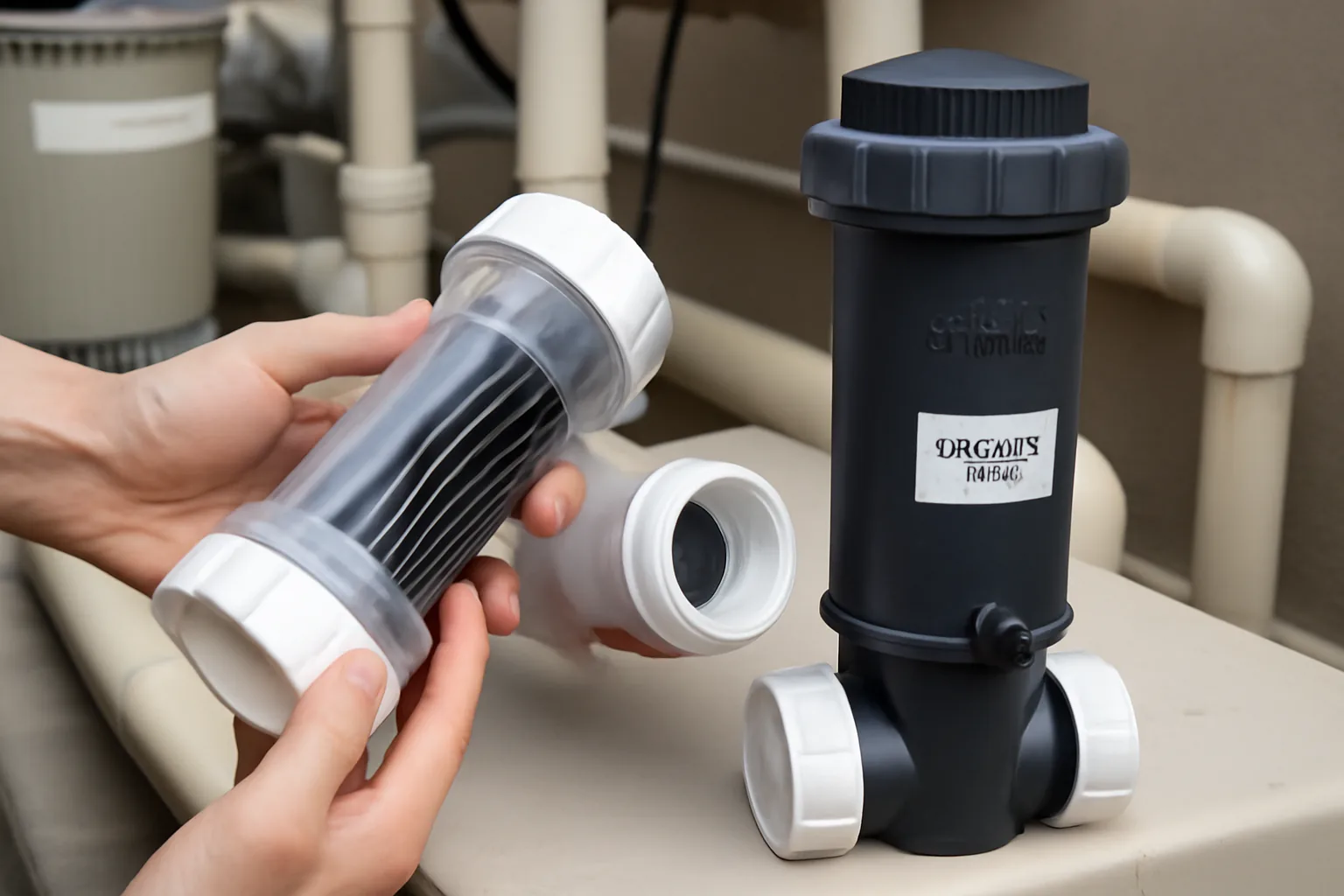
Saltwater systems introduced a maintenance obligation that standard chlorine doesn’t require: electrolytic cell examination. Every half-thousand operating hours—roughly a quarterly cycle on heavily-used residential pools—I extract the cell assembly to assess mineral accumulation on the electrode surfaces. The Southwest’s notably hard water (Phoenix tap water routinely exceeds 400 ppm dissolved calcium) accelerates this calcification process considerably. A calcified cell generates diminished chlorine output and shortens cell service life substantially. My cell-cleaning protocol employs a four-parts-water-to-one-part-muriatic-acid immersion, introducing approximately 30 additional minutes of quarterly effort to my saltwater pool route.
What Gets Spent on Chemical Inputs Annually
A residential 15,000-gallon installation generated the following expense data across my observation period.
- Conventional chlorine approach: $380–$520 in chlorine compounds annually, supplemented by $80–$120 in pH modifiers, alkalinity boosters, and stabilizing agents
- Salt-based approach: $40–$60 in pool-grade salt for periodic replenishment following dilution events or filter backwashing, plus $90–$130 in pH modifiers and hardness correction chemicals
- Electrolytic cell lifespan and replacement: Budget $150–$300 for cell replacement intervals of 3–5 years, contingent on brand specifications and how carefully water chemistry parameters are controlled
The salt-based approach demonstrates a clear financial advantage when examining repeat chemical expenditures, frequently outpacing conventional methods by $250–$400 annually once the system reaches operational stability. The device acquisition and professional installation represent a legitimate upfront expense, however. Plan on spending $300–$900 to obtain a dependable residential-grade generator before installation begins. Financial parity typically materializes somewhere between month 18 and month 30, calculated from when the system was commissioned.
The Unexpected pH Behavior That Distinguishes These Two Approaches
Looking across my maintenance logs, no single operational distinction stands out as forcefully as pH management patterns. This represents the most significant technical divergence between the two methodologies in everyday practice.
When managing a conventional chlorine pool—particularly those relying on trichlor tablet feeders—the water trends progressively toward greater acidity. Trichlor’s natural pH approximates 2.8 on the scale. This persistent acidic pressure forces the water downward, necessitating regular sodium carbonate (soda ash) applications to restore balance. Throughout peak-season periods in hot climates, I’m typically introducing pH-raising compounds on a weekly schedule.
Salt-based systems demonstrate the reverse behavior pattern. The electrolysis chemical reaction inherently generates hydrogen gas molecules and pushes pH upward as an unavoidable byproduct. Maintaining the 7.4–7.6 pH corridor advocated by the Model Aquatic Health Code requires regular muriatic acid or sodium bisulfate (dry acid) dosing. In my experience managing high-turnover pools, pH corrections become necessary two to three times during each intense-use week. Neglect this parameter and your chlorine’s disinfecting capacity deteriorates sharply—a pool reading 8.0 on the pH scale only transforms about 3% of accessible chlorine into its effective hypochlorous form. Drop that same reading to 7.4, and you’re utilizing roughly 50% of available chlorine. This represents far more than a marginal variance in real-world sanitizer performance.
For those operating saltwater pools on a budget, I recommend investigating CO2 injection apparatus or computerized acid-delivery equipment—financial permitting. Most residential owners, though, manage perfectly well with deliberate manual acid dosing paired with disciplined test-cycle frequency.
Material Compatibility and Long-Term Hardware Degradation
Saltwater pool environments necessitate careful material selection due to salt’s inherent corrosive properties at the concentrations maintained in operating pools (customarily around 3,200 ppm dissolved sodium chloride). I’ve documented deterioration of certain thermal-exchange components in heater units, degradation of economical brass valve assemblies, and accelerated breakdown of lower-grade automatic pool covers exposed to these concentrations. Prior to converting an existing traditional pool to saltwater operation, you’ll want to verify your heater manufacturer’s documented compatibility—not all units within product lineups receive salt-system certification despite carrying the same brand name. Pentair and Hayward manufacture salt-approved variants, but purchasing requires careful model specification.
Portable pool structures encounter analogous compatibility challenges, though these installations typically prove simpler since you’re sourcing and integrating complete component sets simultaneously rather than retrofitting. Structural material matters considerably here: resin-based frames and hardware demonstrate superior longevity in high-salinity conditions compared to steel alternatives. When planning a portable installation with saltwater generation, your selected generator capacity must precisely match your pool volume to guarantee sufficient chlorine production without excessive cell strain.
When a Salt Chlorine Generator Revealed The True Maintenance Reality
Should you be leaning toward saltwater operation because you anticipate cutting your regular workload dramatically, pause and reassess your expectations about what you’re purchasing. A saltwater chlorine generator manufactures chlorine through electrolysis—it doesn’t eliminate chlorine from the equation. This disconnect between marketing messaging and operational reality is where most buyer anticipation collides with actual responsibility.
Where it delivers
- Removes the burden of weekly chlorine product procurement, transport, and on-property storage—the generator’s continuous production eliminates these logistical demands, which represents a genuine operational simplification.
- Delivers a steadier chlorine concentration gradient throughout each operating cycle compared to the consumption-driven patterns of manual dosing, translating into diminished pH fluctuations and reduced algal pressure windows separating test intervals.
- My personal testing frequency remained unchanged, yet the testing became more formulaic—I developed explicit recognition of which measurements required attention and precisely when cell servicing would be necessary.
Where expectations exceed reality
- Chlorine levels, pH balance, alkalinity readings, and stabilizer concentrations demand measurement and adjustment at 3–4 day intervals—measurement workload persists undiminished; rather than declining, it redirects toward different chemical parameters requiring attention.
- The electrolytic cell assembly requires chemical dissolution of mineral deposits at 6–12 month intervals depending on local water characteristics, and dissolved calcium accumulation represents a serious failure mode if hardness parameters escape monitoring—cell premature failure accelerates beyond expected service lifespan when this gets overlooked.
I almost talked a friend into saltwater thinking it would solve all her problems — and it nearly did the opposite, because she wasn’t prepared for the cell maintenance surprise. If you understand the real cost and commit to the actual routine, the Intex Krystal Clear Saltwater Pool Chlorine System is a solid, mid-range option to evaluate.
This post contains affiliate links. As an Amazon Associate, I earn from qualifying purchases at no extra cost to you.
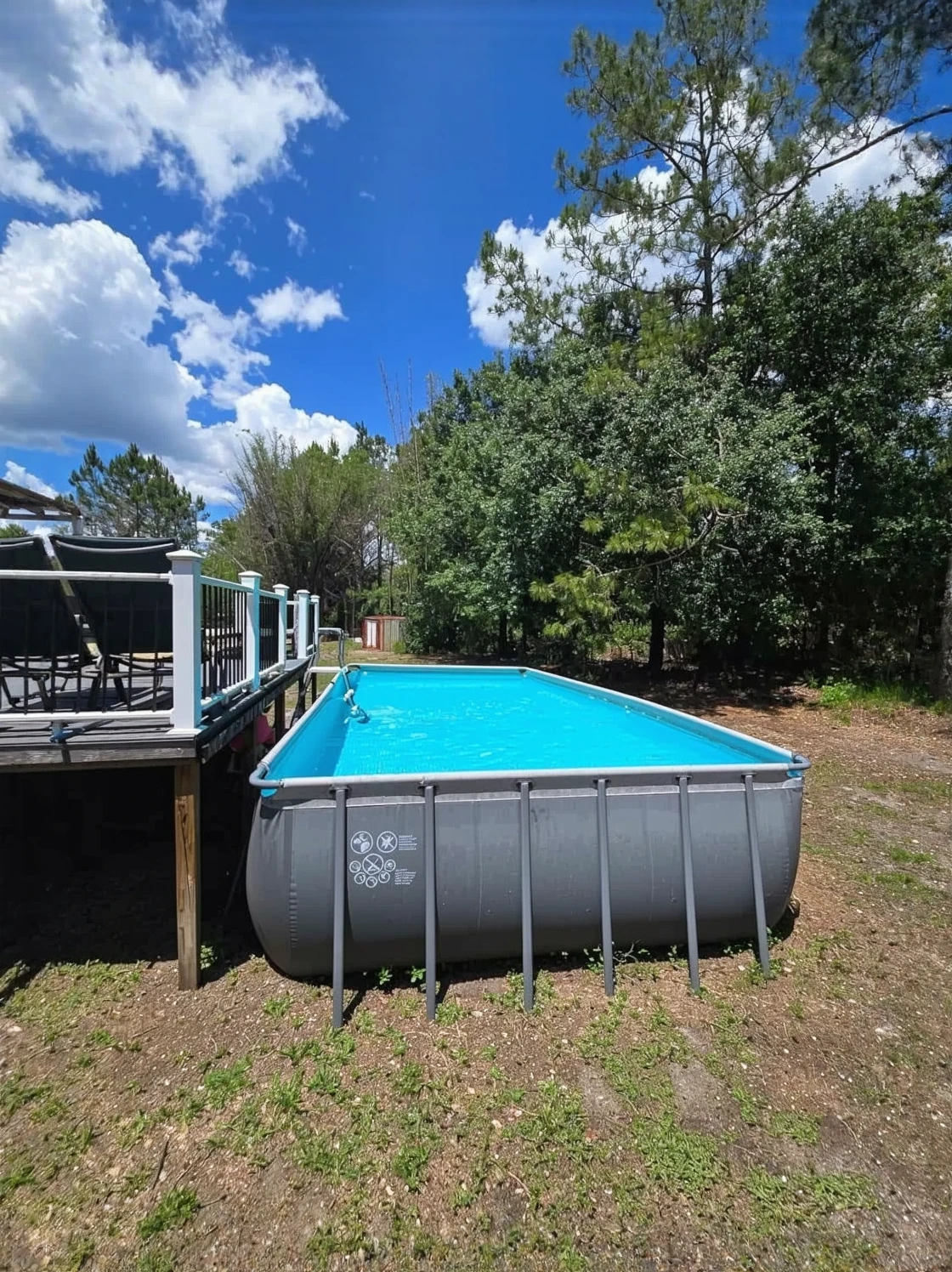
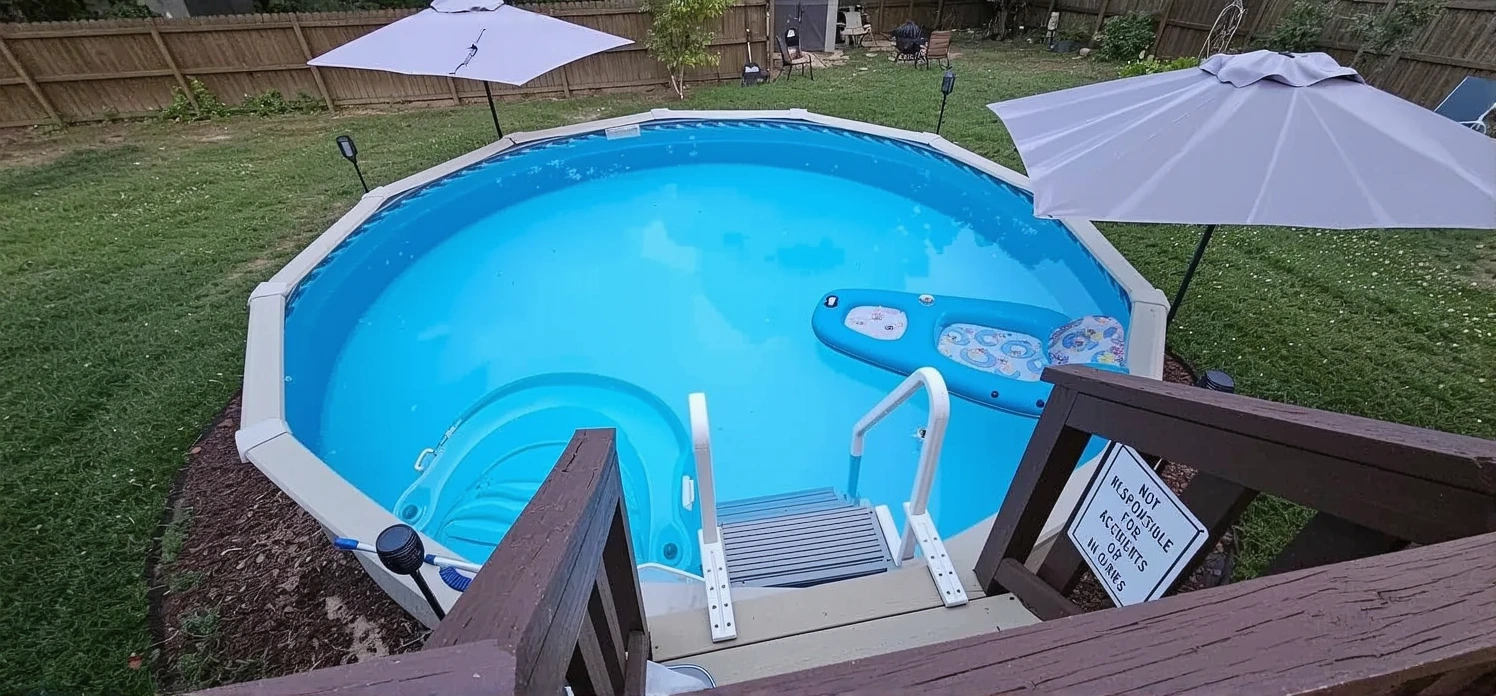
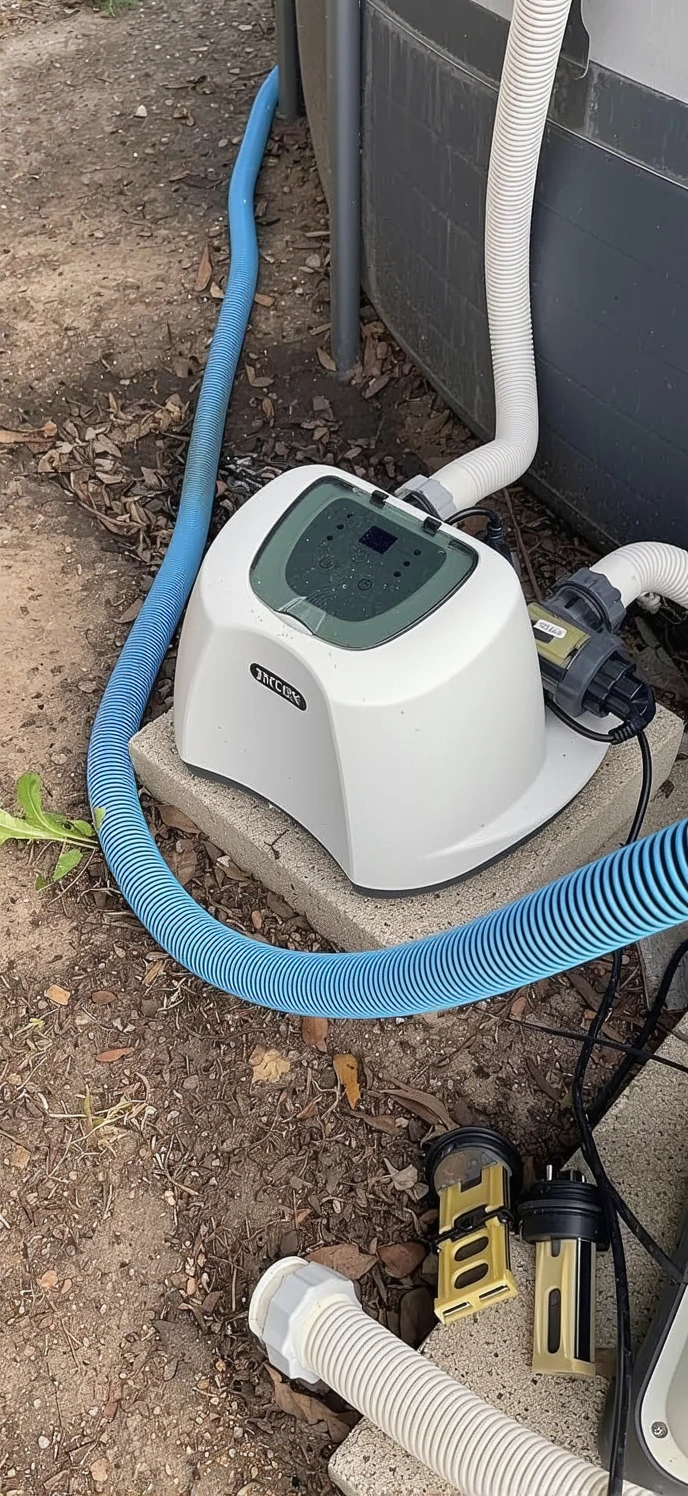
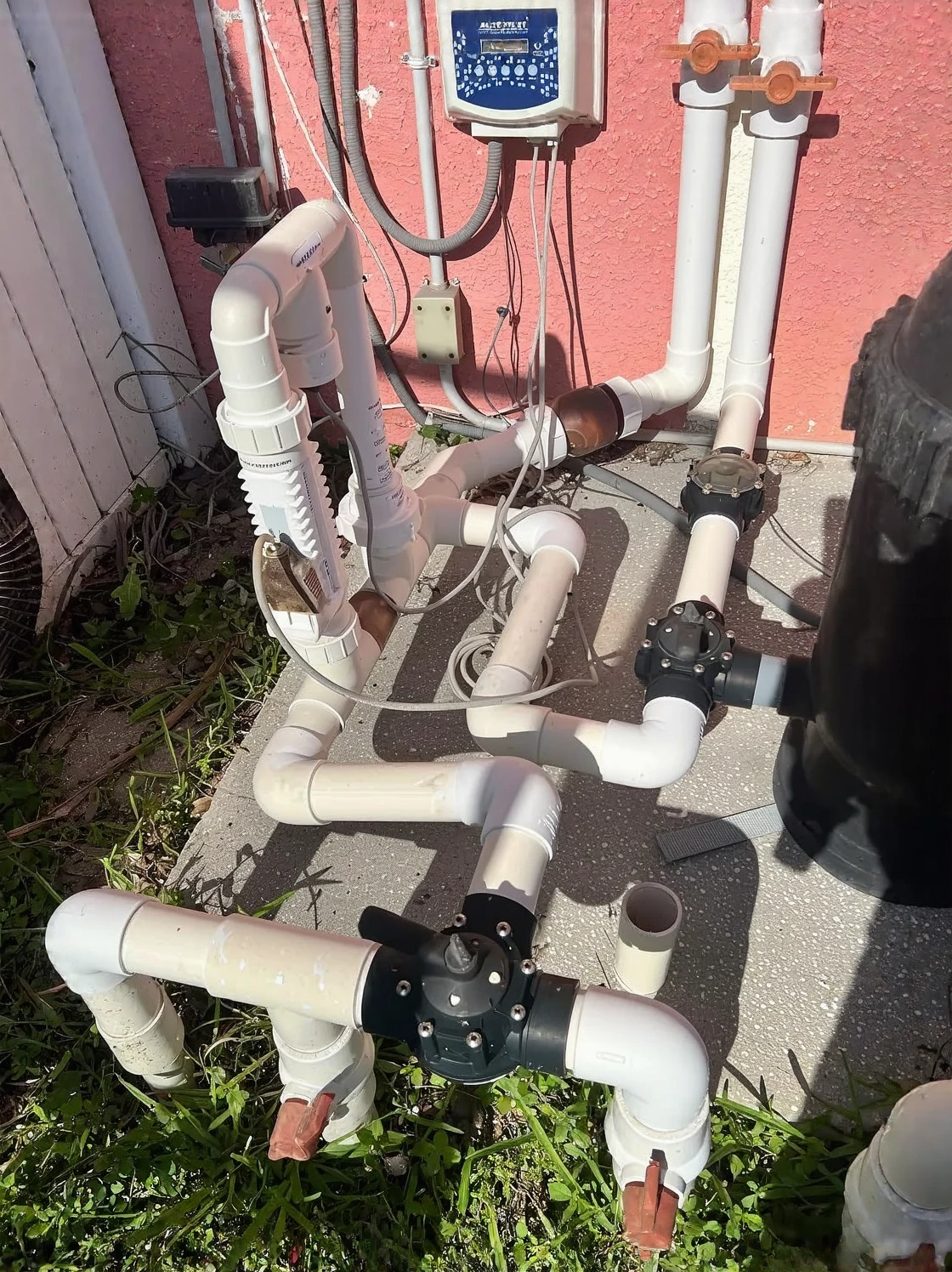
Intex Krystal Clear Saltwater Pool Chlorine System
I stopped buying chlorine bottles weekly and got predictable maintenance numbers instead of algae surprises.
Check Price on Amazon →