I’ve been managing pools professionally for over a decade — resort pools in Arizona, community pools in Nevada, HOA pools in New Mexico — and I can tell you with complete confidence that nothing sends a pool owner into a quiet spiral of despair quite like finding black algae. You’re out there doing your weekly walk-around, coffee in hand, thinking everything looks fine, and then you spot them. Small, dark, slightly raised dots on the plaster floor or along the waterline. You grab your nylon brush and scrub. Nothing happens. You shock the pool. They laugh at you. You add algaecide. Still there. A week later, there are more of them. This, my friend, is the moment you realize your regular pool brush is completely useless — and that you need a stainless steel algae brush for your pool before this problem gets genuinely expensive. I’ve been down this road more times than I can count, and I’m going to walk you through exactly what’s happening, what you need, and how to actually fix it.
Why Black Algae Is Worse Than You Think
Let me give you a quick rundown of the algae hierarchy, because not all algae are created equal — and understanding the difference will save you real money and time.
Green algae is the most common type. It turns your water cloudy or green, floats in the water column, and generally responds pretty well to a solid shock treatment and regular brushing. Annoying, but manageable. If you catch it early, you’re looking at a day or two of aggressive treatment and you’re done.
Yellow or mustard algae clings to walls and often gets mistaken for dirt or sand. It brushes off easily — which fools people into thinking they’ve solved the problem — but it returns quickly because it’s highly chlorine-resistant. You need to treat it aggressively with an algaecide designed specifically for mustard algae, plus a full pool shock. Still, it’s beatable within a week if you’re diligent.
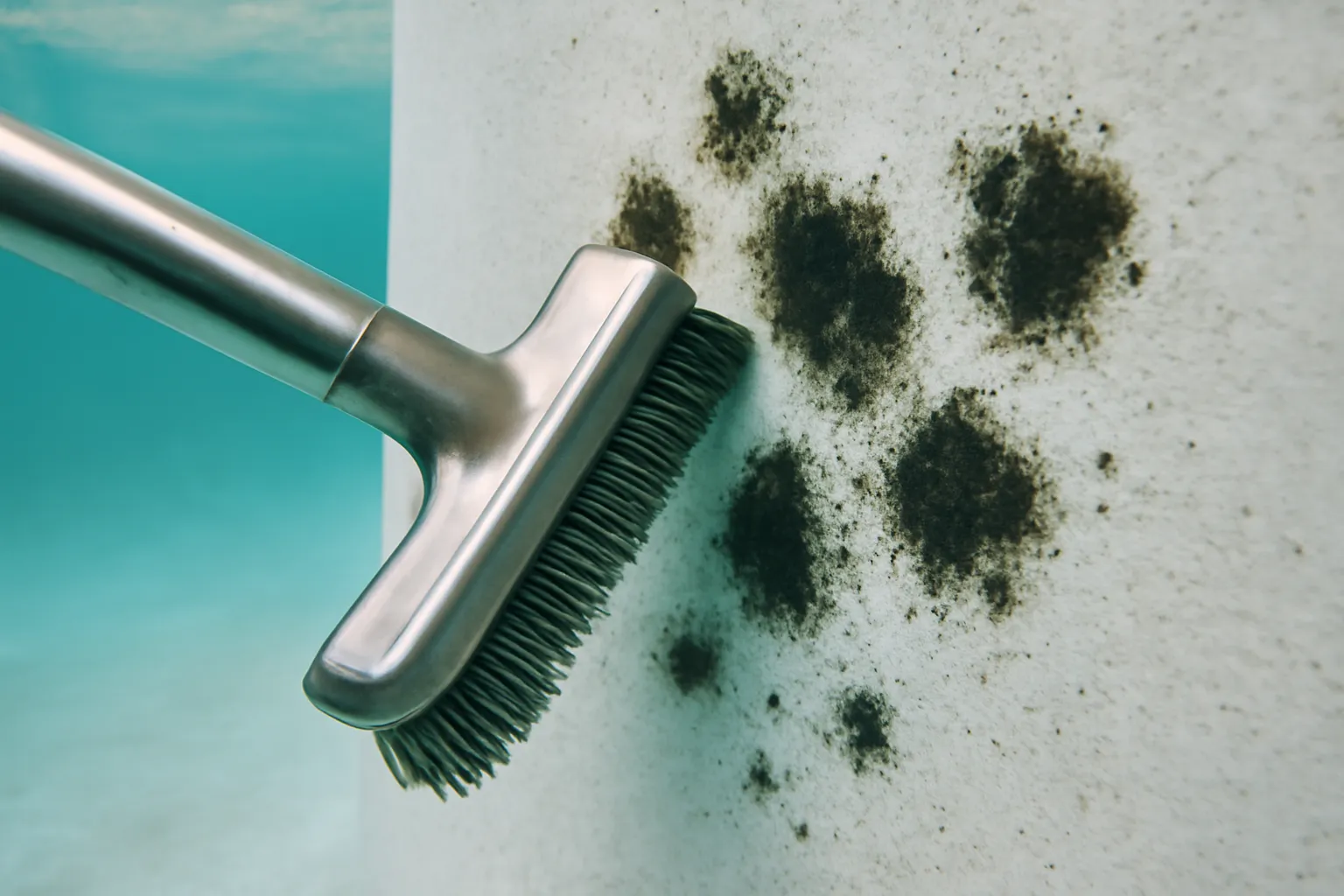
Black algae is the boss fight. It’s actually a cyanobacteria, not a true algae, and it behaves completely differently from the others. It grows in colonies with a deeply pigmented, waxy outer cap that physically shields the organism from chlorine — even at shock levels of 10 ppm or higher. Beneath that cap, the roots penetrate directly into concrete and plaster surfaces, anchoring themselves in a way that no amount of chemical treatment alone can dislodge. When you brush black algae with a nylon brush, you’re essentially polishing it. You’re not breaking the cap, you’re not exposing the roots, and you’re not killing anything.
Here’s where the real cost kicks in. Pool owners I’ve consulted with have spent $200 to $500 on repeated shock treatments, algaecides, and enzyme products trying to kill black algae without ever addressing the physical problem. Some waited so long that the colonies spread across the entire deep end floor, at which point you’re looking at a partial replaster or an acid wash — jobs that run anywhere from $800 to $3,500 depending on pool size and region. One HOA property I took over had black algae that had been “treated” chemically for two full seasons without ever being properly scrubbed. The plaster was permanently stained and pitted in multiple areas. That was a $2,200 problem that started as a $30 brush purchase someone never made.
The longer black algae sits, the deeper its roots go and the more colonies it establishes. Address it immediately, and you can beat it in 7–10 days. Ignore it for a season, and you’re doing a much harder and more expensive job.
What to Look For in a Stainless Steel Algae Brush for Your Pool
Not all pool brushes are built for this job, and there are a few specific things you need to look for when you’re shopping for a wire pool brush for algae removal.
Bristle Material
This is non-negotiable: you need actual stainless steel bristles, not nylon, not polypropylene, not a hybrid mix that’s mostly nylon with a few wire strands thrown in. True stainless steel bristles are hard enough to physically crack and scrape through the waxy protective cap of black algae colonies. Once you break that cap, the chlorine can penetrate to the root structure and begin killing the organism. Without breaking the cap, no chemical treatment on the market is going to work reliably.
Head Size and Shape
For detail work — spot-treating individual colonies on steps, tight corners, ledges, and the waterline — you want a smaller, narrow head rather than a wide wall brush. Black algae tends to establish itself first in low-flow areas: corners, steps, behind ladders, around return fittings. A small, maneuverable head lets you apply concentrated pressure directly to each colony rather than diffusing your scrubbing force across a wide surface.
Handle Attachment and Backing Material
Look for a sturdy aluminum or reinforced plastic backing that won’t flex under pressure. When you’re scrubbing black algae spots, you’re applying significant downward force — a flimsy backing will flex and rob you of the pressure you need. A standard threaded pole attachment (fits any telescoping pool pole) is ideal.
The Brush That Finally Let Me Attack Black Algae Without Spreading It
Black algae has a protective outer shell that standard pool brushes can’t penetrate — they just push the problem around. You need something with real bristle stiffness and precision to actually scrub those colonies off without doing damage to your plaster surface.
What works
- Stainless steel backing doesn’t rust or leave dark marks on your plaster — I’ve had nylon brushes leave stains that looked like more algae
- The 5-inch head size is narrow enough to get into tight spots along the waterline and corners where black algae loves to hide and multiply
- Firm bristles actually break the colony’s protective layer instead of just moving debris around — you’ll see real results in one aggressive scrubbing session
What doesn’t
- The bristles are stiff enough that you have to be careful not to gouge softer plaster finishes — it’s a tool for precision, not brute force
- This is a detail brush, not a full-surface solution — black algae on large areas still requires a full-size brush and serious chemical backup
I’ll admit, the first time I used a detail brush on an active colony, I was worried I’d just make it worse by rupturing the algae and spreading spores everywhere — but that protective shell is tougher than I thought, and this stainless steel brush cuts through it without destroying the plaster. If you’re dealing with black algae, grab the Poolmaster 5-Inch Stainless Steel Pool Algae Detail Brush before the problem spreads.
This post contains affiliate links. As an Amazon Associate, I earn from qualifying purchases at no extra cost to you.
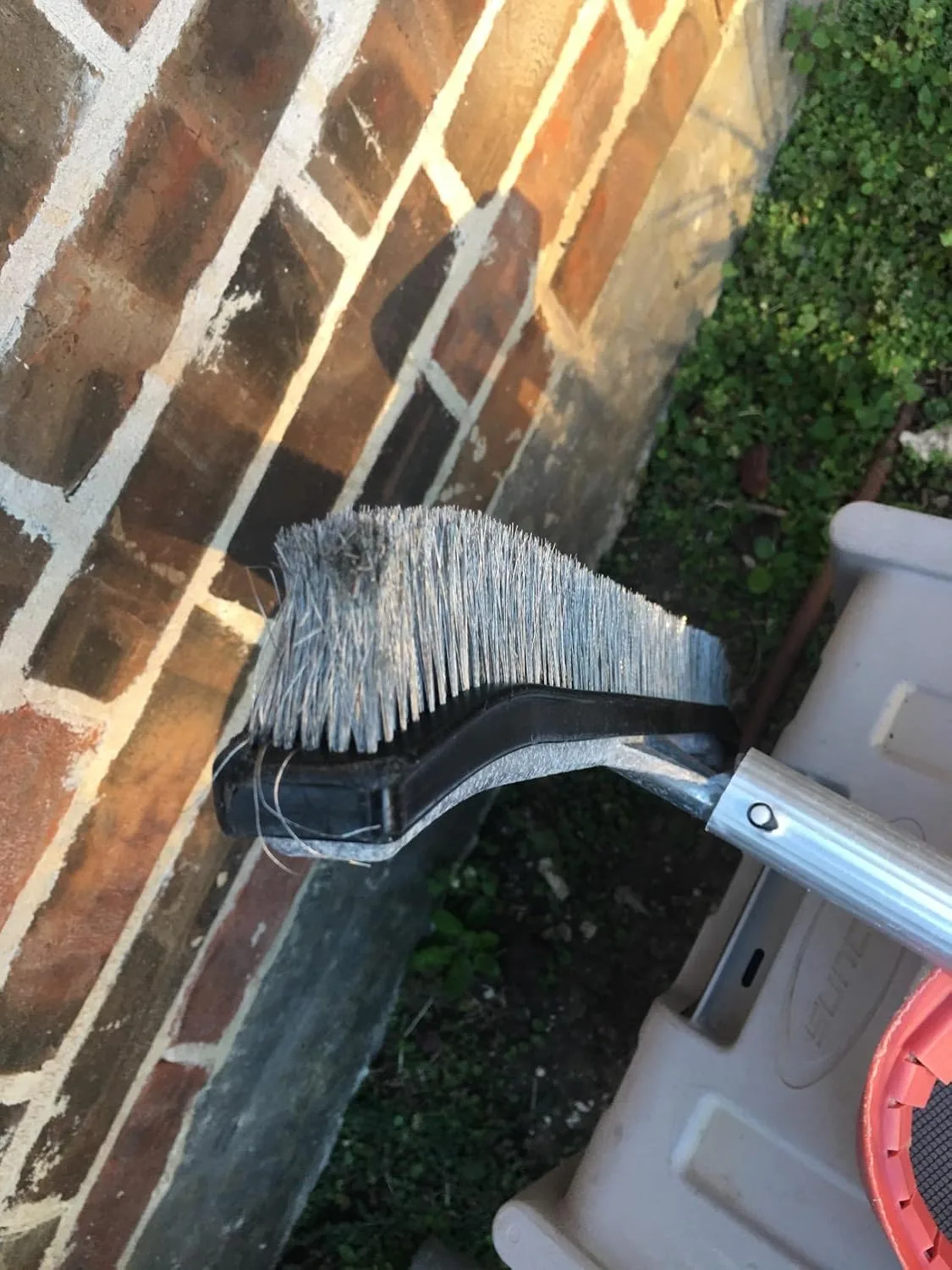
![Customer photo of [specific product condition/damage visible in image]](https://chlorinecorner.com/wp-content/uploads/2026/06/B0017SSFWO-2.webp)