You’ve probably encountered two conflicting pieces of advice online or heard them poolside: “Just buy a suction cleaner, they’re cheap and easy,” versus “Suction cleaners will destroy your filter in one season if you have trees.” One of those statements is misleading, and the other misses crucial context. The truth sits in the middle — and it’s determined by what falls into your pool, not by price alone.
Why the Wrong Automatic Cleaner Becomes an Expensive Liability
Across my years of watching pools closely throughout the Southwest, I’ve tracked patterns that most pool owners never see. Situations involving dust storms rolling across the Sonoran Desert, cottonwood trees releasing their annual cotton explosion in May, and entire neighborhoods dealing with identical debris loads. What this experience taught me is that a mismatched cleaner doesn’t simply fail to work — it generates compounding costs that snowball throughout the season.
Let me walk through the mechanical cascade that happens when you run a suction-side unit in a pool drowning in leaf debris. Those leaves get pulled through the impeller, fragmented into smaller pieces, and funneled straight into your filtration media. Sand filters require backwashing two, sometimes three times as often. Cartridge media gets so clogged you’re replacing it every eight weeks instead of once per season. That translates to replacing a $60–$120 cartridge four times annually — a total of $240–$480 in media costs annually — far exceeding whatever you saved by choosing the cheaper cleaner.
Your pump takes collateral damage too. A suction-side cleaner constricts the flow coming through your skimmer port, which can trigger cavitation — your pump sucking air instead of liquid — if the diaphragm wears or the connection isn’t sealed perfectly. Even sporadic cavitation degrades pump internals. When it’s finally time to replace that pump, you’re looking at $600–$1,200 for installation and the unit itself. Your initial $150 cleaner purchase just triggered five figures in downstream expenses.
Now consider a pressure-side cleaner that covers only 60% of your pool floor because return pressure isn’t sufficient. Organic matter accumulates on neglected sections — food for algae growth — and your water’s demand for chlorine climbs. You’re dosing an extra 2–3 ppm of chlorine weekly throughout the hot months to compensate, adding $30–$50 per month in chemical expense. Over a four-month season, that’s $120–$200 in wasted sanitizer.
The pattern is clear: buying incorrectly costs far more than buying right the first time.
Suction-Side Versus Pressure-Side Cleaners: Comparing Operating Principles and Trade-Offs
Making an informed choice requires understanding how each approach actually functions within your existing pool infrastructure. Let’s examine both mechanisms in detail before moving to the specific recommendation.
Suction-Side Cleaner Mechanics
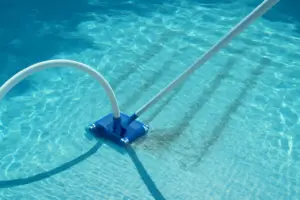
Your pool’s pump generates negative pressure at the skimmer. A suction-side unit plugs into this vacuum, using it to power internal turbines and deflection chambers that move the cleaner randomly across your pool floor. All debris — leaves, sand, dead skin cells — gets pulled through the same pathway as your circulating water, through your pump basket, and into your filter. The cleaner has no independent motor or engine. It’s entirely parasitic on your existing filtration system.
Advantages and disadvantages of suction-side operation:
- Advantage: Purchase price stays low — reliable models cost $100–$300
- Advantage: Requires zero additional equipment — your existing pump and filter handle everything
- Advantage: Installation takes fifteen minutes, no special skills or tools necessary
- Disadvantage: Every particle of debris must pass through your pump impeller and filter cartridge
- Disadvantage: Creates backpressure on your pump, reducing its overall efficiency while running
- Disadvantage: Struggles with large intact objects — whole leaves, acorns, seed pods get shredded or jam
- Disadvantage: Contributes to measurable pump stress and shortened lifespan
Pressure-Side Cleaner Mechanics
A pressure-side unit connects to your return line — the water flowing out of your pump after filtration. This clean, pressurized water propels the cleaner around the pool and simultaneously drives an internal vacuum that deposits debris into an onboard collection compartment. Nothing goes through your main pump or filter a second time. Some pressure units use only the circulation pressure your equipment already generates; others demand a dedicated booster pump to function effectively.
Advantages and disadvantages of pressure-side operation:
- Advantage: Collected debris bypasses your pump and filter entirely
- Advantage: Effectively processes large debris — whole leaves stay whole and go into the bag
- Advantage: Brushing action during cleaning helps suppress algae formation
- Advantage: Doesn’t slow down your circulation pump
- Disadvantage: Equipment costs escalate — units themselves run $200–$500+
- Disadvantage: Most designs require purchasing and installing a booster pump ($300–$500 installed labor)
- Disadvantage: More components to maintain — wheels deteriorate, seals leak, brush hairs clog
There exists a third category — robotic pool cleaners — which operate with complete independence from your plumbing. They plug in, house their own motor and filtration, and work on schedules you program. Effectiveness is superior and cost ranges from $500–$1,500+, but that’s a separate analysis. This discussion stays anchored to the suction-versus-pressure decision tree.
The practical decision matrix I apply when counseling pool owners: Your debris profile determines the right category. Light loads — fine dust, minimal pollen, occasional sand — suggest a suction-side cleaner makes financial sense. Heavy loads — trees overhead, seasonal leaf drop, abundant organic matter settling — indicate that pressure-side investment pays dividends in reduced filter stress and pump longevity. Type of debris matters more than purchase price differences.
Evaluating Suction-Side Cleaner Quality: Key Performance Metrics
Once you’ve determined that suction-side fits your debris situation, the decision space remains substantial. Models ranging from $79 to $250 all connect via the same skimmer port, yet performance variance is dramatic. Separating reliable equipment from frustrating purchases requires knowing what engineering details actually matter.
Floor Coverage Efficiency
Budget units use primitive randomized movement patterns that consistently miss corners, steps, and wall-adjacent zones. Engineering-forward designs employ refined deflection geometry or algorithmic navigation sequences designed to maximize surface contact. For a standard rectangular 16 by 32 foot inground pool, your target should be a cleaner achieving 80% or greater floor contact per operating cycle. Anything lower leaves you performing supplemental manual vacuuming weekly — defeating the purpose of automation.
Navigation Performance on Complex Pool Geometry
Rigid-bodied cleaners frequently jam when encountering freeform designs, kidney-shaped basins, or pools with pronounced curves and radius transitions. Superior units feature segmented articulation, multi-axis drive mechanisms, or specialized track geometries engineered for curvilinear pursuit. If your pool’s profile isn’t a basic rectangle, this feature becomes non-negotiable.
Hose Durability and Configuration
Hose systems typically fail before any other component. Select UV-resistant, anti-kink materials formulated for poolside conditions. Total length should accommodate a run from your skimmer to your pool’s extreme point with twelve inches of slack — neither stretched tight nor pooling in tangled coils.
The Suction-Side Solution for Tree-Adjacent Pools: Why the Zodiac MX6 Works Where Others Stall
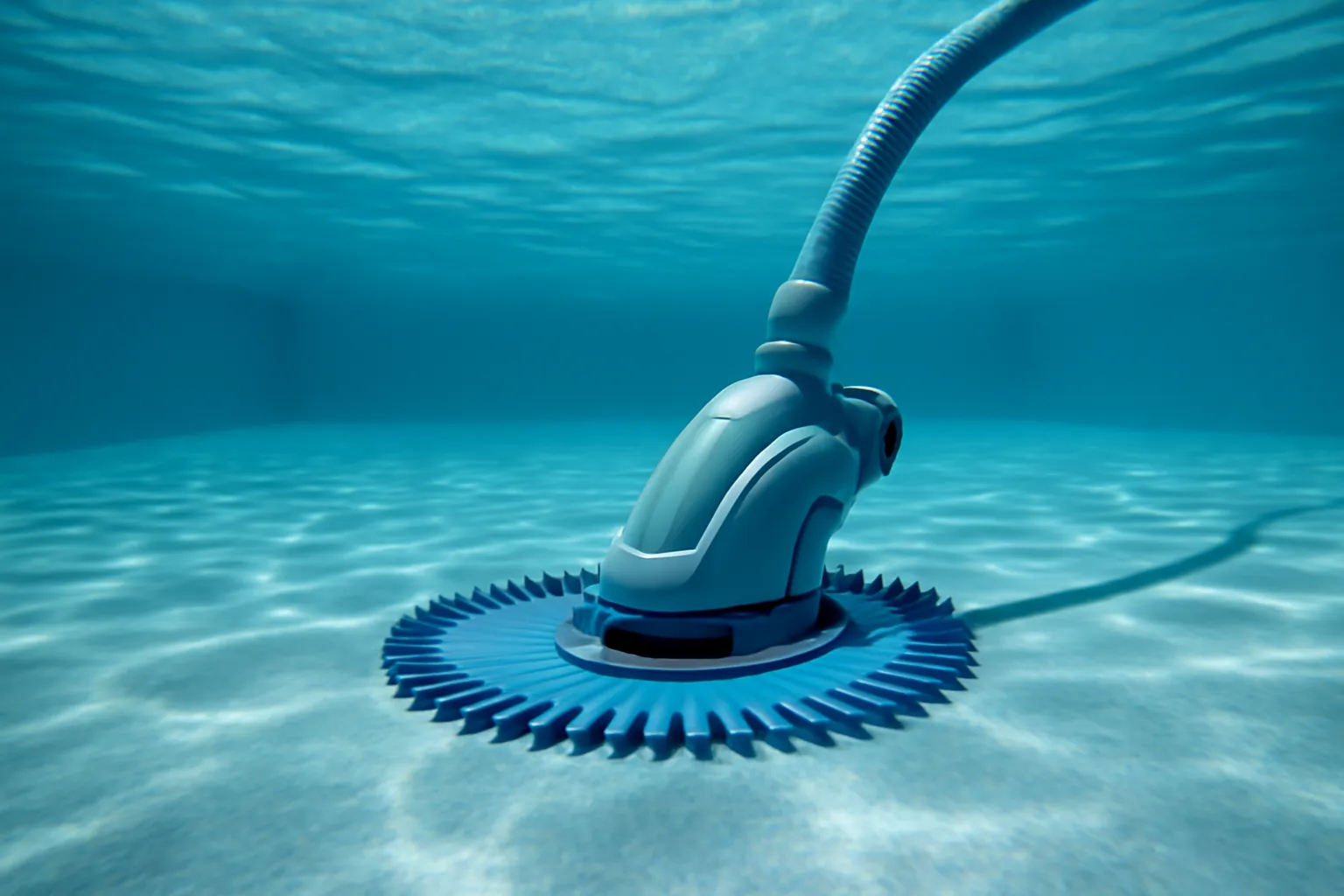
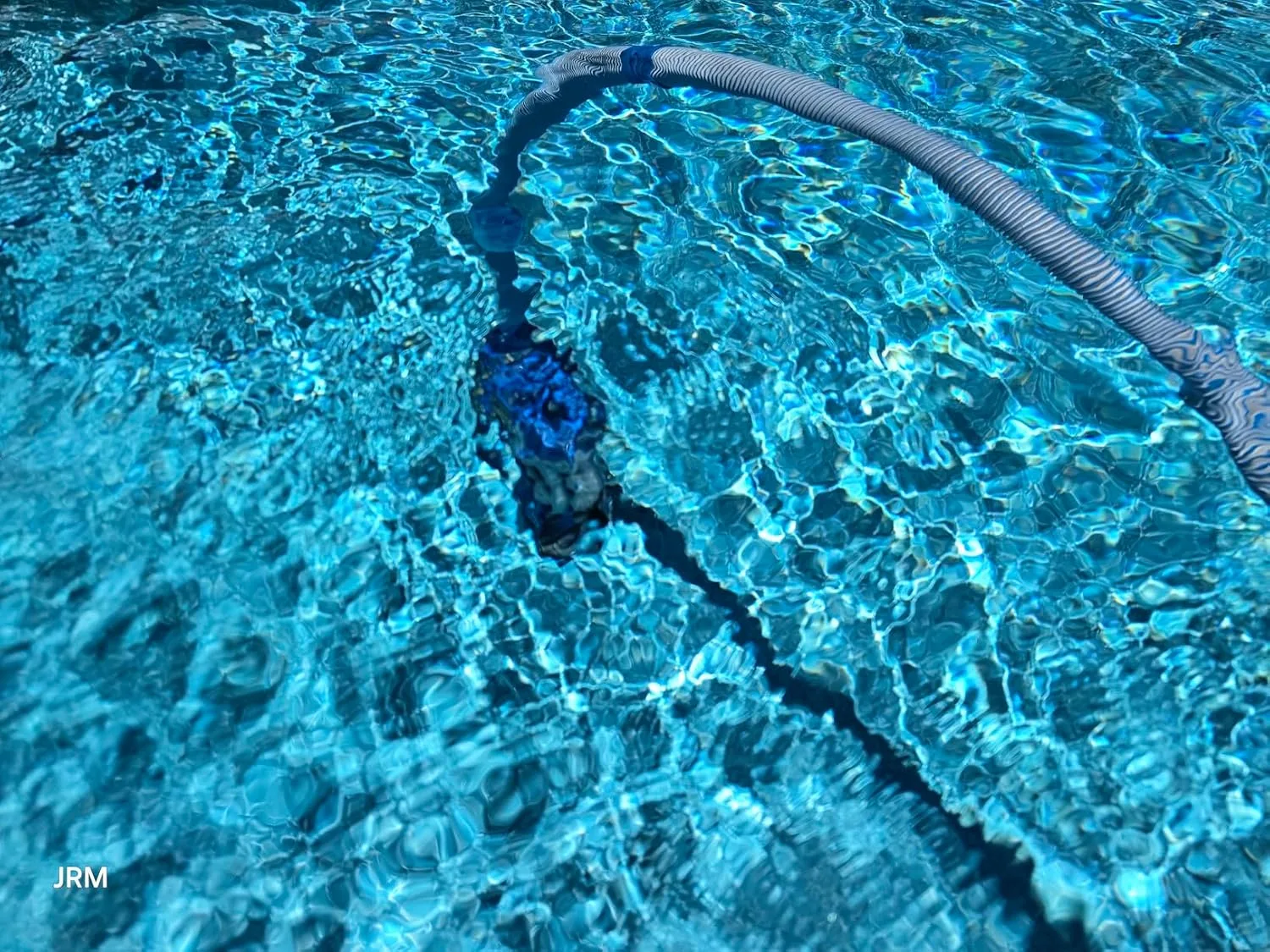
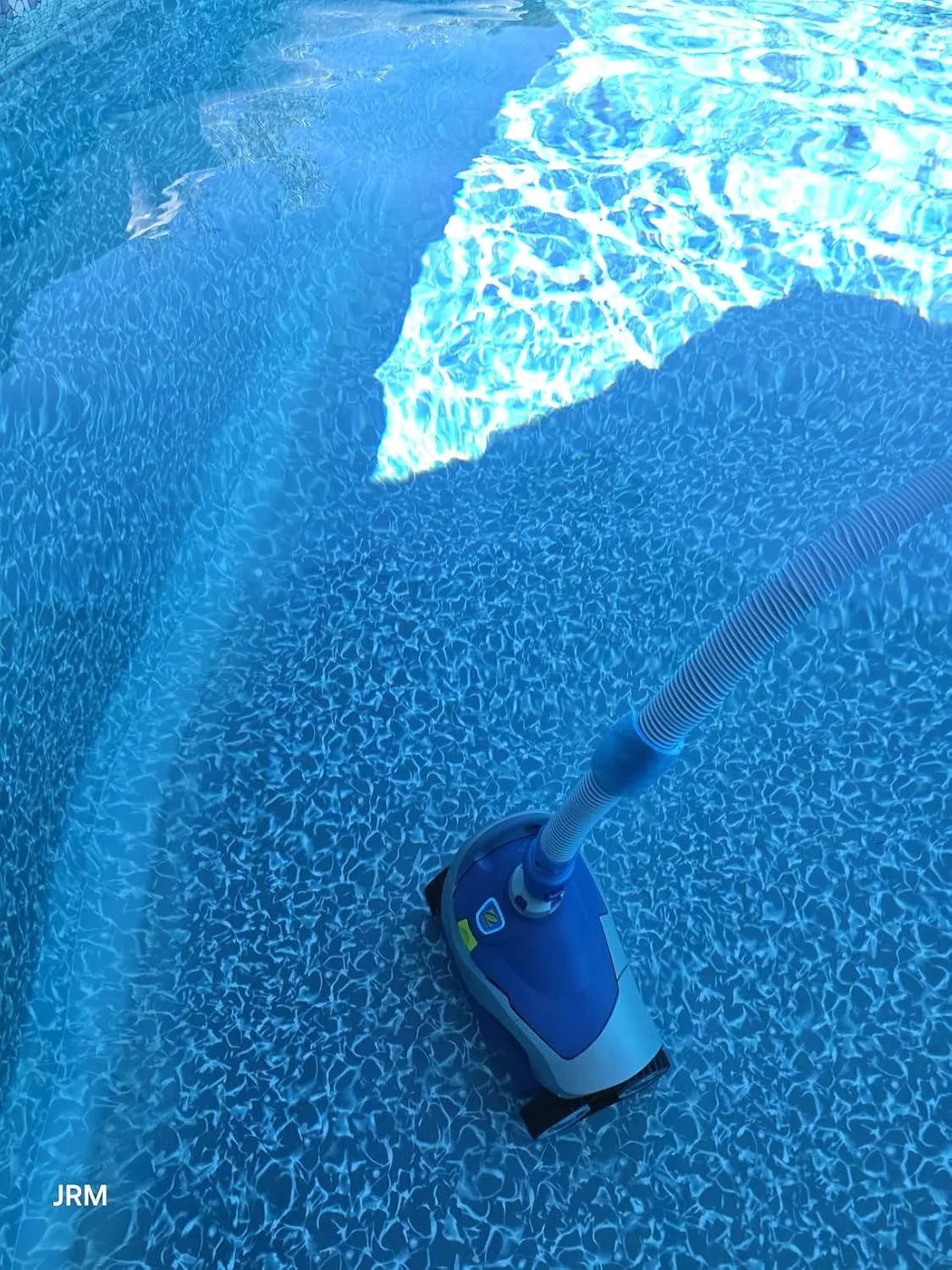
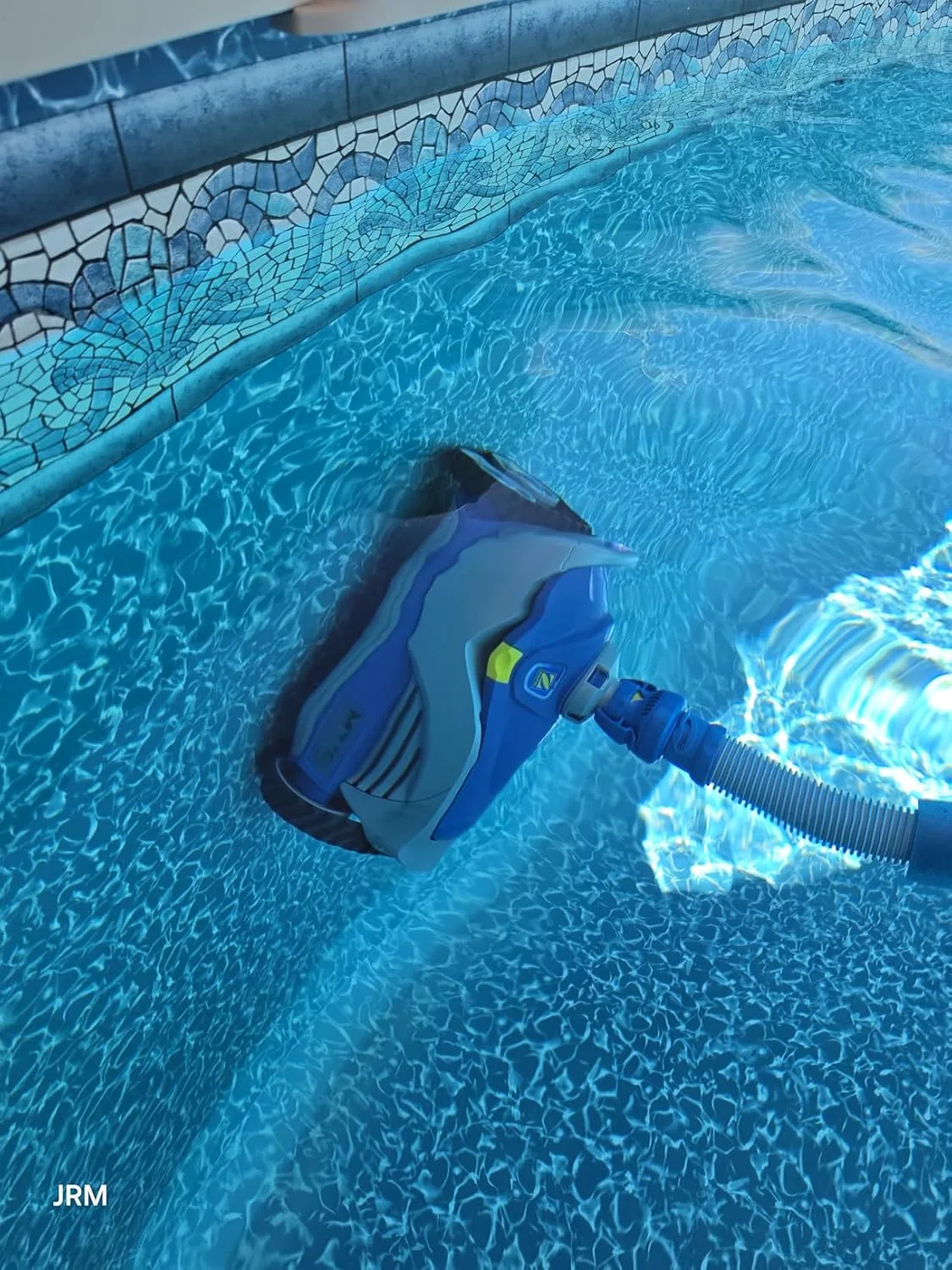
When your pool borders vegetation or experiences continuous debris influx, the wrong suction-side cleaner turns into a filter-clogging nightmare — but the right one becomes your most reliable automation tool. The Zodiac MX6 addresses the specific failure modes that plague tree-surrounded pools without requiring expensive booster pumps or system redesigns.
What performs
- Onboard debris trap positioned ahead of your circulation pump captures leaves and twigs before they fragment and clog cartridge media, extending filter life between chemical backwashes
- Sweep-arm configuration distributes floor coverage more evenly across cleaning cycles, reducing run time needed to achieve adequate surface cleaning
- Compatible with standard 1.5–2 horsepower residential equipment without demanding booster pump installation, keeping your equipment pad simple
What requires attention
- Debris basket demands regular emptying during periods of active leaf drop — it’s engineered maintenance, not a “install and ignore” proposition if trees dominate your pool’s surroundings
- Step surfaces or uneven floor contours can occasionally catch the unit, requiring observation during initial deployment to understand your specific pool topology
I had one tense afternoon last June when I noticed the pressure creeping up after only two days of MX6 operation, and I nearly panicked—until I realized I’d just forgotten to empty the basket after an overnight windstorm. That single basket-check saved me from the exact nightmare the HOA homeowner experienced. If you’re in a similar situation, grab the Zodiac MX6 Suction-Side In-Ground Pool Cleaner and commit to a weekly basket inspection during leaf season.
About This Article

Written by Nadia Caldwell. Backyard pool owner and water chemistry nerd. After years of chasing down cloudy water and algae blooms on my own pool and my neighbors', I now write about pool maintenance, water treatment, and everything chlorine-related for everyday pool owners. More about this site.
Scope and limits. Nadia is a pool owner who reads chemistry, not a certified pool professional. Follow label directions on every chemical, never mix them, and use a certified pool operator for equipment and sanitizer system work.
Verify this against a primary source
Specifics change, and your situation may differ from the one described here. These are the authorities worth checking directly:
- World Health Organization — guidelines for safe recreational water environments
- Pool & Hot Tub Alliance — water chemistry and pool operation standards