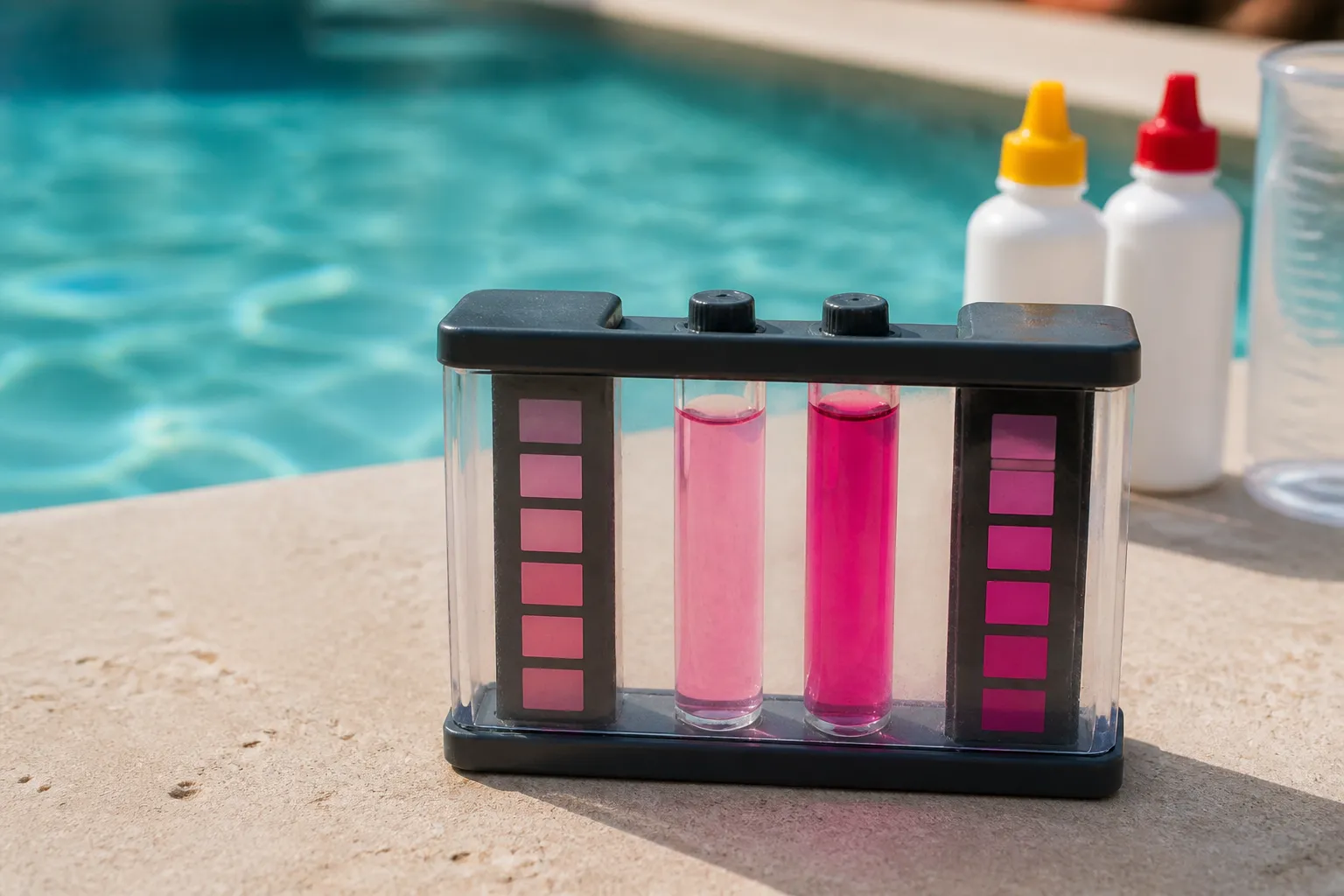
Combined chlorine in your pool isn’t just an unpleasant chemical reading—it’s a sign your water is no longer protecting the people in it.
During the summer months, a property owner reached out requesting an urgent visit. “The water reeks,” she explained. “It’s absolutely overpowering—like a gymnasium locker room. My children are complaining their eyes hurt. I’m certain there’s a problem with how much chlorine is in this pool.” I unpacked my testing equipment, ran the analysis, and discovered precisely what my experience predicted: total chlorine measured 3 ppm, yet free chlorine sat at only 1.5 ppm. The issue wasn’t excess chlorine at all. The pool was starved for usable chlorine—and saturated with combined chlorine.
That unmistakable odor? Not a sign of chlorine abundance. It’s chlorine failing its fundamental task, which essentially means your pool has become a haven for harmful microorganisms wrapped in a pungent chemical announcement. And your basic test strips won’t catch it.
Throughout my years at this chasing pool chemistry around Arizona and Nevada, I’ve come to recognize combined chlorine as the overlooked adversary most swimmers and property managers have never learned about. Understanding its role transforms how you approach water maintenance—and makes your pool genuinely safer.
Why Combined Chlorine Is Worse Than You Think
Most people don’t grasp the full weight of what combined chlorine does to a pool. The unpleasant scent and the eye irritation are merely surface-level consequences. The genuine danger runs much deeper.
The chemistry deserves your attention, because it directly affects who uses your pool and how safe they are.
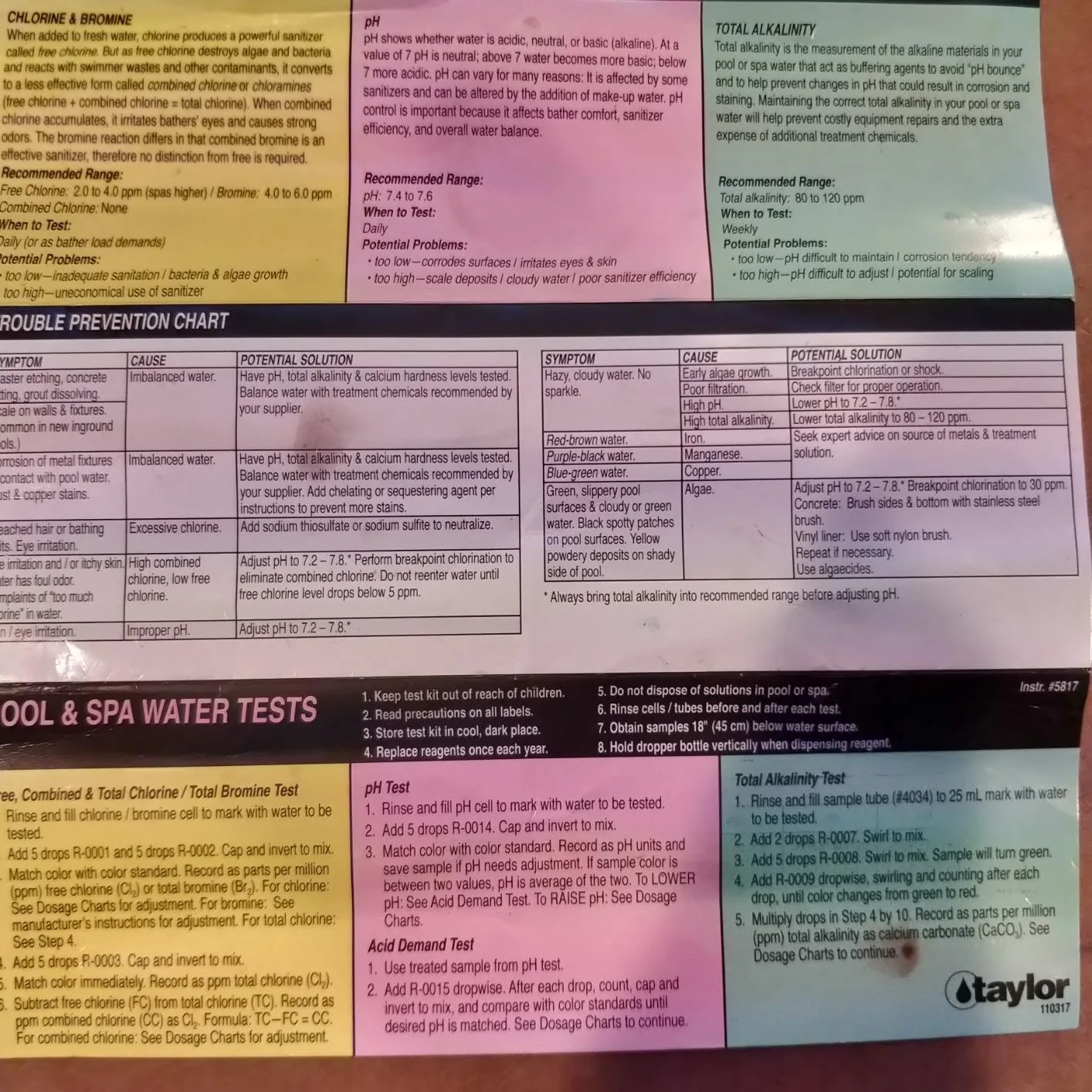
Free chlorine represents the chlorine molecules actually performing disinfection work—hypochlorous acid (HOCl) and hypochlorite ion (OCl⁻) that neutralize pathogens, viruses, and unwanted algae growth. This is what defends your swimmers from contamination. Maintain this between 1–3 ppm in standard pools and 3–5 ppm in heated spas.
Combined chlorine (referred to as chloramines in technical discussions) is generated when free chlorine encounters nitrogen sources from pool users—ammonia expelled through perspiration and bodily waste, organic molecules from skin oils, nitrogen-based compounds found in personal care products. The crucial detail: chloramines deliver roughly one-eightieth the sanitizing punch of free chlorine. Yet they excel at triggering respiratory irritation, eye discomfort, and that recognizable chemical stench.
Total chlorine is the combined measurement of free chlorine and combined chlorine together. This introduces the core problem. Most basic test strips report only total chlorine. When your strip reads 3 ppm, you’re left guessing—there’s no way to know whether you’re looking at active sanitizer or inert, irritating chloramine buildup.
The calculation is straightforward: Combined Chlorine = Total Chlorine minus Free Chlorine. Suppose your total chlorine result is 3 ppm while free chlorine registers at 1 ppm—that means 2 ppm exists as combined chlorine. The CDC’s established standards for public aquatic facilities cap combined chlorine at 0.4 ppm maximum. You’d be operating at five times the approved level. Your strips would never alert you to this.
For backyard and residential pools, staying below 0.4 ppm is still the gold standard. When combined chlorine exceeds 0.2 ppm, swimmers typically begin noticing offensive odors and discomfort. Push it past 0.4 ppm and you’re entering territory where health risks escalate—your pool shifts from a safe recreation space into something working against water quality.
None of this has to happen. The solution is completely within your control. But you cannot manage what remains invisible to you. And basic test strips cannot expose combined chlorine.
The Test Kit That Finally Revealed What That Smell Actually Meant
The pungent aroma that so many attribute to “strong chlorine” actually broadcasts a failure—chlorine isn’t functioning as it should. Your senses will mislead you without supporting data. A proper testing system reveals the difference between assumption and reality.
What works
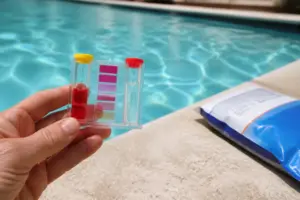
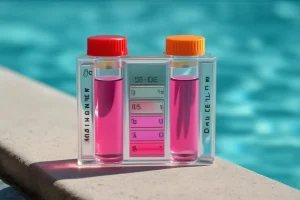
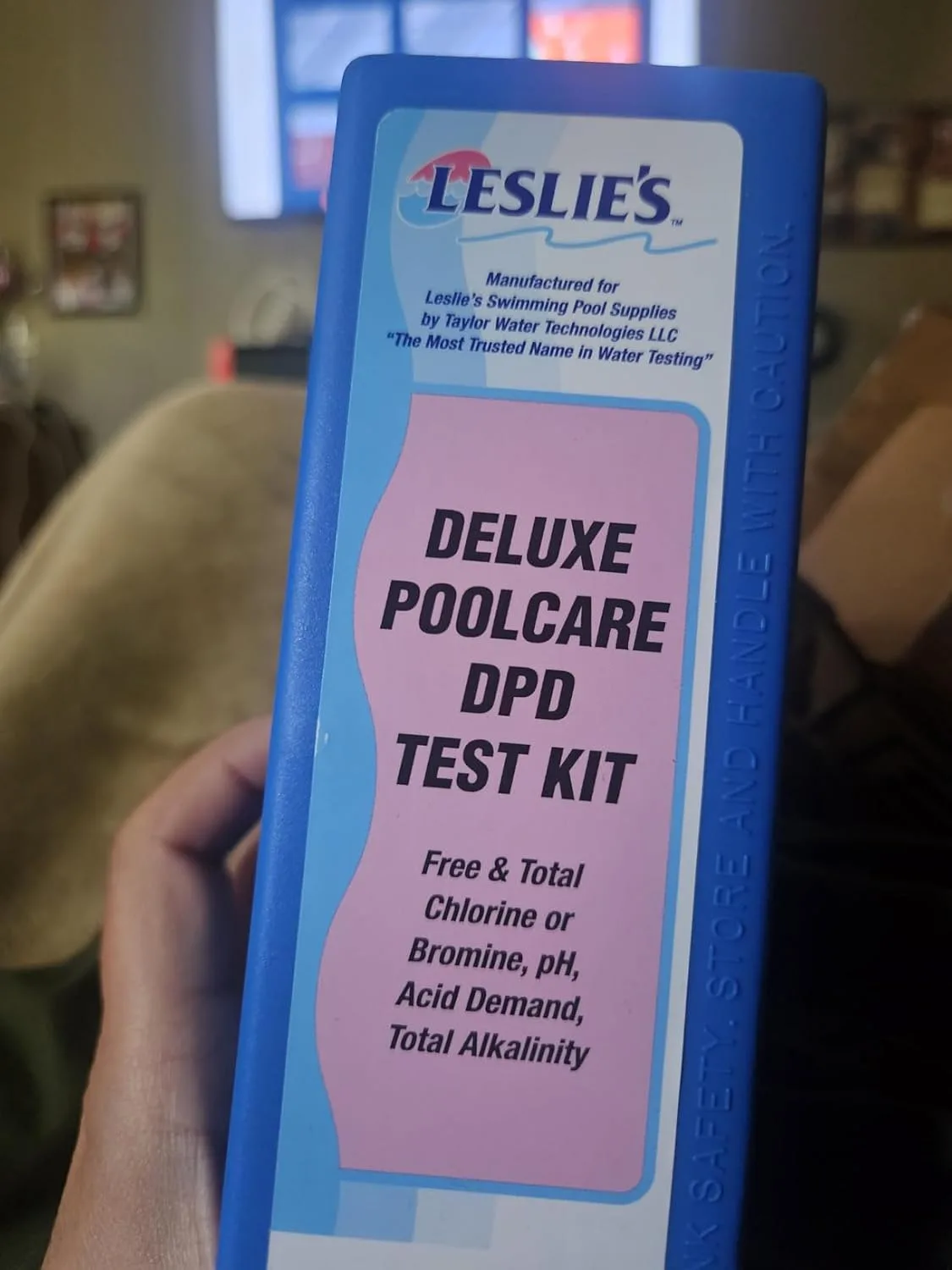
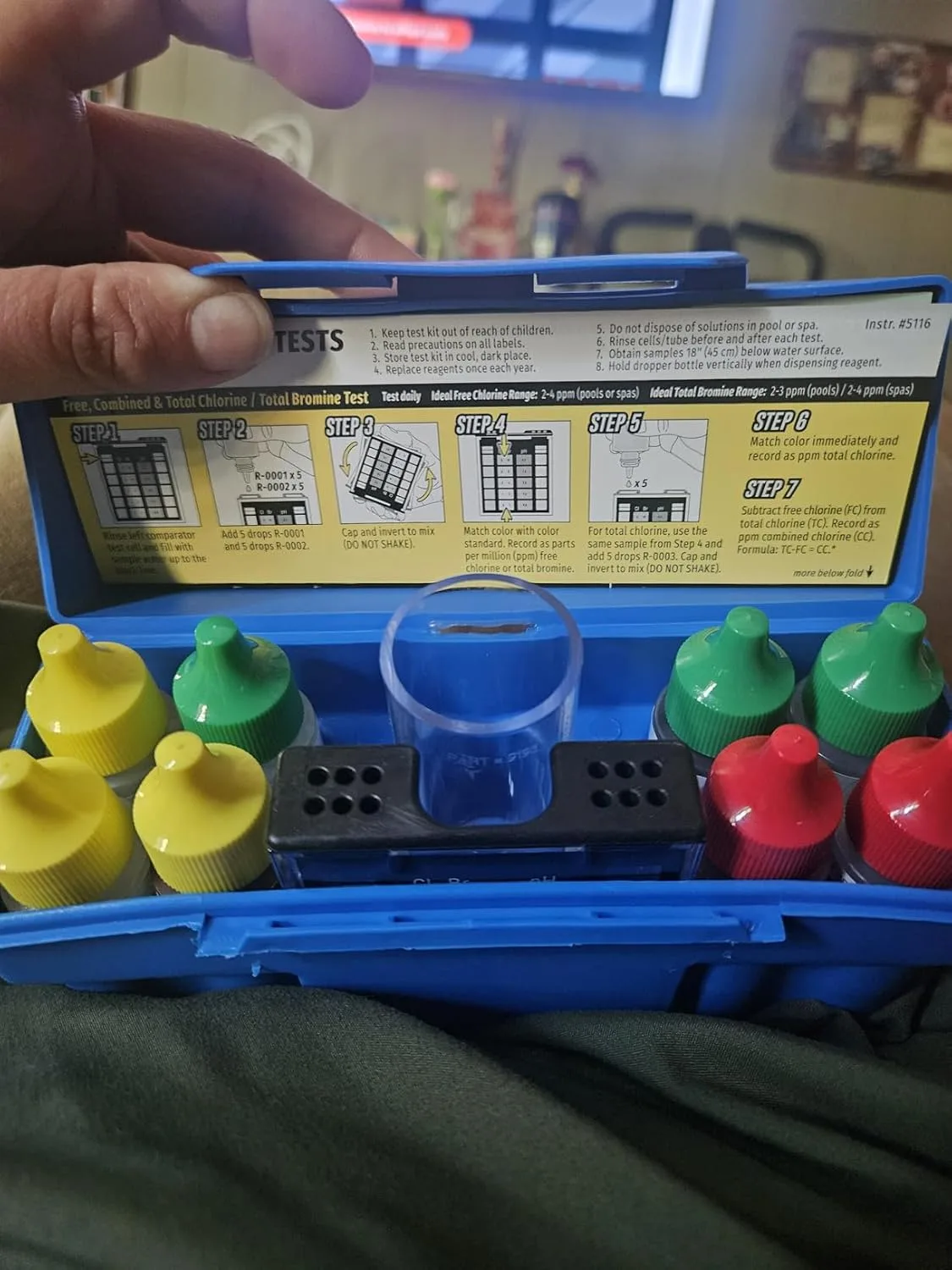
- DPD chemistry using color-indicator vials provides immediate visibility into the disparity between total and free chlorine—fast results without electronic delays or guessing at fading comparisons.
- A complete testing panel covering chlorine balance, pH status, alkalinity reserves, acid requirement, hardness, and stabilizer concentration means every factor gets checked without buying modular kits piecemeal.
- Chemical reagents maintain their accuracy throughout the year, eliminating uncertainty about whether deteriorating test materials are still dependable.
What doesn’t
- Reagent bottles require annual or biennial replacement, meaning your testing expenses extend beyond the initial kit investment.
- Matching colors under direct sunlight or dim conditions introduces frustrating variability—consistent lighting becomes essential for reliable interpretation.
I almost didn’t buy this kit when I started, thinking my eyes and a pool store test strip were enough—until I realized how many times I’d been treating symptoms instead of root causes. The Taylor K-1004 DPD, 6-in-1 Pool Test Kit changed that for me and every homeowner I’ve recommended it to.
About This Article
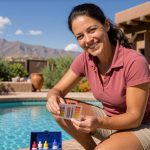
Written by Nadia Caldwell. Backyard pool owner and water chemistry nerd. After years of chasing down cloudy water and algae blooms on my own pool and my neighbors', I now write about pool maintenance, water treatment, and everything chlorine-related for everyday pool owners. More about this site.
Scope and limits. Nadia is a pool owner who reads chemistry, not a certified pool professional. Follow label directions on every chemical, never mix them, and use a certified pool operator for equipment and sanitizer system work.
Verify this against a primary source
Specifics change, and your situation may differ from the one described here. These are the authorities worth checking directly:
- World Health Organization — guidelines for safe recreational water environments
- Pool & Hot Tub Alliance — water chemistry and pool operation standards