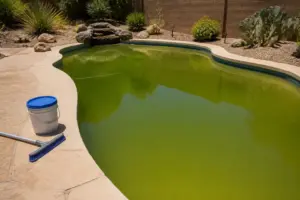
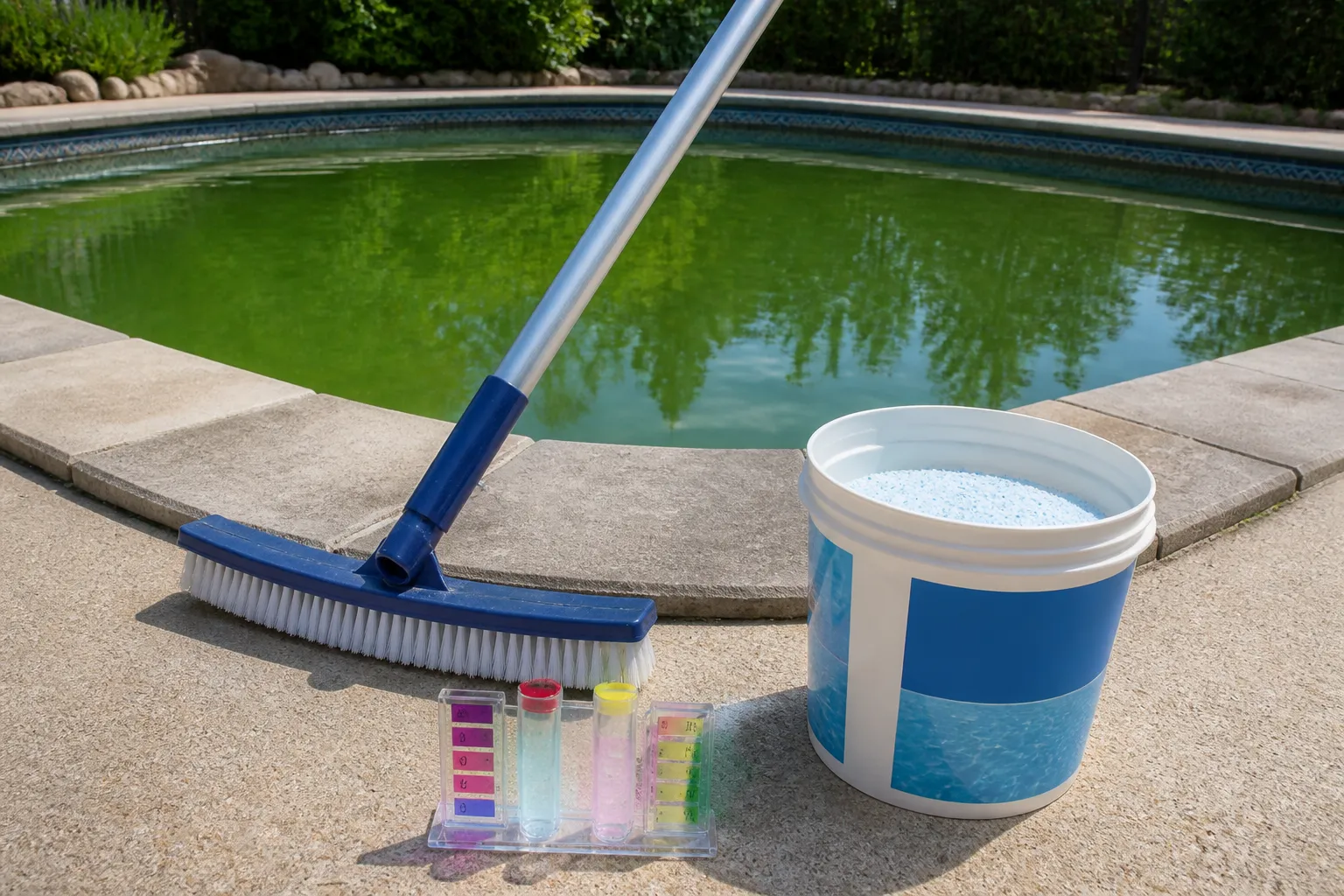
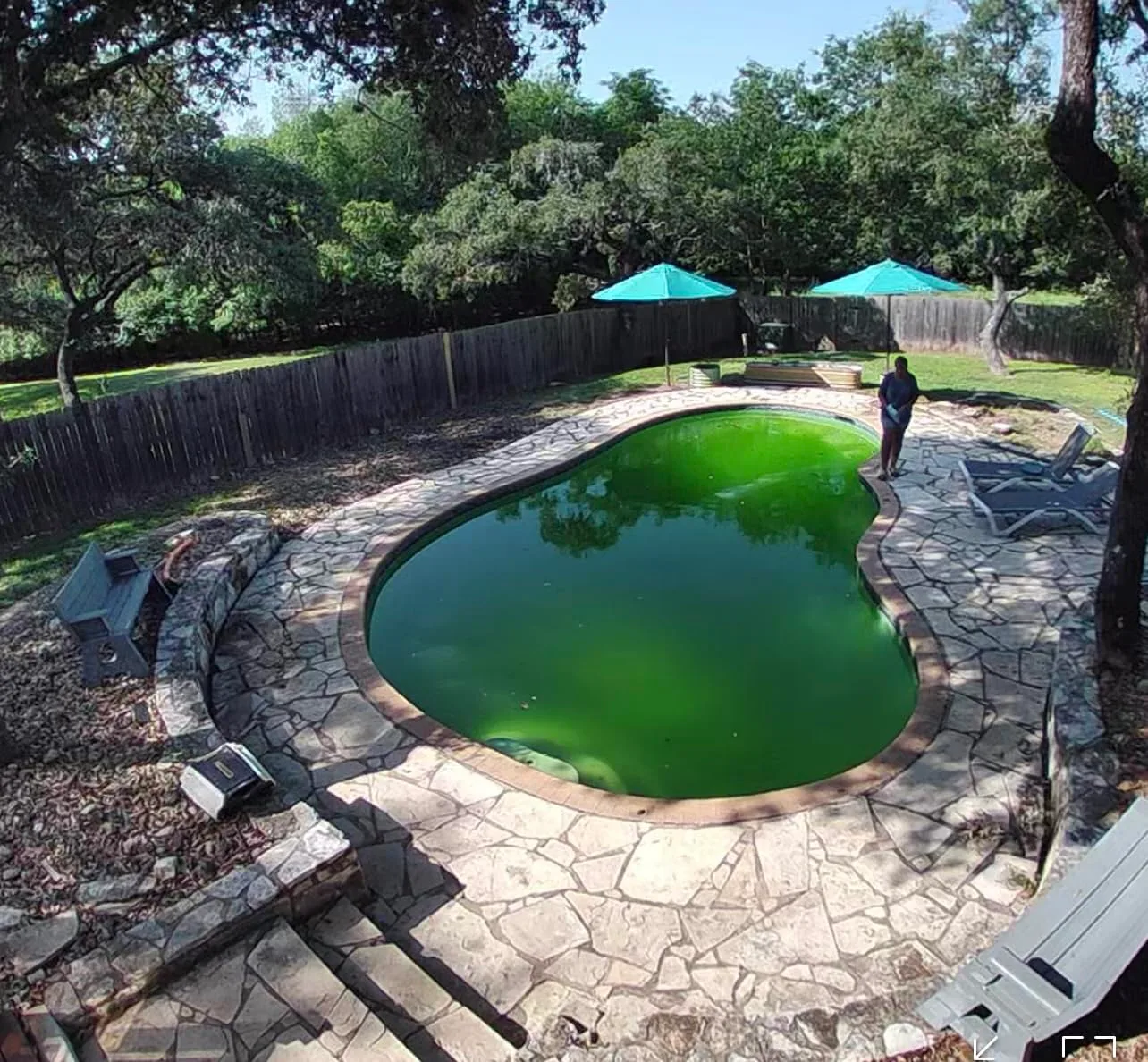
Late April arrives, you pull the winter cover back, and what greets you resembles pond water thick enough to stand a brush in. The pool you winterized in November with flawless water balance has transformed into a brackish, opaque mess, and now you’re calculating whether to surrender $800 to a professional crew.
Hold that thought. Over years of watching pools closely around Arizona and Nevada, one pattern emerged with absolute clarity: green water in spring is almost always within reach of a determined owner working alone, no credentials required. Resolution typically spans 3–7 days of steady maintenance, not advanced knowledge. Success hinges on executing things in proper sequence.
I’ve documented pool owners racing to buy shock at 2 p.m., dumping it blindly without checking pH levels, neglecting to brush surfaces, and then discovering their filter plugged solid by nightfall. Simultaneously, I’ve observed owners who applied a methodical, step-by-step approach extract transparent water from that same murky green in five days. The dividing line isn’t talent or some magical understanding of chemistry—it’s following the correct order and showing up consistently.
What follows is a complete walkthrough: how to evaluate green water before treating it, which chemicals work and in what amounts, the reason certain products matter over others, and the exact sequence that produces results. You’ll finish this knowing whether recovery takes forty-eight hours or a full week, plus you’ll have a specific shopping list that prevents throwing money at the wrong purchases.
Why a Green Pool Is Worse Than You Think
Discolored water represents far more than an aesthetic nuisance—it signals water chemistry in freefall, and conditions deteriorate rapidly if you delay response, potentially inflicting permanent damage to your system components.
When autumn closure happens, you’re theoretically sealing a well-calibrated environment. Throughout the winter months, without sunlight exposure and with circulation dormant or minimal, dormant algae spores residing within the water column or coating interior surfaces begin awakening as temperatures climb. If that cover transmits light through its material, or rainwater accumulated atop it and created a six-month algae incubator, you’re starting from behind. Layer on top of this the typical situation where pools winter with excess pH and total alkalinity, and spring restart triggers an algae explosion the instant water begins moving again.
The coloration itself isn’t the core concern—the danger erupts when correct procedures get skipped or executed backwards:
- Filter media saturates completely within hours, not a gradual accumulation. Pools choked with algae biomass can elevate filter gauge readings by fifty percent in just four to six hours. Absence of frequent pressure monitoring means you’re operating in darkness until excessive pressure forces an automatic shutdown—by then circulation has stopped and algae proliferation accelerates dramatically.
- Applying oxidizer without addressing pH wastes expense and effort. At a pH reading of 8.2 (the winter baseline for many pools), chlorine’s killing power degrades substantially, converting into less effective forms. Watching owners double, even triple their shock addition because initial readings showed no improvement—only to see their chemical budget evaporate with zero results—became a familiar frustration.
- Deploying algae-killing agents during initial treatment guarantees lost money. These additives perform optimally within a narrow chlorine band—above 5 ppm but beneath 10 ppm. Introduce them when your oxidizer dose creates 15+ ppm chlorine, and the free chlorine neutralizes the algaecide compound before it contacts a single algal structure. I’ve observed owners invest seventy dollars in algaecide products only to watch them neutralized in moments.
- Dead algae particles drifting through water registers as treatment failure to untrained eyes. Once algal colonies expire, color transforms to grey-blue and suspension persists for one to two days while filtration removes particles. First-time pool handlers frequently misinterpret this phase as treatment malfunction. It signals progress. But reactive owners respond by pouring in additional chemicals, doubling recovery duration unnecessarily.
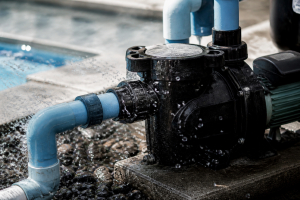
- Harm to mechanical systems appears subtly, revealing itself seasons later. Media beds dormant through winter frequently develop flow corridors—spaces where water bypasses sand and takes shortcuts rather than filtering uniformly. Starting treatment without addressing this condition, then pushing algae-heavy water through a compromised filter without constant pressure checks, forces organic debris into gaps that resist cleaning. I’ve replaced $2,000 filter vessels because spring reopenings proceeded without this foundation step.
Fortunately, adhering to the correct sequence when clearing green water eliminates these pitfalls entirely. The tradeoff: you’ll invest three to seven consecutive days in water analysis, manual surface scrubbing, and pressure gauge surveillance.
The Oxidizer That Returned My Pool to Clarity in 36 Hours Rather Than Seven Days
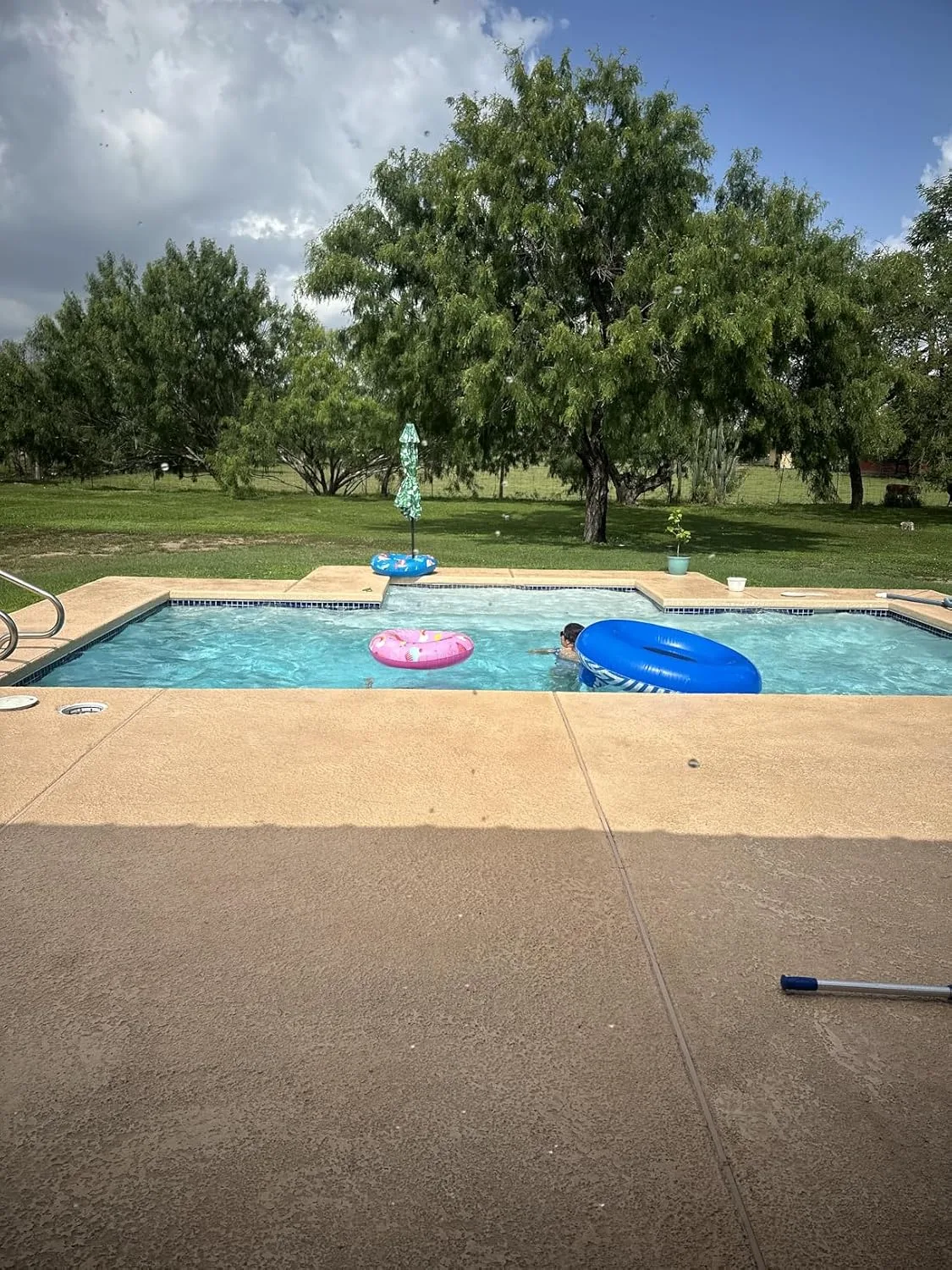
Watching green water and knowing you need swimmable conditions before summer heat intensifies makes urgency real—your spring recovery depends on a shock formulation potent enough to obliterate serious algal blooms in a single treatment without requiring a second round midway through.
What works
- Industrial-strength concentrations eliminate the need for bucket-sized quantities dispensed across 10,000-gallon increments—one application typically completes spring restorations without escalation in standard reopenings.
- Accelerated destruction of mature algae develops noticeably; cloudiness dissipates within thirty-six hours when dosed precisely, contrasting sharply with conventional shock’s five-to-seven-day timeline.
- Thorough dissolution prevents granular sediment accumulation on basin surfaces, trimming vacuuming frequency and reducing backwash cycles throughout the recovery window.
What doesn’t
- Availability remains limited compared to standard mass-market offerings, necessitating careful measurement—inaccurate volume calculations introduce over-saturation risks and extend pre-swim waiting periods unnecessarily.
- Per-application cost exceeds typical retail shock pricing, though total consumption drops and faster recovery cuts overall chemical spending, yielding net savings despite higher unit price.
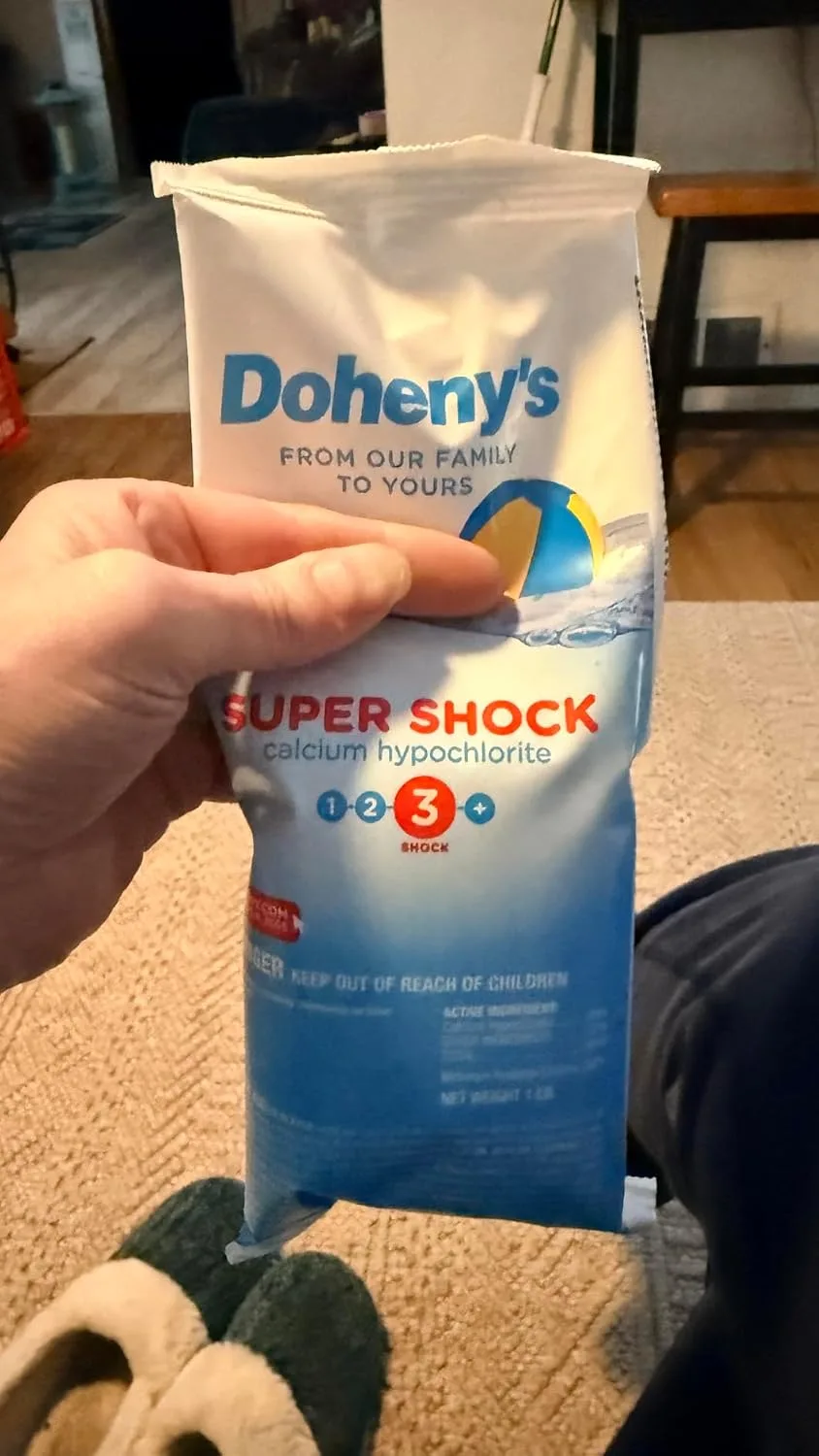
I’ll admit: the first time I ordered this instead of the 50-pound bucket from the warehouse store, I second-guessed myself standing poolside with the math running through my head. But those 36 hours of clarity proved the math right. Grab Doheny’s Super Pool Shock—Pro-Grade Chlorine Shock and dose by your actual water volume—the payoff is a swimmable pool before Memorial Day without the guesswork.
About This Article
Written by Nadia Caldwell. Backyard pool owner and water chemistry nerd. After years of chasing down cloudy water and algae blooms on my own pool and my neighbors', I now write about pool maintenance, water treatment, and everything chlorine-related for everyday pool owners. More about this site.
Scope and limits. Nadia is a pool owner who reads chemistry, not a certified pool professional. Follow label directions on every chemical, never mix them, and use a certified pool operator for equipment and sanitizer system work.
Verify this against a primary source
Specifics change, and your situation may differ from the one described here. These are the authorities worth checking directly:
- World Health Organization — guidelines for safe recreational water environments
- Pool & Hot Tub Alliance — water chemistry and pool operation standards