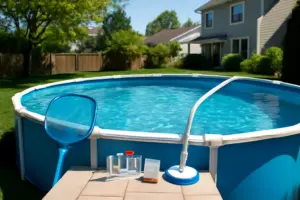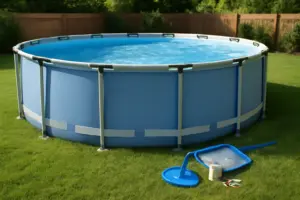
Walk up to a three-year-old above-ground pool in a Scottsdale backyard, and the setup tells you everything. The water itself reads 7.4 pH and 2.0 ppm free chlorine — chemistry locked in tight. The filter’s humming along without complaint. But then you notice the entry: a metal ladder bolted to the pool wall, moving slightly with each person’s weight. Around its base, the grass has surrendered entirely. The deck surface? Bare ground and scattered patio stones that shift when you step on them. The pool equipment and chemical investment tells one story; the space around it tells another. This disconnect frustrates me because I’ve watched homeowners spend considerable money on filtration, testing equipment, and water treatment, only to overlook the single structural element that shapes how their backyard actually functions. That element is a deck around above ground pool — and fixing it changes everything about owning one of these pools.
Why That Wobbly Ladder Is a Bigger Problem Than It Looks
Most above-ground pool owners don’t realize what a wobbly ladder actually costs them across three different dimensions: safety, water chemistry, and equipment longevity.
The safety issue cuts deepest. Consumer Product Safety Commission data shows that entry and exit zones account for a substantial share of residential pool injuries — slips, falls, structural failures. An unstable ladder flexing against a pool wall that gives slightly under weight isn’t an entry system at all. When children are involved (and they always are when pools are involved), a ladder that shifts sideways or tips isn’t merely inconvenient; it’s a documented hazard. Most jurisdictions require railings on any elevated platform taller than 30 inches, and virtually all above-ground pools sit right at or well above that threshold.
Now consider the chemistry piece, which almost nobody thinks about. Chlorinated water dripping down the outside of that metal ladder frame and pooling against the pool wall’s uprights accelerates corrosion in ways most people never connect back to their entry system. I’ve inspected pool frames on relatively new units — three or four years in the ground — where rust and structural degradation made them look ancient. The culprit? Constant water channeling down the exterior. A well-engineered deck diverts that water away from the metal structure.
Then there’s the filter burden. Bare ground around an entry point becomes mud territory after rainfall. Mud gets tracked into the pool. Your filter then processes higher particulate loads on every cycle, clogging faster and running hotter. I’ve logged water tests at properties with poor entry drainage and consistently documented elevated suspended solids and shortened filter runtimes compared to installations with clean, hard-surfaced entries.
The solution exists across multiple price points and complexity levels, from modest platforms to comprehensive installations. Your circumstances determine which approach makes sense.
Your Deck Around Above Ground Pool Options: From Budget to Full Transformation
Three distinct paths exist for addressing your entry situation — and the optimal choice depends on your financial capacity, available yard space, and commitment level to the project.
Option 1: Freestanding Platform Deck (Most Popular)
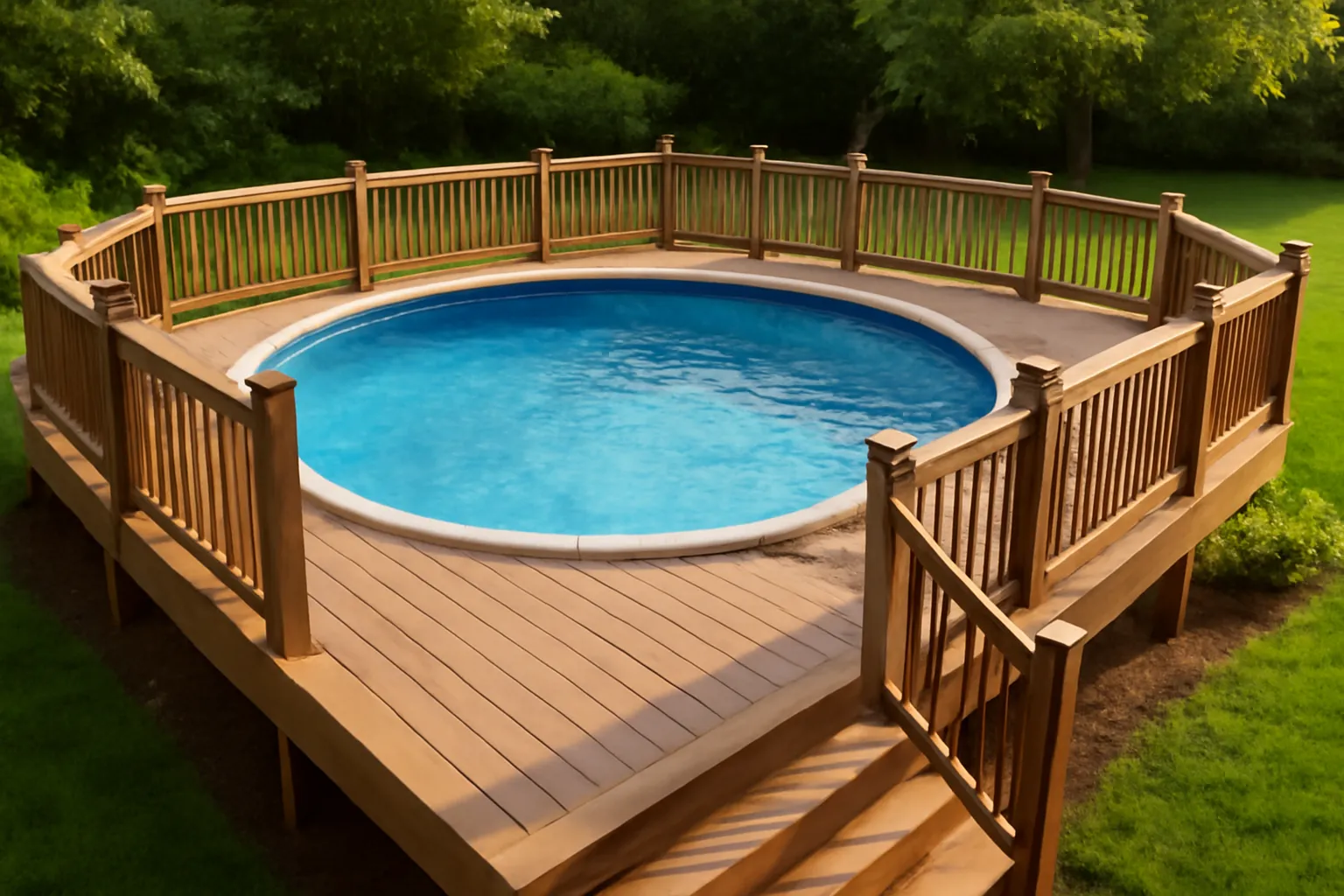
A freestanding deck above ground pool stands independently at pool-wall height on one or several sides. It connects to nothing — not your home, not your pool structure — which typically streamlines permitting requirements (though always verify with your local building department first). This approach dominates the residential market for understandable reasons. Budget-conscious DIY builds land in the $1,500–$5,000 range; hiring professionals pushes costs to $3,000–$10,000. Your material options break down as follows:
- Pressure-treated lumber — bottom-tier pricing at $2–$4 per board foot. Demands yearly sealing and staining work. Splinters become inevitable as seasons pass, particularly in constantly wet conditions. Gets the job completed but requires relentless upkeep.
- Composite decking (Trex, TimberTech) — $5–$10 per board foot and genuinely justifies the premium when moisture never leaves. Resists splinter formation, never rots, eliminates the need for seasonal sealing protocols. It’s what I’d pick for any pool deck that gets constant moisture and sun.
- Aluminum deck kits — bolt-together assemblies with no cutting required, generally priced $2,000–$6,000 for starter configurations. Minimal maintenance demands and lightweight construction, though you’re confined to predetermined shapes and sizes.
Regardless of material selection, proper footings are non-negotiable. Concrete piers sunk below your region’s frost line or sono tube foundations. Never, ever build on stacked concrete blocks or bare ground adjacent to water features. I’ve encountered numerous “temporary” block-based decks still standing five or six years later, rotting at their base and tilting dangerously toward the pool wall. Don’t replicate that mistake.
Option 2: Wraparound Deck
A wraparound deck above ground pool encircles your entire pool and produces a landscape transformation that genuinely competes with in-ground aesthetics. It’s simultaneously the most visually impressive and most financially demanding choice, ranging from $5,000–$15,000 and climbing based on pool dimensions and material selection. Demands rigorous structural engineering since you’re calculating for multiple simultaneous users, not just one or two lounge chairs. Worth the expense if your long-term pool commitment is ironclad and your budget accommodates it. If you’re still uncertain whether this pool will remain a permanent fixture in three to five years, begin conservatively.
Option 3: Partial Entry Platform (Budget Sweet Spot)
This is where practical thinking meets financial reality: a single 8×10 or 10×12 section positioned at your primary entry point, complete with a gate structure and stairs descending into the water. DIY completion costs between $800–$2,500 and this genuinely qualifies as a weekend project for someone with intermediate carpentry skills working from above ground pool deck plans DIY documentation available through lumber suppliers or internet resources. You achieve legitimate safety improvements, significant visual enhancement, and an actual entry mechanism — without straining your household budget. This is precisely where the solution I’m about to describe slots in most effectively.
The Ladder That Finally Stopped Me From Holding My Breath Every Time a Guest Climbed It
An unstable ladder isn’t simply an eyesore—it represents a genuine risk exposure that makes you tense whenever someone accesses the pool. Two years passed before I addressed mine, telling myself a replacement would eventually materialize, except every option felt either inadequate or excessively priced until I discovered an entry solution that delivers genuine stability and doesn’t require breaking the bank.
What works
- Absolute steadiness throughout weight distribution—no metallic rattling or lateral swaying that triggers concern when guests are climbing
- Component-based assembly means you can customize it for your specific pool wall dimension and ground terrain without demanding specialized installation expertise
- The surround guard eliminates that ring of dead vegetation at the pool’s perimeter, saving you from awkward conversations with neighbors about brown grass patches
What doesn’t
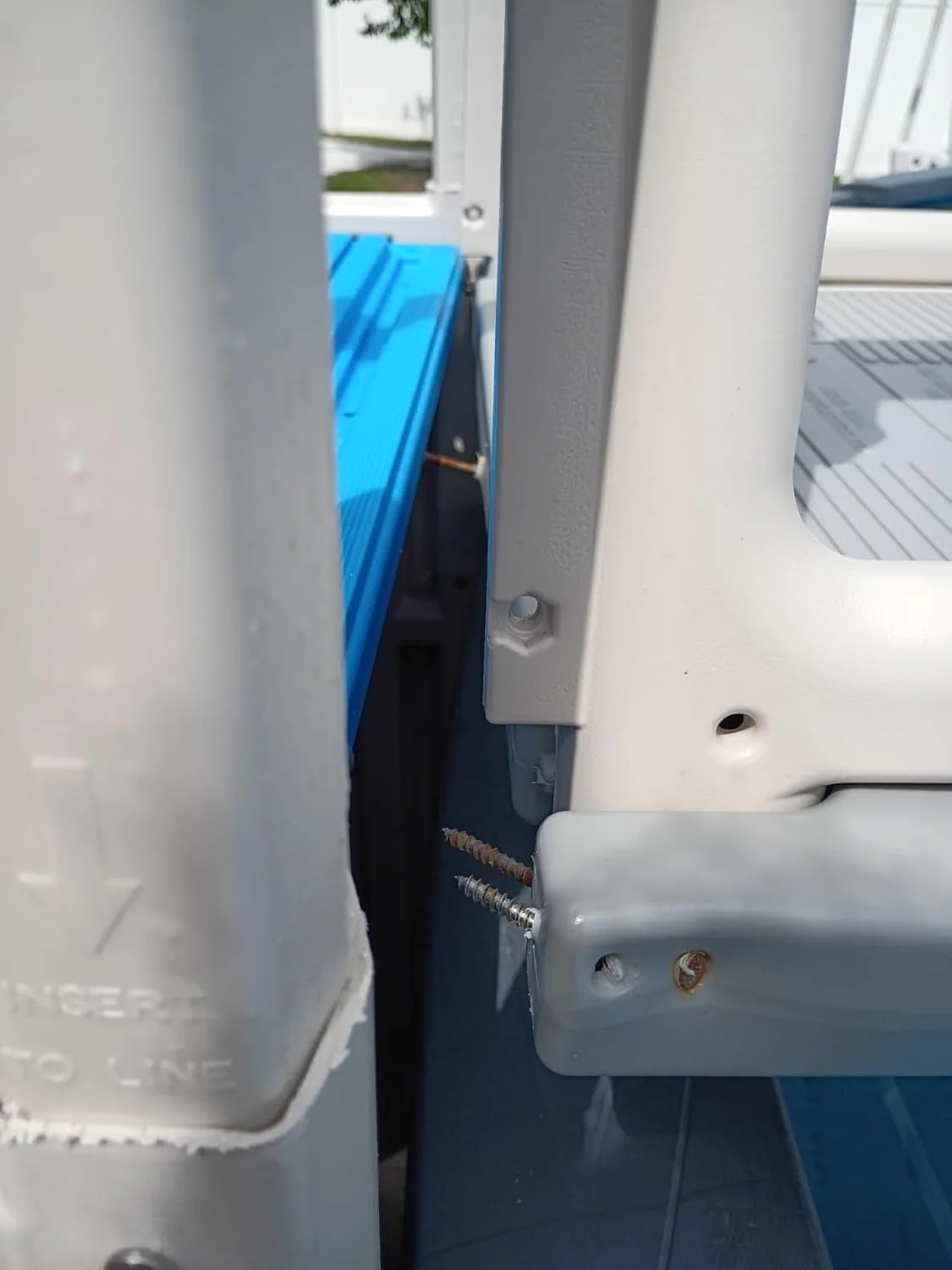
- Setup demands more clock time than advertised—partner assistance and a solid afternoon beat the manufacturer’s promised 30-minute assembly window significantly
- Uneven terrain requires pre-installation preparation work; you’ll need to level and shim your ground surface before any final assembly begins
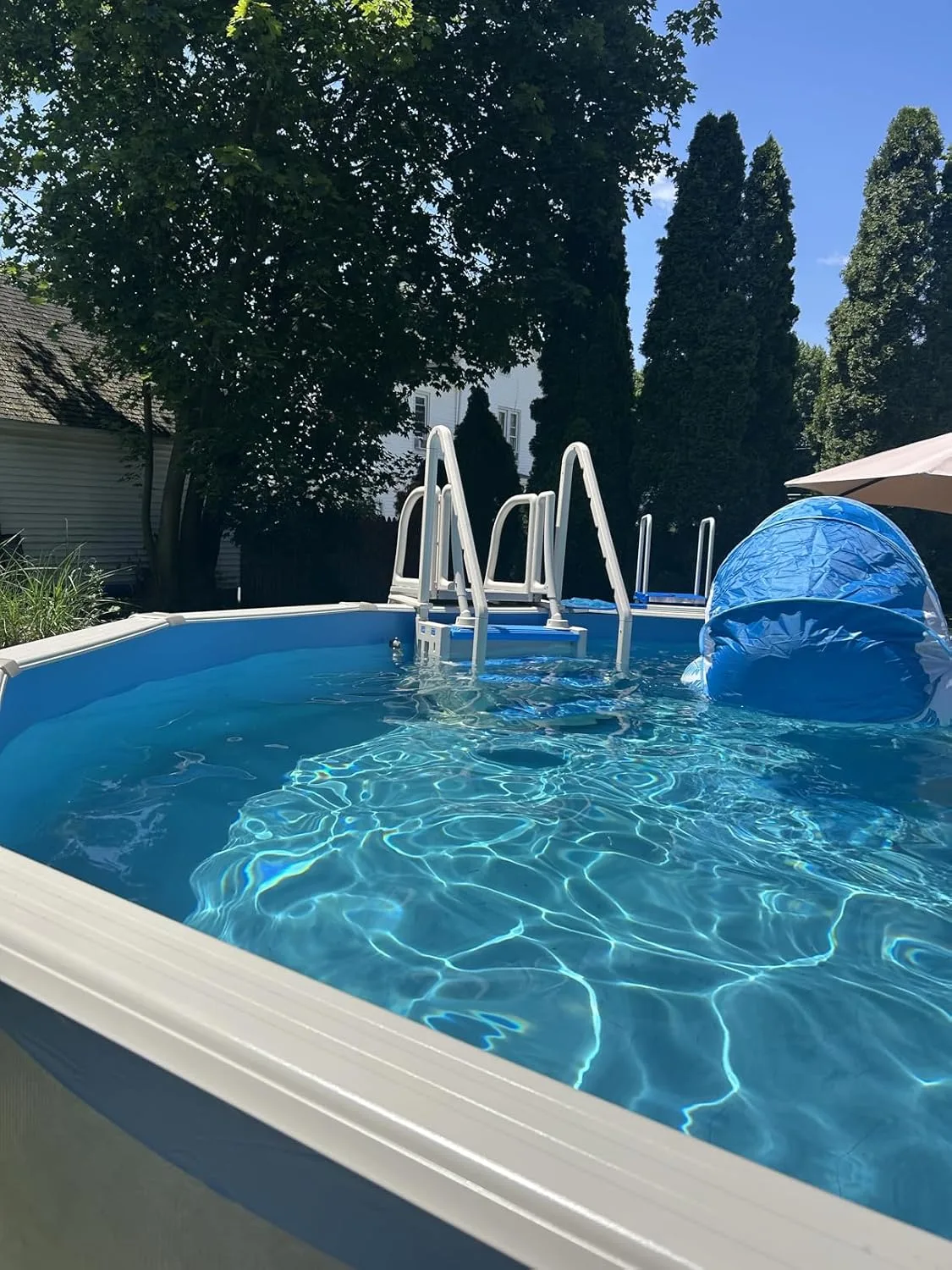
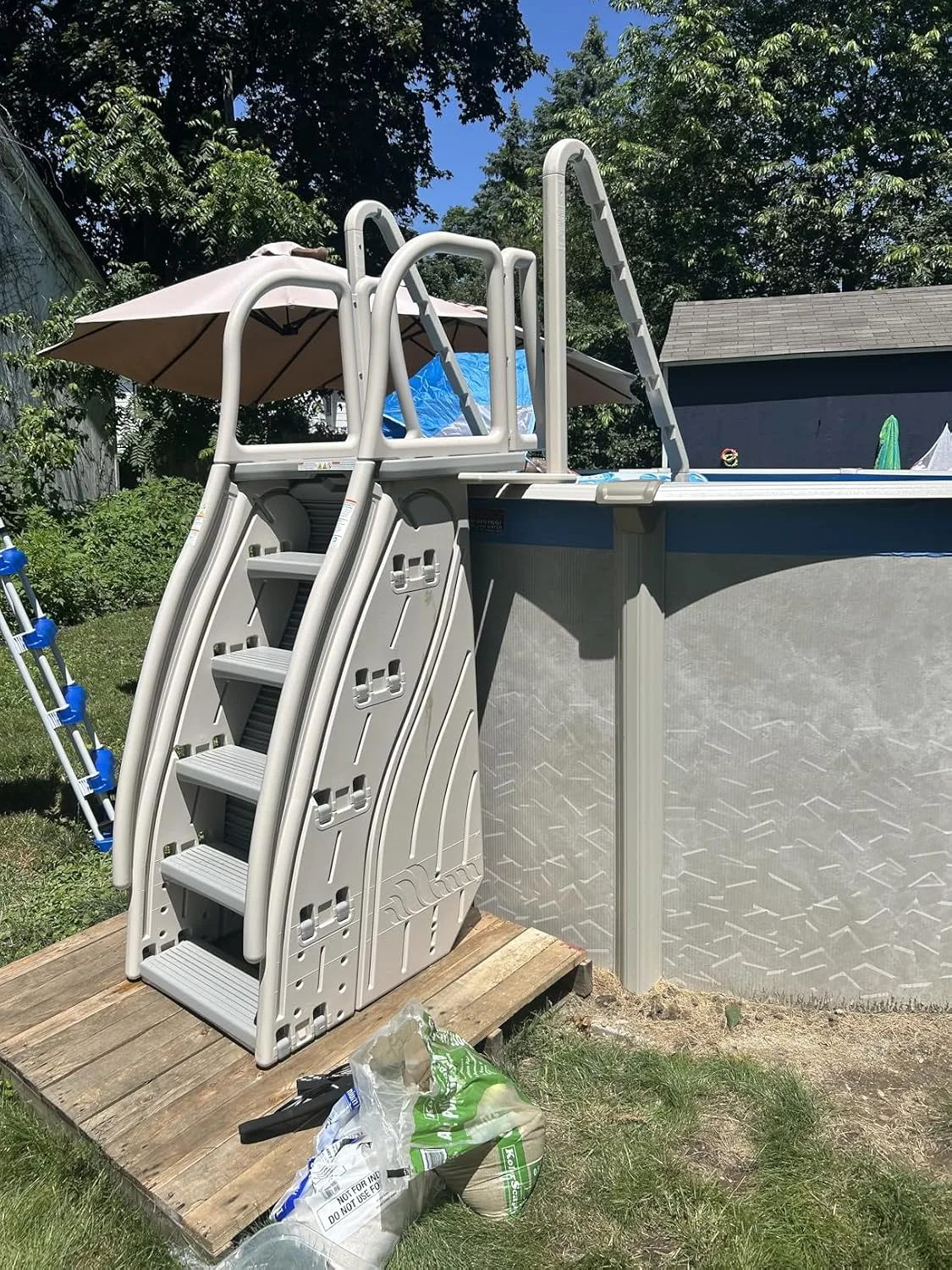
I almost talked myself out of upgrading because I figured any above-ground pool ladder would feel the same, and I didn’t want to waste money on something that wouldn’t really solve the wobble. But after installing the Confer Plastics 9300 Roll-2-Guard Modular & Adaptable Above Ground Pool Entry System (9300 with Step-1X), I realized how much that ladder anxiety had been quietly eating into my pool enjoyment.
About This Article
Written by Nadia Caldwell. Backyard pool owner and water chemistry nerd. After years of chasing down cloudy water and algae blooms on my own pool and my neighbors', I now write about pool maintenance, water treatment, and everything chlorine-related for everyday pool owners. More about this site.
Scope and limits. Nadia is a pool owner who reads chemistry, not a certified pool professional. Follow label directions on every chemical, never mix them, and use a certified pool operator for equipment and sanitizer system work.
Verify this against a primary source
Specifics change, and your situation may differ from the one described here. These are the authorities worth checking directly:
- World Health Organization — guidelines for safe recreational water environments
- Pool & Hot Tub Alliance — water chemistry and pool operation standards