You’ll encounter two conflicting statements poolside and online with striking regularity. The first claims “Chemistry is everything—get your chlorine and pH dialed in, and clarity follows.” The second insists “A filter does the real work; chemistry is just support.” Here’s the truth neither camp fully grasps: one of these statements is incomplete, and chasing it alone will leave you frustrated. Chemistry without adequate filtration is like mopping a floor while dirt keeps falling from the ceiling. Your sanitizer gets consumed fighting suspended debris instead of actual pathogens, your chlorine demand skyrockets, and no test kit result will ever satisfy you. I’ve met countless pool owners—standing right there with their perfectly balanced readings and still-cloudy water—who learned this lesson the hard way. The clarifier is the filter. The sanitizer is the chemical. Both matter. But if your filter isn’t working, your chemistry can’t rescue you. Understanding the gap between sand versus cartridge versus DE filtration is the overlooked foundation of every crystal-clear pool I’ve had a hand in — and getting this choice wrong turns water maintenance into an expensive, exhausting guessing game.
Why Underestimating Your Filter System Costs Real Money
Most pool owners dismiss a struggling filter as a nuisance rather than a crisis point. Pressure readings climb, notes get made, and swimming continues. In my own pool and in the pools of neighbours and family I’ve helped over the years, I’ve seen this pattern repeatedly, and it has caused trouble every single time. Let me explain why this habit is so destructive.
A filter that’s too small or plugged creates mounting head pressure, forcing your pump motor to labor harder and hotter for extended periods. That added hydraulic load—measured in PSI above baseline—degrades your pump’s mechanical life span dramatically. A decent variable-speed pump represents an $800–$1,500 investment. A filter cartridge needing a $75 refresh or a $40 DE powder top-up transforms, through neglect, into four-figure pump replacement. I’ve documented this exact sequence across dozens of properties, always preceded by identical warning signs: pressure gauges sitting 8–10 PSI above where they should be for weeks or months on end.
Inadequate filtration also destabilizes your water’s chemical equilibrium. Algal cells, decomposed organic load, cosmetic oils, and residual skin products that belong trapped in filter media instead recirculate continuously. Chlorine intended for pathogen control becomes consumed neutralizing this particulate soup. Free chlorine readings drop faster than normal, you dose additional sanitizer, and the water remains opaque. You’re trapped in a vicious cycle of chemical dosing without corresponding water quality gains.
There’s also a public health compliance layer. CDC guidelines mandate water transparency extending to the deepest pool floor at all times—not merely for visual appeal, but as a lifeguard and parental safeguard against unobserved drowning incidents. Murky water blinds the people responsible for emergency response. Filtration systems that match your pool’s volume and usage patterns form the bedrock of safe recreational water. This isn’t theatrical concern. I communicate this directly to every neighbor who asks me about it.
Solution paths aren’t complicated. Identification starts with recognizing your current filter category, validating whether it’s proportioned for your gallonage, and assessing whether it remains functional. That assessment always circles back to one core principle: matching appropriate technology to your exact operational needs.
Pool Filter Types Sand vs Cartridge vs DE: A Real-World Breakdown
Time to examine the mechanics directly. I’ll lay out the genuine strengths of each approach, identify realistic drawbacks, and clarify which scenario matches which solution—because a universal answer doesn’t exist.
Sand Filters
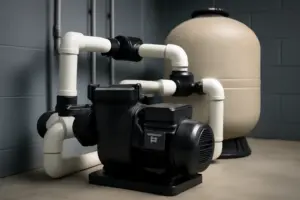
Sand filtration represents the oldest continuously deployed method in residential pool care, and longevity indicates something. Tank compartments filled with #20 silica sand intercept contaminant particles as liquid circulation passes downward. Mechanically straightforward, structurally resilient, and capable of withstanding abuse.
- Filtration capability: 20–40 microns
- Maintenance: Backwash every 1–2 weeks (consumes 200–500 gallons per cycle); replenish sand media every 5–7 years ($30–$50 per load)
- Cost: $200–$600 equipment purchase
- Best for: Secondary residences, leased residential units, high-foliage environments (deciduous trees overhead), operators seeking minimal active engagement
- Honest limitation: 20–40 micron range represents coarser filtration than alternatives—expect transparent water, not luminous brilliance
Cartridge Filters
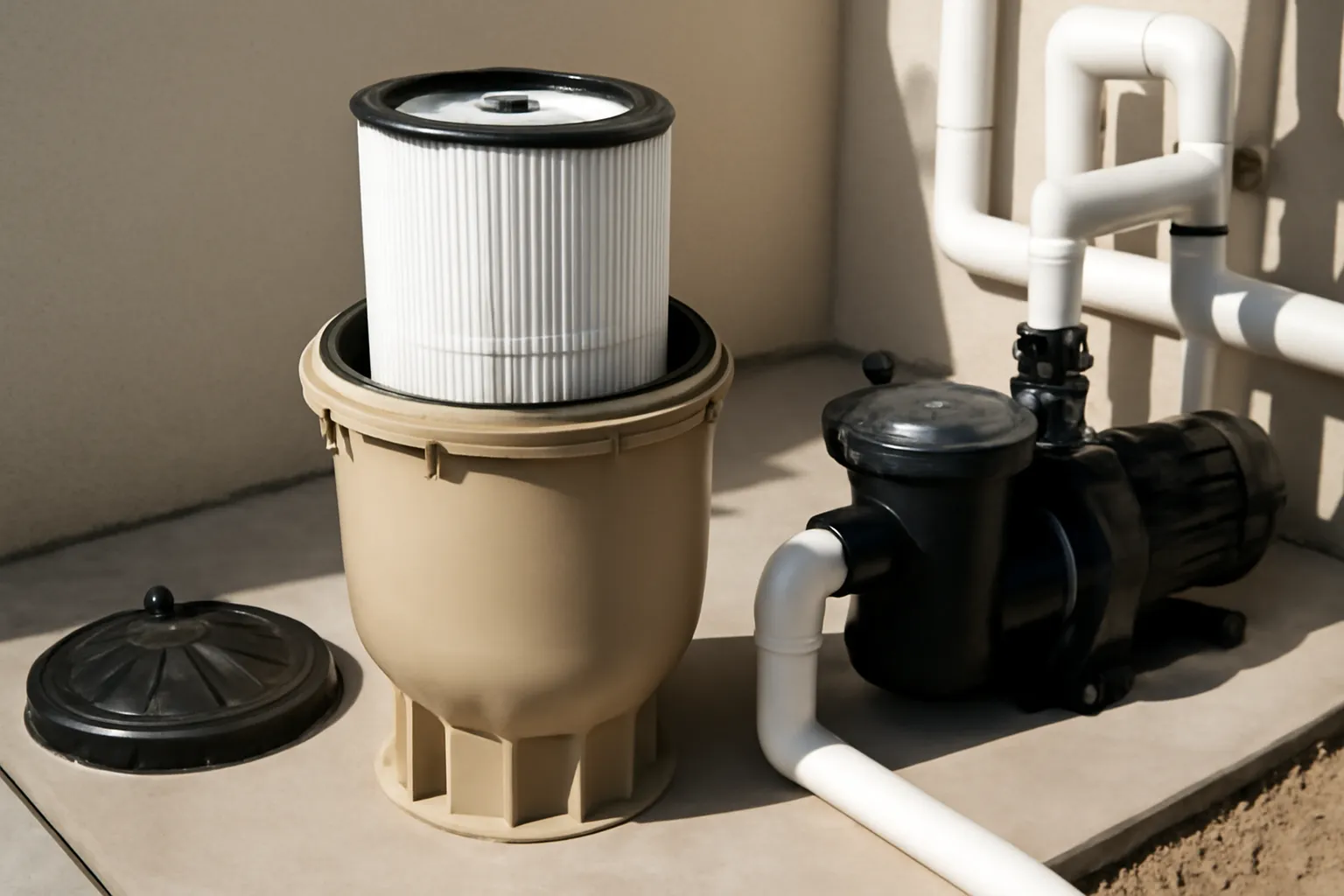
From a practical standpoint, cartridge filtration delivers the optimal balance for the typical residential setting. Pleated polyester cartridge media intercepts particles at 10–15 micron resolution—roughly 2–4× the fineness sand achieves. Backwash elimination means zero water depletion; spatial footprint shrinks considerably; reduced operational pressure extends pump service life measurably.
- Filtration capability: 10–15 microns
- Maintenance: Extract and spray rinse every 2–4 weeks; submersion-clean with filter chemical quarterly; element swap every 1–3 seasons ($50–$150 per unit)
- Cost: $200–$500 housing investment
- Best for: Homeowners pursuing authentic water clarity with sustainable upkeep demands
- Honest limitation: Genuine periodic maintenance is non-negotiable—this is the most actively engaged system of the trio; debris-loaded surroundings accelerate clogging cycles
DE Filters (Diatomaceous Earth)
DE filtration represents the ultimate threshold for water brilliance, objectively. Powdered skeletal structures from fossilized diatoms coat interior grid assemblies, achieving 2–5 micron filtration. Most bacterial organisms occupy the 1–10 micron spectrum. You will perceive tangible water quality elevation in DE-filtered pools immediately upon submersion.
- Filtration capability: 2–5 microns
- Maintenance: Backwash and replenish with fresh powder every 1–2 months; disassemble grid structure and conduct thorough rinse 1–2 annually; grid replacement every 3–7 seasons
- Cost: $400–$800 equipment acquisition; $20–$40 powder refill per session
- Best for: Clarity perfectionists, aquatic competitors, high-utilization facilities
- Honest limitation: Steepest upfront expense, most intricate upkeep protocol, DE powder triggers minor inhalation reactions (respiratory mask mandatory during application), several municipalities prohibit DE discharge due to municipal line blockage potential
Across all categories, one universal truth prevails: right-sizing filtration capacity remains non-negotiable. The formula I reference is minimum 1 square foot filtration area per 10,000 gallons of pool volume — and exceeding this standard invariably delivers superior outcomes. An oversized filter in an otherwise optimized installation outperforms an undersized one consistently.
What to Look For in a Pool Cartridge Filter Element Replacement
Should cartridge-based systems prove appropriate for your circumstances—which I endorse for the majority of residential operators—then your replacement cartridge’s build quality exerts substantial influence on performance. I’ve observed pool stewards allocate $400 toward quality filter housings, then undermine that investment by installing the bargain-bin aftermarket cartridge available. It’s strategically backwards. Below are the criteria I employ when evaluating replacement cartridge specifications.
Pleat Count and Fabric Density
Increased pleat quantity translates directly to expanded filtration surface area. Expanded surface acreage enables finer particle interception, lengthens operational intervals before mandatory cleaning, and minimizes strain transmitted to pump systems. Quality cartridges showcase uniformly-spaced, tightly-packed pleating constructed from compact polyester substrate—not sparse pleat geometries permitting small contaminants to transit unfiltered.
End Cap Quality
Cartridge terminal caps represent the failure point in discount-tier products. They demand leak-tight sealing and must endure repeated thermal cycling between chilled rinse water and heated pool water circulation. Specify cartridges incorporating robust end cap construction with precision fit geometry—any opening there allows unfiltered water to bypass media entirely, negating the filtration function.
Dimensional Accuracy
Few recognize dimensional consistency as critical. Replacement cartridges that deviate even marginally from specification dimensions will not seat flush within filter housings, generating unfiltered bypass pathways. Confirm length measurement and outer diameter parameters precisely match your housing manufacturer documentation before purchase.
When My Aging Filter Exposed Everything I Thought I Understood About Chemistry
I burned two complete seasons attributing particle-laden water to phantom chemistry deviations until I discovered an aged, deteriorated filter operating at severely compromised efficiency—a silent source of my frustration masquerading as a minor equipment detail. A cartridge system that’s degraded, undersized relative to circulation requirements, or operating beyond rated capacity leaves you battling translucent or turbid conditions regardless of whether your chlorine residual and pH readings align with textbook ranges.
What works
- Circulation handling maintains stable pressure readings throughout high-demand periods—my pressure gauge remains consistent even running continuous 24-hour circulation during summer peaks.
- Pleated cartridge geometry captures finer particulates than sand-based systems, producing noticeable water clarity improvement within one full circulation cycle following thorough backwash.
- Cleaning frequency follows predictable patterns; monthly rinse cycles combined with biannual submersion-cleaning eliminate the constant pressure-gauge monitoring required by aging systems.
What doesn’t
- Cartridge elements represent replaceable consumables—expect element renewal every 2–3 years of standard operation, which factors into annual maintenance expenditure calculations.
- Allowing pressure gauge readings to exceed 20 psi between cleanings severely compromises filtration effectiveness, reintroducing cloudy conditions within 48–72 hours of neglect.
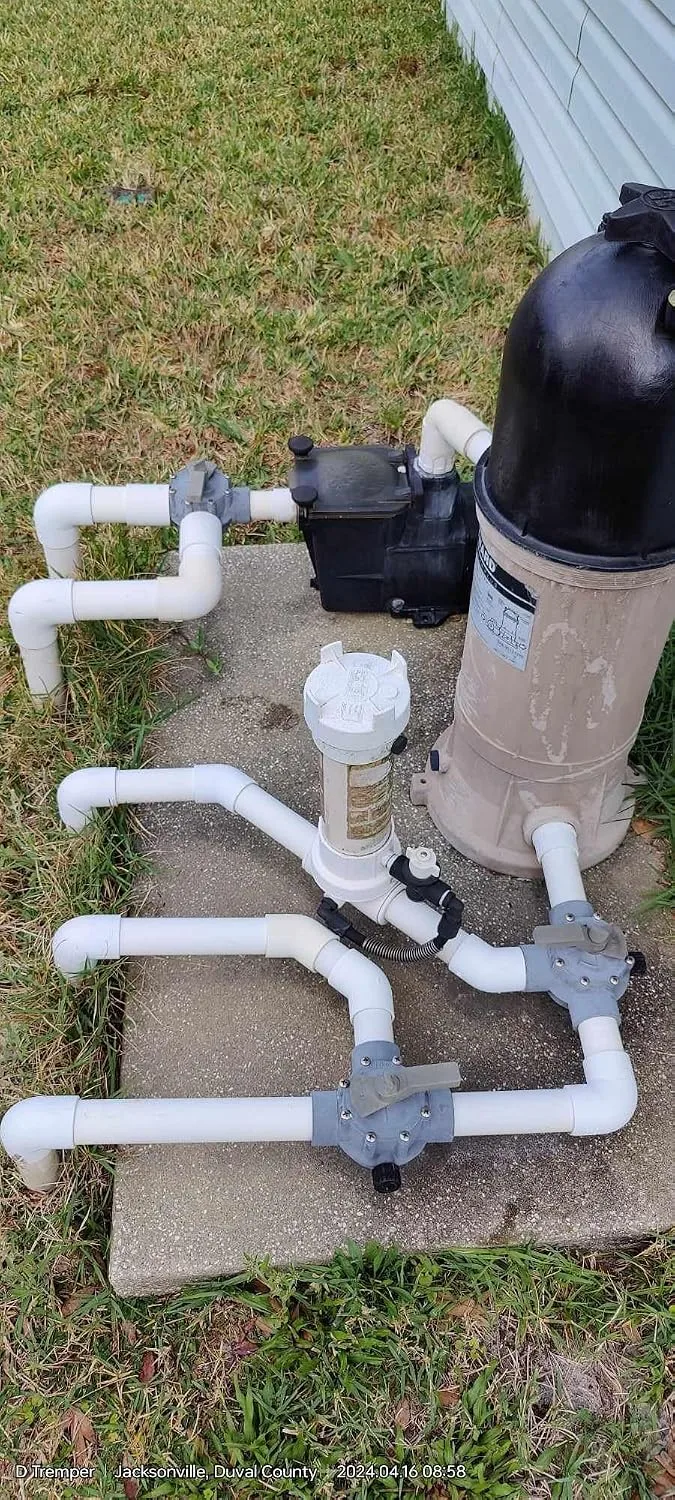
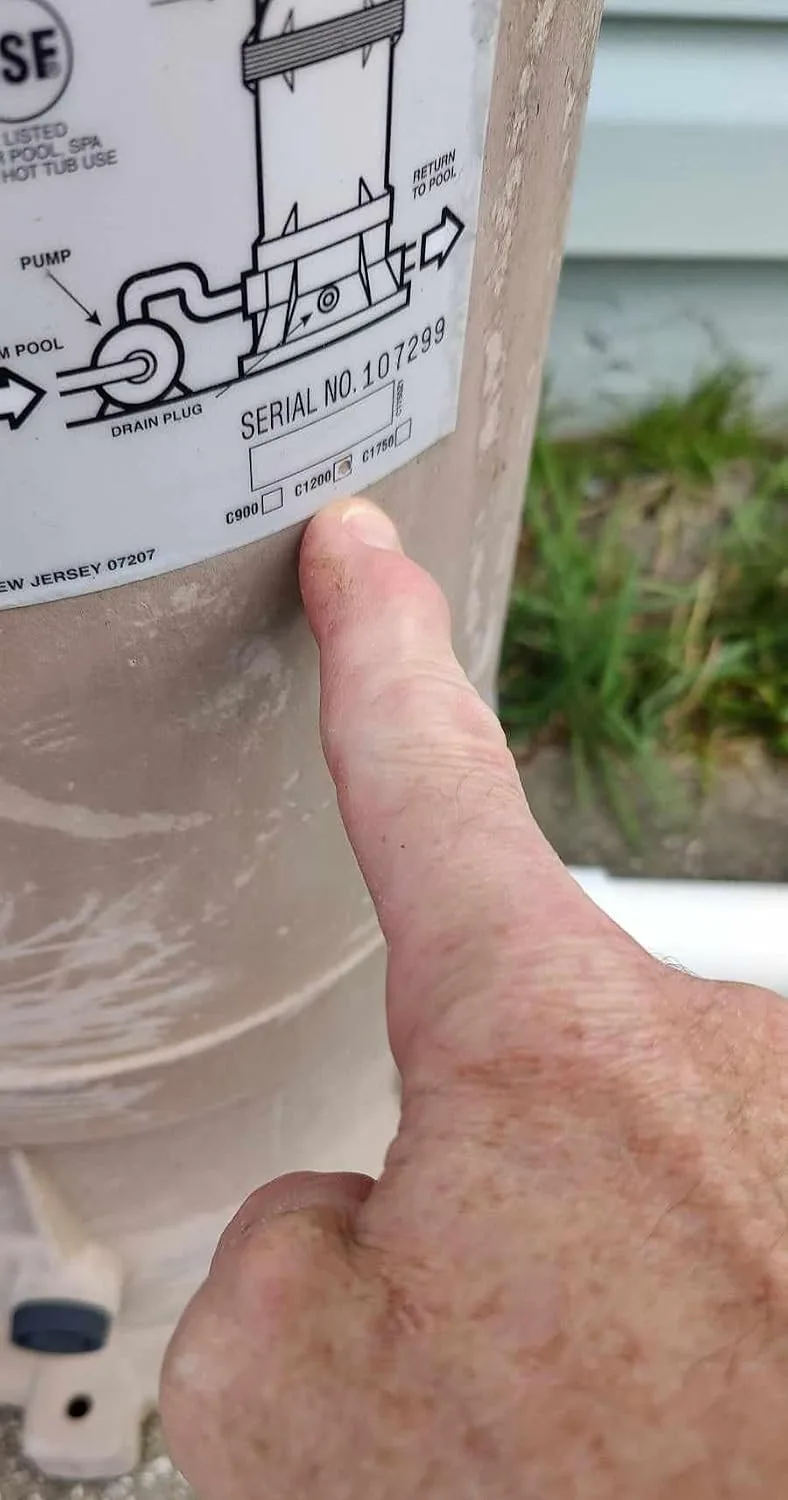
I almost gave up on this whole project last summer when the cloudiness came back after three weeks—until I checked the filter pressure and realized I’d missed my cleaning window. That one wake-up call made me a believer; I grabbed the POOLPURE C1200 Pool Filter and stuck to a real maintenance rhythm.
About This Article
Written by Nadia Caldwell. Backyard pool owner and water chemistry nerd. After years of chasing down cloudy water and algae blooms on my own pool and my neighbors', I now write about pool maintenance, water treatment, and everything chlorine-related for everyday pool owners. More about this site.
Scope and limits. Nadia is a pool owner who reads chemistry, not a certified pool professional. Follow label directions on every chemical, never mix them, and use a certified pool operator for equipment and sanitizer system work.
Verify this against a primary source
Specifics change, and your situation may differ from the one described here. These are the authorities worth checking directly:
- World Health Organization — guidelines for safe recreational water environments
- Pool & Hot Tub Alliance — water chemistry and pool operation standards