I’ve been managing pools for resort chains and HOA communities across the Southwest for over a decade, and I can tell you with absolute certainty: the moment a pool owner pulls out a test strip and squints at the color chart is the moment they’re already losing the chemistry game.
Here’s what happens. You dip the strip, it turns blue-green, you compare it to the tiny chart on the bottle, and it reads “3 ppm chlorine.” Pool looks fine. Water’s clear. No smell. So you figure you’re good for another week.
Except your pool guy keeps muttering about “combined chlorine” and “chloramines,” and you’re standing there thinking: isn’t chlorine just chlorine? Why does it matter?
It matters because that strip just lied to you—or more accurately, it told you only half the truth. And that missing half is exactly what can turn your pool from sparkling and safe into a murky, eye-burning mess faster than you’d think possible.
Let me explain what’s actually happening in your water, why basic test strips are setting you up to fail, and how to test for free chlorine the right way—so you actually know what’s in your pool.
Why This Problem Is Worse Than You Think
Let’s start with the terminology because this is where the confusion lives. I’ve had enough conversations with frustrated pool owners to know that the industry throws around “chlorine,” “free chlorine,” and “combined chlorine” like everyone should automatically understand the difference. We don’t make it easy.
Free chlorine is the active sanitizer in your water right now. It’s the chlorine that’s actually doing the job—killing bacteria, viruses, and oxidizing the organic contaminants (sweat, urine, sunscreen, body oils) that swimmers leave behind. Chemically, free chlorine exists as hypochlorous acid (HOCl) and the hypochlorite ion (OCl⁻). This is what you need to keep your pool safe. Target: 1–3 ppm for a residential pool, 3–5 ppm for a hot tub.
Combined chlorine (also called chloramines) is what happens when free chlorine reacts with ammonia and nitrogen compounds from swimmers. It’s still technically chlorine, but it’s been “used up” in a chemical reaction. Combined chlorine is a terrible sanitizer—about 80 times less effective than free chlorine. And here’s the kicker: combined chlorine is why your pool smells like chlorine. That strong, eye-watering smell everyone associates with pools? Not too much chlorine. It’s chloramines and not enough free chlorine to keep them in check. Most people get this completely backward.
Total chlorine is the sum of free and combined. Free chlorine + combined chlorine = total chlorine. Most basic test strips measure total chlorine, which means they’re giving you incomplete data.
Here’s why this matters beyond semantics:
If your strip reads “3 ppm total chlorine” but you don’t know how much is free versus combined, you could have a serious problem hiding in plain sight. Let’s say the actual breakdown is 1 ppm free and 2 ppm combined. Your total reads good—3 ppm is in range—but your free chlorine is too low to adequately sanitize the pool, and your combined chlorine (chloramines) is dangerously high. You’re breathing chloramine vapor. Your eyes sting. Kids complain. Your equipment gets stressed from imbalanced chemistry. And the whole time, your basic strip is telling you everything’s fine.
I’ve seen HOA pools at resorts with crystal-clear water that still had high chloramine levels because someone trusted a test strip. I’ve watched homeowners spend $300 on pool service calls to “shock” the water because they didn’t realize they needed to know the difference between free and total chlorine in the first place.
The solution: learn how to test for free chlorine specifically, not just total chlorine. It’s not complicated, and the accuracy difference between a basic strip and a proper test kit is genuinely life-changing for your pool chemistry routine.
What to Look For in a Free Chlorine Test Kit
There are three main ways to test for free chlorine: test strips, DPD drop test kits, and digital photometric testers. Let me break down each so you can decide what makes sense for your situation.
Test Strips (Quick But Limited)
Test strips are seductive because they’re fast. Dip, wait 15–30 seconds, read the color, done. The problem is that most standard test strips read total chlorine, not free. You can find “free chlorine” specific strips (HTH, Taylor, AquaChek Select make them), but they’re less common at hardware stores, and frankly, the accuracy is hit-or-miss. Strips are affected by humidity, age, and your ability to match colors in good light. Accuracy is typically ±0.5–1 ppm—fine for a quick weekly check, not fine for troubleshooting.
The Test Kit That Finally Showed Me What Those Strips Were Hiding
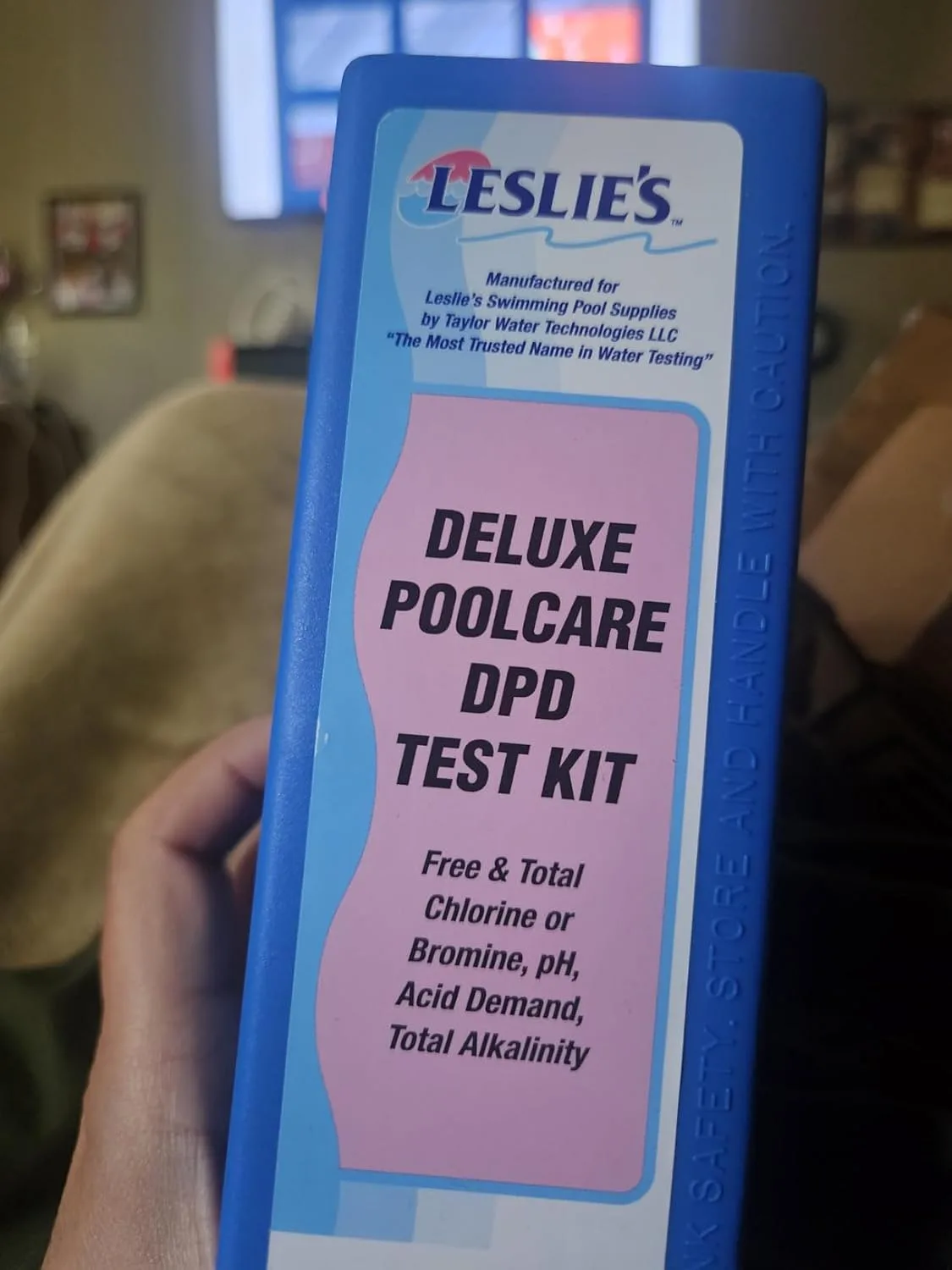
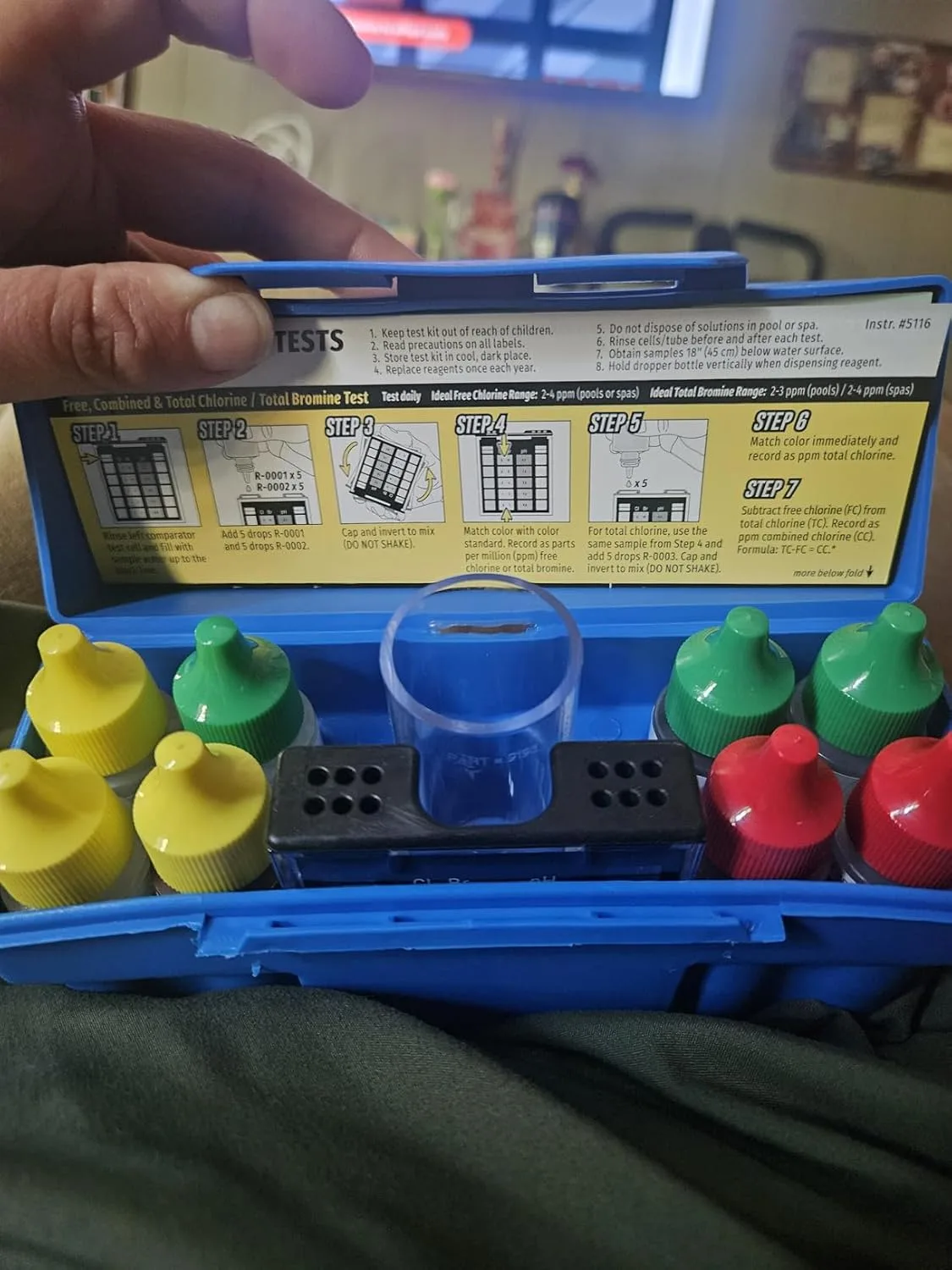
Test strips can’t distinguish between free chlorine and combined chlorine—they just lump them together and call it “total chlorine.” That’s the blind spot that kept me thinking my water was safe when it was actually full of chloramines doing nothing to sanitize.
What works
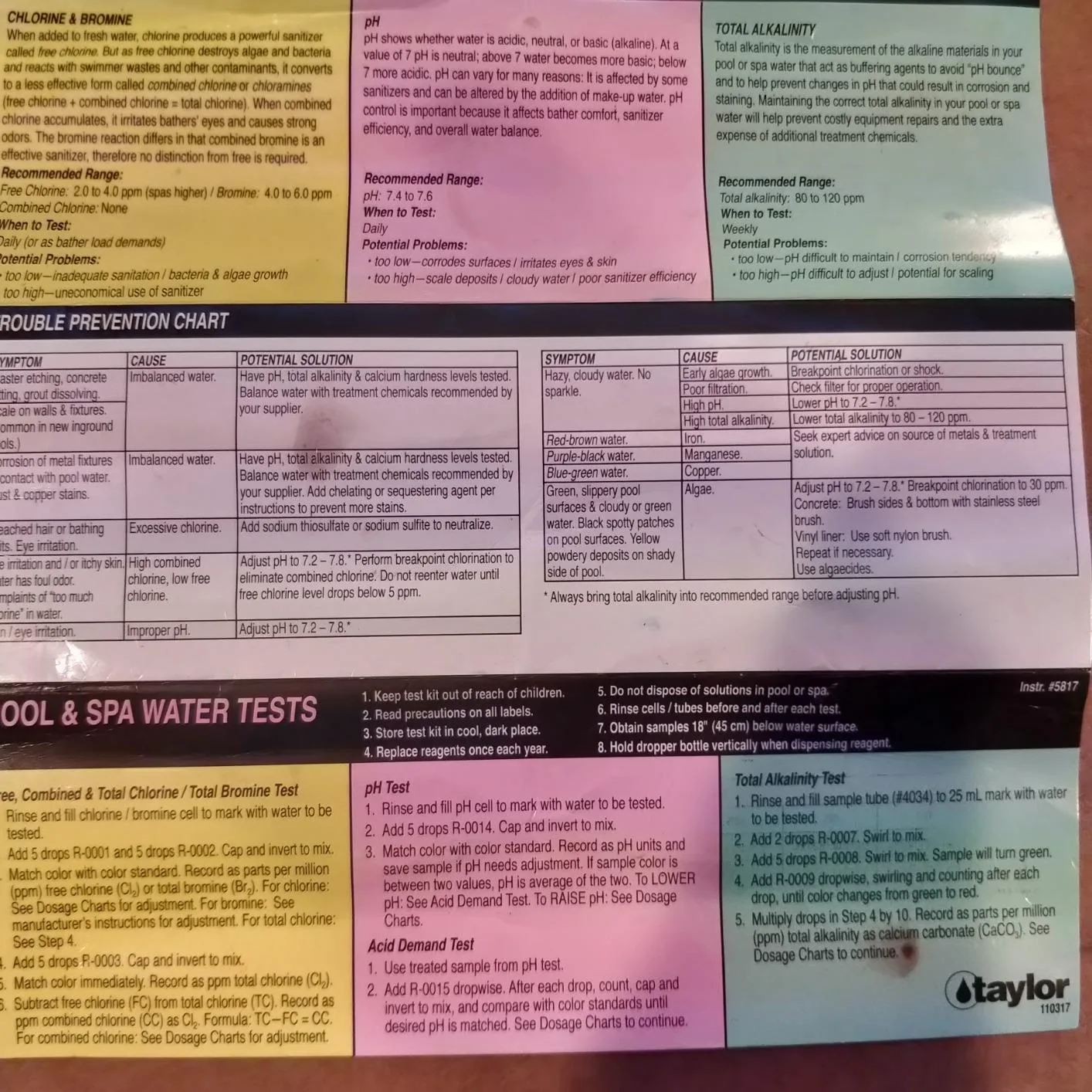
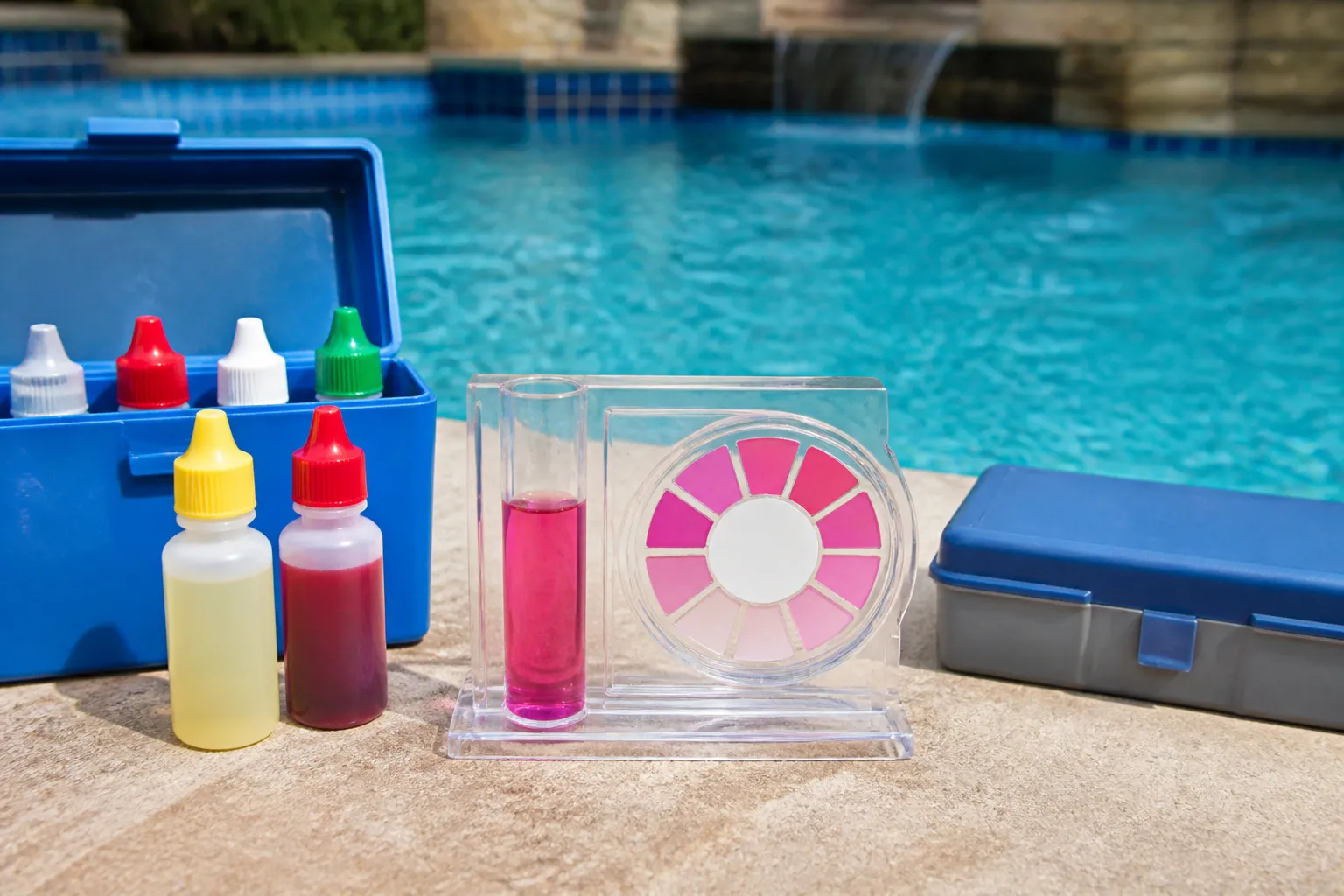
- The DPD liquid reagent method separates free chlorine from combined chlorine in under five minutes—no guessing, no color-matching headaches with tiny strip charts.
- I can actually see when chloramines are building up and shock accordingly, instead of watching cloudiness and smell creep in while strips tell me everything’s fine.
- The kit includes pH, alkalinity, and acid demand tests, so I’m not buying five different tools to understand what’s actually happening in my water.
What doesn’t
- It takes more time than strips—reagent drops, timing, color matching—but that five minutes beats the hours I waste troubleshooting chemistry problems strips missed.
- You have to replace reagent bottles periodically, and they can expire, so there’s a small ongoing cost beyond the initial kit purchase.
I’ll admit, the first time I tested with this kit and saw a combined chlorine number that strips never flagged, I had a moment of real doubt—was I overthinking this, or had I just been lucky my pool hadn’t turned green? I wasn’t lucky. Since then, I’ve never gone back to strips. Pick up the Taylor K-1004 DPD 6-in-1 Pool Test Kit and you’ll see exactly what I mean.
This post contains affiliate links. As an Amazon Associate, I earn from qualifying purchases at no extra cost to you.