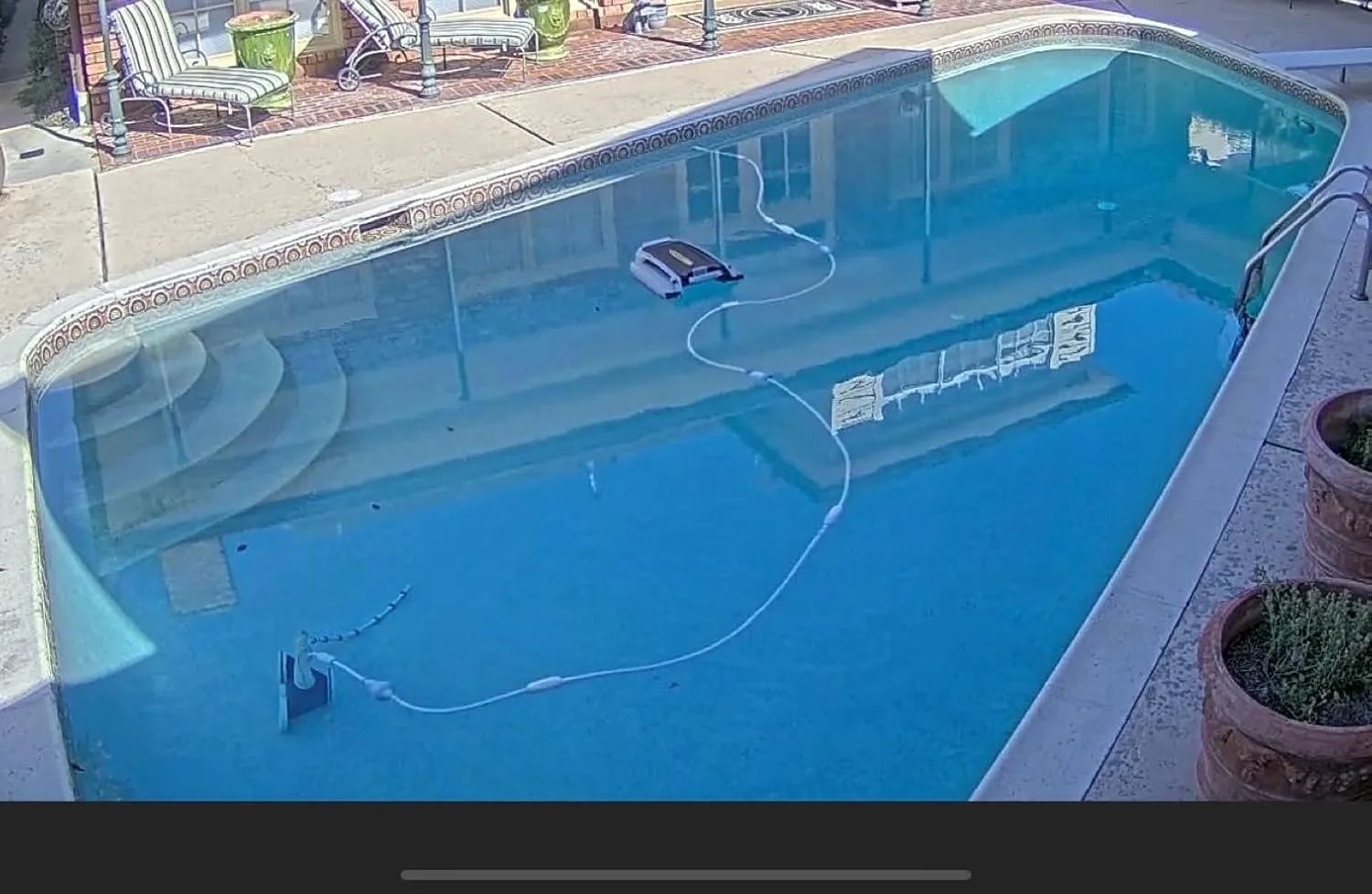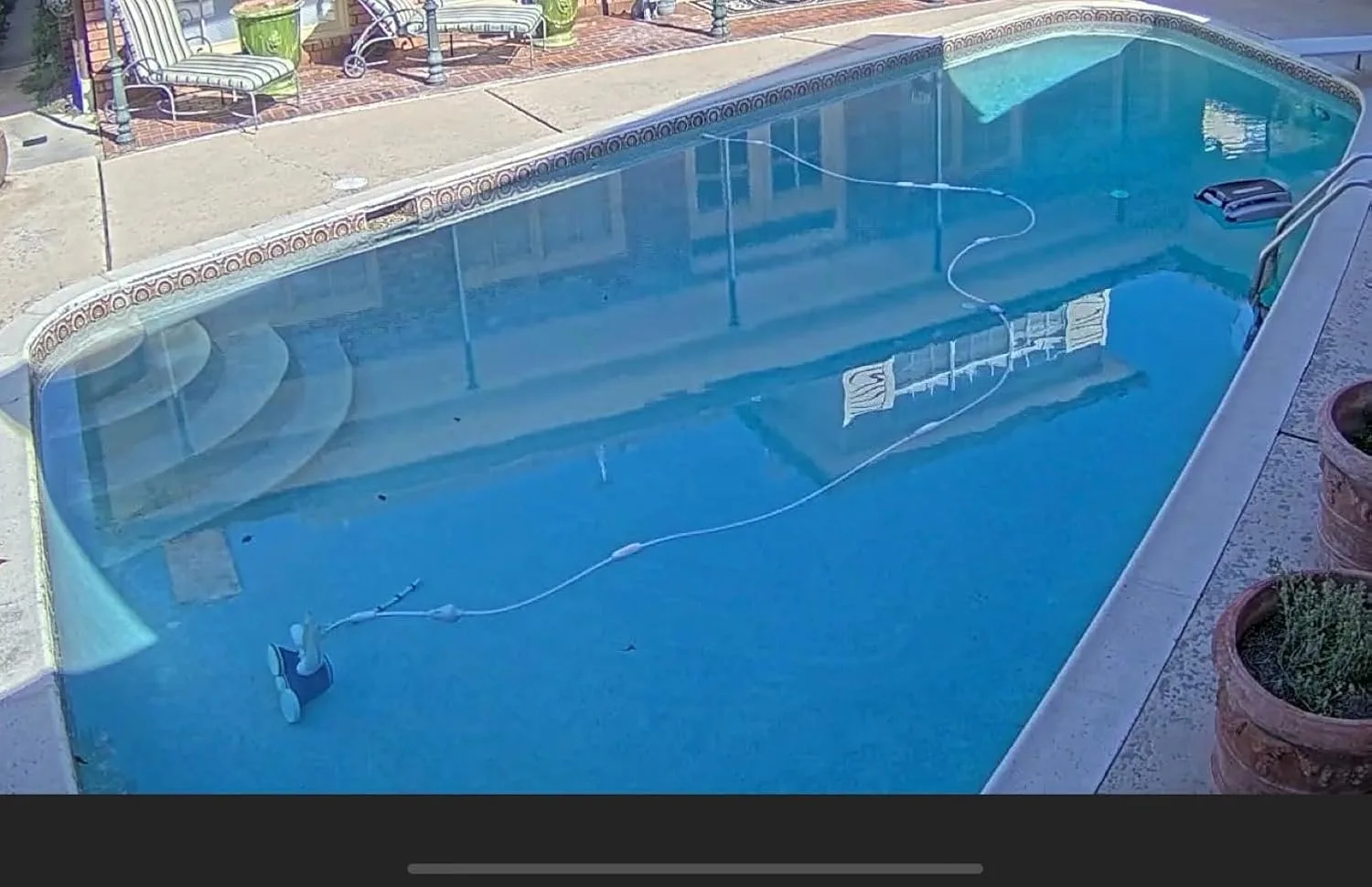
Every spring, without fail, I’d show up to one of my HOA pool accounts and find the same scene: a gorgeous blue pool absolutely blanketed in yellow pine pollen, with a frustrated homeowner standing at the edge holding a net like they’d been personally wronged by the local tree population. I’ve managed pools across Arizona, Nevada, and New Mexico for over a decade — resort pools, community pools, luxury backyard setups — and I can tell you with complete confidence that surface debris is the single most underestimated maintenance problem pool owners face. It doesn’t look dangerous. It doesn’t smell. It just… sits there. Until it doesn’t, and then you’ve got a whole different set of problems on your hands. If you’ve been Googling the best solar pool skimmer because you’re tired of spending your evenings dragging a net across the water before your kids can jump in, I hear you. Let me walk you through what I’ve learned — and what’s actually worth your money.
Why Surface Debris Is a Bigger Problem Than You Think
Here’s what most pool owners don’t realize: your built-in wall skimmer is passive. It sits in one spot and waits for water to flow through it. Your pump creates a surface current that draws some debris toward that opening — but realistically, it’s pulling in whatever happens to be floating within a few feet of the skimmer throat. Studies and field observations consistently show that a standard single-skimmer setup effectively captures debris from maybe 15–20% of the pool’s surface area. The rest of that pollen, those dead bugs, the oak leaves, the cottonwood fluff — it just circles around until it gets waterlogged and sinks.
And that’s where things get expensive.
Once organic debris sinks to the bottom, it starts decomposing. Decomposing organics consume chlorine at a surprisingly aggressive rate. On a warm day (water temp above 80°F, which is basically every summer day in the Southwest), I’ve seen a moderate leaf load drop free chlorine from a healthy 3.0 ppm down to under 1.0 ppm in less than 48 hours. That’s a pool that’s now vulnerable to algae growth and bacterial contamination — and you’re going to spend money on shock treatments, enzyme products, and clarifiers to get back to baseline. We’re talking $20–$50 in chemistry corrections that could have been avoided with better surface maintenance.
There’s also the equipment angle. Leaves and debris that bypass the surface and get pulled toward your main drain or pump basket are hard on your system. I’ve seen impellers clogged with compressed leaf matter, which means service calls and repair bills. In commercial settings, I track this stuff obsessively — but even for a residential pool owner, the math is pretty clear. Surface skimming isn’t just a cosmetic issue. It’s a chemistry issue, an equipment issue, and a time issue. The average pool owner I’ve spoken with spends 15–25 minutes per day manually netting during peak debris season. Over a three-month fall season, that’s somewhere between 22 and 37 hours of your life spent holding a pole. There’s a better way.
What to Look For in the Best Solar Pool Skimmer
The solar-powered automatic pool skimmer category has matured a lot in the past few years. Early models were underpowered, directionally confused, and had collection baskets the size of a coffee cup. Today’s better units are genuinely useful tools — but not all of them are created equal. Here’s what actually matters when you’re evaluating options.
Solar Panel and Battery Capacity
The solar panel charges an onboard battery, which powers the motors. What you want is a unit with enough battery reserve to keep working through brief cloud cover and to run in the early morning or late afternoon when sun intensity drops. Cheap units shut down the moment shade hits them. Better units store enough charge to run continuously for several hours even without direct sun. Look for a dual charging option — solar plus USB — so you can top off the battery during genuinely cloudy stretches rather than letting debris accumulate.
Motor Quality and Salt Tolerance
This is where a lot of solar skimmers fail quietly. Salt chlorine generators are now in roughly 35–40% of residential pools, and saltwater is corrosive. Motors not designed for salt exposure degrade quickly — sometimes within a single season. If you have a saltwater pool, you need motors specifically rated as salt-tolerant. Twin motor designs also give you better maneuverability and more consistent surface coverage than single-motor units.
Collection Basket Size and Debris Capacity
Bigger is better here, within reason. A small basket fills up fast during heavy pollen or leaf season, meaning the unit rides higher in the water, loses suction efficiency, and eventually just pushes debris around instead of collecting it. Look for a design that makes emptying easy — you shouldn’t need tools or a degree in engineering to pop the basket and dump it.
The Skimmer That Finally Stopped Me From Fighting Pollen Every Single Morning
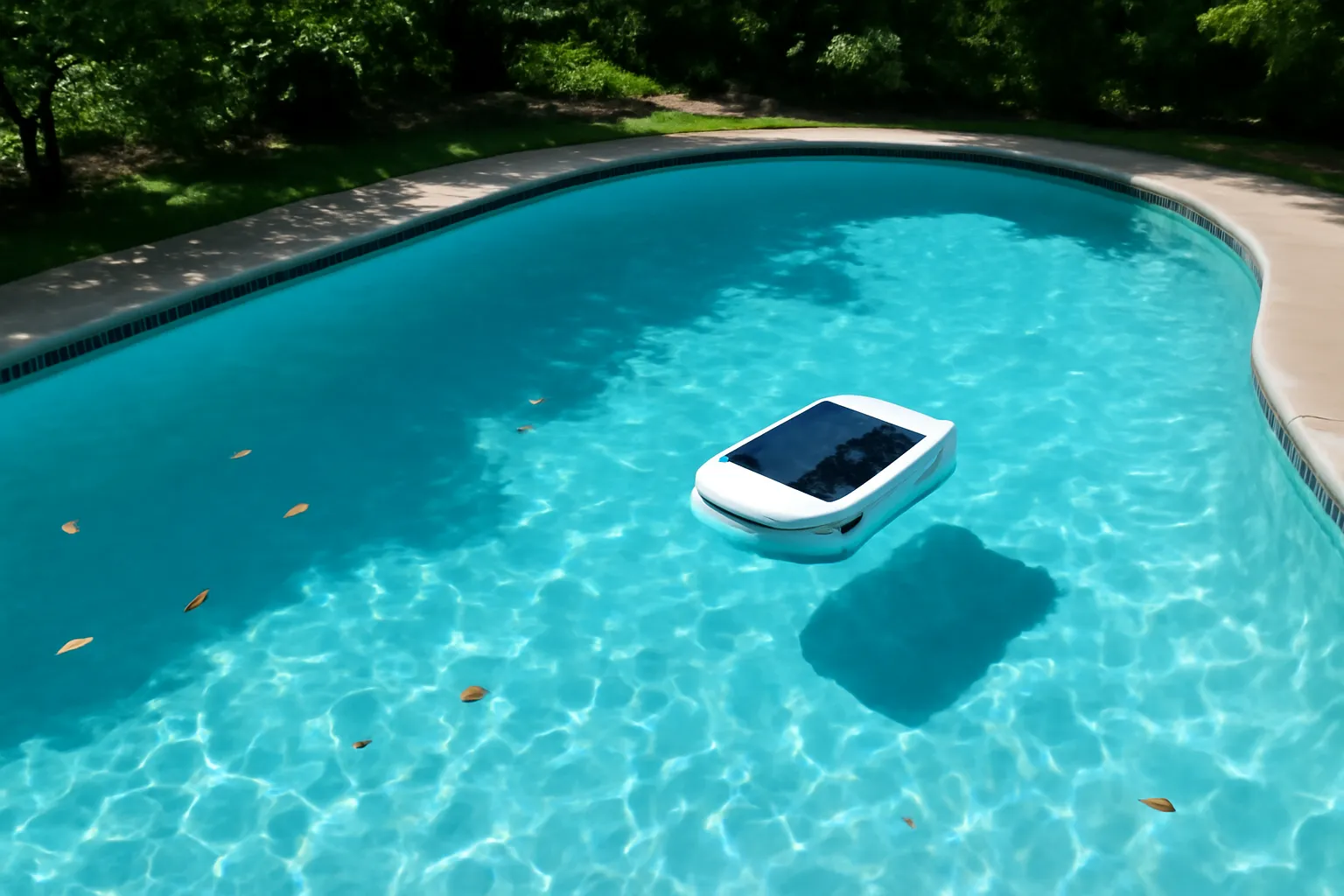
Manual skimming works, but it’s reactive—you’re always playing catch-up, especially during heavy pollen season or after windy nights. A solar-powered robotic skimmer handles the surface debris 24/7, so you’re not standing poolside with a net before breakfast.
What works
- Runs on solar power, so it skims continuously without adding to your electric bill or requiring daily manual labor.
- Clears surface debris before it sinks and breaks down into smaller particles that tax your filter and alkalinity levels.
- Covers the whole pool surface methodically—no missed corners or the spots you skip because you’re tired of skimming.
What doesn’t
- Performance drops on heavily overcast days; it’s not a replacement for skimming during monsoon season or back-to-back cloudy weeks.
- Requires occasional cleaning of the collection basket and periodic repositioning if you have an irregular pool shape or deep lounging areas.
I was skeptical that a solar robot could keep up with Arizona wind and pollen—I’d seen too many gadgets underperform in the field—but after two seasons with the Betta SE Plus Solar-Powered Robotic Pool Skimmer, I’ve cut my manual skimming time in half and stopped finding debris sludge at the deep end.
This post contains affiliate links. As an Amazon Associate, I earn from qualifying purchases at no extra cost to you.