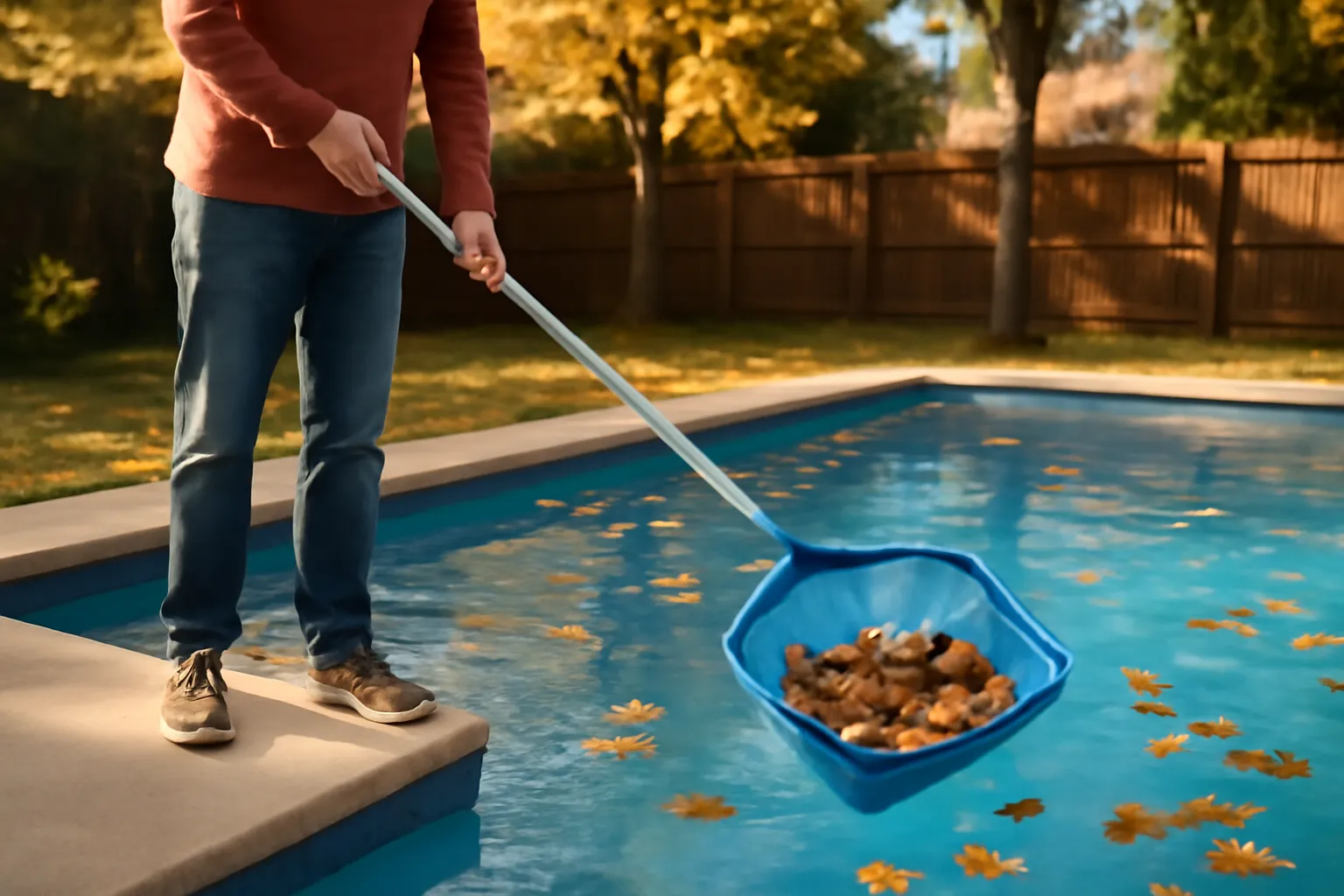
Dawn breaks at 7 a.m., and your pool’s surface has become a landing pad for an entire oak tree worth of branches and leaves. You reach for that threadbare skimmer net—the one that came vacuum-sealed to your telescoping pole back when you first set up—and you start dragging it across the water. It collects maybe a third of what’s floating there. Then you lift it out, and just like that, half of what you managed to grab tumbles back into the pool. Does this scenario hit close to home? Over thirteen years of chasing water chemistry, I’ve seen it on everything from sprawling 25,000-gallon pools across Arizona to busy community pools in New Mexico, and I can state this with zero hesitation: that bargain-bin flat net ranks as the most universally frustrating piece of pool gear in existence. The aggravation is real, it spreads across every pool deck, and—the encouraging part—it’s completely solvable once you grasp the real distinction between pool net designs and recognize which tool belongs in your hands for which task.
Why a Flimsy Flat Skimmer Net Is Worse Than You Think
I can already hear the objection: it’s simply debris. How concerning could that possibly be? Over the years, I’ve observed “simply debris” snowball into genuinely serious expenses far more often than I’d prefer. Let’s examine what’s truly unfolding below the waterline—and I do mean literally.
Whenever organic matter such as leaves, seed pods, flower fragments, and clippings remains submerged in pool water, decomposition begins immediately. This decomposition devours your free chlorine at a staggering pace. Under intense Southwest summer conditions, a substantial leaf accumulation can push your free chlorine from a solid 3 ppm down to virtually nothing within several hours. That translates to continuously adding chlorine just to counteract a condition you might have eliminated by net in mere minutes. Tracking across a full season, I’ve documented pool owners spending an extra $80 to $150 solely due to inefficient debris removal.
There’s also a phosphate concern layered on top. When organic debris deteriorates, it leaches phosphates into your water, and phosphates fuel algae proliferation. Once your phosphate concentration climbs above 500 ppb, combating algae turns into an unwinnable struggle regardless of how much sanitizer gets introduced. Bringing phosphate concentration back within acceptable ranges demands a specialized phosphate-reduction product—yet another $20 to $40 outlay that consistent skimming could have circumvented.
Your pump and filtration system face consequences too. Leaves that escape your surface skimming and descend into deeper sections migrate toward your circulation intake and skimmer opening. Substantial debris buildups fill skimmer baskets rapidly, restrict water circulation, and tax your pump mechanism. I’ve witnessed impellers damaged by material that should have been intercepted weeks before through proper surface maintenance. Restoring a pump begins near $150 and escalates steeply from there.
Duration compounds the issue as well. Debris resting atop the water for a few hours presents an uncomplicated skimming opportunity. Debris that descends and settles requires equipment-based removal—a 30-to-45-minute undertaking instead of a quick 5-minute surface pass. That arithmetic should demonstrate why skimming apparatus warrants serious attention. And the main reason most inhabitants neglect regular skimming? Their tool transforms a straightforward chore into an exercise in frustration.
Pool Net Types Explained: Flat Skimmer vs. Deep-Bag Leaf Rake
Let’s clarify the distinction between pool net designs right now, since substantial misunderstanding surrounds what each option was built to accomplish.
Flat Skimmer Nets
Consider a flat skimmer net a direct translation of its nomenclature—a shallow, open-topped design with filtration material attached to a framework. The construction measures only roughly half an inch to one inch in vertical dimension. Their application targets daily surface maintenance: water-bound insects, atmospheric dust, scattered petals, alongside the thin accumulation of residue and lotion that collects on still surfaces. They operate smoothly across the top layer, excelling at their narrow purpose. They’re straightforward to clean afterwards. Supposing your pool occupies an open area without nearby trees and you perform a routine 3-minute surface sweep each morning, a flat net fulfills its responsibility adequately.
Their capabilities terminate abruptly when substantial debris accumulation enters the picture. Load a flat net with multiple saturated leaves, and gravity plus water physics conspire against you. The instant you raise the net skyward, the combined heaviness of those leaves paired with the minimal rim elevation ensures everything cascades back into the pool. You’ve completed the capture and reversed it within a singular motion. I’ve watched maintenance personnel execute this frustrating loop six or seven times on the identical water section before abandoning the effort.
Deep-Bag Leaf Rakes
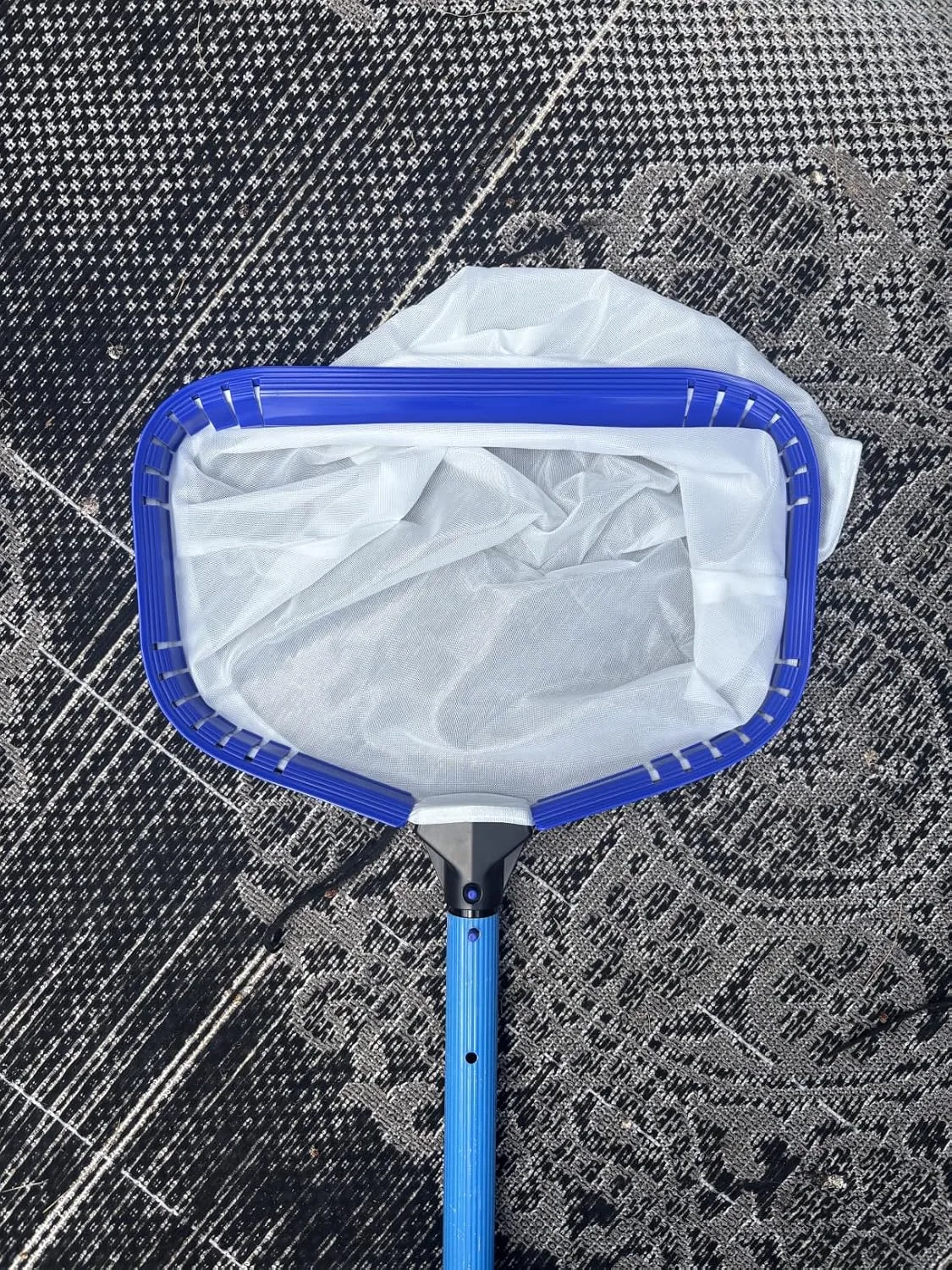
A deep-bag leaf rake—alternatively termed a leaf scoop or pool rake—incorporates a fixed framework (frequently square or slightly angled) topped with either webbing or mesh material extending four to eight inches downward beneath the frame boundary. This vertical extension proves decisive. Once you scoop floating debris, gravity carries it into the lower chamber, where it remains secured when you elevate the net skyward. The chamber itself prevents escape. This ranks as your go-to apparatus following windy episodes, throughout autumn maintenance schedules, or whenever substantial quantities require removal.
Furthermore: an expertly manufactured deep-bag rake transcends surface-only functionality. You maneuver it at an inclination toward your pool basin and maneuver it horizontally across the floor, consolidating settled matter into the lower compartment before it undergoes complete breakdown. It genuinely performs dual roles when engineering matches quality standards.
The practical response to flat pool skimmer versus leaf rake concerns whether most residences truly require both—the flat option for routine maintenance and the deep variant for heavier weekly labor or climate recovery. Nevertheless, faced with a single-tool scenario and any vegetation bordering your basin? Acquire the deep bag without hesitation. There’s no competing alternative.
What to Look For in a Heavy Duty Pool Skimmer Net
Depth-bag rakes show tremendous variation in construction quality. My own equipment history includes numerous budget options that failed before season completion—frames warped, mesh deteriorated—therefore permit me to outline the actual specifications distinguishing a heavy duty pool skimmer net.
Frame Material
This consideration creates the paramount distinction across quality tiers. Polymer frameworks weigh minimal but eventually distort and fracture—particularly across high-sun zones like the American Southwest where solar intensity stays relentless throughout every season. Steel-alloy construction maintains rigidity, resists oxidation, and sustains structural integrity when bearing load. Based on field observations, an aluminum-constructed apparatus outperforms an equivalent polymer model by a factor of four-to-five in operational lifetime. That variance becomes substantial when deployment occurs weekly.
Mesh Size and Material
Tight weave snares everything—atmospheric particles, granular sediment, even minute organisms—although clogging accelerates and water drag intensifies during forward propulsion. Loose weave permits unobstructed movement but allows smaller matter to bypass. Residential applications typically benefit from intermediate-density nylon weaving: adequate particle capture minus the resistance burden when advancing through water. Nylon outperforms polyester in pool contexts because superior resistance to photochemical breakdown and chlorine deterioration extends serviceable lifespan.
Bag Depth
Extended vertical dimension accommodates greater debris quantity before necessitating drainage. For landscape-heavy residential settings, targeting five-to-six inches of lower-chamber measurement proves worthwhile. This characteristic separates “best pool skimmer net for leaves” candidates from ordinary alternatives—because botanical matter occupies considerable volume, and restricted bags require constant emptying.
Pole Compatibility
Confirm that the apparatus affixes to your extending rod through conventional threaded connection or twist-and-lock coupling. The vast majority of professional-grade rods incorporate standardized attachment protocols, yet confirming specifications eliminates post-purchase complications.
The Deep Bag That Finally Stops Debris From Sliding Back Out
That inexpensive starter-kit net isn’t just annoying—it depletes valuable morning minutes every day. Investing in a deep-chamber net featuring genuine mesh construction fundamentally transforms the debris-retrieval procedure, particularly when battling heavy seasonal fall or unexpected wind events.
What works
- The deep-chamber structure secures everything you collect—materials stay contained as you extract the apparatus, meaning considerably fewer passes across the surface.
- Industrial-grade mesh withstands repeated contact with concrete edges and doesn’t deteriorate or separate when confronted with seasonal leaf accumulation or coniferous needle debris.
- The expanded frame footprint permits single-pass collection of floating matter instead of multiple repositioning attempts, a meaningful factor during time-restricted morning maintenance or quick pre-dusk sessions.
What doesn’t
- The expanded vertical chamber demands supplementary draining duration, necessitating 30-plus additional seconds above deck surface before the chamber empties sufficiently.
- Once charged with collected debris, perceptible weight increase becomes immediately apparent, a consideration throughout intensive leaf seasons involving repetitive collection cycles.
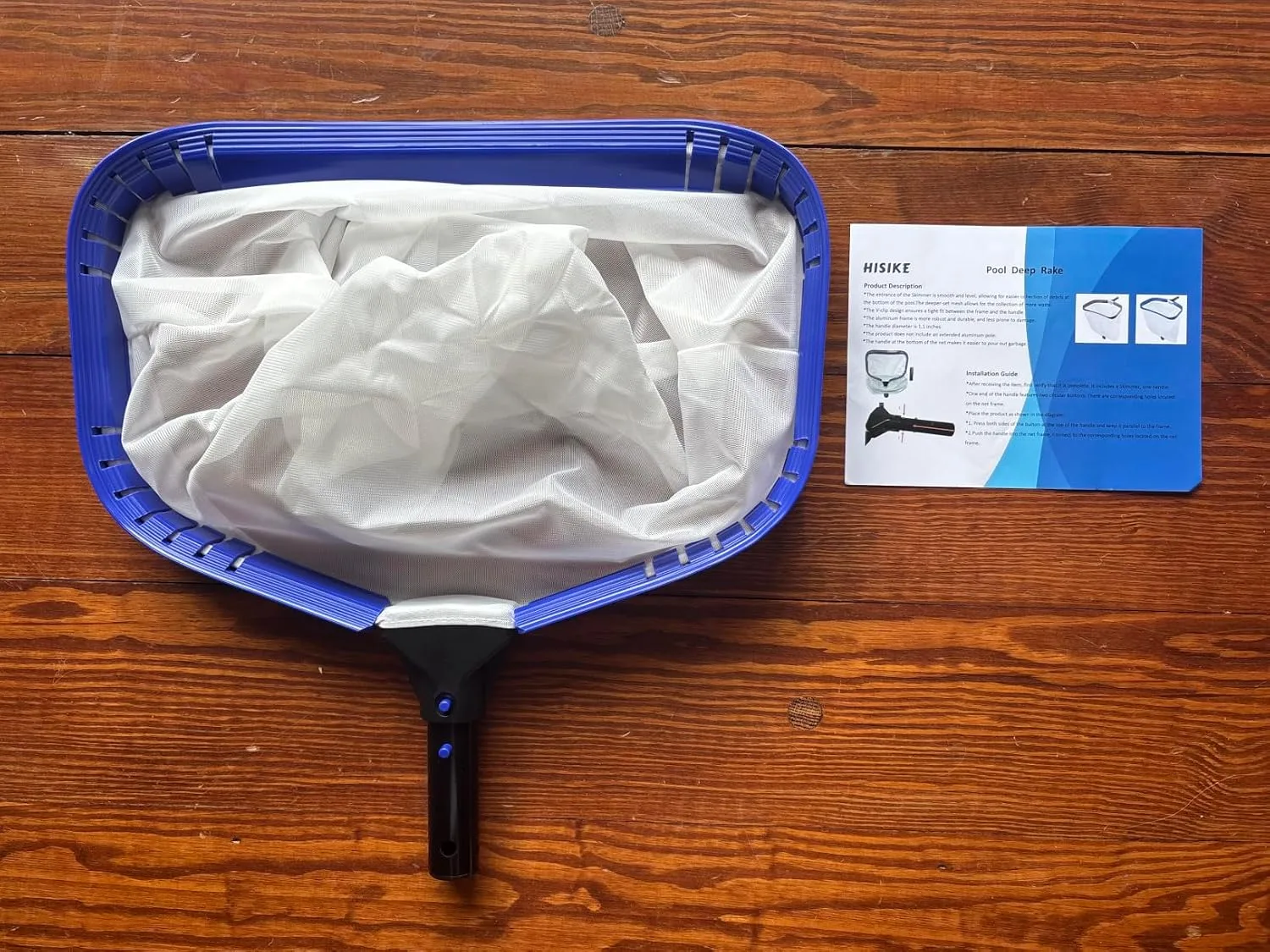
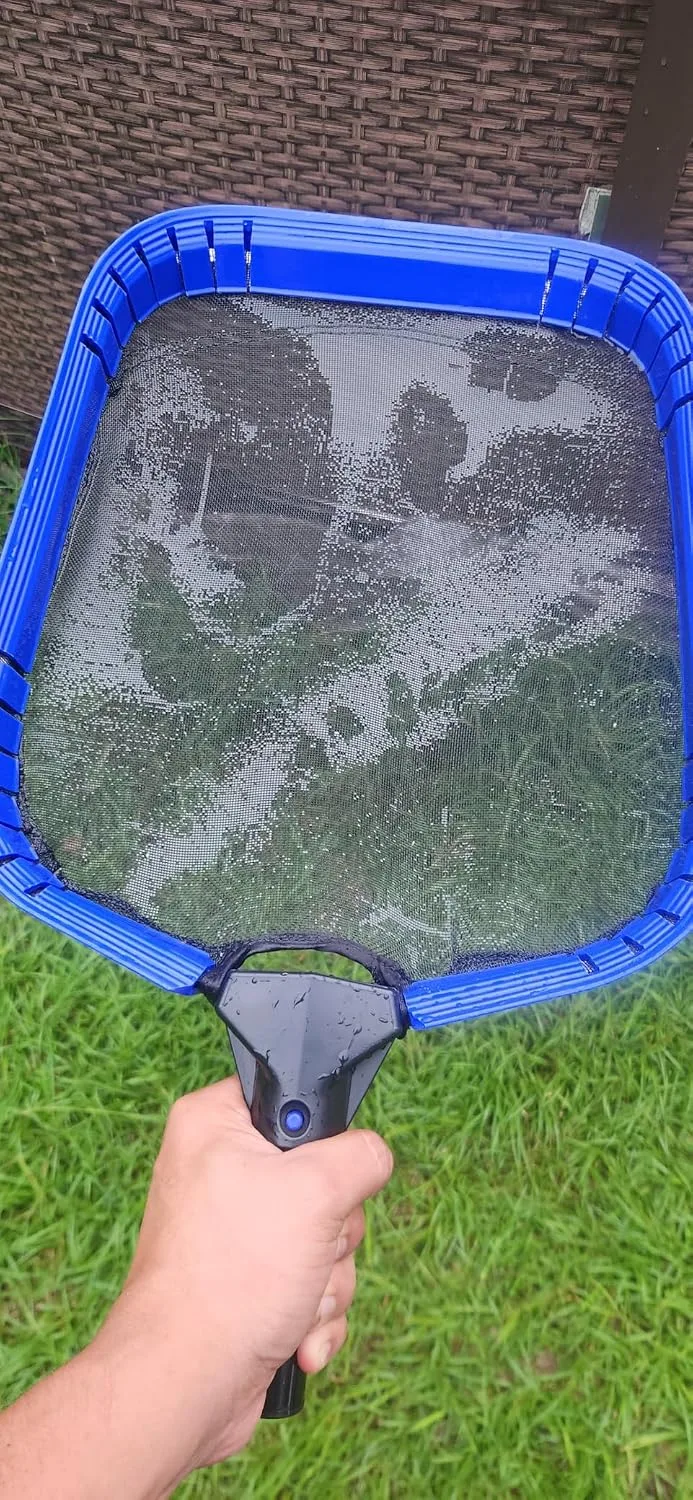
I was skeptical that a $30 skimmer net would make that big of a difference—I’d already resigned myself to the slide-back ritual as just part of pool ownership. Once I switched, I realized I’d been wasting 10 minutes every morning just compensating for a bad tool. HISIKE Heavy Duty Deep Bag Pool Skimmer Net
About This Article

Written by Nadia Caldwell. Backyard pool owner and water chemistry nerd. After years of chasing down cloudy water and algae blooms on my own pool and my neighbors', I now write about pool maintenance, water treatment, and everything chlorine-related for everyday pool owners. More about this site.
Scope and limits. Nadia is a pool owner who reads chemistry, not a certified pool professional. Follow label directions on every chemical, never mix them, and use a certified pool operator for equipment and sanitizer system work.
Verify this against a primary source
Specifics change, and your situation may differ from the one described here. These are the authorities worth checking directly:
- World Health Organization — guidelines for safe recreational water environments
- Pool & Hot Tub Alliance — water chemistry and pool operation standards