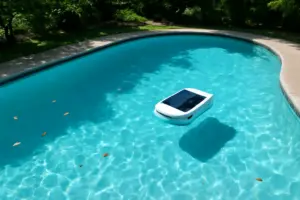
Every morning for about three summers straight, I’d walk out to whatever pool I was managing that week and do the same mental math: how much heat did we lose overnight, and how long is it going to take me to skim all this garbage off the surface? At one HOA property in Scottsdale, I was pulling half a skimmer basket worth of oak leaves, moths, and cottonwood fluff off the water before 7 a.m. — every single day. Meanwhile, the heater was running longer than it should have been because we’d dropped 2°F overnight. Those two problems felt separate at first. They’re not. They have exactly the same root cause: the pool was uncovered. And they have exactly the same solution. Once I started treating a solar pool cover as non-negotiable standard equipment rather than an optional accessory, both problems essentially disappeared. If your pool is losing heat overnight and you’re skimming debris every morning, this post is for you. A solar pool cover keeps debris out while simultaneously solving your heat loss problem — and I’m going to walk you through everything I know about making it work.
Why This Problem Is Worse Than You Think
Let me give you the number that usually gets people’s attention: evaporation accounts for roughly 70% of all pool heat loss. Not the cool night air sitting on top of the water. Not conduction through the pool walls. Evaporation. Every water molecule that escapes the surface takes heat with it — it’s the same principle that makes sweating an effective cooling mechanism for your body. For a pool, that translates to losing 2°F to 3°F overnight under typical Southwest conditions, and even more in dry climates where evaporation rates are aggressive. If your heater is set to maintain 82°F and you’re waking up to 79°F every morning, your heating system is working overtime just to recover ground it already covered the day before.
Here’s what that actually costs you. A pool heater running an extra 2–3 hours per day to compensate for overnight heat loss can add $40–$80 per month to your energy bill depending on whether you’re running gas or electric. Over a six-month swim season, that’s real money. But heat loss is only half the story.
Debris is a water chemistry problem, not just an aesthetic one. Leaves decompose and release tannins that drop your pH and stain your plaster. Pollen — and if you’ve managed a pool in spring in the Southwest, you know how bad it gets — introduces organic load that consumes chlorine rapidly. When your free chlorine drops below 1.0 ppm because it’s busy fighting organic debris, you’re flirting with algae growth. I’ve taken over community pools mid-season where the previous operator let debris accumulate, and the chlorine demand was so elevated we couldn’t get stabilization without a partial drain and refill. That’s an expensive lesson.
There’s also the equipment angle. Debris that makes it into the skimmer basket and pump basket in large quantities restricts flow, which reduces filtration efficiency and puts strain on the pump motor. I’ve seen pump seals fail prematurely on pools with heavy debris loads. Preventive maintenance is almost always cheaper than reactive repairs — and nothing is more preventive than stopping debris from entering the water in the first place.
The time cost adds up too. A thorough surface skim takes 15–20 minutes on a moderately debris-heavy pool. Do that every morning for 180 days and you’ve spent 45–60 hours skimming. That time either comes out of your morning or out of your maintenance budget if you’re paying someone else to do it.
What to Look For in a Solar Pool Cover — And Why Thickness Actually Matters
Not all solar covers are built the same, and the differences matter more than most people realize when they’re standing in a pool supply aisle comparing price tags. Let me break down what separates a cover that earns its place in your routine from one that ends up folded in a corner of the garage by July.
Thickness: The Most Important Spec Nobody Reads
Solar pool covers are rated in mil (thousandths of an inch). The three tiers you’ll see most often are 8-mil, 12-mil, and 16-mil. Here’s the honest breakdown:
- 8-mil covers are budget entry points. They heat adequately but are thinner, more prone to tearing, and typically last one to two seasons before UV degradation makes them brittle and crumbly. If you’re trying the concept before committing, they’re fine. Don’t expect longevity.
- 12-mil covers hit a reasonable middle ground — better durability, 2–3 seasons of useful life, decent insulating performance. Most residential pool owners land here.
- 16-mil covers are the commercial and long-term residential standard. More durable bubble construction, better edge integrity, and meaningful lifespan of 3–5 seasons. The per-season cost ends up being lower even though the upfront price is higher.
Blue vs. Clear: There’s a Real Difference
Blue covers absorb solar radiation more effectively during the day, which means better surface heating. Clear covers allow more light to penetrate deeper into the water column, which can be beneficial for larger, deeper pools where you want more distributed heating. For most residential pools under 5 feet deep, blue tends to perform better. Silver or blue-silver two-tone covers add a reflective backing that improves nighttime heat retention — essentially acting as an insulating layer to slow the heat from radiating back out overnight.
The Science Behind the Bubbles
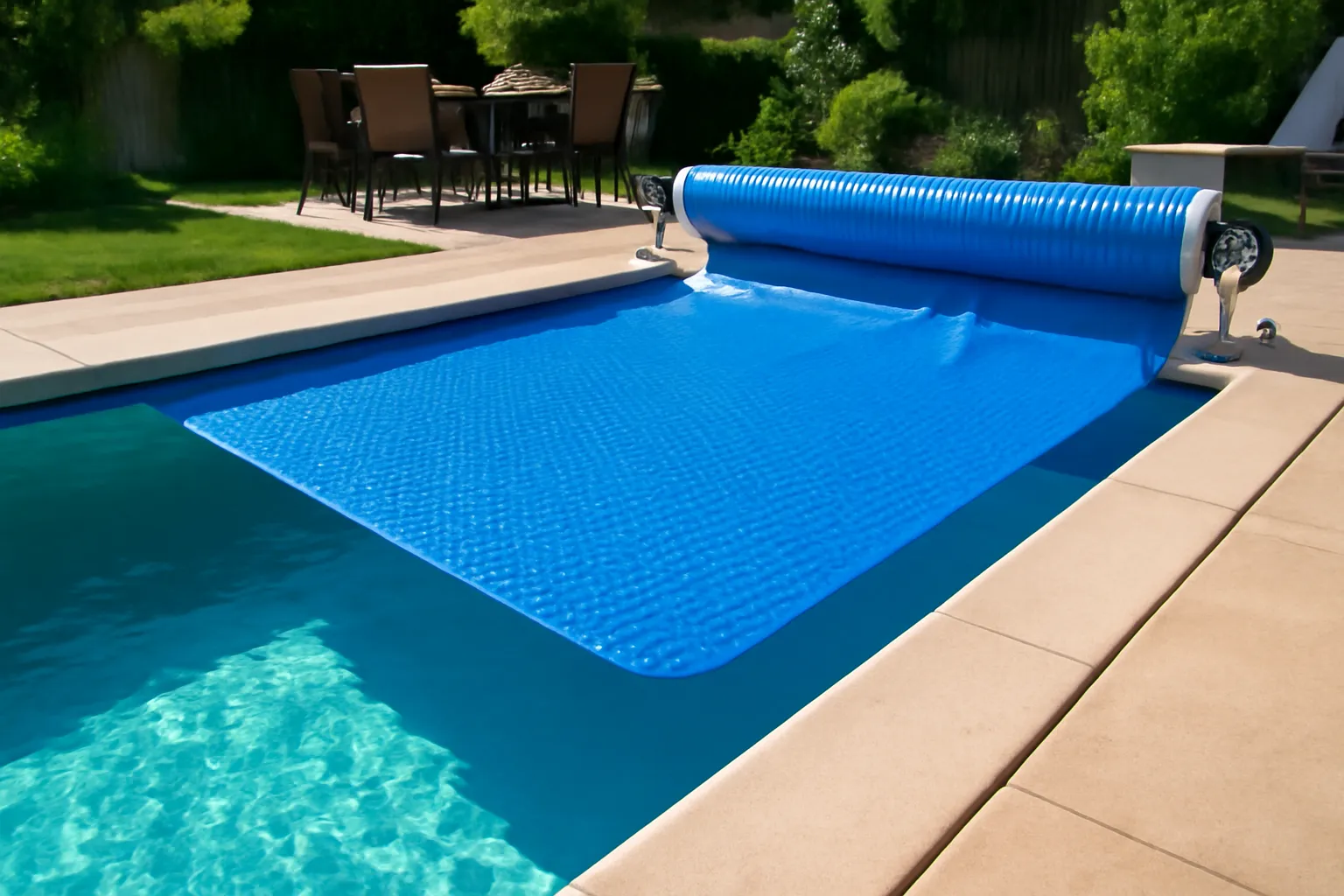
The bubble side always faces down into the water — this is the question I get most often from homeowners who’ve never used one before. Those bubbles aren’t just structural padding. They function like tiny lenses, concentrating and directing solar energy into the water while also creating an insulating air gap between the water surface and the outside air. The combined effect is substantial: a quality solar blanket for pool heating and debris prevention can raise water temperature 10°F–15°F over the course of several days of consistent use. More immediately, it cuts evaporation by up to 95%, which means you’re not constantly topping off the water level, and your chemical concentrations stay stable instead of fluctuating with water loss.
The Solar Cover That Finally Stopped My 5 a.m. Debris Routine
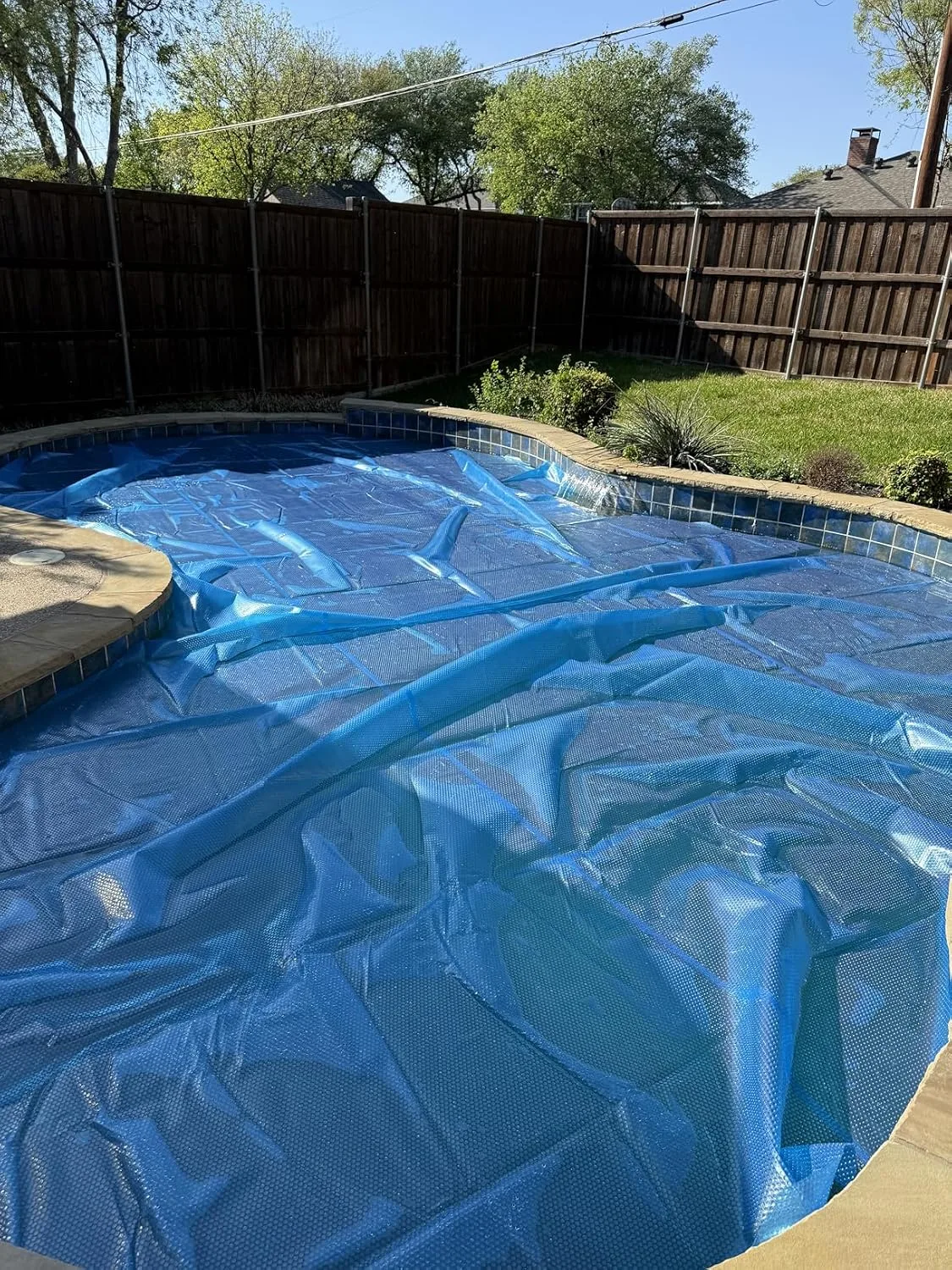
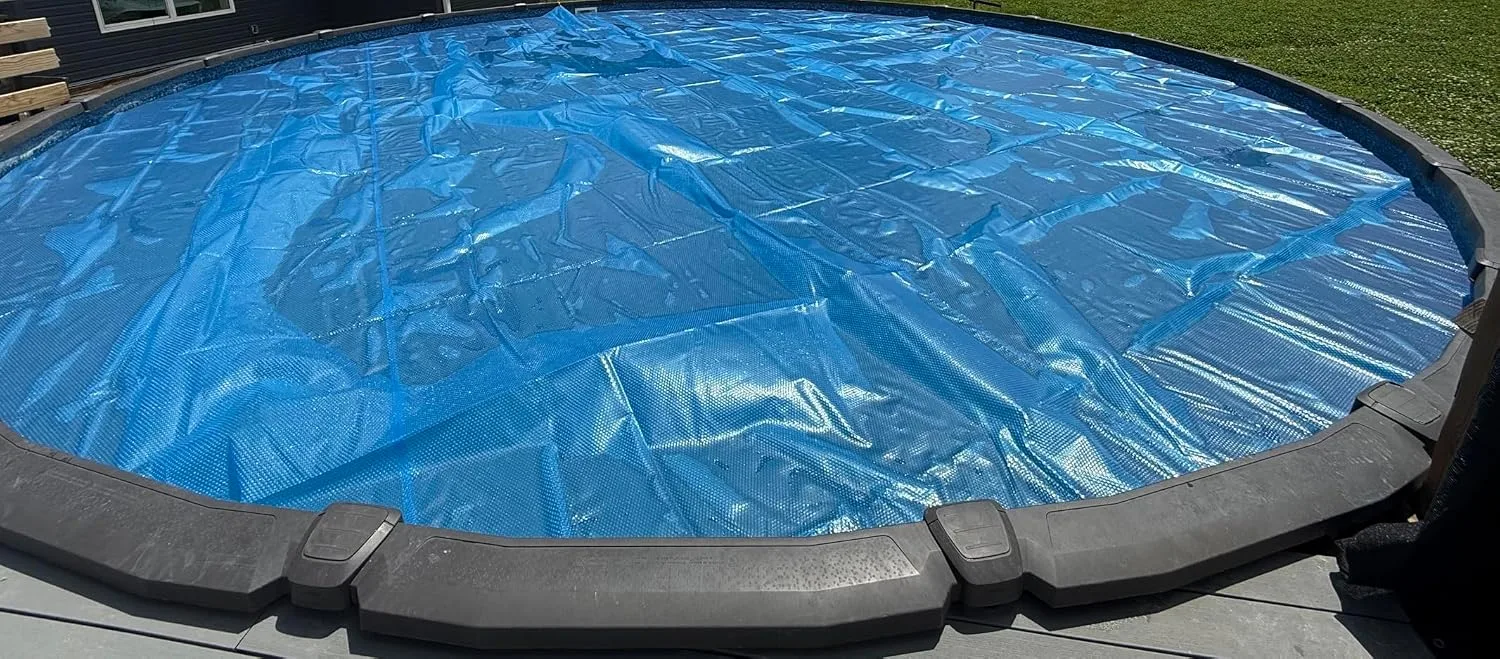
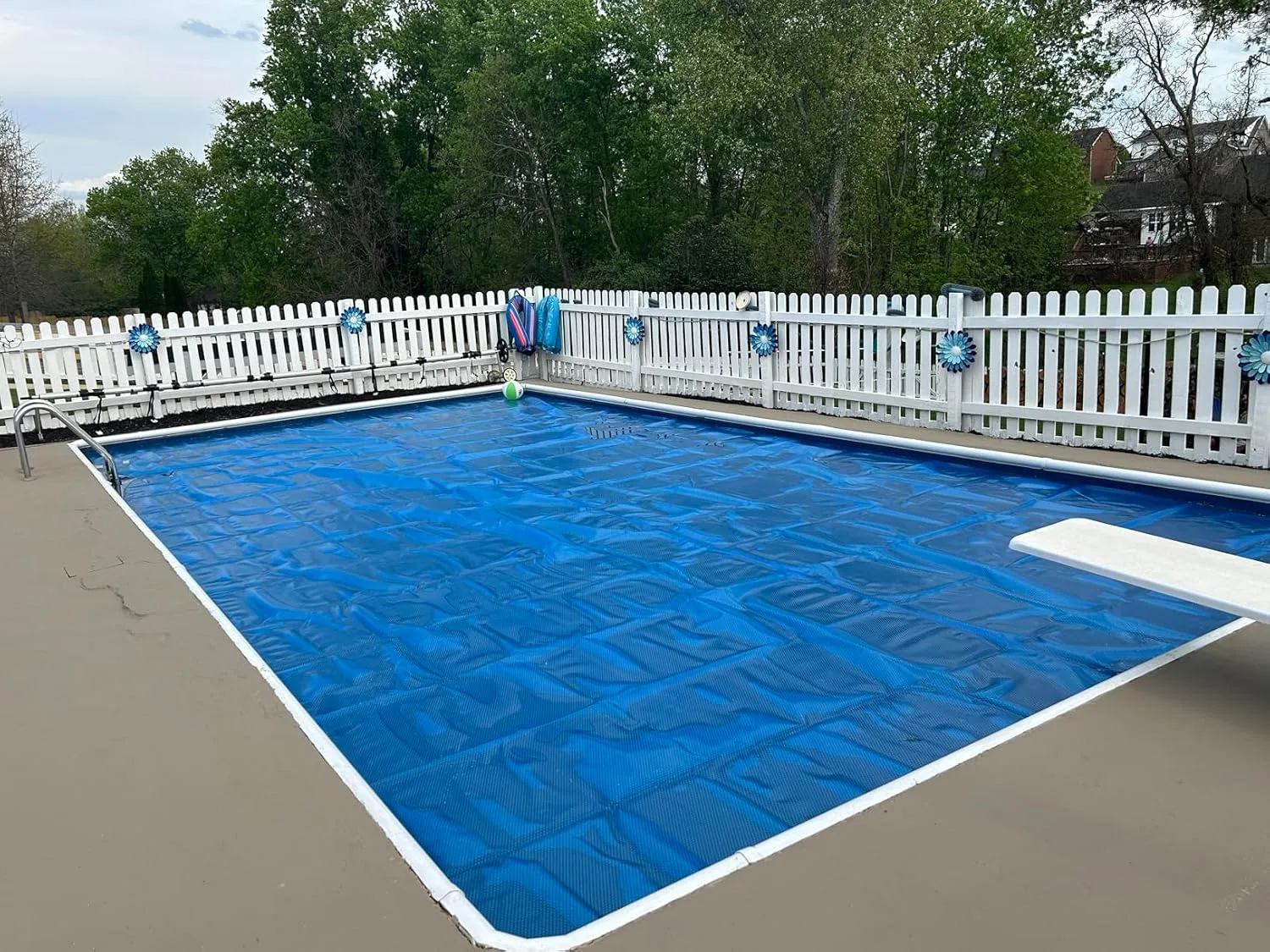
A solar pool cover tackles both problems at once: it blocks falling debris before it hits the water, and it traps heat overnight so your heater doesn’t have to work overtime. After years of manual skimming and climbing utility bills, this was the one thing that actually moved the needle.
What works
- Keeps 80–90% of leaf debris, pollen, and cottonwood fluff off the surface before it sinks—no more pre-dawn skimming sessions.
- The dual heat-locking air layer holds overnight temperature drop to 3–5°F instead of 10–15°F, which cuts heater runtime noticeably over a season.
- 16-mil thickness is heavy enough to stay put in Arizona wind but light enough that one person can roll it on and off without it becoming a daily frustration.
What doesn’t
- You still need a secure reel or storage spot—leaving it balled up poolside gets old fast, and a tangled cover defeats the purpose on busy mornings.
- Takes 5–10 minutes to deploy depending on pool size and how practiced you are, which means you can’t just jump in on a whim during the day.
I was skeptical the first week—I’d bought covers before that slid around or tore under tension—but the VEVOR’s grip and durability won me over within ten days. VEVOR Solar Pool Cover, 32 x 16 ft, 16-Mil with Dual Heat-Locking Air Layer
This post contains affiliate links. As an Amazon Associate, I earn from qualifying purchases at no extra cost to you.