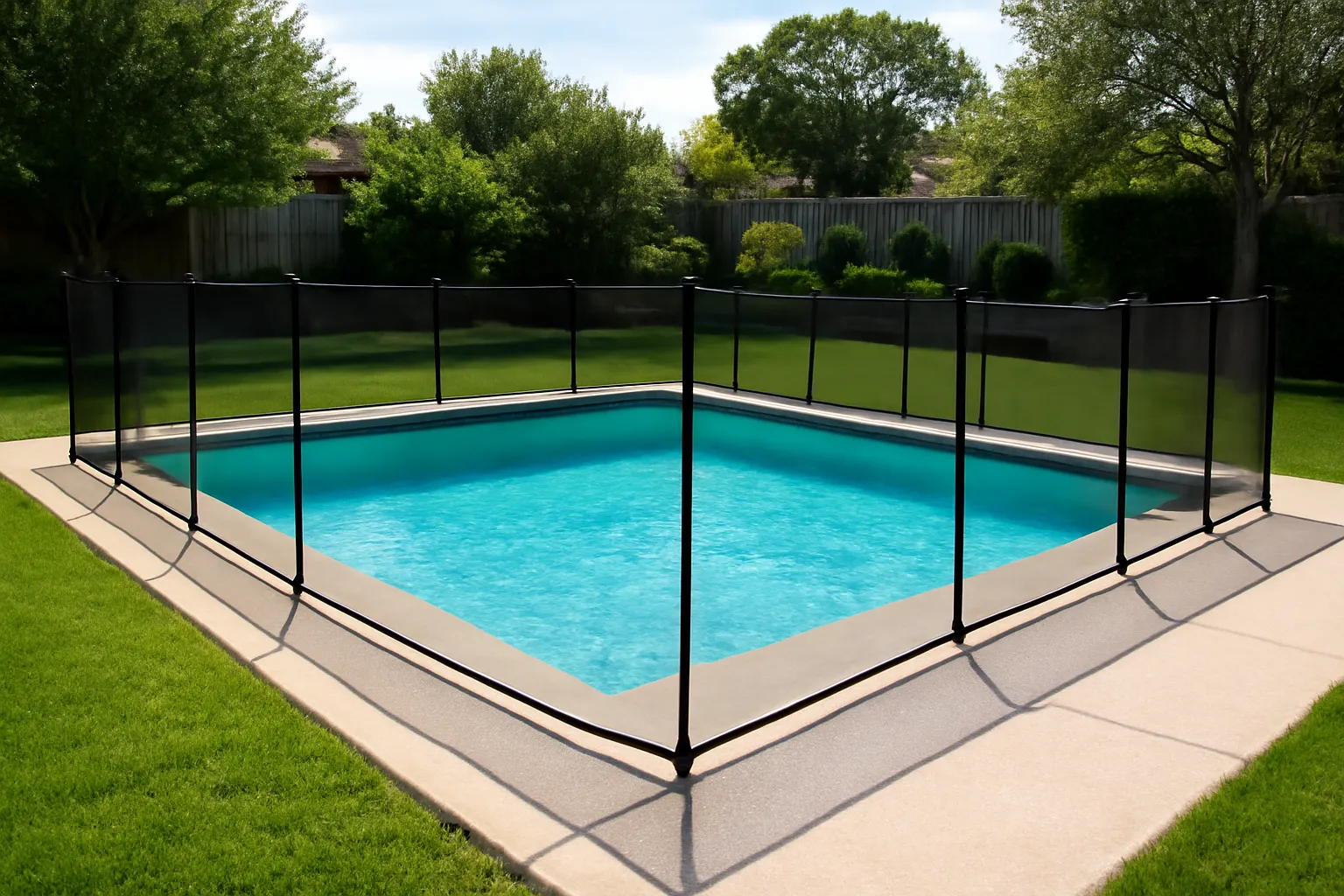
You’ve just finished the pool. The water chemistry is dialed in, the decking is pristine, and then someone raises it: the fence question. Your insurance adjuster mentions it. Your local building code requires it. Your spouse points out the liability. Suddenly you’re staring at three completely different fence systems, each priced wildly differently, and the internet offers no clear winner. I’ve spent fifteen-plus years around backyard pools in the Southwest — my own in Arizona, and enough of my neighbors’ that the fence question keeps coming back around. I’ve talked a good number of them through this exact decision, and I’ve also watched homeowners who chose wrong deal with that regret for years afterward. What follows is the real-world breakdown I give them before they commit any money.
Why the Fence Decision Is More Consequential Than Most People Realize
First, the statistic that doesn’t get enough airtime: unintentional drowning remains the top cause of death for children between ages one and four across the country, and research from the CDC confirms that properly installed four-sided pool fencing can slash childhood drowning risk by up to 83 percent. When I mention that number, people stop and listen. That’s exactly why I do.
What complicates the decision substantially is this: pool safety codes aren’t consistent across states and municipalities, and they frequently diverge from what experts recommend as truly safe practice. Certain jurisdictions allow a three-sided barrier with your home serving as the fourth wall. Others mandate complete four-sided isolation fencing with a gate that self-closes and self-latches. Before you evaluate a single fence material, track down your municipal pool code requirements — your city building department’s website typically posts it, or a phone call gets you answers. Document your jurisdiction’s minimum height specification (48 inches is standard; 60 inches provides better protection), gate hardware requirements, and whether your design needs a construction permit.
Here’s where it gets genuinely complicated: the three primary fence categories — mesh that comes down, metal that stays put, and transparent panels — aren’t simply different price points. They’re fundamentally different in how long installation takes, how they weather harsh sun and splash conditions, how they function near chlorinated water chemistry, and how they’ll appear after two or three years of seasonal exposure. I’ve watched premium glass installations turn murky and mineral-stained because homeowners underestimated the cleaning commitment. I’ve seen aluminum posts corrode at their concrete bases when installers failed to properly seal the footings. And I’ve seen removable mesh systems still working flawlessly at year seven or eight because the owner understood what separates a solid product from a mediocre one. The fence type definitely factors in — but the specification matters equally. Let me walk you through how each of these options actually performs.
Pool Fence Comparison: Mesh vs. Aluminum vs. Glass, Side by Side
Removable Mesh Pool Fencing
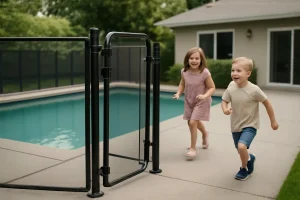
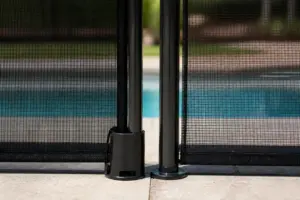
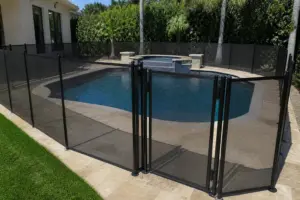
By a significant margin, removable mesh is the option most families with small children select, and the reasons are solid. The setup functions this way: aluminum support poles drop into floor-mounted anchor points that are drilled into your concrete perimeter and secured using epoxy. Mesh material connects between the poles, and the tension system keeps everything rigid and vertical. Standard sizing puts the barrier at four to five feet tall, and when properly set up, the mesh resists both pushing and climbing attempts from young children.
Installation cost sits between $15 and $25 for every linear foot — meaning a standard 100-120 linear foot pool boundary lands somewhere in the $1,500 to $3,000 range, depending on your geographic area and whether you handle installation yourself or hire someone. The majority of homeowners can complete the installation in two to four hours using a concrete drilling bit, epoxy anchor adhesive, and standard hand equipment. The biggest challenge involves drilling those sleeve holes at exactly 90 degrees — if a pole sits at an angle, the mesh becomes loose.
The primary advantage is the ability to take it apart and remove it. You extract the poles, bundle the mesh sections, and what remains is just a series of small aluminum sleeves sitting flush with your deck surface — practically invisible. That’s genuinely convenient for hosting adult-focused pool events, family celebrations, or eventually, when your children reach an age where the barrier serves no purpose. You can swap out damaged sections independently without replacing the complete installation, which translates to lower expenses as time goes on. A quality mesh product performs well for five to ten years; the aluminum poles themselves persist much longer.
The reality check: this approach registers as functional rather than stylish. It won’t move your property’s sale price the way a permanent installation would. Additionally, lower-grade mesh products or improperly stored panels can lose their tautness over multiple seasons.
Permanent Aluminum Fencing
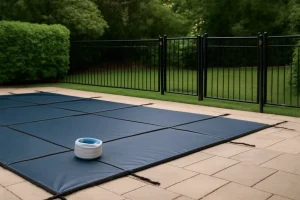
Anodized and powder-coated aluminum picket fence is the traditional permanent solution — the design you encounter at municipal recreation facilities and luxury residential properties. Vertical posts go into concrete-poured footings, making the fence a truly fixed structure. Installation expenses range from $20 to $40 per linear foot, bringing typical complete perimeter installations to between $2,500 and $5,000 or higher. Professional installation is strongly recommended since footing work requires expertise, particularly in areas subject to freeze-thaw cycles where soil movement can misalign posts.
When executed properly, aluminum fencing operates maintenance-free for two decades or longer — no staining required, no corrosion concerns, just periodic water rinsing. This choice substantially improves your home’s resale value. The tradeoff centers on its permanent nature: you can’t collapse it for entertaining, and although you can see through the pickets, visibility is more restricted than with mesh or glass options, particularly if the design incorporates broader decorative rail sections. Plus, it represents a major construction undertaking — factor in the permitting timeline as well.
Glass Panel Fencing
Seamless tempered glass combined with stainless-steel connector hardware represents the luxury, contemporary option — and the price tag reflects that premium positioning. Budget $50 to $100 per linear foot when professionally installed; a typical perimeter works out to $6,000 to $15,000 minimum. Professional installation is non-negotiable; panels are heavy, they demand exact leveling, and fastener specifications are rigid.
The benefit is strikingly beautiful: completely unobstructed sightlines, deck wind break benefits, and a high-end modern look that photographs exceptionally well. However, maintenance becomes the serious challenge — mineral buildup from water, pool water splashing onto surfaces, sunscreen residue, and smudges become constantly apparent on transparent surfaces. In my own backyard and in a few pools I’ve helped neighbours and family with, where calcium hardness regularly exceeds 300-500 ppm, glass barriers needed weekly washing to maintain appearance. Should a panel suffer impact damage (an errant lawn chair, an aggressive throw by a child), it will fracture safely in the tempered-glass design, but replacement glass panels cost $200 to $500 each. Plus, stainless fasteners deteriorate more rapidly near saltwater environments than manufacturer specifications typically forecast.
Why Removable Mesh Became My Default Recommendation for Most Homeowners
Committing to a permanent rigid structure anchored to your concrete felt like locking yourself into a choice you might resent three years down the road. Removable mesh satisfies code requirements while maintaining flexibility — plus you preserve your sightlines completely.
What delivers real benefits
- Installation happens in a single afternoon using no specialized tools and without permanent damage to your surface — I had mine up and inspected before the insurance company even phoned to schedule their visit.
- The mesh material is transparent enough that pool supervision from inside works perfectly, eliminating that “I can’t monitor what’s happening now” worry.
- Complete removal is straightforward during off-season months or before listing for sale, so you never sacrifice long-term aesthetic choices.
What presents challenges
- The mesh requires manual re-tensioning and periodic maintenance — it deteriorates if neglected for months, and loose-looking mesh looks significantly worse than having nothing.
- Certain jurisdictions have stricter code language that doesn’t accept removable systems as satisfying permanent barrier mandates, so you’ll need to verify your local statutes up front.
I almost talked myself out of the removable option because I worried it would look cheap or feel flimsy — but when I actually opened the box and felt the material, the aluminum frame was solid enough to give me real confidence. If you’re in the same headspace, grab the 4×48FT Inground Pool Safety Fence, DIY Removable Mesh Barrier, Black and check your local code first.
About This Article

Written by Nadia Caldwell. Backyard pool owner and water chemistry nerd. After years of chasing down cloudy water and algae blooms on my own pool and my neighbors', I now write about pool maintenance, water treatment, and everything chlorine-related for everyday pool owners. More about this site.
Scope and limits. Nadia is a pool owner who reads chemistry, not a certified pool professional. Follow label directions on every chemical, never mix them, and use a certified pool operator for equipment and sanitizer system work.
Verify this against a primary source
Specifics change, and your situation may differ from the one described here. These are the authorities worth checking directly:
- World Health Organization — guidelines for safe recreational water environments
- Pool & Hot Tub Alliance — water chemistry and pool operation standards