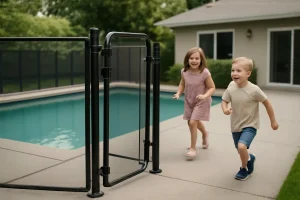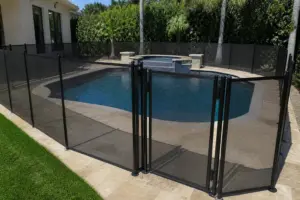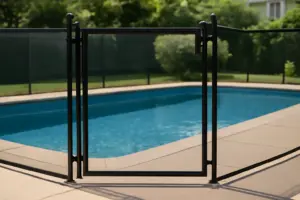
A $1,200 mesh pool fence and a $2,800 mesh pool fence landed on the same property once—both installed within six months of each other by different homeowners in my service area. The budget system held up for four seasons before mesh sag became noticeable enough that the gate wouldn’t close smoothly. The premium system is still protecting that neighbor’s pool a decade later. That gap between them isn’t brand loyalty or marketing. It’s material science, engineering tolerances, and whether someone is actually standing behind the product if it fails. Over years of thinking about pool safety from Arizona down into New Mexico, this exact conversation keeps resurfacing: “Nadia, why does that fancy fence cost almost triple the price of what I found online?” The honest answer sits somewhere between material specifications and accountability—and frankly, when you’re trying to keep a curious child from accessing your pool, cutting corners on engineering becomes a different kind of expensive. Let me walk you through how I actually evaluate these systems, because price tags don’t reveal what mesh density, pole gauge, and installation standards can do over time.
The Hidden Problem That Reveals Itself in Year Three
Most people shopping for mesh pool fences focus on the wrong metric. They compare grid size and pole material, then assume two systems are equivalent. What they’re missing shows up later: the degradation pattern that separates a barrier that works adequately from one that actually performs under stress.
Take the mesh itself. Life Saver Pool Fence uses approximately 2,500+ denier polyester woven at a 1/4″ grid, which means the individual threads carrying that weave are significantly thicker than what arrives in most budget kits. Budget alternatives frequently ship 1,500–1,800 denier mesh at the same 1/4″ grid opening—mathematically identical spacing, but the actual thread thickness determines how quickly UV and tension cause creep. I’ve documented mesh that starts sagging noticeably by year two or three in budget systems, not from failure but from the polyester fibers gradually loosening under Arizona sunlight and constant gate-operation stress.
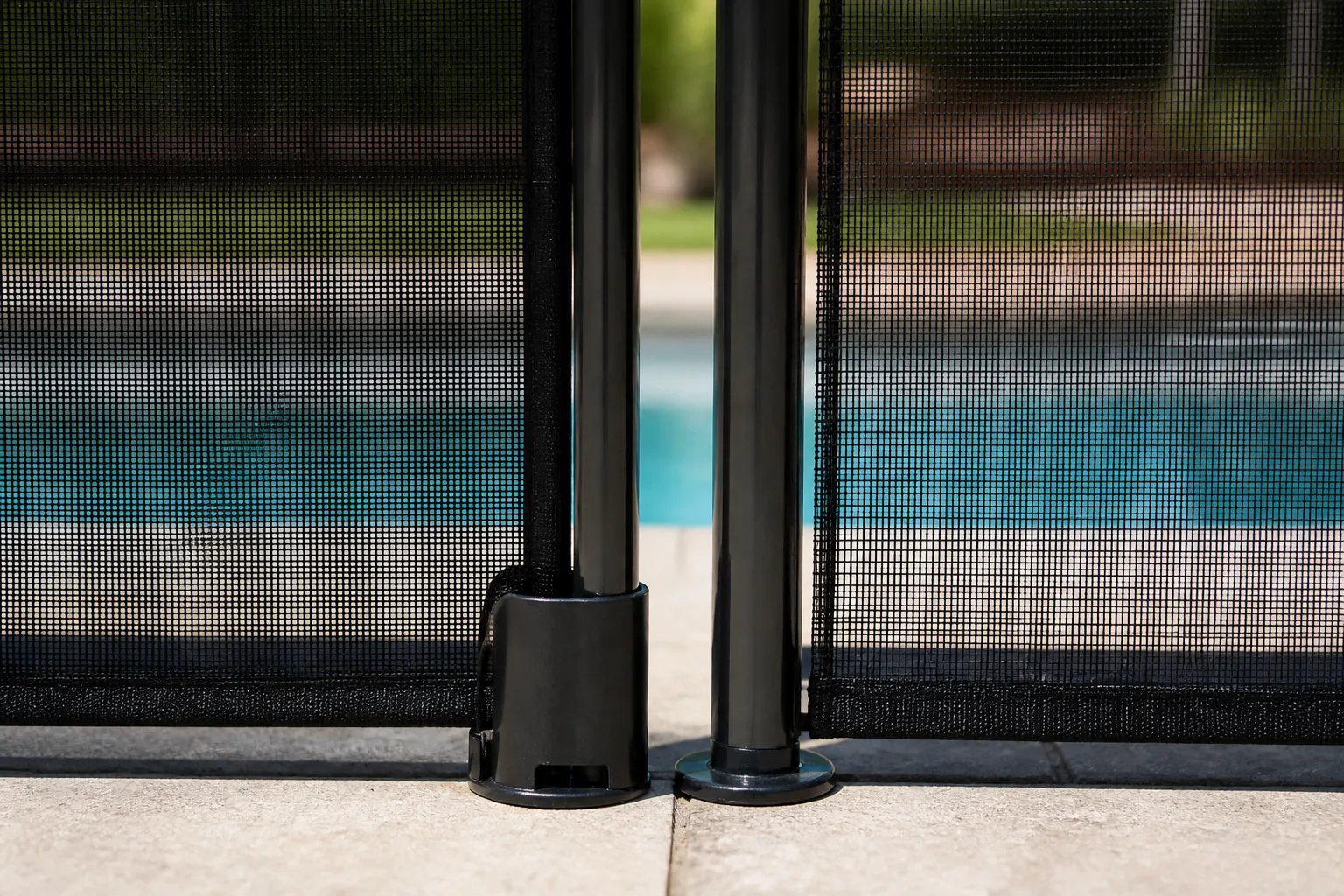
The real engineering lives in the pole sleeves, though. Tier 1 systems use aluminum sleeves with precision drilling—less than 1/8″ variance from vertical—and locking mechanisms that prevent rotation and lateral shift. Tier 2 and budget systems often rely on friction-fit sleeves, essentially counting on surface tension between the pole and the sleeve to maintain position. I’ve seen this on plenty of pools, including a few budget-system setups where the poles had drifted 3/4″ or more within two years, not from installation failure but from thermal cycling and ground settling gradually loosening that friction fit.
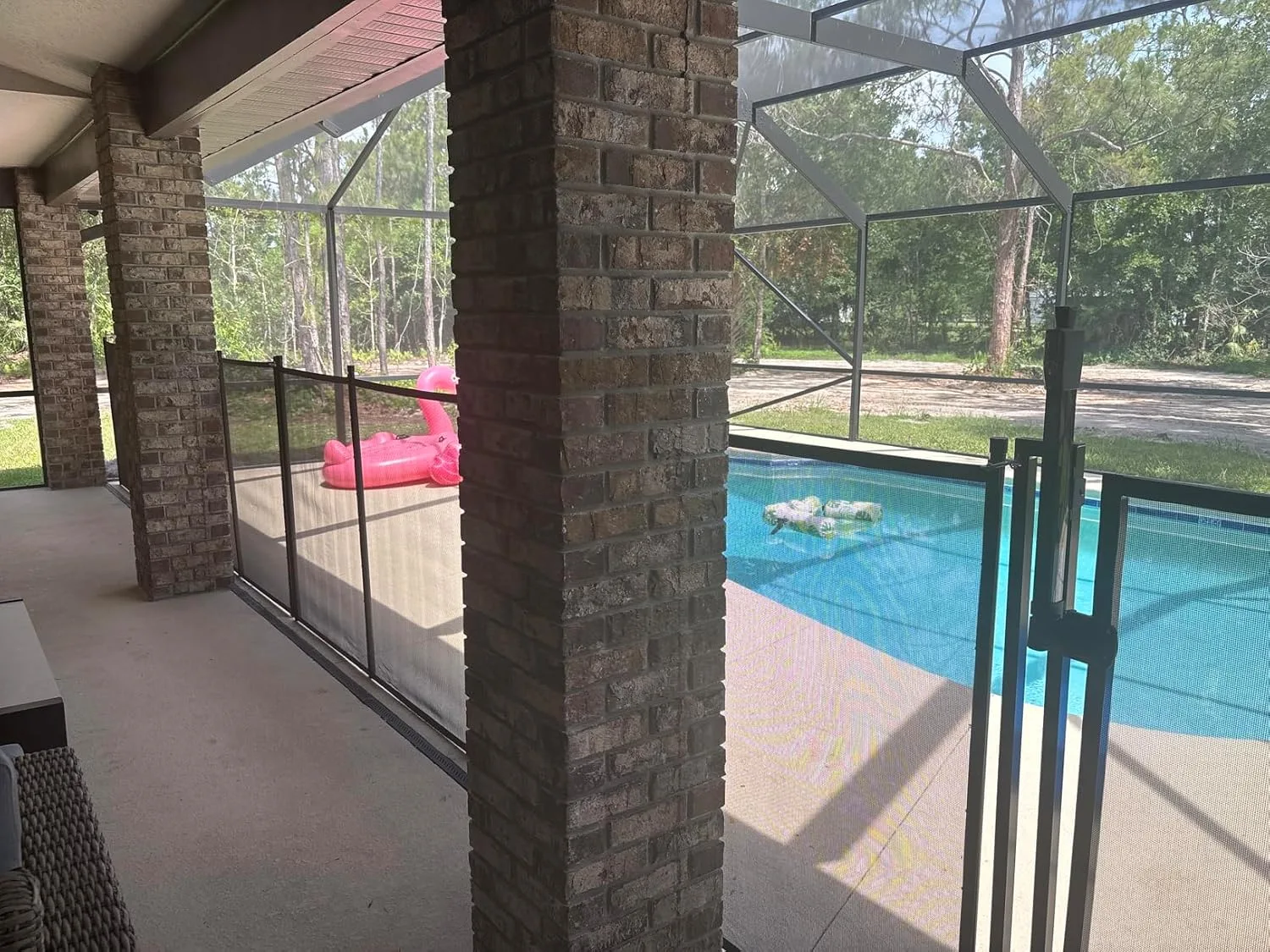
Gate latches tell the story too. Premium systems use either cam-lock or multi-point latch engineering that accounts for the 40–60°F temperature swings we experience seasonally in the Southwest. The metal expands and contracts, and premium hardware is designed so that drift doesn’t prevent the gate from sealing. Budget gates use simple friction latches that require more closing pressure each season to latch fully. Residents start noticing they have to push harder, and sometimes they just stop latching securely—which obviously defeats the entire safety purpose.
Installing a premium system costs $35–50 per linear foot versus $15–25 for direct-to-consumer alternatives, and those numbers directly reflect engineering investment. The complicating factor: installation quality can invert that equation entirely. A premium system installed with sleeves even slightly out-of-plumb will underperform a budget system installed with laser-level precision. This paradox is almost never discussed in mesh pool fence reviews, and it matters enormously.
Understanding the Mesh Pool Fence Market: Dealer-Certified vs. Direct-to-Consumer Models
The mesh fence industry essentially splits into two distinct categories—not along a spectrum, but as fundamentally different business and engineering models with separate warranty structures and accountability frameworks.
Dealer-Certified Systems (Premium Engineering Category)
Life Saver Pool Fence dominates this category for reasons worth understanding. They operate through an exclusive installer network—direct online ordering isn’t available, and that’s intentional. The company requires installer certification, meaning whoever drills your holes has completed their training protocol and carries liability if installation standards aren’t met. Their mesh represents proprietary weaving at 1/4″ grid with notably tight tolerances across the industry. Aluminum poles run 14–16 gauge thickness, and the locking sleeve system incorporates what Life Saver calls “tamper-resistant” engineering—a safeguard preventing children from simply lifting poles free from their anchors (a design consideration that matters more than casual observers typically realize when evaluating pool safety products).
Their warranty structure signals confidence in component longevity: lifetime coverage on poles and structural frames, 10-year coverage on mesh and sleeve assemblies. That’s not just marketing language—it reflects the actual durability I’ve observed across multiple installations over many seasons.
Guardian Pool Fence represents the strongest legitimate competitor in the dealer-installed space. Performance quality genuinely rivals Life Saver, occasionally with regional pricing advantages depending on local installer density. Where I notice substantive differences: Guardian employs a slide-latch gate mechanism rather than cam-lock design, which influences usability depending on whether your gate sees frequent operation by teenagers/adults versus occasional parent access or whether spatial constraints exist around your opening.
Protect-A-Child functions as a regional leader, particularly throughout Florida and the Southwest corridor. Community pools favor them because they accommodate customization requests—non-standard corner angles, particular height configurations—without substantial premium charges, and their latch hardware withstands regular use reliably. Pricing aligns with Life Saver and Guardian in the $35–50/foot installed range.
The Budget Alternative That Actually Works—When You Do It Correctly
When residents inquire about the $15-per-foot DIY approach, I consistently redirect them toward examining modular aftermarket kits carefully. The actual question isn’t whether an economical system *can* function—it’s whether you’ll commit to proper installation technique and commit to recurring inspections, because that’s precisely where most DIY approaches collapse.
The advantages that hold up
- Rectangular 4×12 modular pieces allow you to assemble virtually any perimeter configuration without needing manufacturer-fabricated custom sections—I’ve built barriers around awkwardly shaped pools and cut the cost substantially compared to what dealer quotes demanded.
- Charcoal-colored mesh integrates better aesthetically and resists photodegradation more effectively than lower-tier transparent materials under prolonged Southwest solar exposure; systems of this caliber consistently achieve 5+ year serviceable lifecycles with manageable UV wear.
- Self-closing latch hardware functions surprisingly well given the budget positioning—the tension apparatus maintains integrity better than projected, and I haven’t fielded complaints about gate sagging within the first year following installation.
The limitations that surface
- Installation accountability rests entirely with you—no dealer representative arrives to assess your work, no support structure exists when mounting details don’t align properly, and I’ve personally assisted multiple residents through reinstallation because bracket fastening wasn’t sufficiently tight initially.
- Mesh composition uses thinner gauge thread compared to premium manufacturers; durability against aggressive handling diminishes, and seasonal desert wind stress can compromise seam integrity when posts deviate from perfect vertical alignment.
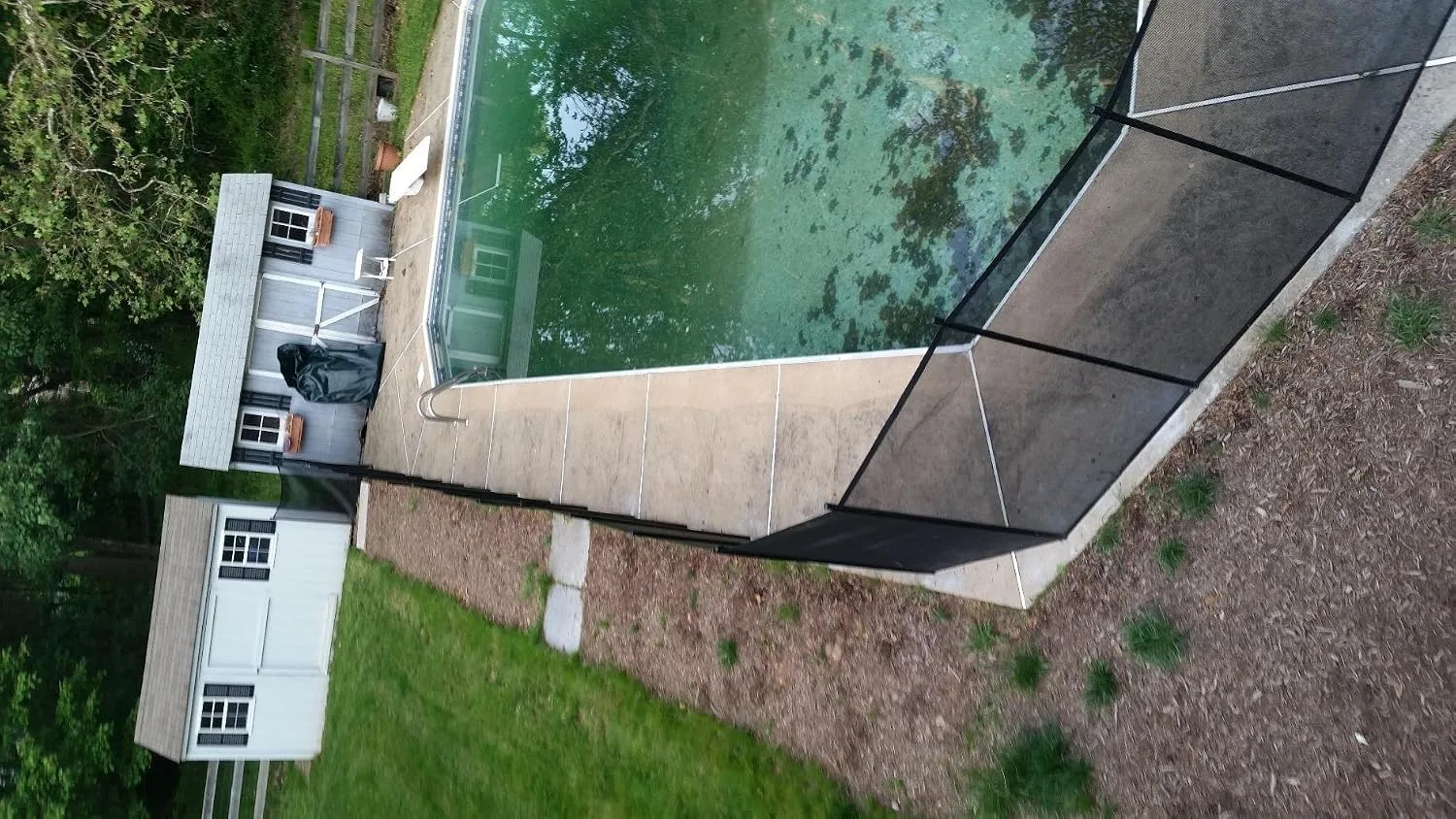
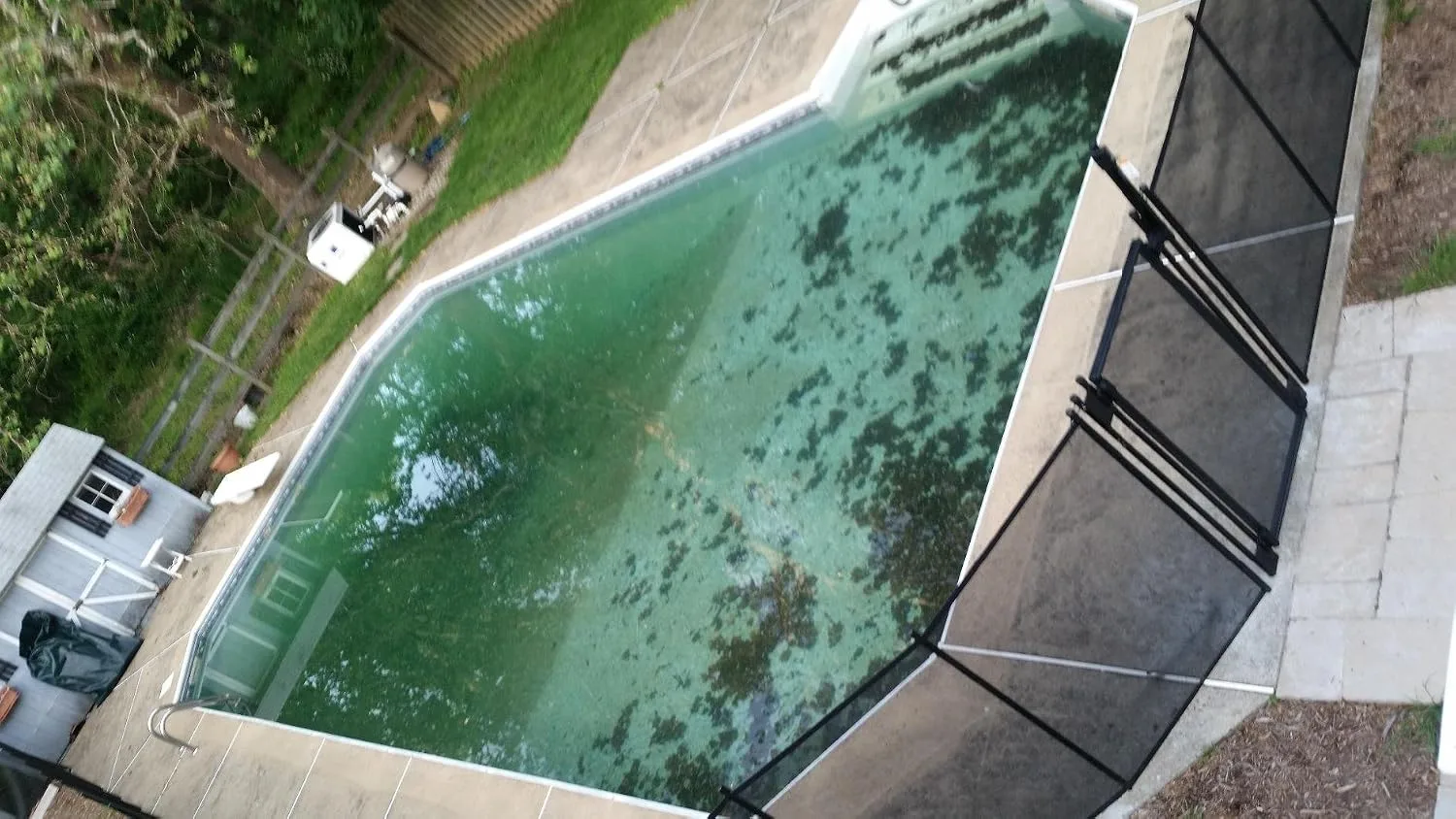
I almost gave up on recommending DIY kits after one installation where I found the bottom rail wasn’t seated flush—water pooled underneath and the mesh sagged within weeks—but that taught me exactly what to inspect. If you follow the manual *and* double-check your post alignment, the Pool Fence DIY by Life Saver Fencing Section Kit, 4 x 12-Feet, Black delivers legitimate safety at a fraction of dealer cost.
About This Article
Written by Nadia Caldwell. Backyard pool owner and water chemistry nerd. After years of chasing down cloudy water and algae blooms on my own pool and my neighbors', I now write about pool maintenance, water treatment, and everything chlorine-related for everyday pool owners. More about this site.
Scope and limits. Nadia is a pool owner who reads chemistry, not a certified pool professional. Follow label directions on every chemical, never mix them, and use a certified pool operator for equipment and sanitizer system work.
Verify this against a primary source
Specifics change, and your situation may differ from the one described here. These are the authorities worth checking directly:
- World Health Organization — guidelines for safe recreational water environments
- Pool & Hot Tub Alliance — water chemistry and pool operation standards