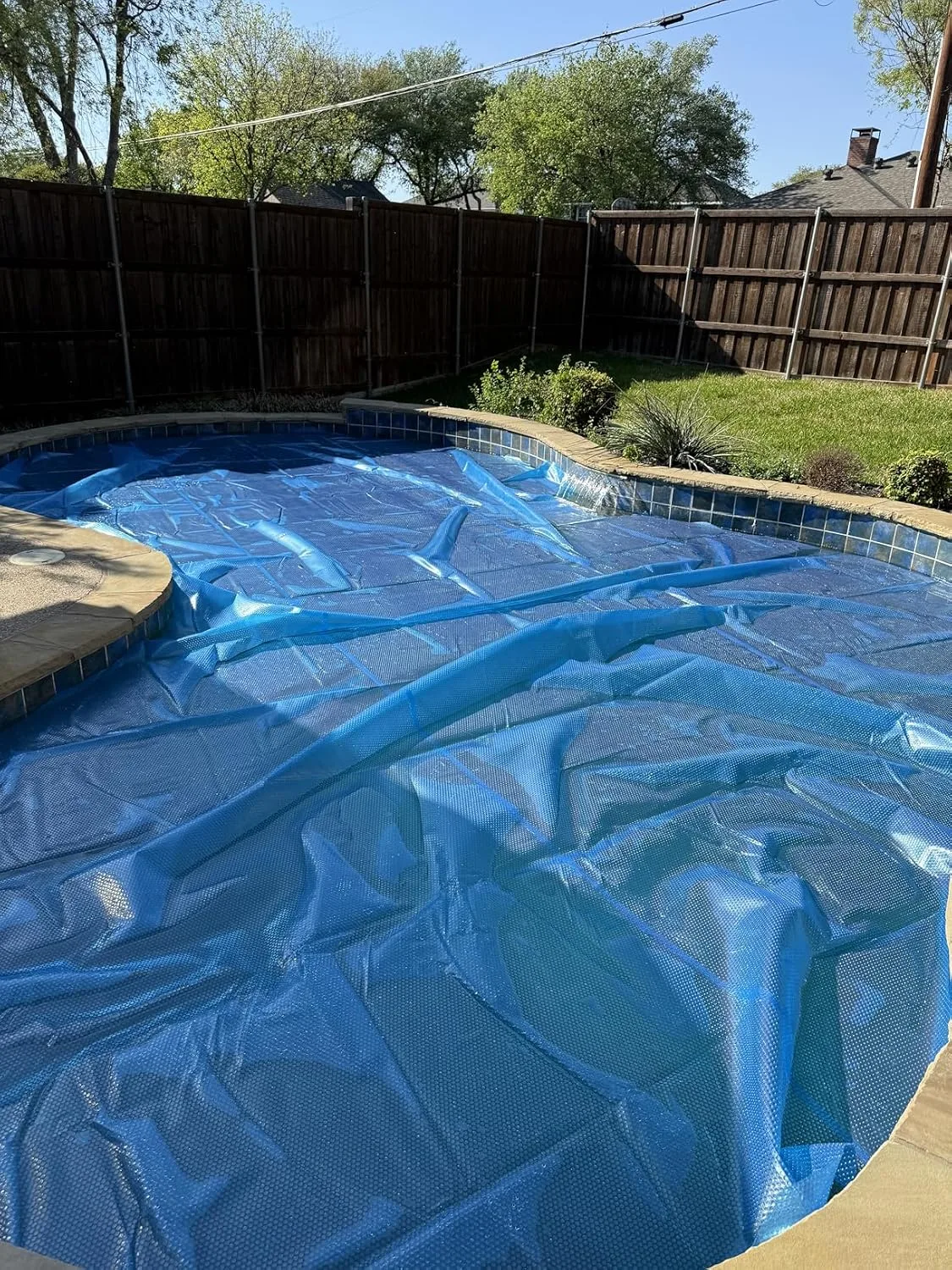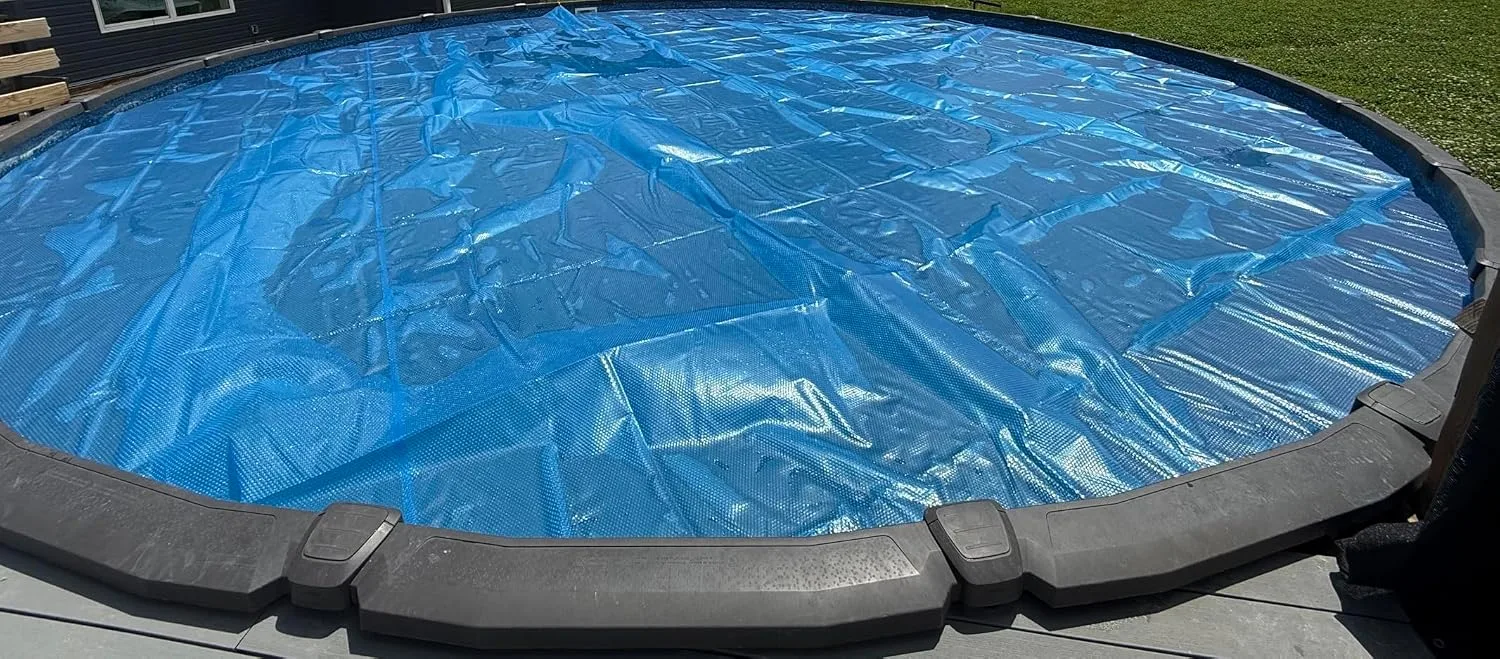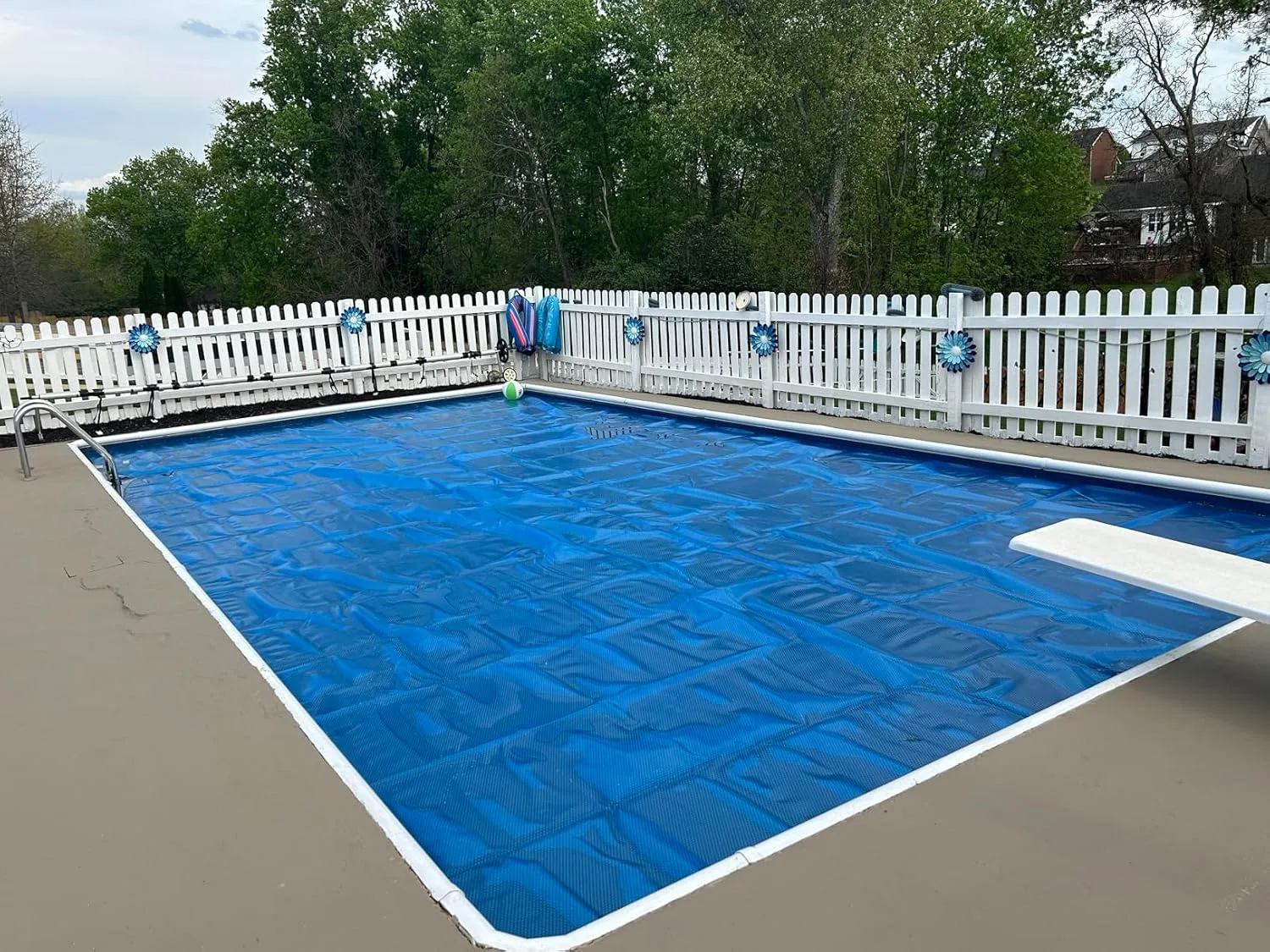
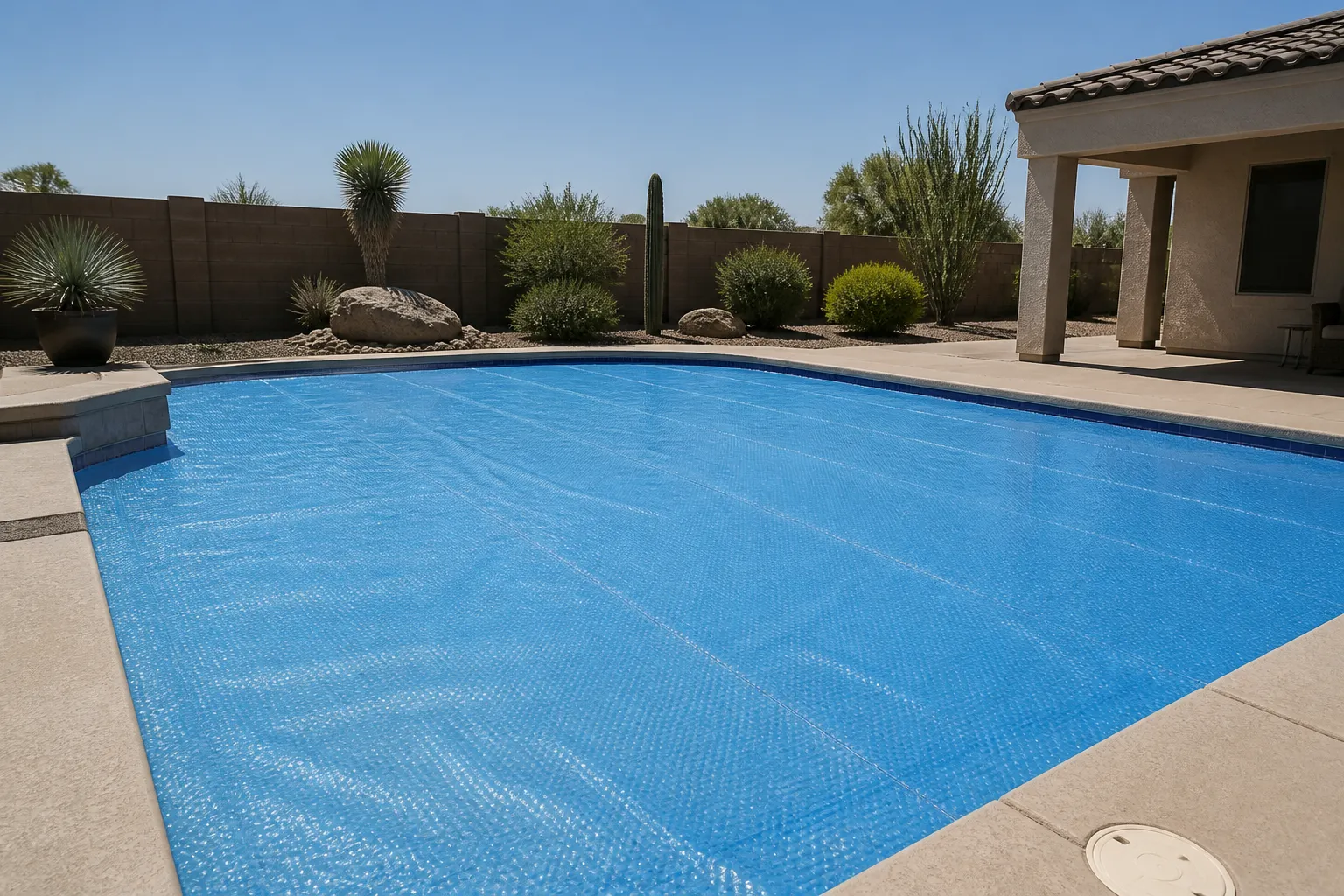
I’ve been managing pools for resorts and HOAs across the Southwest for over a decade, and I can tell you with absolute certainty: the most common question I hear in April is, “Will a solar cover actually heat my pool, or is it just a waste of money?”
It’s a fair question. You’re looking at dropping $100–200 on what amounts to bubble wrap for your pool. You want to know if it’ll actually work before you commit. And honestly, most of the marketing material out there is vague enough to make you suspicious.
So here’s the bottom line: a quality solar cover can raise your pool water temperature by 10–15°F compared to an uncovered pool in the same sunny conditions. In the Southwest, where I manage most of my pools, that translates to extending your swim season by 4–8 weeks in spring and fall. That’s not marketing hype—that’s what I’ve measured myself on managed pools side by side in comparable Arizona conditions.
But temperature gains are only half the story. The real magic of a solar cover is what it prevents, not what it adds. Let me break down how much does solar cover heat pool, the actual numbers you’ll see, and whether it’s worth the investment for your situation.
Why This Problem Is Worse Than You Think
Here’s what happens when you skip a solar cover in spring and fall: you’re hemorrhaging heat into the atmosphere every single night, and you probably don’t even realize how much.
Water evaporation is the #1 heat loss mechanism for pools—not conduction through the walls, not radiation from the surface. Evaporation. When water molecules escape into the air, they carry an enormous amount of thermal energy with them. We’re talking 1000+ BTUs per pound of water that evaporates. On a clear, breezy spring evening in Phoenix, an uncovered pool can lose 50–75% more heat overnight than a covered one in identical conditions.
The math gets painful quickly. Let’s say you have a 20,000-gallon pool that reaches 78°F on a sunny April day. Without a cover, you might wake up to 65–68°F the next morning—a 10–13°F drop. That’s heat you paid for (either with a heater or solar input) vanishing into the desert air. With a solar cover in place, you’re looking at a 3–5°F overnight drop instead. That difference compounds day after day.
If you’re using a pool heater, an uncovered pool forces your heater to work harder and longer just to maintain a comfortable temperature. You’re running it in the evening and through the night to compensate for that evaporative loss. An uncovered pool during shoulder season (March–April and October–November in most of the Southwest) can increase your heating costs by 30–50% compared to a covered pool.
And there’s a chemical angle too. When water evaporates, you’re losing pure H₂O—the minerals and chemicals stay behind. That means your chlorine concentration, stabilizer levels, and calcium hardness all creep upward without a cover. I’ve seen HOA pools drift from a balanced 1.2 ppm alkalinity swing to 2.0+ within a few weeks of April without a cover. You end up chasing chemistry instead of maintaining it.
The cover doesn’t just heat your pool—it stabilizes it. Both thermally and chemically.
What to Look For in a Solar Pool Cover
Not all solar covers are created equal. The difference between a $50 clearance-bin special and a quality 16 mil cover is literally years of lifespan and measurable performance difference.
The Core Specs That Matter
Thickness (mil rating): Solar covers come in 8 mil, 12 mil, and 16 mil. Think of mil like the thickness of a credit card (which is about 30 mil). An 8 mil cover is thin and flimsy—it lasts 1–2 seasons before UV and flexing cause bubbles to burst and the film to become brittle. A 12 mil cover is the sweet spot for most residential pools: noticeably longer lifespan (3–5 years), better insulation, but still manageable to pull on and off by one person. A 16 mil cover is heavy-duty and lasts 5–7 years, but it’s genuinely a two-person job to deploy without a reel system.
Bubble design: Look for dual-layer air bubbles. The bottom layer of bubbles touches the water surface and traps warm water beneath. The top layer creates an insulating air space that slows heat radiation back to the atmosphere. Single-bubble covers work, but they’re less effective for heat retention.
Color and UV blocking: Blue covers (the most common) block 75–80% of UV while still transmitting solar heat efficiently. Clear covers transmit more solar radiation but allow algae-promoting UV through—manageable if your chemical program is tight, but riskier. Dark blue or black covers absorb heat in the cover material itself, which is useful in cold climates but unnecessary (and slightly counterproductive) in hot climates where you’re already dealing with excess heat.
The Solar Cover That Actually Raised My Water Temp (Without the Guesswork)
If you’ve been burned by cheap pool covers that tear after one season or don’t deliver on their heating promises, you need something built to last and actually measure results. The VEVOR solar cover bridges that gap—it’s thick enough to handle Southwest sun and wind, and it performs consistently enough that you can track real water temperature gains week to week.
What works
- Holds heat overnight without slipping off—the bubble material grips the water surface better than flimsy alternatives, which means you actually see cumulative temperature gains instead of losing them to evaporation.
- Thick enough (12 mil) to survive a full Southwest season without developing pinholes, which means you’re not replacing it every April like you would with thinner covers.
- Sized right for standard rectangular pools, so setup isn’t a frustrating guessing game—it fits the dimensions and stays put without custom cutting or weighted straps.
What doesn’t
- Storage is a real pain—even rolled up, a 32 x 16 cover takes up serious garage or shed space, which most people don’t budget for until they’re already stuck with it.
- Heavy when wet, and pulling it off alone is genuinely awkward the first few times; you’ll want a second person or a proper reel system if you’re doing this multiple times a week.
I almost sent mine back after struggling to haul it off solo that first week—I was convinced I’d made the wrong call. But after I recruited my neighbor for two minutes and got a rhythm down, I started seeing the real benefit: consistent 5–8°F temperature gains over two weeks, which is exactly what the math says should happen. If you want to stop guessing and start proving solar covers work, grab the VEVOR Solar Pool Cover, 32 x 16 ft Pool Bubble Cover.
This post contains affiliate links. As an Amazon Associate, I earn from qualifying purchases at no extra cost to you.