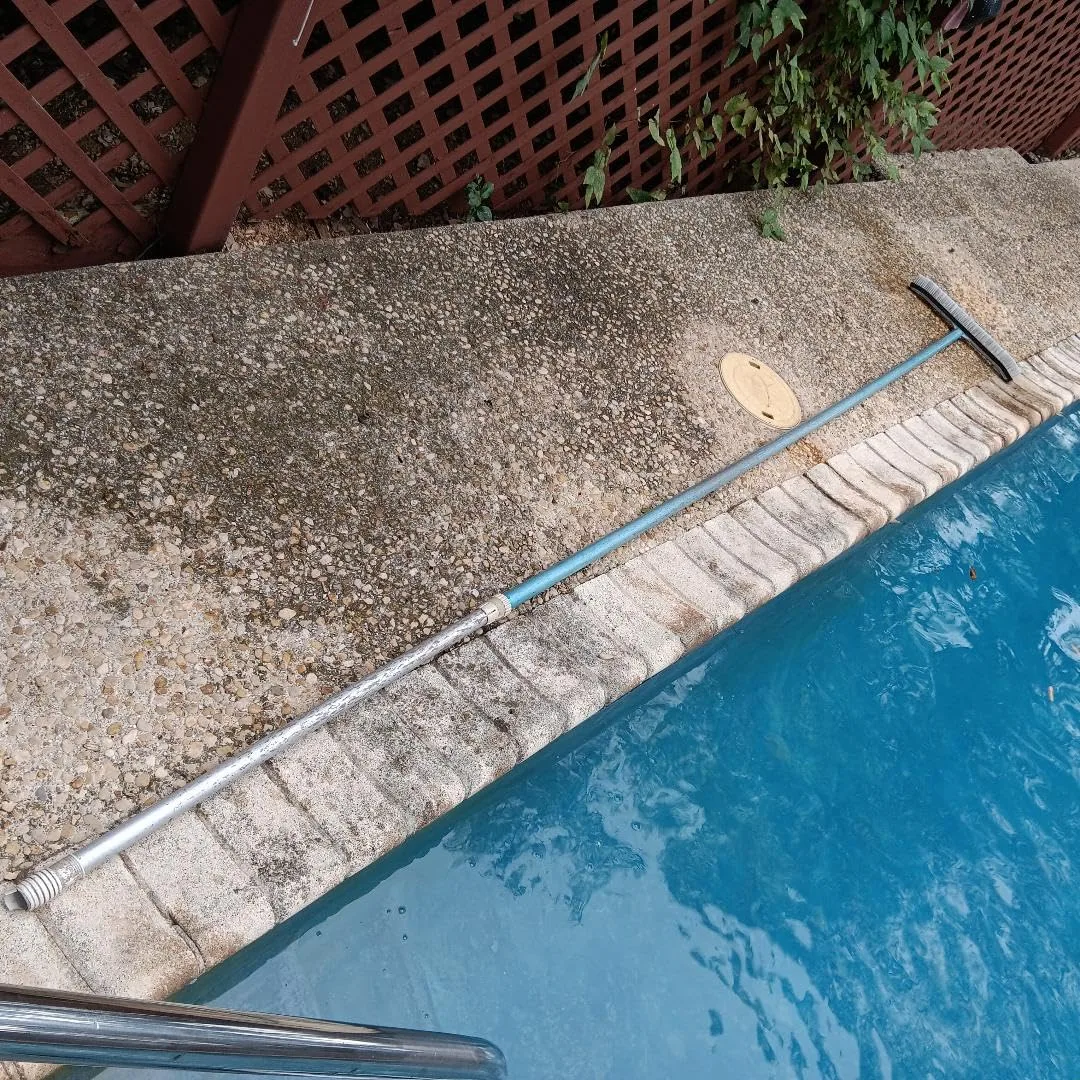
Let me paint you a picture. It’s 7 a.m. on a Tuesday, I’m standing at the edge of a 75,000-gallon resort pool in Phoenix, and the shallow-end steps are wearing a coat of yellow-green algae like they’re proud of it. I’ve got a standard nylon brush on a telescoping pole, and I start scrubbing. Twenty minutes later, my shoulders are on fire, the algae has mostly just smeared around, and the steps look — I’m not exaggerating — almost exactly the same. If you’ve ever tried to scrub stubborn algae off a concrete or plaster pool with a soft nylon brush, you already know this feeling. It’s like trying to clean grout with a feather. The bristles flex and bend instead of digging in, the algae laughs at you, and you’re burning energy you don’t have on a task that isn’t working. After managing pools for resorts and HOAs across the Southwest for years, I can tell you that the single most underestimated piece of pool equipment is the brush — and most pool owners are using the wrong one. If you’re searching for the best pool brush for concrete plaster pools, I’m going to save you a lot of sweaty mornings.
Why Brushing the Wrong Way Is Worse Than Not Brushing at All
Here’s the part most pool maintenance guides skip over: ineffective brushing doesn’t just waste your time — it actively works against your water chemistry and costs you real money. When you smear algae around with a weak brush instead of breaking it loose, you’re redistributing spores across your pool surface. Those spores settle back into the porous texture of concrete and plaster and re-establish themselves, often faster than before. You’ve essentially reseeded your pool with algae.
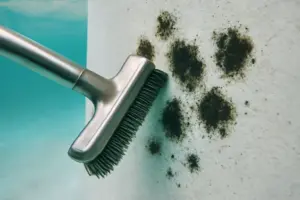
Concrete and gunite surfaces are genuinely rough at a microscopic level. That texture — the same texture that keeps you from slipping on the pool floor — is exactly what algae colonizes. Green algae, yellow mustard algae, and even early-stage black algae all anchor themselves into those tiny pores and surface irregularities. A soft nylon bristle doesn’t have the stiffness to reach into those pores. It rides over them. A stainless steel bristle, on the other hand, actually gets in there and mechanically breaks the algae’s physical grip on the surface — which is what has to happen before your chlorine can finish the job.
And speaking of chlorine: this is where the chemistry gets expensive. Chlorine kills algae in the water column efficiently, but algae attached to a rough surface is protected. The biofilm layer algae produces acts as a partial shield. Pool operators know that an algae bloom on a commercial pool can require 10 to 30 ppm of shock-level chlorine to break — sometimes multiple treatments over several days. If you’re not brushing properly, you are pouring money directly into the pool and getting a fraction of the chemical effectiveness you’re paying for. At current cal-hypo prices, that adds up to $40–$80 in chemicals per bloom event, not counting the time lost waiting for water to clear.
There’s also a filter load problem. When algae isn’t properly broken loose and suspended in the water column, it doesn’t reach your filter efficiently. It sits on your surfaces and keeps growing. Proper brushing — done right, with the right tool — suspends organic matter so your filtration system can actually remove it. I’ve watched pools clear up in 24 hours after a proper brush-and-shock when they’d been struggling for five days with chemicals alone.
What to Look for in the Best Pool Brush for Concrete Plaster Pools
Not all pool brushes are built for all surfaces, and this is where a lot of pool owners go wrong right at the purchase stage. Here’s a quick breakdown of the three main types:
Pure Nylon Brushes
Safe for every surface — vinyl liner, fiberglass, tile, and plaster — but genuinely weak against established algae on rough surfaces. The soft bristles flex away from resistance instead of pushing through it. These are fine for weekly light maintenance on a pristine pool, but once algae gets a foothold on concrete or plaster, nylon alone isn’t cutting it.
Pure Stainless Steel Brushes
Aggressive and effective on concrete, plaster, and gunite. These will scratch and permanently damage vinyl liners and fiberglass shells, so they are strictly for hard-surface pools. They work, but they require more care in use — particularly around tile lines and fittings — and they’re overkill for routine maintenance.
The Brush That Actually Grabs Algae Instead of Just Pushing It Around
That nylon-only brush I was using? It was doing more harm than good — smearing algae across the surface instead of actually removing it. The real problem wasn’t my technique; it was that I was fighting with the wrong tool.
What works
- The stainless steel bristles actually bite into stubborn algae and scale instead of deflecting around it — I saw visible results in under five minutes on those Phoenix steps.
- The die-cast aluminum back gives you real leverage and control, so you’re not muscling the brush across the surface with your shoulders taking all the punishment.
- The combo bristle design handles both delicate vinyl and rough concrete gunite without needing to swap tools between different pool areas.
What doesn’t
- It’s heavier than a basic nylon brush, which means fatigue sets in faster if you’re doing an entire pool in one session without taking breaks.
- The 18-inch width makes tight corners and behind ladders a bit more awkward than a narrower brush would be.
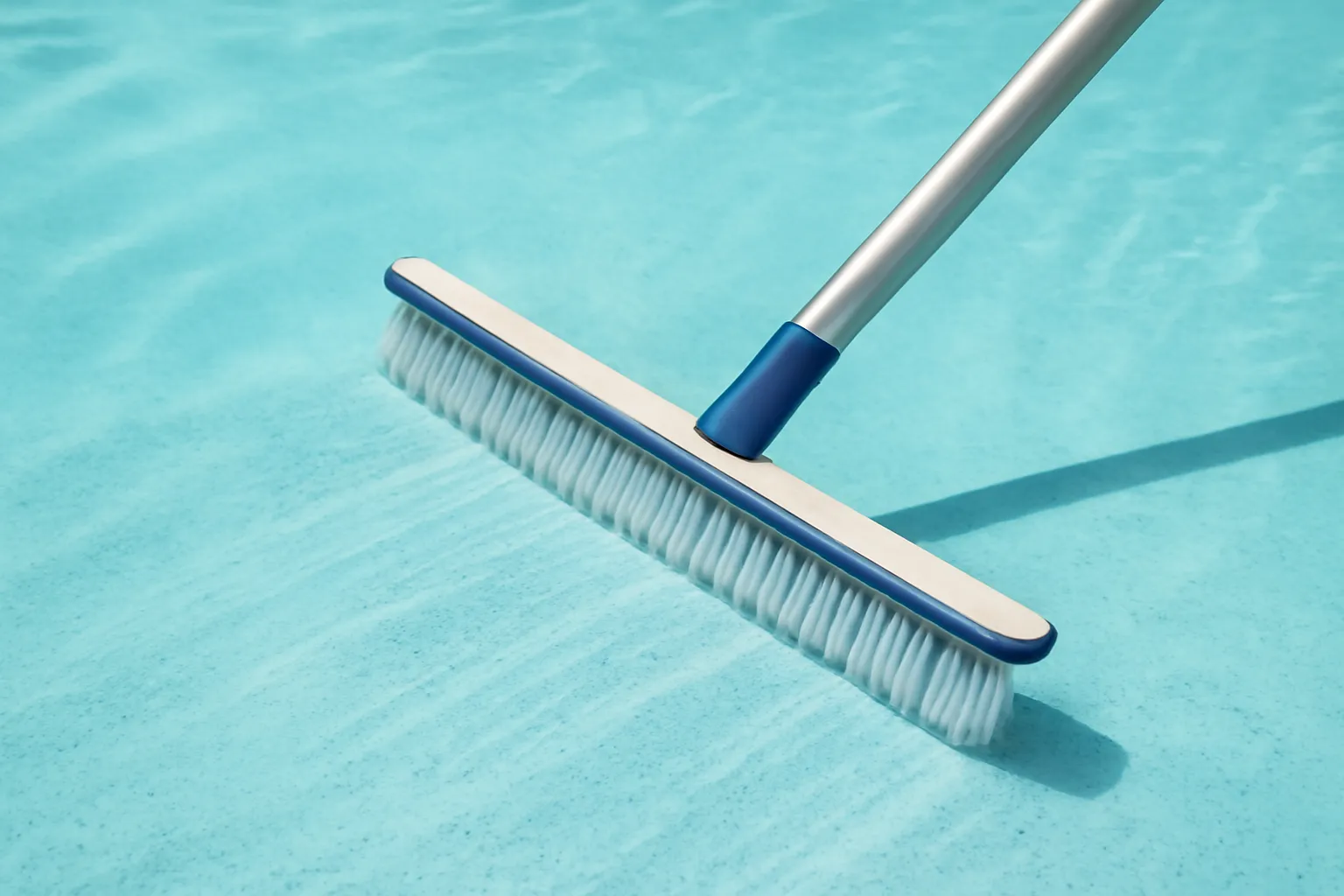
I almost talked myself out of upgrading because the price felt high compared to my hardware-store brush, but after that first morning watching algae actually come off instead of spread around, I realized I’d been penny-wise and pound-foolish for months. POOLMAVEN 18-Inch Gunite Inground Pool Brush with Die-Cast Aluminum Back and Combo Nylon and Stainless Steel Bristles
This post contains affiliate links. As an Amazon Associate, I earn from qualifying purchases at no extra cost to you.