I’ve been managing pools professionally for over fifteen years — resorts, HOA communities, luxury properties across the Southwest — and I can tell you with absolute certainty that the question I get most often from homeowner clients isn’t about algae or pH levels. It’s a version of this: “My granddaughter is visiting next weekend. What do I do about the pool?” What they’re really saying, if you read between the lines, is that they lie awake at night thinking about it. They know every door to the backyard is a potential access point. They know a two-year-old can move faster than you think. They know it only takes a minute — sometimes less. I’ve installed more diy pool baby gate hardware than I can count, and I’ve had that same knot in my stomach standing next to an unfenced pool while a toddler toddles nearby. If you’re in that position right now, this post is for you. Let’s talk about the single most important safety upgrade you can make to your pool — not the fence, not the alarm, the gate — and how to install it correctly so it actually does its job.
Why This Problem Is Worse Than You Think
Let me give you the number that stops every conversation cold: drowning is the leading cause of accidental death for children ages 1 to 4 in the United States. Not car accidents. Not falls. Drowning. And the statistic that haunts pool professionals like me is this — the overwhelming majority of residential child drownings happen in the family’s own backyard pool, and they happen during a period of supervision that was only briefly interrupted. A phone call. A sibling needing attention. A quick trip inside to grab a towel. That’s all it takes.
What makes this so devastating from a safety engineering standpoint is that small children — particularly toddlers between 12 and 36 months — are drawn to water instinctively. They don’t assess risk. They don’t hesitate. A child that age can reach the water’s edge and slip in before an adult twenty feet away has time to react. The window is that narrow.
Here’s what I see in my professional work that most homeowners don’t fully reckon with: a fence alone is not sufficient. A fence with a propped-open gate, a gate that doesn’t latch reliably, or a gate that swings inward toward the pool is not meaningfully safer than no gate at all. I have walked HOA properties where someone wedged a brick against the pool gate to keep it open “just while we’re out here.” I’ve seen gates where the latch was installed at knee height — well within reach of a curious three-year-old. I’ve seen gates with decorative horizontal rails that function as a perfect climbing ladder for a motivated toddler.
The Consumer Product Safety Commission estimates that proper four-sided pool fencing with a compliant, self-latching gate could prevent approximately 50 to 90 percent of child drownings in residential pools. That’s not a marginal improvement. That’s a transformational one. The gate is the weakest link in that system — and it’s the part most homeowners install carelessly or purchase based on price alone. Getting the gate right is everything.
What Makes a Pool Gate Actually Code-Compliant
Before we get into gate types and hardware, let’s establish what “compliant” actually means — because “pool gate for toddlers self closing” is a phrase that gets thrown around loosely, and not every product marketed that way actually meets the standard. Most jurisdictions follow ASTM F1346, the Standard Performance Specification for Safety Covers and Labeling Requirements for All Covers for Swimming Pools. Here’s what a compliant gate requires:
- Self-closing: The gate must return to the fully closed position on its own from any angle of opening — including just barely ajar. A gate that only self-closes when opened wide doesn’t count.
- Self-latching: The latch must engage automatically without any human action. If someone has to reach back and push the latch down after walking through, it’s not self-latching in any meaningful safety sense.
- Latch height minimum 54 inches from the ground: The release mechanism must be out of reach of small children. This is non-negotiable. A latch at 36 inches is accessible to a determined four-year-old.
- Opens away from the pool: A child pushing against the pool side of the gate should not be able to open it. The gate must swing outward, away from the water.
- No handholds or footholds: No horizontal rails, decorative cross-members, or structural elements a child could use to climb. This rules out a lot of the decorative wrought-iron style gates you’ll see at big-box stores.
Check with your local building department before you install anything. Some states — Arizona, Florida, California, and Texas among them — have their own pool barrier laws that go beyond ASTM F1346. Some jurisdictions require a permit even for removable pool fencing and its accompanying gate. A $50 permit is worth every penny if it means an inspector signs off that your installation is correct.
The Main Gate Types for a DIY Pool Baby Gate Installation
Mesh Removable Fence Gates
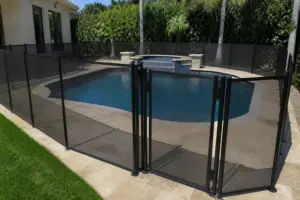
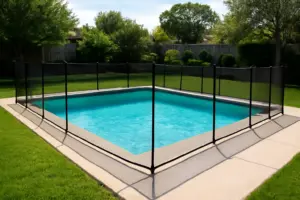
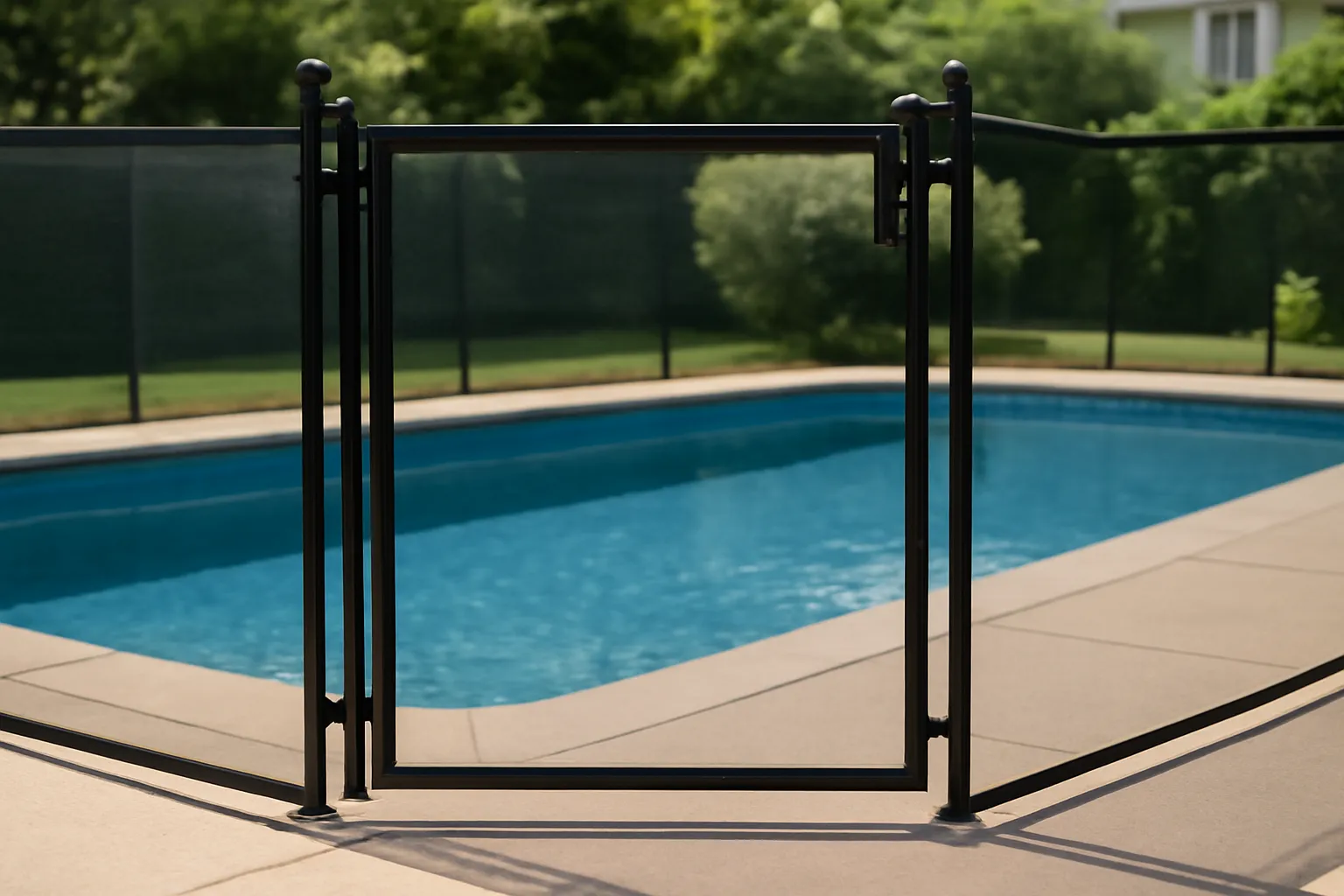
These integrate with the removable mesh pool fencing systems you’ve probably seen at resort pools and upscale HOA communities. The gate section uses the same mesh material with a self-closing hinge mechanism and a magnetic or gravity latch. Installation is the most DIY-friendly of all the options — fence posts anchor into holes drilled into the pool deck, no concrete work required. The gate itself typically costs $150–$300, and the full fence system runs $1,200–$2,500 depending on perimeter length. If you want to be able to remove the entire barrier when guests are over and adults are actively supervising, this is your system.
Aluminum Fence Gates
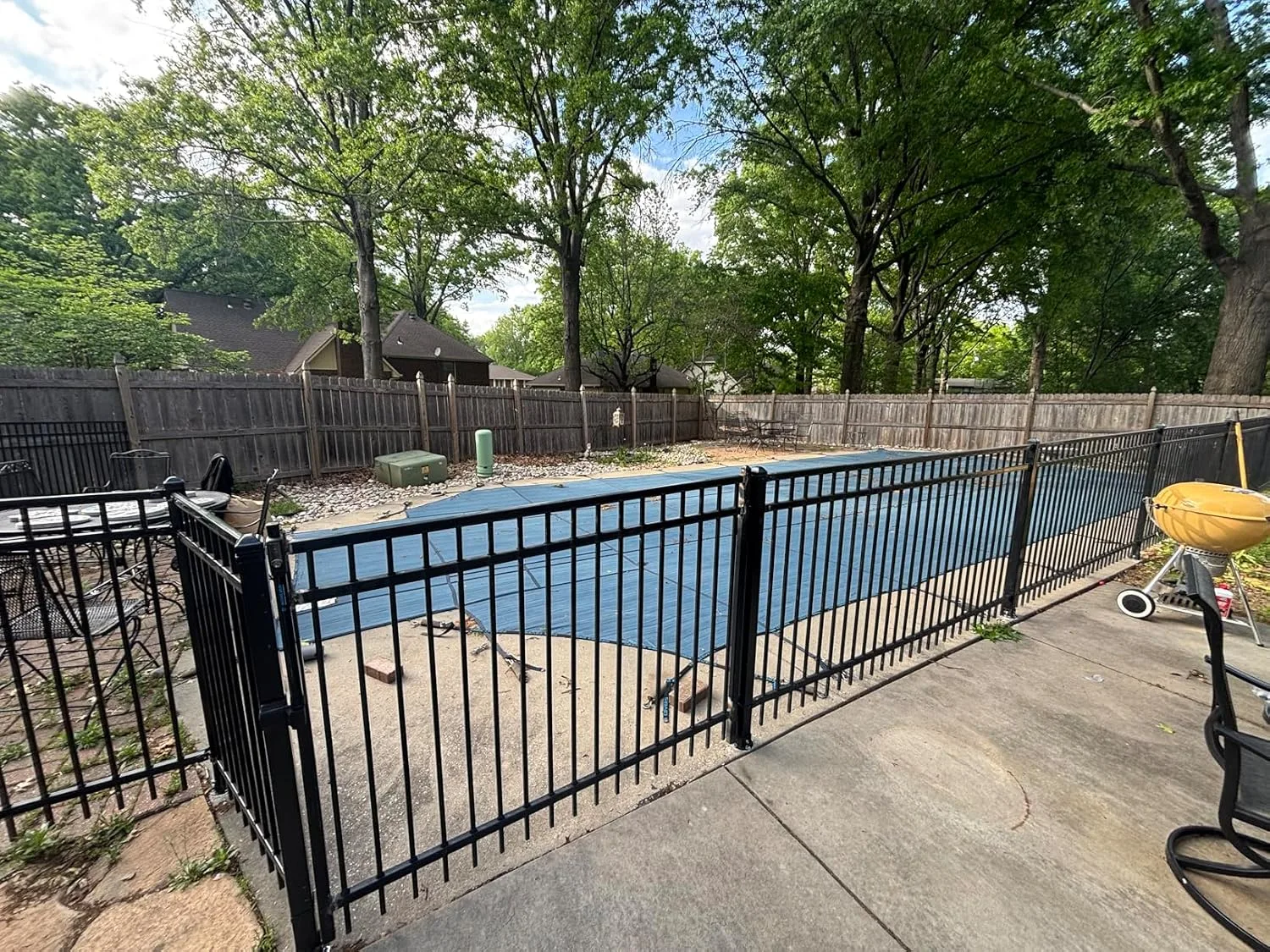
More permanent than mesh, these match aluminum pool fencing and are the most common choice for homeowners who want something that looks intentional rather than temporary. Self-closing hinges are built in, and the latch is typically a MagnaLatch or key-lockable mechanism mounted at the top of the gate. Installation requires anchoring posts into concrete, so this is more involved — budget a half day and don’t skip the post-setting compound. Gate cost: $200–$500.
Glass Panel Gates
The premium option. Frameless tempered glass with spring-loaded hinges and a top-mounted magnetic latch. These look stunning around a modern pool, and they’re genuinely strong — tempered glass doesn’t give a child anything to grab or climb. The tradeoff is cost ($400–$800 for the gate alone) and installation precision. Glass panel gates require perfectly plumb posts and careful hinge alignment. One degree off plumb and the gate won’t self-close reliably. If you’re not confident in your post-setting work, hire this one out.
Deck-Mounted Swing Gates
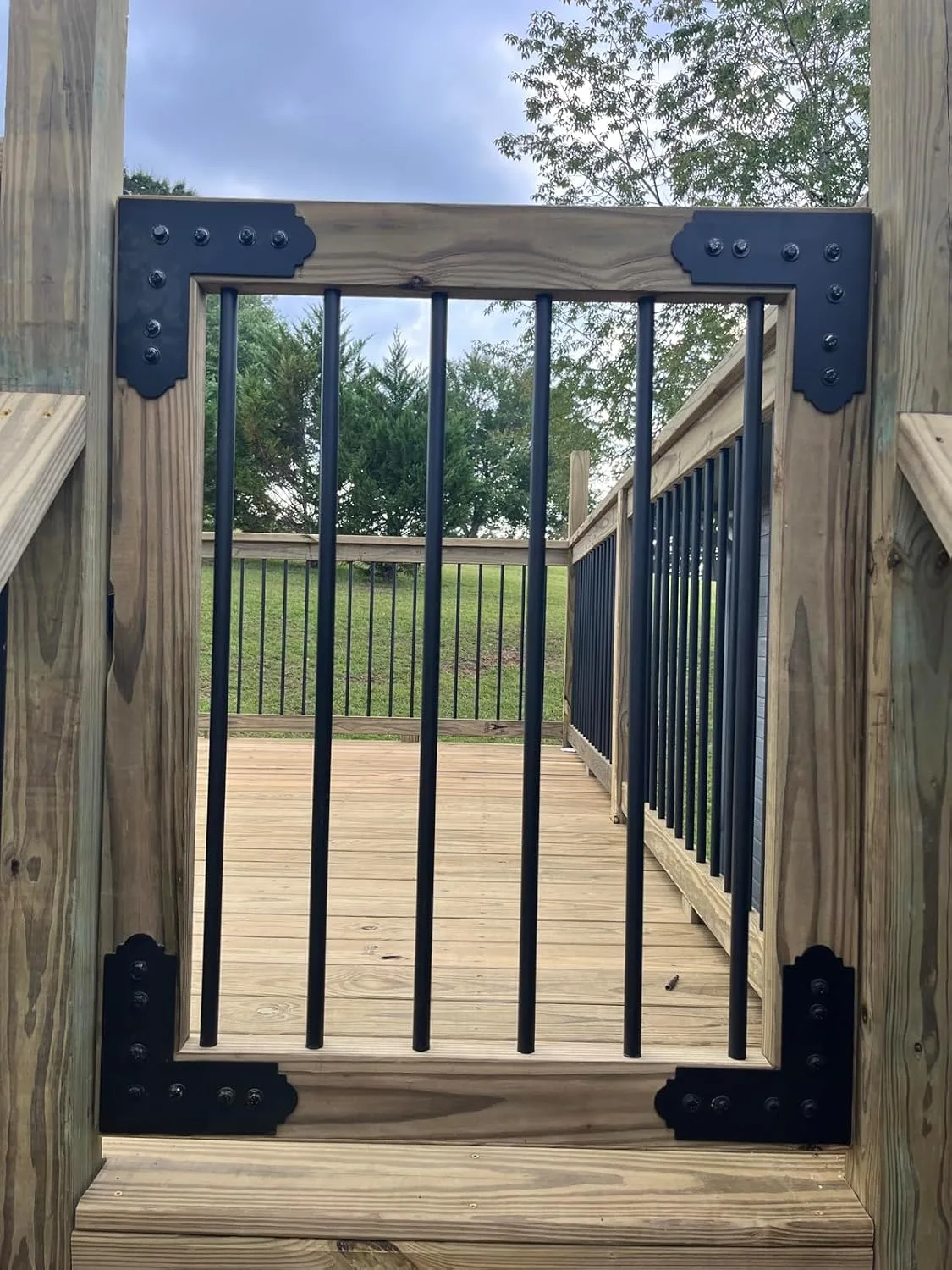
This is the option most relevant to the baby proof pool gate installation scenario where the pool area is already partially enclosed — a house wall on one side, an existing fence on two sides — and you just need to gate off one access point like a deck opening or a gap between structures. The gate hardware mounts directly to existing posts or to the deck structure itself. This is exactly the use case the D&D Technologies hardware kit is designed for, and it’s where that kit shines.
The Hardware That Finally Let Me Say “Yes” to Pool Visits Without the Anxiety
A properly installed safety gate is the difference between a pool you can’t enjoy with young visitors and one you can actually relax around. The MagnaLatch system gives you a physical barrier that works the way you need it to — automatically, reliably, every single time.
What works
- The self-closing TruClose hinges mean the gate swings shut on its own — no manual pull required, no second-guessing whether you closed it hard enough.
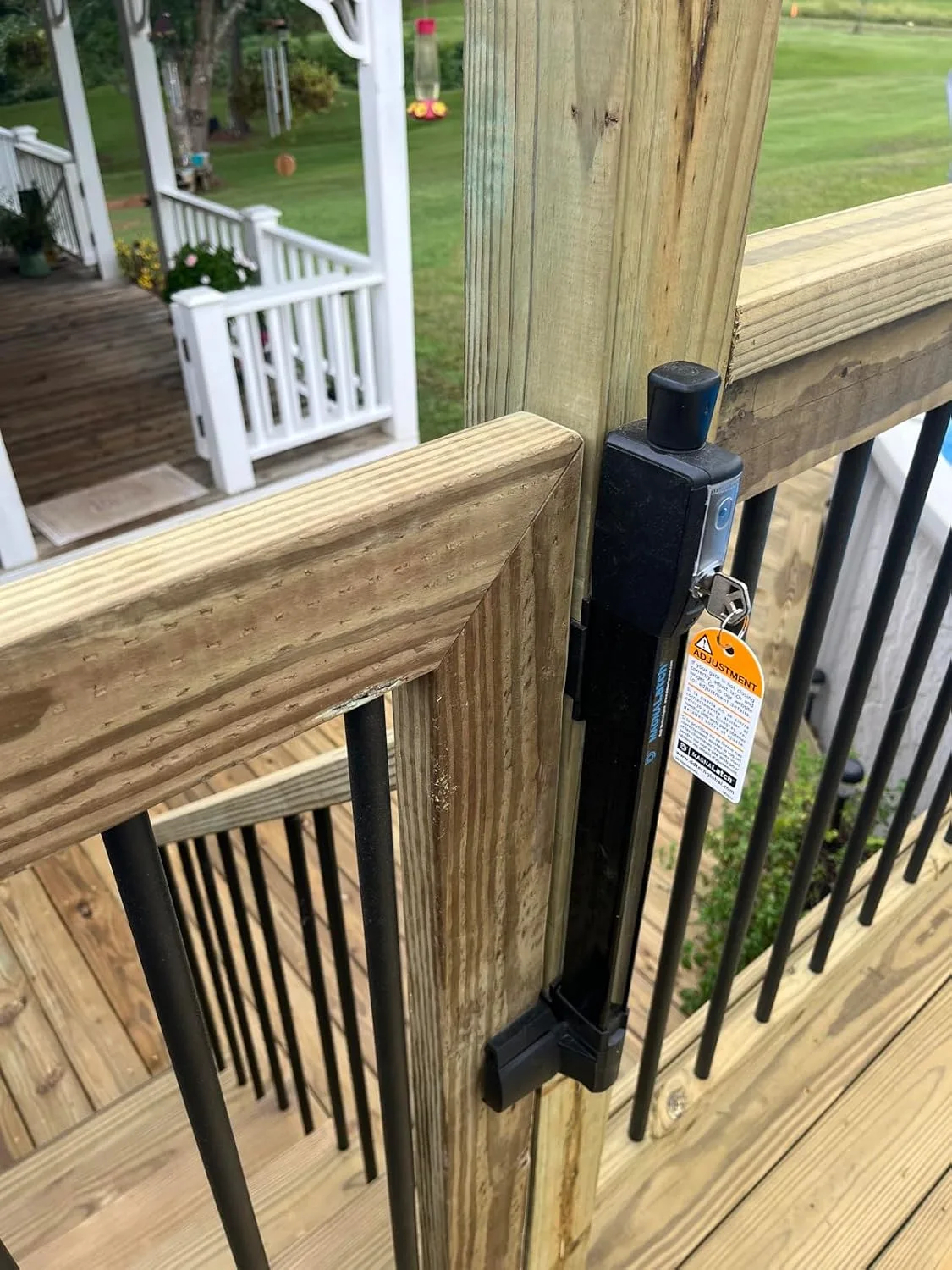
- The MagnaLatch top pull is genuinely toddler-proof; small fingers can’t operate it the way they can with lever handles, and it latches flush without gaps where little hands can get stuck.
- The spacer kit handles the awkward 2-inch gate gaps that come standard on most prefab frames — you’re not improvising or worrying about compliance.
What doesn’t
- Installation requires drilling into your existing frame or posts; if you’re renting or want zero permanent changes, this isn’t a quick rental solution.
- You still need to build or source a proper gate frame first — this kit is the hardware layer, not the full DIY gate-building solution.
I’ll admit: I second-guessed the installation cost and complexity the first time I priced it out, wondering if a simpler latch would do. But once I watched that gate close and latch itself after my neighbor’s son ran through, I understood why this hardware costs what it does. If you’re serious about pool safety and toddler visits, grab the D&D Technologies MLTPTCA1CAPSPKA Pool Safety Gate Hardware Kit with MagnaLatch Top Pull 20-inch Gate Latch, Self-Closing TruClose Hinges and Safety Cap for Child Protection & Spacer for 2″ Gate Gaps.
This post contains affiliate links. As an Amazon Associate, I earn from qualifying purchases at no extra cost to you.