
Last month, I got a call from a resort manager in Scottsdale who’d just replaced a hot tub salt cell for the third time in two years. “Nadia,” she said, “is this thing defective, or am I doing something wrong?” We pulled up her maintenance logs, tested her water, and—surprise—the cell wasn’t actually dead. It was just scaled to hell, and no one had cleaned it properly since installation.
That conversation happens more often than you’d think, and it’s the reason I’m writing this. If you’re standing in front of your spa’s control panel watching it display an active salt system while your test strips show barely-there chlorine, you’re probably asking yourself: how do I know when to replace a salt water cell for hot tubs? The honest answer is more nuanced than you’ll find in most guides, because spa salt systems live in a completely different world than pool salt systems—and the wear patterns prove it.
I’ve managed pools across the Southwest for resort chains and HOAs, which means I’ve replaced hundreds of salt cells. But spa cells? Those follow their own rules. Let me walk you through how to actually diagnose a failing spa salt cell before you spend $200–400 on a replacement you might not need.
Why This Problem Is Worse Than You Think
Here’s the thing about hot tub salt systems that catches most owners off guard: they’re built on the exact same electrolysis technology as pool salt generators—titanium plates, a control board, dissolved salt in water—but they operate in an environment so different that pool-cell advice almost doesn’t apply.
A typical spa runs at 100–104°F continuously, in a volume of maybe 300–600 gallons. Your pool, by comparison, spends most of the year under 85°F and holds 15,000–30,000 gallons. That temperature difference might not sound dramatic, but it fundamentally changes how fast a salt cell wears out.
Heat accelerates two destructive processes simultaneously. First, mineral scale—calcium, magnesium, and other dissolved minerals come out of solution faster in hot water and coat the titanium plates. This scale acts like an insulating blanket, blocking the electrolysis reaction that actually produces chlorine. You can see this happening: white or tan buildup on the cell plates that thickens over time. Second, the catalytic coating on the plates themselves degrades faster at sustained high temperature than it does in cooler pool water. The electrode material actually loses surface area with use, and heat speeds that process up considerably.
The result: a spa salt cell commonly lasts 1–3 years of regular use, versus 3–7 years for a pool cell. That’s a massive difference, and it catches owners completely off guard. They expect a cell to last 5+ years—that’s what happened with their pool—and when their spa cell needs replacing at year two, they assume something went wrong. Usually, nothing did. The cell is just on schedule.
If you’re running under-sanitized water because you didn’t know the cell was failing, you’re setting yourself up for biofilm growth, algae blooms, cloudy water, and worse—water that looks fine but harbors bacteria. In a spa where bathers are sitting in tight contact with the water, that’s not just a comfort issue. It’s a health issue. That’s why knowing when to replace a salt cell for a hot tub actually matters.
The Seven Signs Your Spa Salt Cell Is Actually Failing
Before you assume the cell is dead, you need a diagnostic process. Replacing a cell is the right move—eventually—but jumping to that step without ruling out easier fixes wastes money and masks the real problem.
Step 1: Test Salt Level First (This Rules Out 70% of False Alarms)
I cannot overstate this: low salt is the single most common cause of “my spa isn’t making chlorine,” and it costs about $10 to rule out, not a $200+ new cell.
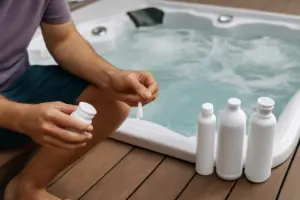
Check your manual—this is important because spa salt ranges vary between manufacturers much more than pool salt ranges do. Most spas run between 2,000–4,000 ppm (parts per million), but some systems are 2,500–3,500 or even 3,000–4,000. Use test strips or a digital salt meter to confirm exactly where you stand. If you’re below range, add salt per the manufacturer’s instructions and retest. The cell hasn’t failed; it just doesn’t have the raw material to work with.
Step 2: Persistent Low or Zero Chlorine Despite “Active” Display
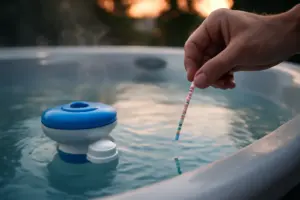
After confirming salt is in range, run a free chlorine test. A healthy spa salt system should be producing 1–3 ppm of free chlorine when running on its standard cycle (most systems have a cycle timer; check yours). If you’re getting zero to barely-detectable chlorine and the control panel shows the cell is running, now you’ve got real evidence something’s wrong—but you still need to keep diagnosing.
Step 3: Brand-Specific Error Codes
Most modern spa salt systems throw distinct error codes on the control panel: “Check Cell,” “Cell Failure,” “Low Salt,” or similar messages depending on the brand. If you’re seeing a persistent error code after confirming salt level is correct, that’s strong evidence pointing toward the cell itself. Different manufacturers use different diagnostic protocols, so check your manual for what the specific code means—but any cell-related code that stays after a salt check is a warning flag.
Step 4: Visible Scale That Won’t Fully Clean Off
Here’s what separates a struggling cell from a truly failing one: a proper cleaning. Most manufacturers recommend soaking the cell in a diluted acid solution or a dedicated cell-cleaning product for 15–30 minutes to dissolve mineral deposits. Do this according to your manual instructions—never use muriatic acid or anything stronger than what the manufacturer approves, or you’ll damage the titanium.
After cleaning, inspect the plates closely. If white or tan scale dissolves completely and doesn’t come back within a couple weeks of normal operation, the cell is still viable. But if scale remains stubborn, or if buildup returns within 2–3 weeks of a thorough cleaning, the plates have pitted enough that deposits are getting trapped in the damage. That’s a sign the cell is nearing end of life.
Step 5: Discolored or Pitted Plates After Cleaning
Healthy titanium plates look uniform silver-gray. If yours have dark patches, black spots, or visible pitting after a full cleaning, you’re looking at material loss. Those aren’t cosmetic marks—they represent reduced electrode surface area and lower chlorine output, period. A cell at this stage might still produce some chlorine, but it’s already on borrowed time.
Step 6: Needing Cleaning Far More Often Than the Manual Interval
Your manual probably says something like “clean every 2–3 months under normal use.” If you’re finding yourself cleaning every 2–3 weeks just to keep chlorine output usable, the plates are heavily scaled. This is a sign the cell’s coating is degrading faster than normal—heat and water chemistry are conspiring to age it ahead of schedule. You’re in the final months of useful life.
Step 7: Cloudy Water or Rising Odor Despite Chemistry Being In Range
A spa’s bather load per gallon is way higher than a pool’s—a 400-gallon spa with 4 people in it is chemically a much more demanding environment than a 20,000-gallon pool with 10 people. If your salt and pH are correct but the water is getting cloudy or smells like chloramines despite the cell showing active, a cell that’s lost even 30–40% of its output can fall behind demand. The water looks “okay” on paper but isn’t actually getting enough active chlorine.
What to Look For in a Spa Salt Cell Replacement
Once you’ve confirmed—really confirmed, not just guessed—that the cell is failing, you need a replacement that matches your exact system. This is where spa cells differ significantly from pool cells. Pool salt cells have more cross-brand compatibility; spa cells are far more proprietary.
Look for these specs when shopping for a replacement:
- Exact model match: Check your control board or manual for your spa’s brand and model number. Briidea, Intex, Coleman, and others all use manufacturer-specific protocols. A cell designed for an Intex system won’t communicate properly with a Coleman board, even if the physical dimensions seem close.
- Titanium electrode material: Non-negotiable. Cheap cells use graphite or other metals that degrade much faster in hot water. Titanium withstands the heat and electrolysis stress far better.
- USA or verified origin: Cells manufactured in the U.S. tend to have tighter tolerances and better quality control than imported knockoffs. If the manual specifies what origin the OEM uses, match it.
- Correct capacity rating: Most spa cells are rated for systems up to 1,000–2,000 gallons. Make sure the replacement matches your spa’s volume. An undersized cell will struggle; an oversized one is overkill but won’t hurt.
- Warranty: A cell should come with at least a 1-year warranty. Two years is better. This matters because if the replacement fails prematurely due to a manufacturing defect, you want recourse.
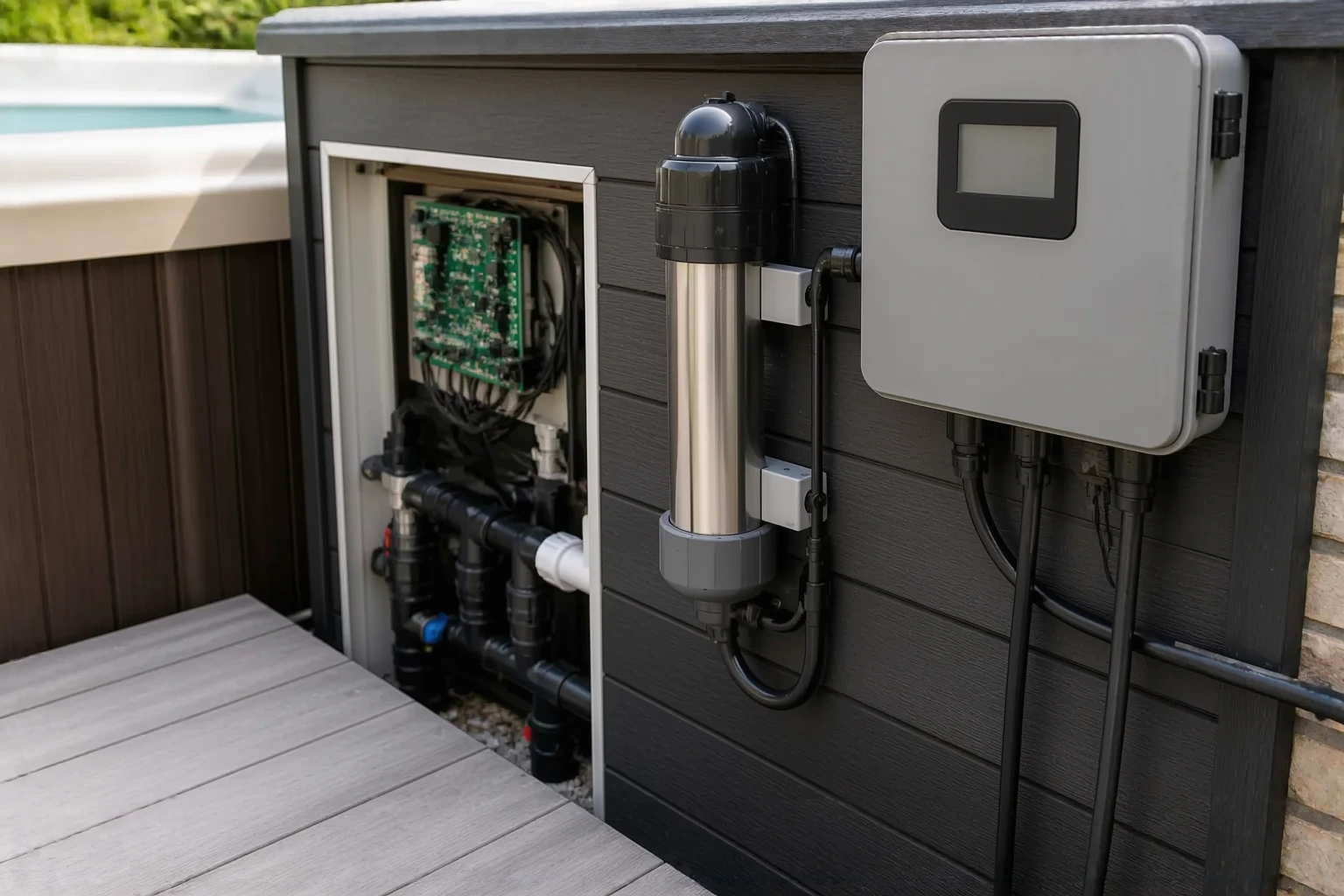
The Briidea Chlorine Generator with USA Titanium Salt Cell, Designed for Hot Tubs & Swim Spas, Up to 2000 Gallons is a solid choice if your system is Briidea-compatible or if you’re building from the salt-generator components up. It runs $179.99, which is mid-range for quality spa cells, and includes a USA-manufactured titanium cell rated for systems up to 2,000 gallons. The titanium electrode is the real win here—it’s what keeps the cell performing under sustained heat. The main limitation: compatibility. Double-check your system’s brand before ordering, because this cell won’t work with every spa setup.
Expect to pay $150–400 for a quality OEM-compatible spa salt cell. You’ll find cheaper options, but they typically use lower-grade electrodes that’ll fail faster—and you’ll be back here in 12–18 months instead of 2–3 years. It’s not worth it when you factor in labor and the stress of an under-sanitized tub.
How to Install and Use Your New Salt Cell Like a Pro
Installation varies by brand, but the process is usually straightforward enough that most owners handle it themselves. Before you start, turn off power to the system and drain the cell chamber per your manual’s instructions.
Here’s the pro workflow I’ve used on hundreds of replacements:
- Clean the cell chamber before installation. Even though you’re replacing the cell, scale and debris can accumulate in the housing. Rinse it thoroughly with fresh water. This reduces the time before your new cell needs its first cleaning.
- Install the cell per manual specs—connection order matters. Most systems have a flow direction marked on the cell itself. Reverse polarity won’t damage anything usually, but it means the cell won’t produce chlorine properly. Take 30 seconds to verify the inlet and outlet connections are correct.
- After installation, don’t run the system immediately. Wait 24 hours to ensure the water has stabilized and any air pockets in the system have cleared. Running the cell with air in the line can damage the electrode coating.
- On day two, run a test cycle and retest chlorine after 4 hours. A brand-new cell should produce output noticeably faster than your old one was at the end. If output seems slow, check salt level again (the reset process sometimes shifts ppm slightly) and confirm the control board hasn’t reset to a lower output setting.
- Reset any service counters on the control board. Most systems track cell runtime and will alert you when cleaning is due. After installation, reset that counter to zero so the system knows you’ve got a fresh cell.
Common mistakes I see: Owners who don’t clean the cell chamber before installation (scale transfers to the new cell immediately), who skip the 24-hour settling period (air in the system confuses the diagnostics), or who install the cell backward and then assume it’s defective when it doesn’t produce chlorine. Take your time here. A five-minute installation saves you a headache later.
One more pro tip: the month you install a new cell is a good time to run a full water chemistry rebalance. Test pH, alkalinity, and calcium hardness, and adjust them if needed. A new cell performs best in optimized water, and you’ll extend its life meaningfully by starting it off in clean chemical conditions.
Pairing Cell Replacement With Your Spa Maintenance Routine
A failing or newly replaced salt cell is a signal to tighten up your overall spa maintenance. Since the hot tub salt system is the backbone of your sanitization, everything else depends on it working right.
Here’s what I recommend for the month before and after a cell replacement:
- Increase your test frequency to every 2–3 days. During this window, you’re confirming the new cell is producing output consistently and the system is back to baseline. Normal operation can return to weekly testing after 2–3 weeks of stable readings.
- Plan cell cleaning on a tighter schedule in the 3–6 months before replacement. If you’re getting early warning signs (scale buildup every 4–6 weeks instead of every 3 months), start cleaning every 2 weeks. This extends the old cell’s final useful life and buys you time to budget for the replacement.
- Consider your overall sanitizer strategy. Some owners, after replacing a spa salt cell once or twice, decide to switch to a bromine system instead. Bromine actually works better in hot water from a chemistry perspective, and it doesn’t require the same level of electrode maintenance. It’s a valid alternative—worth exploring if you’re tired of the replacement cycle.
- Check your water hardness before winter. Calcium buildup on salt cells accelerates in higher-hardness water. If your hardness is above 400 ppm, that’s part of why your cell is scaling up so fast. Using a sequestering agent or softening the water slightly before the heating season can meaningfully extend cell life.
This routine keeps everything working in sync. A new cell installed in well-balanced water, on a consistent cleaning schedule, will hit that full 2–3 year lifespan. A new cell installed in neglected water with sporadic maintenance? You’ll be back here in 18 months wondering what went wrong.
The Bottom Line
Knowing when to replace a salt water cell for hot tubs comes down to eliminating the obvious culprits first. Low salt? Fix that for $10. Scale buildup? Clean it per the manual. Persistent low chlorine after both of those steps, plus visible plate damage or error codes? Now you’ve got a real cell failure, and replacement is the right move.
The Briidea Chlorine Generator with USA Titanium Salt Cell at $179.99 is a solid choice for compatible systems—titanium electrode, 2,000-gallon capacity, and mid-range pricing that reflects genuine quality. But the most important thing isn’t which brand you choose; it’s that you choose the right one for your system and that you confirm the old cell actually needed replacing before you install it.
A spa salt cell typically lasts 1–3 years because of heat and scale. That’s not a defect; it’s part of owning a hot tub. Budget for it, watch for the warning signs, and replace the cell when the diagnostics confirm it’s time. Your water—and your skin—will thank you.
Affiliate Disclosure: This post contains affiliate links. As an Amazon Associate, I earn from qualifying purchases. If you buy something through my links, I may earn a small commission at no extra cost to you. I only recommend products I’ve actually used on the pools I manage.
Briidea Chlorine Generator with USA Titanium Salt Cell
I replaced my worn cell with this one when the chlorine output started dropping.
Check Price on Amazon →