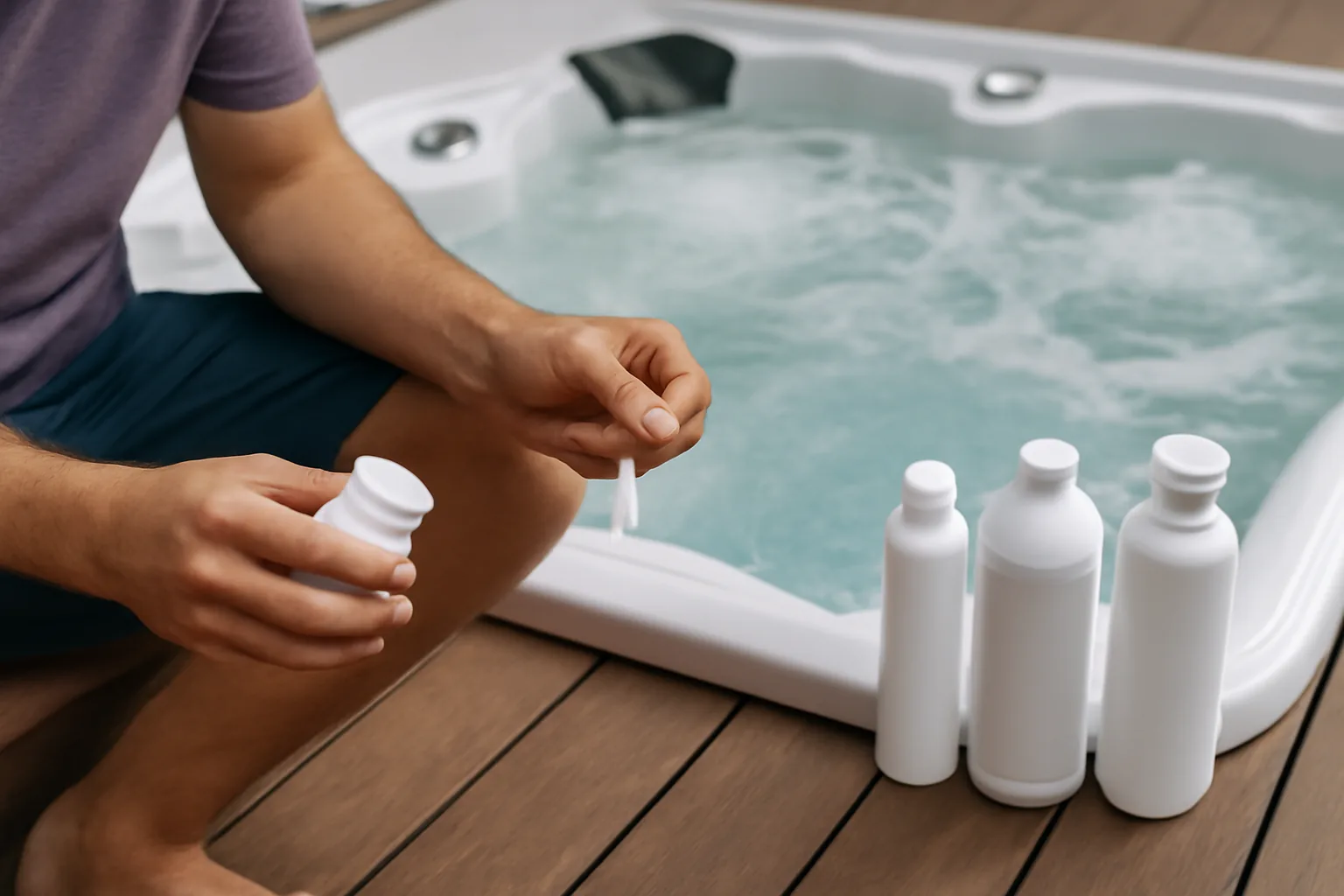
You lift the cover on a Wednesday afternoon and stop. The water’s gone milky. Not quite green, but heading that direction fast. Your skin itches after a soak yesterday. And that smell—sharp, almost medicinal—hits you the moment the lid comes up. You assume the chlorine is doing its job. It’s not. What you’re looking at is a spa that’s been coasting without a plan, and the chemistry has finally caught up to neglect.
This exact scenario landed on my desk in March when a homeowner north of Phoenix called in a bind. Her spa had shifted from crystal-clear to distinctly off-color in the span of ten days. She’d been dosing sanitizer whenever the water “looked suspicious”—no actual testing, no schedule. Her total dissolved solids had climbed to dangerous levels, pH was sitting at 8.4, and her chlorine residual had essentially flatlined. The fix required draining the entire system, running a plumbing purge treatment to clear the lines, and rebuilding chemistry from scratch. The bill came to around $280. The prevention—a straightforward weekly checklist—would have cost her pocket change and maybe thirty minutes of her time.
I’ve spent the last dozen years holding certifications in aquatic operations while overseeing water balance protocols at resorts and community associations throughout Arizona, Nevada, and New Mexico. The routine I’m laying out here isn’t academic—it’s the exact framework I implement on-site and teach to operators. Stick with this spa weekly maintenance system without cutting corners, and your water remains transparent, your hardware ages well, and you actually use the thing instead of becoming its hostage.
Why Weekly Is the Right Interval for Spa Maintenance
Spa water operates in an entirely different chemical universe than a residential pool. Temperatures between 100°F and 104°F push every chemical reaction into overdrive. Chlorine dissipates much faster. pH migration accelerates. A single bather introduces contaminants that matter far more in a 400-gallon vessel than they would in a 20,000-gallon pool. The math on bather load per gallon tilts everything.
The Model Aquatic Health Code and NSF/ANSI Standard 50 establish firm requirements: free chlorine residual must land between 3–5 ppm for residential spas, or bromine between 4–6 ppm if you go that route. Your pH corridor is 7.4 to 7.6. Total alkalinity occupies 80–120 ppm. These aren’t arbitrary bands—they’re the chemistry window that protects bather skin and keeps equipment from corroding or scaling.
From what I’ve observed in the field, a thorough seven-day testing and correction cycle holds all parameters in that safe zone without requiring obsessive daily management. Stretch to fourteen days between checks, and you’re nearly always treating a crisis instead of preventing it. Daily pre-use checks are excellent practice for heavy-use installations, but a solid weekly regimen is the fundamental structure that keeps any residential spa on track.
The Hot Tub Weekly Maintenance Routine I Actually Use
Here’s my exact protocol. I execute this every seven days, usually Sunday mornings before anyone plans to use their spa. The full cycle runs 15–25 minutes after you’ve developed the rhythm. Your first attempt will likely take longer—that’s expected and fine.
Step 1: Test the Water First — Always
Chemical dosing without a test result is how you create problems instead of solving them. I made this mistake early on: I tossed in pH increaser based purely on visual assessment without running numbers first. The reading was already 7.8. My dose pushed it to 8.6, tanked my sanitizer, and left me scrubbing calcium deposits for two weeks straight. Test every single time before you treat anything.
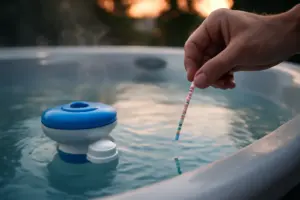
The essential parameters are free chlorine (or bromine if you use that), total alkalinity, pH, and calcium hardness. If your spa sits outdoors and you’re running a stabilized chlorine product, cyanuric acid testing matters too. A solid test takes under 120 seconds with decent strips and a basic understanding of what the results mean.
Step 2: Adjust Chemistry in the Correct Order
Sequence is everything. Total alkalinity must come first—it stabilizes pH fluctuations. Once alkalinity sits at 80–120 ppm, dial in pH toward 7.4–7.6. Only after those are locked down do you address sanitizer. Save calcium hardness adjustments for the very end. Skip this progression and your corrections interact poorly, diluting their potency and leaving you stuck chasing your tail.
I typically reach for sodium carbonate (pH Up) or sodium bisulfate (pH Down) depending on how the scale reads. The Southwest’s municipal fill water tends to run alkaline and high in pH, so I’m generally pushing downward rather than up. Your local water character might differ. If your spa draws from a well, have your source water analyzed before initial fill so you can predict what baseline adjustments you’ll need.
Step 3: Shock the Water Weekly
Oxidation isn’t reserved for when your water looks compromised. A weekly shock dose oxidizes combined chloramines, body oils, fragrances, and organic residue that accumulates even in light-use spas. My go-to for routine maintenance is non-chlorine shock (potassium monopersulfate)—typically 2 oz per 500 gallons. You get re-entry capability within 15 minutes and your free chlorine doesn’t spike.
Spas that accommodate four-plus people multiple times weekly get a different approach—I rotate in a chlorine shock (dichlor or cal-hypo) every other week to attack the organic burden more forcefully. After shocking, run your circulation jets for a minimum of 20 minutes with the cover fully open to let gases escape.
Step 4: Clean the Waterline and Filter
Wipe the waterline down with a non-abrasive spa-specific cleaner on a weekly basis. Sunscreen and body oils bond at the waterline and form biofilm colonies if you leave them alone. Two minutes of attention prevents the stubborn scummy ring that requires aggressive scrubbing once it hardens.
Your filter demands a hose rinse every fourteen days as a bare minimum, and a full soak in filter cleaner once monthly. What I see repeatedly: spa owners ignore their filters until debris visibly clogs them. By then, you’ve already lost circulation efficiency, stressed your pump, and allowed particles to slip through to your water. Plan on filter replacement every 12–18 months; age matters more than visible cleanliness.
Step 5: Check Equipment and Cover
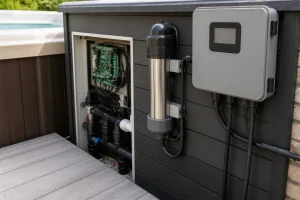
Give your equipment pad one minute of visual inspection. Scan for seeps at pipe joints, listen for pump vibrations that sound off, and verify your heater is holding temperature normally. A pinhole leak caught early might run you $15 in hardware. The same leak ignored becomes a pump seizure or structural water intrusion that costs thousands.
Examine your cover condition. A waterlogged or saturated cover loses insulation performance and forces your heater to work much harder. Press the foam—if it feels sodden or you hear water inside, retire it. Quality spa covers run 3–5 years before degradation. Replacement hovers between $200–$500 depending on dimensions and material grade.
The Test Strips That Finally Showed Me What Was Actually Wrong With My Water
Guessing at spa chemistry based on appearance and odor is how I ended up with that sharp, acrid smell and murky water in the early days—a direct result of testing blindness. Relying on consistent, regular testing is the only way to catch parameter drift before it transforms into a wallet-draining catastrophe.
What works
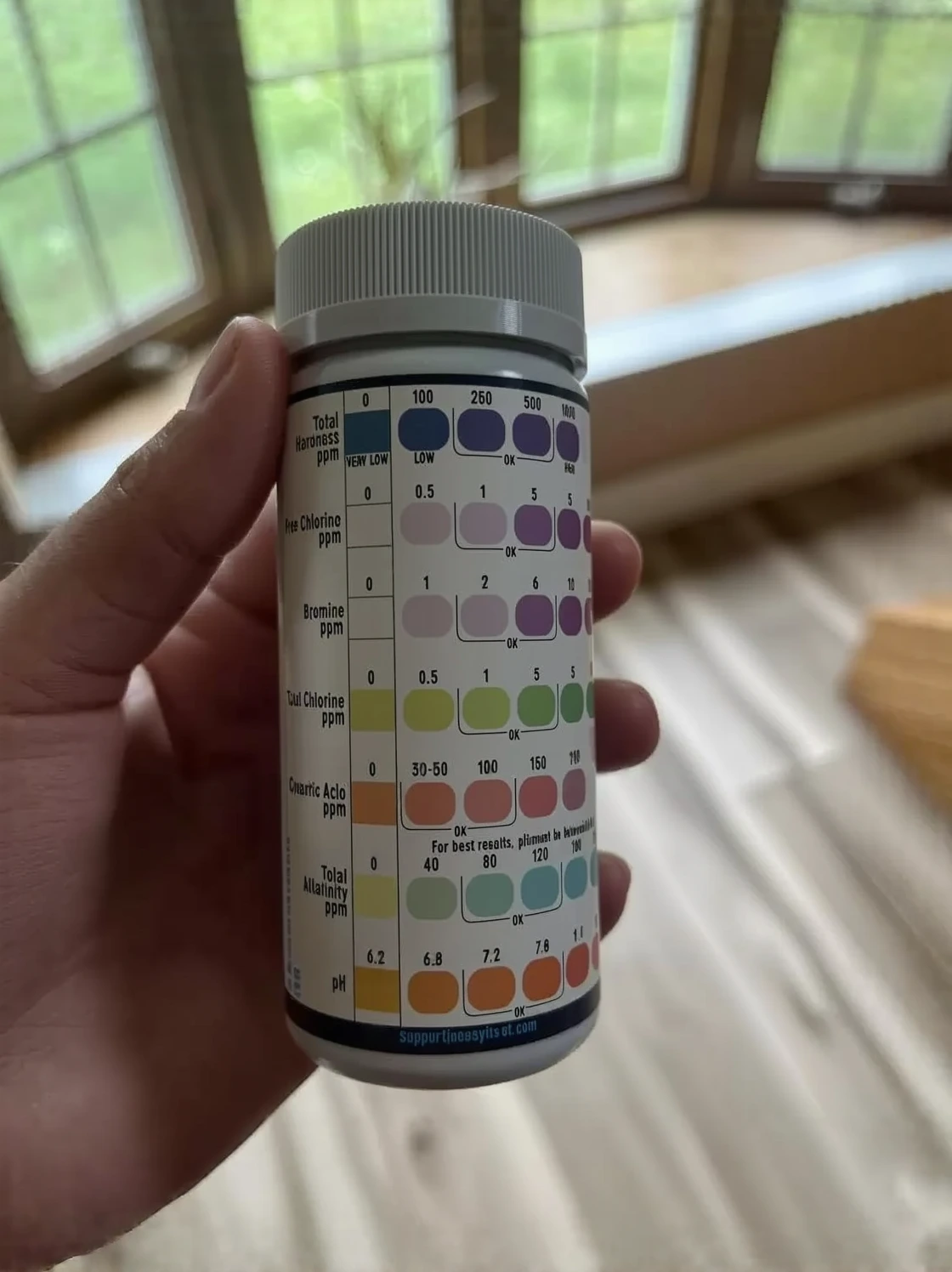
- A seven-parameter strip reads pH, alkalinity, chlorine, bromine, hardness, and additional metrics in a single dip—no liquid bottles to mix or extended waits for color stability.
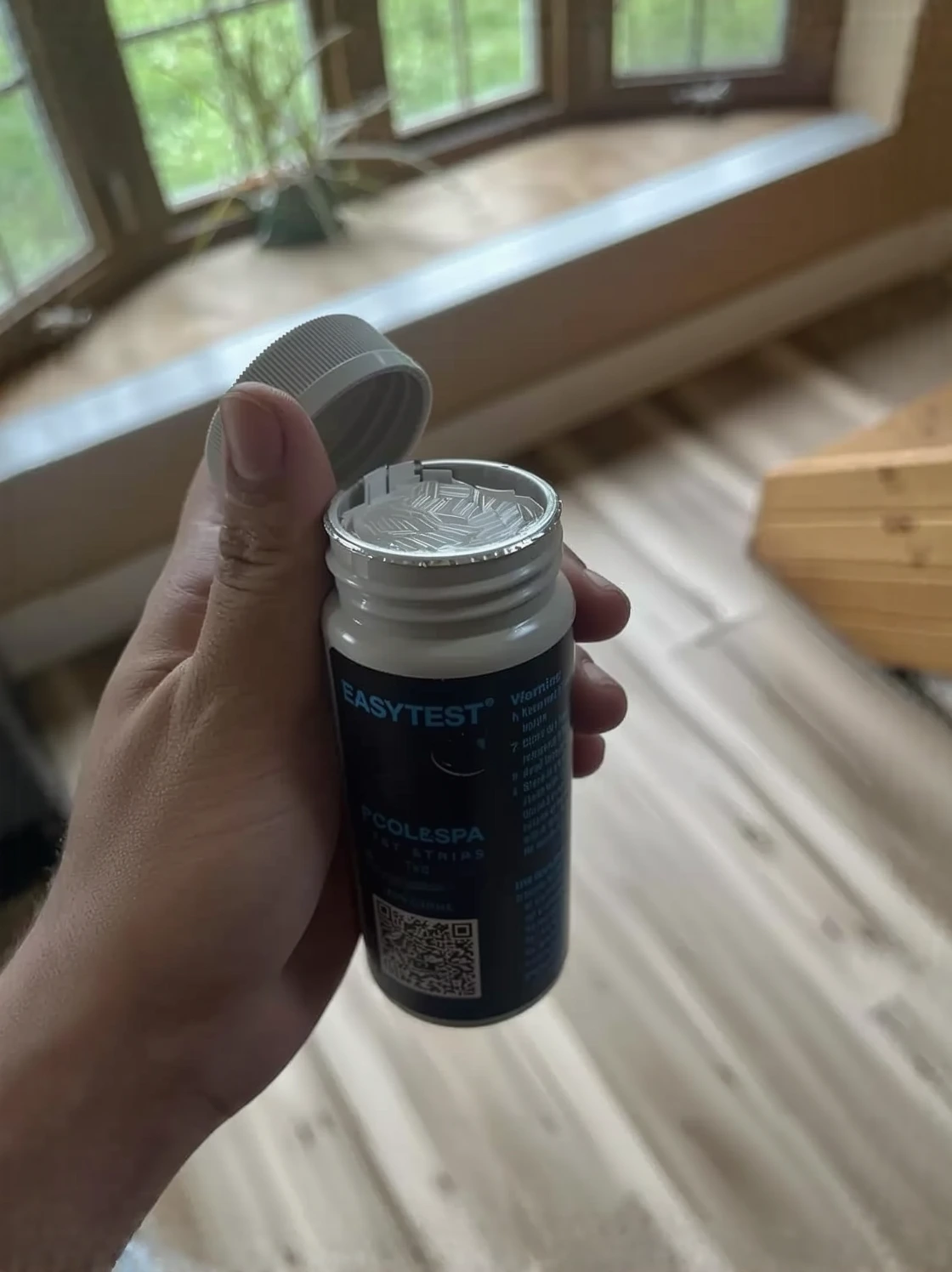
- 150 strips per container lets you test repeatedly throughout each week without rationing supplies, catching problems early instead of allowing cascades.
- Straightforward, color-matched indicator panels prevent the random chemical additions that used to worsen imbalances instead of fixing them.
What doesn’t
- Strips sacrifice some precision relative to liquid titration testing—they won’t detect minute variations, but for routine weekly checks they deliver sufficient accuracy.
- Strip longevity depends on storage conditions; exposure to humidity or heat shortens their usable life, so bathroom cabinets and poolside storage degrade them faster than a cool, dry cupboard would.
I almost switched back to eyeballing it after my first strip gave me a result I didn’t believe—until I tested again five minutes later and got the same reading, which turned out to be the actual problem I’d been ignoring. Grab the EASYTEST 7-Way Pool Test Strips (150 strips) and make testing part of your weekly ritual.
This post contains affiliate links. As an Amazon Associate, I earn from qualifying purchases at no extra cost to you.
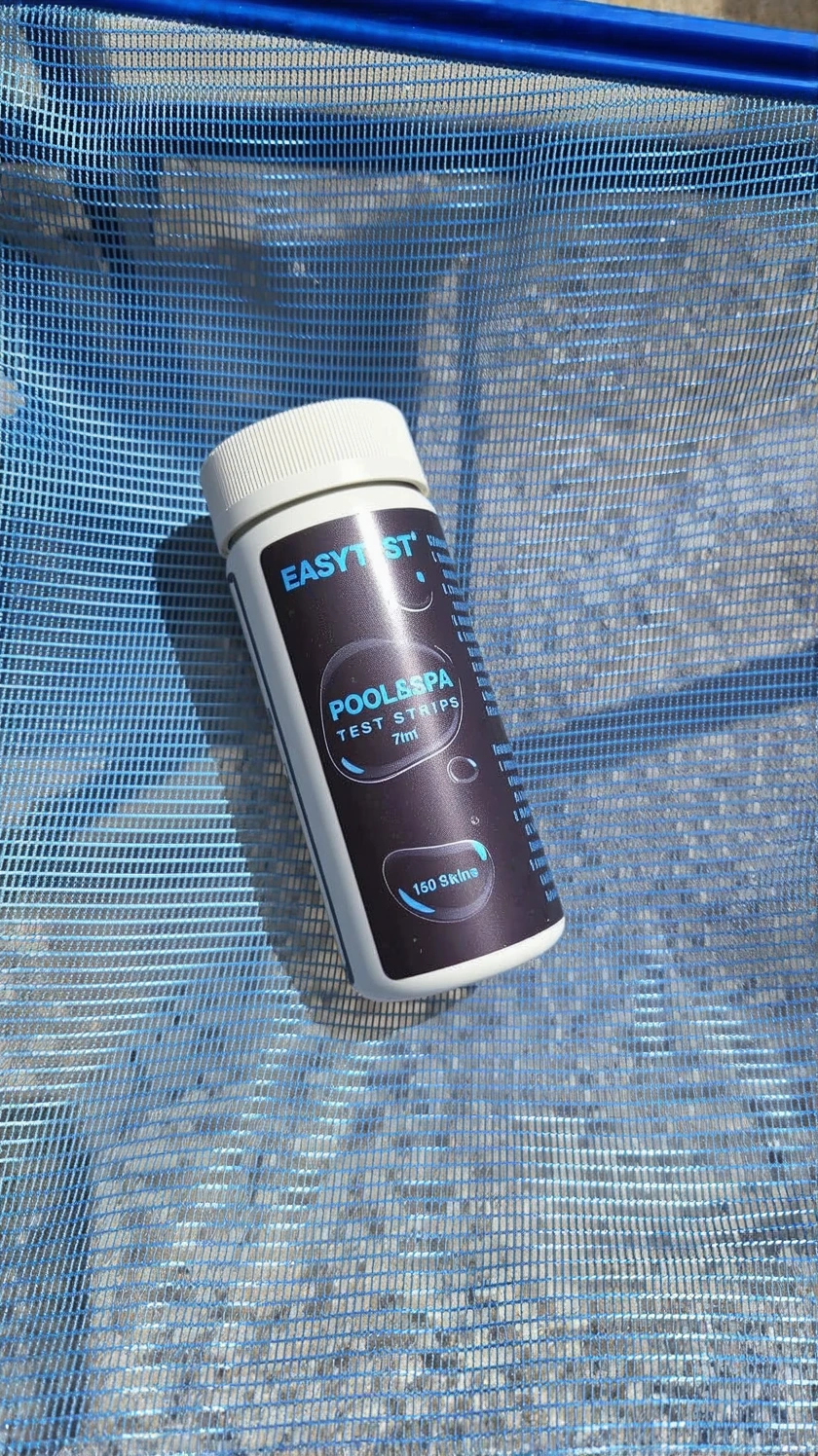
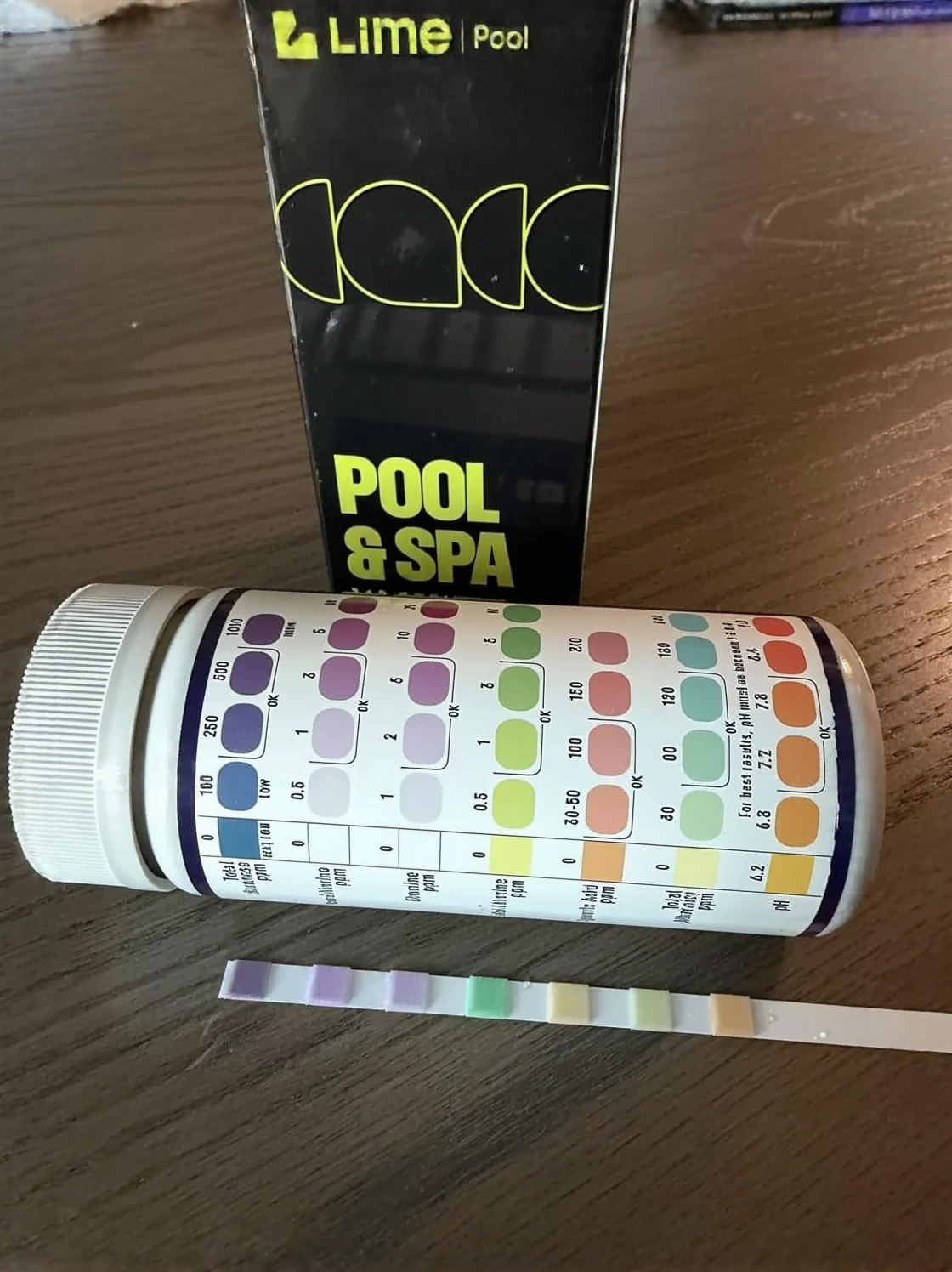
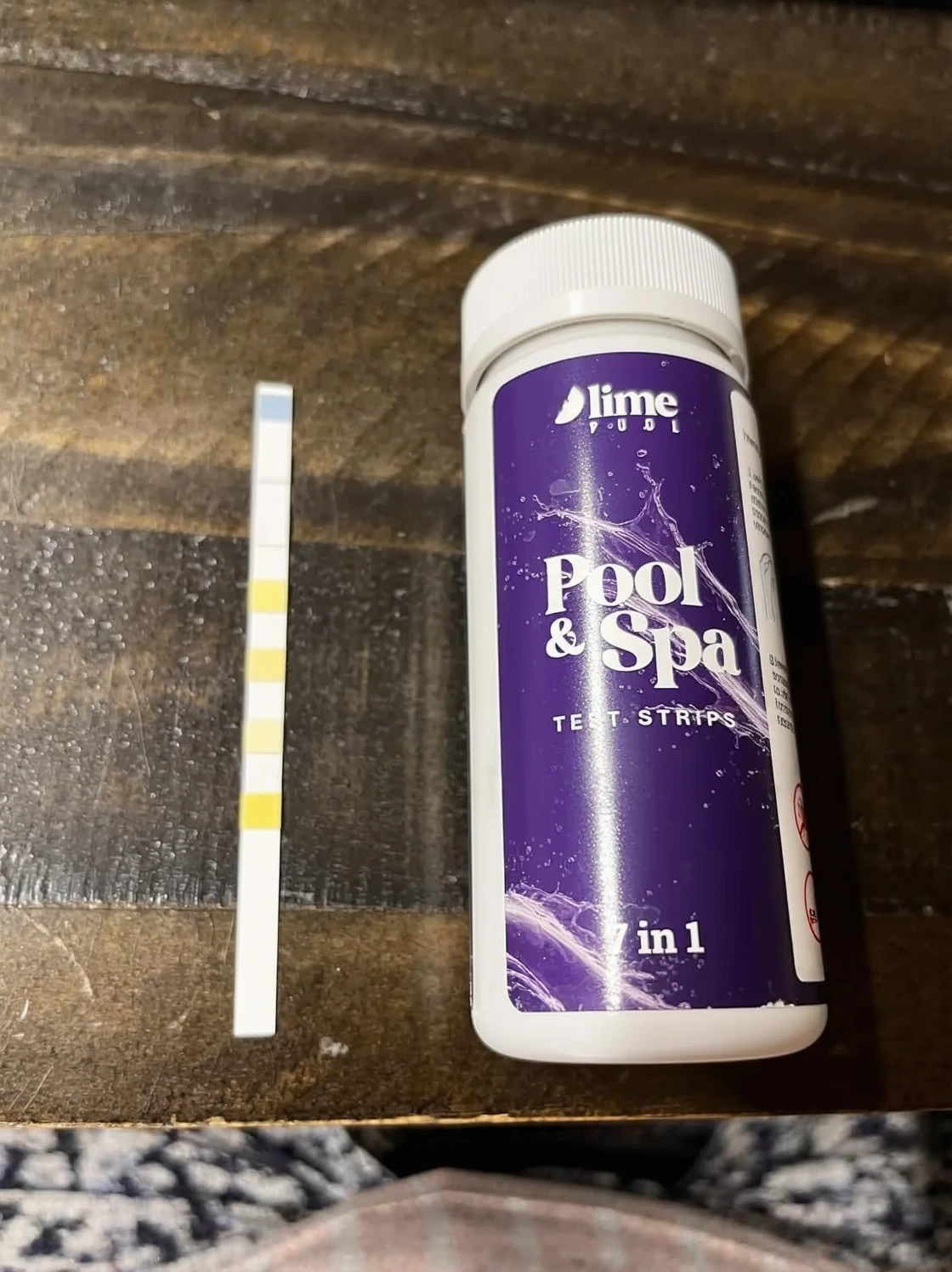
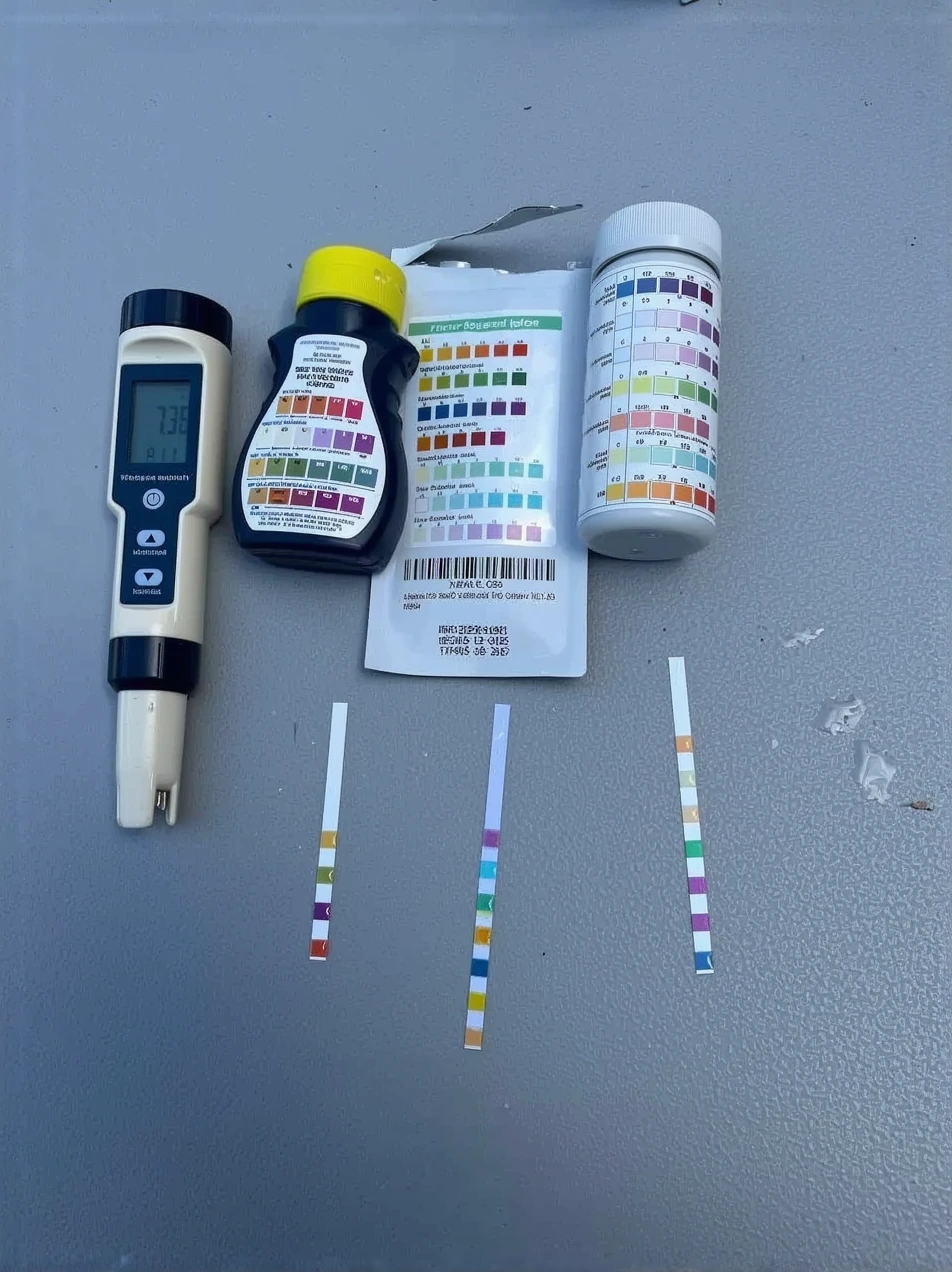
EASYTEST 7-Way Pool Test Strips (150 strips)
I test my spa twice weekly now without rationing strips or second-guessing chemical doses.
Check Price on Amazon →