I’ve managed pools at desert resorts where the sun shelf was the most fought-over real estate on the property — more than the hot tub, more than the lap lane. Guests would stake their claim on those shallow ledges at 7 a.m. with a towel and a paperback, and I completely understood why. There’s something almost unfairly relaxing about lying back in six inches of warm water while the rest of the world is upright and functional. Then I started getting calls from HOA homeowners and private pool clie Then I started getting calls from homeowners and contractors asking me the same question: “If I’m already ripping up my deck, how hard can adding a sun shelf really be?” It was a lot harder than they expected.nts saying the same thing: “Nadia, I keep seeing these gorgeous tanning ledges on Instagram and I want one. Can I add a sun shelf to my existing pool without rebuilding the whole thing?” The answer, thankfully, is yes — but there’s a lot to unpack before you call a contractor or start pricing sledgehammers. Let me walk you through exactly what’s involved, what it costs, what can go wrong, and how to turn that shelf into a legitimate resort experience once it’s in.
Why Adding a Sun Shelf to an Existing Pool Is More Complicated Than It Looks
Here’s the thing nobody on Instagram is talking about while they’re lounging in that perfect turquoise shallow water: those sun shelves were almost always designed into the pool from the start. Retrofitting one onto an existing pool is a real construction project — not a weekend DIY situation — and understanding why will save you from making expensive assumptions.
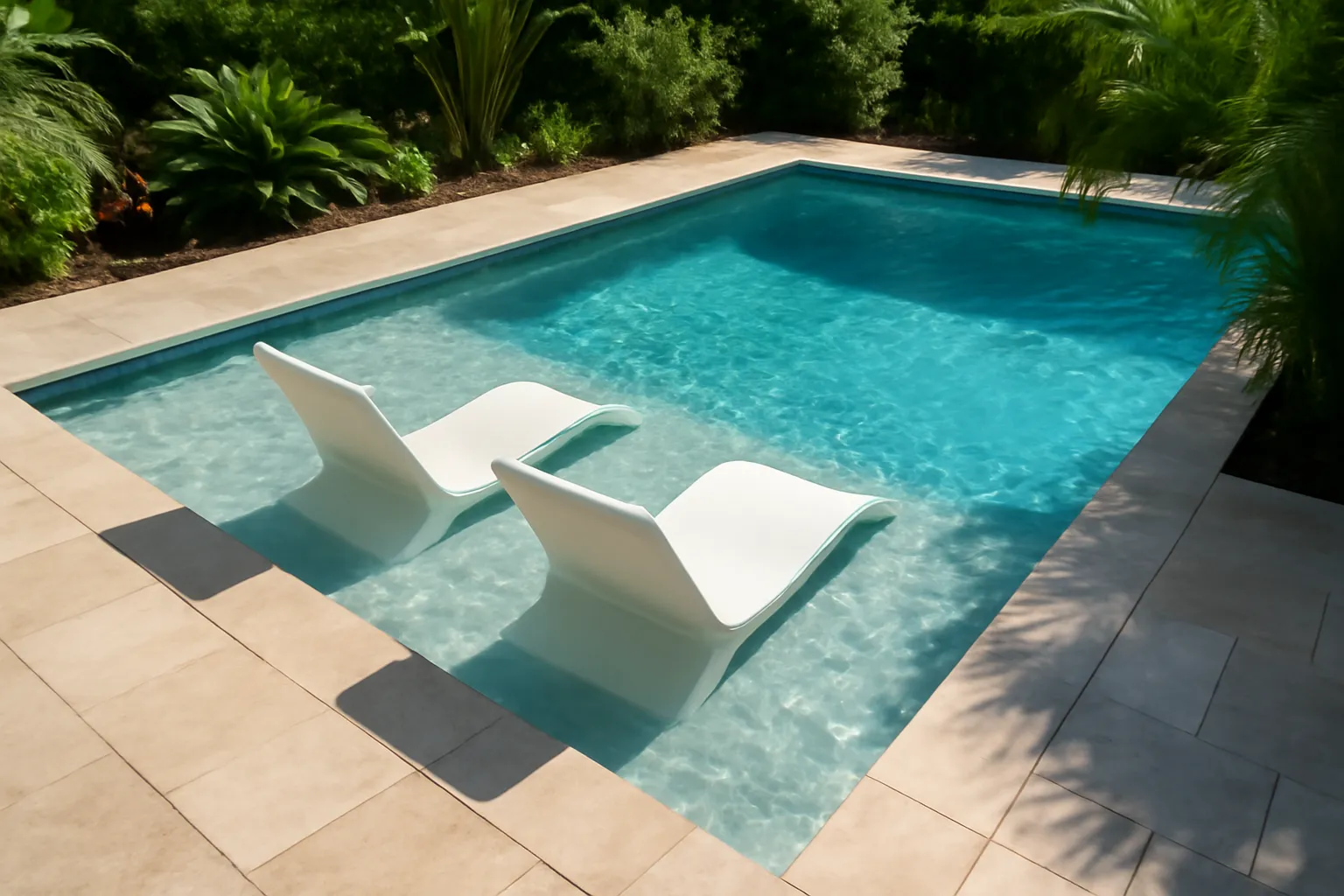
A sun shelf, also called a Baja shelf, tanning ledge, or wading shelf, is a flat platform typically 6 to 10 inches deep that extends from the pool wall into the pool’s interior. The ideal dimensions for comfortable lounging are roughly 5 to 7 feet wide and 8 to 12 feet long. Go deeper than 12 inches and you’ve essentially built a very shallow wading pool rather than a lounge surface — you can’t recline comfortably when the water hits your chin. Go shallower than 6 inches and you’ll fight constant evaporation in sunny climates, and the water heats up to a point where algae will throw a party on that surface every week.
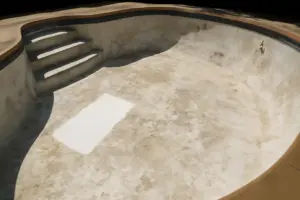
If you want to add a sun shelf to an existing pool, you’re looking at one of two approaches. The first is a fiberglass insert — a pre-molded shelf unit that gets bonded to your existing pool wall during a partial drain and resurface. This runs $3,000 to $8,000 installed and takes about 3 to 5 days. It’s faster and cleaner than the alternative, but you’re limited to whatever shapes the manufacturer offers, and the finish may not match your existing plaster or pebble surface perfectly. The second option is a concrete or gunite build-out, where a contractor forms and pours a new shelf section from scratch and then plasters it to match your existing pool surface. This is the custom route — you can build in bubblers, add the exact dimensions you want, and get a seamless visual match. But it costs $5,000 to $15,000 or more, requires fully draining the pool, and takes one to two weeks from start to swim-ready.
There are also pools that simply aren’t good candidates for this retrofit. If your pool is under 300 square feet of surface area, adding a tanning ledge will eat into your swimming space in a way most families find frustrating within one season. Above-ground pools cannot be retrofitted with a sun shelf — full stop. And pools with aging or compromised shells should address structural issues before adding any new concrete or bonded elements. I’ve seen homeowners spend $6,000 on a beautiful new shelf only to need a full replaster six months later because they skipped a step. Don’t be that homeowner.
The Loungers That Finally Made My Sun Shelf Guests Stop Complaining About Comfort
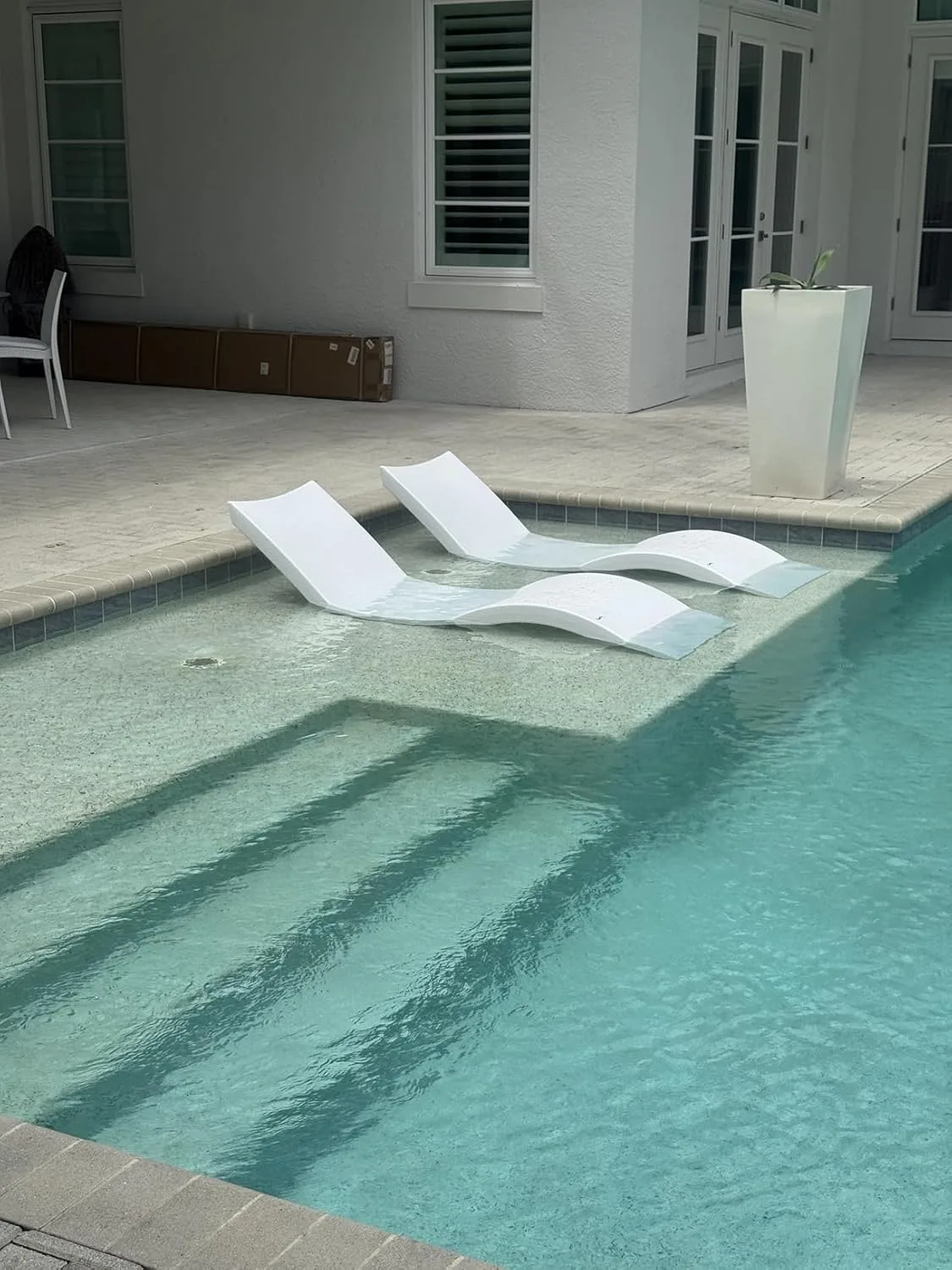
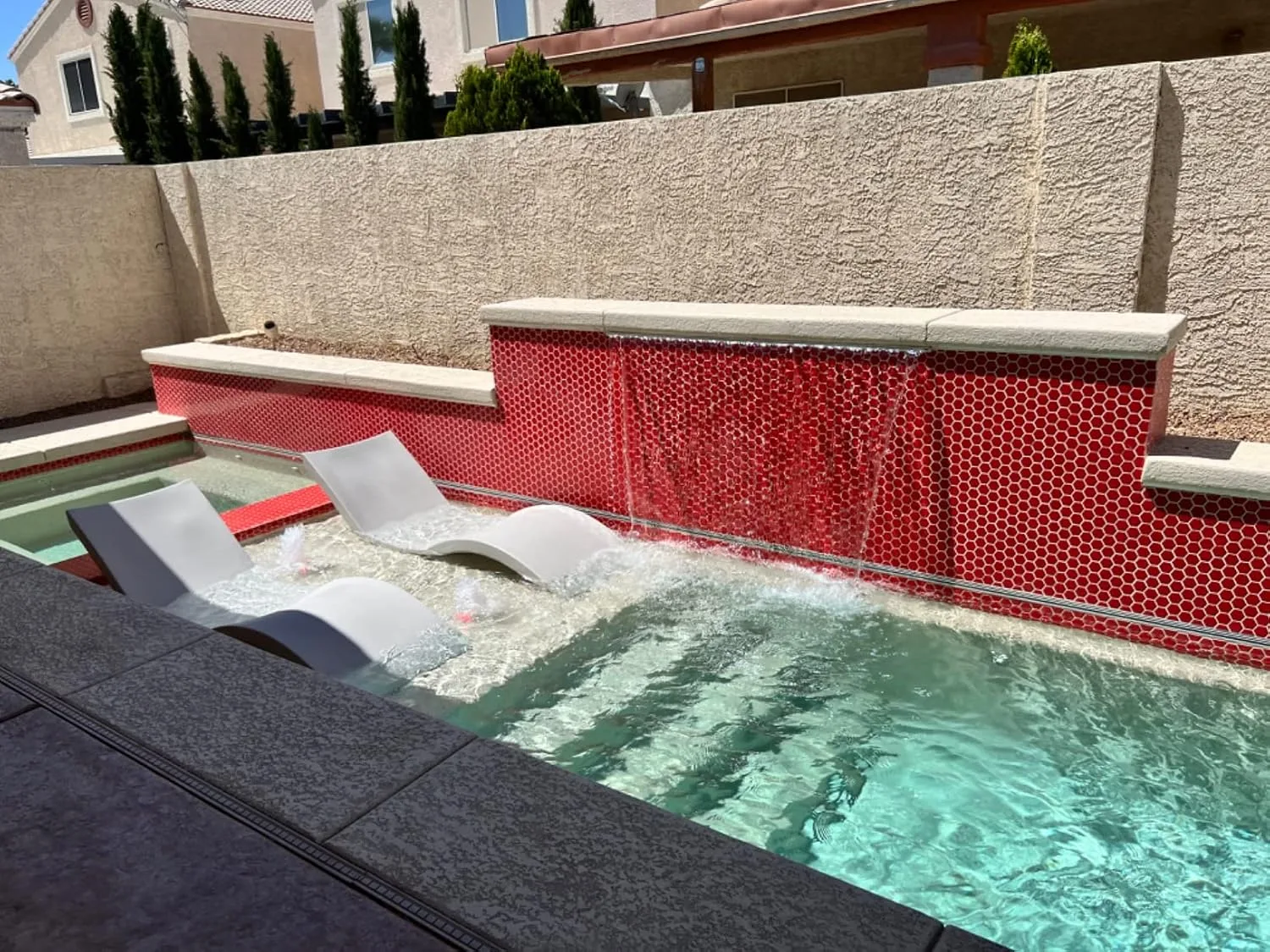
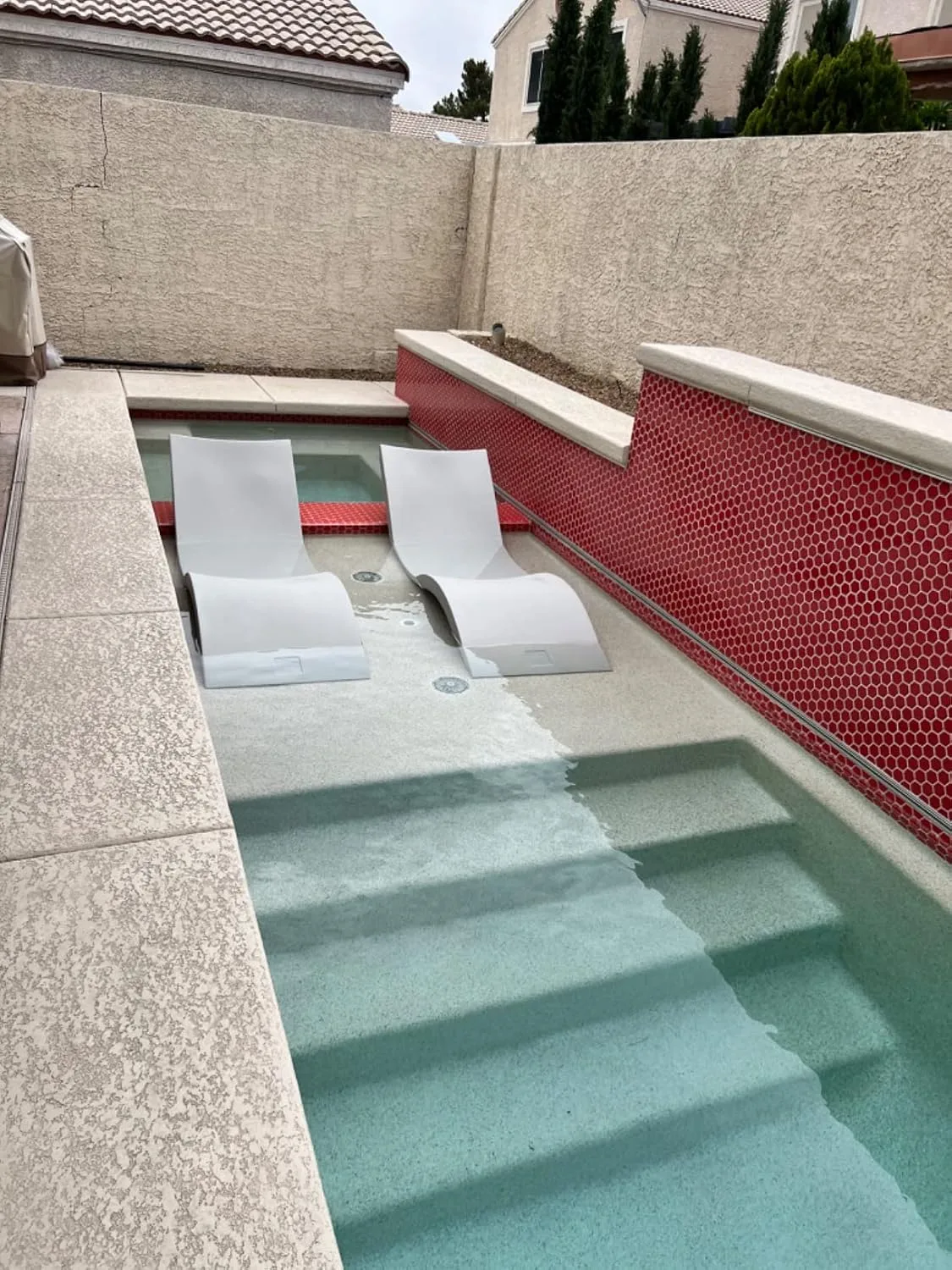
When I added a sun shelf to my own pool, I quickly realized that the lounging experience depends almost entirely on what people are actually sitting on. Concrete ledges are beautiful—but they’re hard, they get scalding hot, and they offer zero back support after 20 minutes.
What works
- The contoured design keeps you stable in shallow water without sliding, even as the ledge shelf slopes slightly—I’ve tested this with different body types and water depths.
- The material is chlorine-resistant and doesn’t degrade or stain like fabric loungers do, so you’re not replacing them every other season.
- Two chairs fit perfectly on a standard 6-foot sun shelf without crowding, which solves the “towel territory wars” I used to manage at resorts.
What doesn’t
- They’re not cheap, and the initial investment feels steep when you’re already sunk into deck work and plumbing.
- White shows algae and mineral stains quickly in direct sun, so you’ll be scrubbing them weekly if your water chemistry isn’t locked down.
I almost talked myself out of buying loungers at all—figured cheap foam alternatives would do the job—but one afternoon of watching guests shift uncomfortably every five minutes changed my mind. If you’re investing in a sun shelf, invest in seating that actually works. Check out the Ledge Lounger Signature Chaise (Set of 2, White).
This post contains affiliate links. As an Amazon Associate, I earn from qualifying purchases at no extra cost to you.