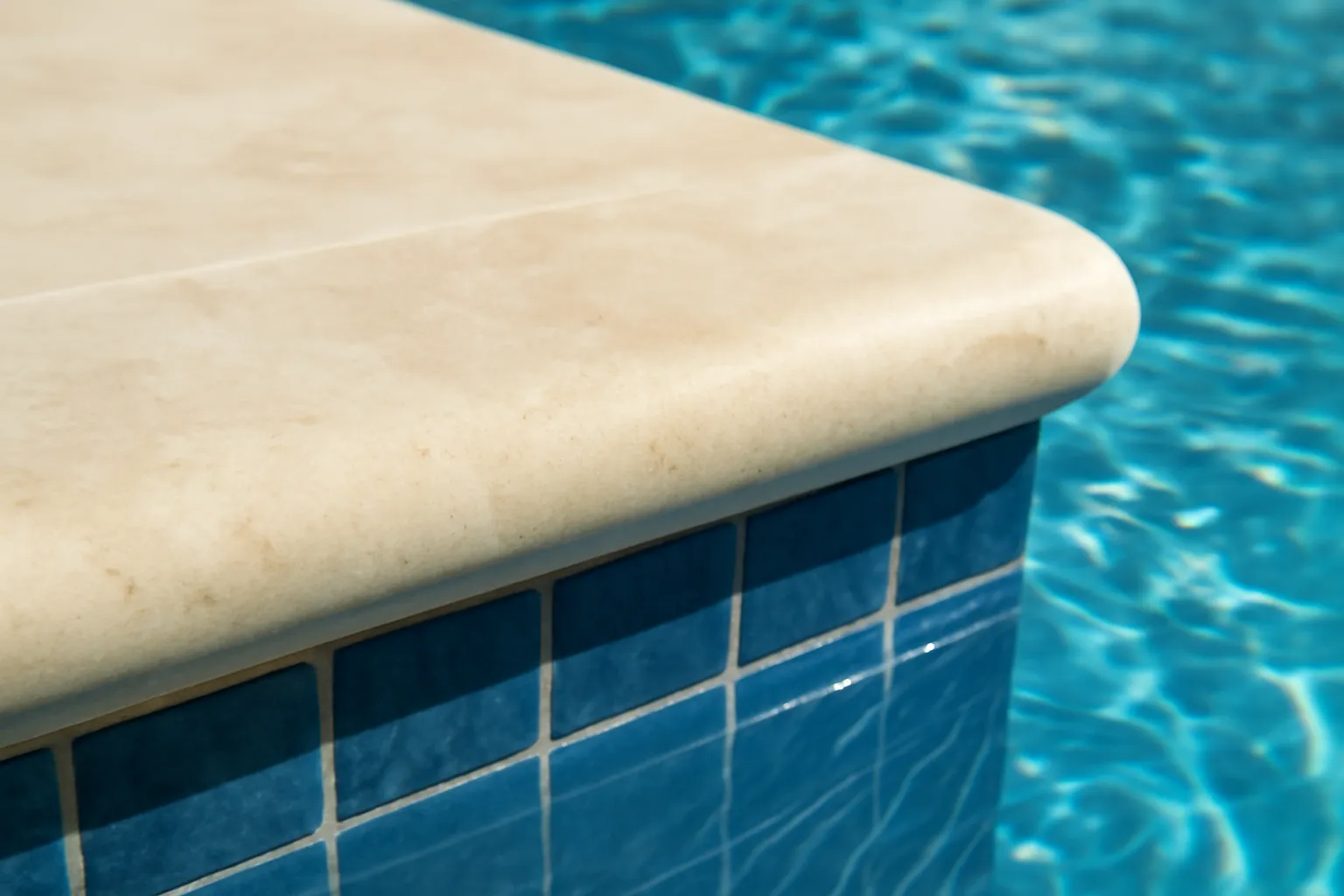
Every season, I get some version of the same call from a panicked HOA board member or resort facilities manager: “Nadia, there’s this cracked stone thing around the edge of the pool and water is getting underneath it — what even is that?” After fifteen years managing pools across the Southwest, I can tell you that question almost always comes too late. The cracking started six months ago. The water’s been seeping behind the pool shell for three rainy seasons. And what looked like a cosmetic eyesore is now a structural repair bill that would make anyone’s eyes water. I’ve watched beautiful resort pools get sidelined for weeks over damage that started with a gap the width of a credit card. The frustrating part? Most pool owners don’t even know what that edging is called, let alone that it’s one of the hardest-working components on the entire pool. So let’s fix that. If you’ve been Googling “what is pool coping” at 11pm while staring at a crack in your pool deck, you’re in exactly the right place.
What Is Pool Coping — and Why Does It Matter More Than You Think?
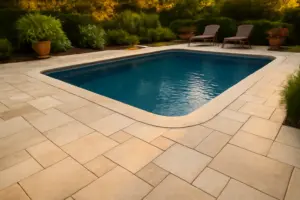
Pool coping is the cap or edging material that sits on top of the pool wall, forming the finished border between the water and your deck. Think of it as the crown molding of your pool — it covers the bond beam (the top structural edge of the pool shell), creates a clean transition to the deck surface, and takes a beating every single day from UV exposure, pool chemicals, foot traffic, and weather. It’s doing three jobs at once, and it rarely gets credit for any of them.
The Three Critical Functions of Pool Coping
- Structural protection: The coping locks the pool shell to the surrounding deck and shields the bond beam from direct exposure to rain, freeze-thaw cycles, and pool chemistry. When it fails, that bond beam is next.
- Water management: Properly installed coping directs splashed and rain water away from the pool shell. Water that gets behind the coping causes erosion, hydrostatic pressure buildup, and long-term structural damage that’s expensive to remediate.
- Swimmer safety: Coping gives swimmers something to grip at the pool edge and provides a non-slip surface for getting in and out. A crumbling or shifting coping edge is a genuine slip-and-fall liability.
Pool Coping Types Explained
Understanding pool coping types explained in plain terms helps you make smarter decisions about repair or replacement. The most common style is bullnose coping — a rounded edge that overhangs the pool wall slightly, comfortable to grip, and available in natural stone or precast concrete. It’s the style you’ll see on probably 70% of residential pools. Then there’s cantilevered coping, where the pool deck itself is poured right to and over the pool edge in one seamless, monolithic slab. The bullnose vs cantilevered pool coping debate usually comes down to aesthetics versus repairability — cantilevered looks sleek and modern, but if it cracks, you’re dealing with a much more complex fix than simply resetting a loose bullnose piece.
Beyond those two styles, you’ve got natural stone (travertine, flagstone, bluestone) at $20–$50 per linear foot installed — premium look, every piece unique, but requires sealing and careful maintenance. Brick coping runs $8–$15 per linear foot and has a classic appeal, though it absorbs water and deteriorates faster in climates with freeze-thaw cycles. Precast concrete is the most affordable option at $5–$12 per linear foot — manufactured in consistent molds, easy to source, and perfectly serviceable for most residential pools.
Why Ignoring Damaged Coping Is Worse Than You Think
Here’s what I’ve seen happen when pool owners treat coping damage as a “deal with it later” cosmetic issue: it becomes a very expensive structural problem, usually at the worst possible time.
Water infiltration is the big one. When coping separates from the pool shell — even by a quarter inch — rainwater and splash water funnel directly behind the bond beam during every rain event. In the Southwest, where I’ve done most of my work, the freeze-thaw cycles aren’t as brutal as up north, but the monsoon season is relentless. Water trapped behind pool walls expands, contracts, and erodes the substrate. I’ve inspected pools where the bond beam was essentially crumbling because of two years of unaddressed coping separation. Repairing that kind of damage runs $3,000 to $10,000 depending on severity — sometimes more if decking has to come up entirely.
There’s also the water chemistry angle that most people overlook. Cracks in coping and the deck joints around it allow soil and organic debris to migrate into the pool during heavy rain events. Suddenly your carefully maintained 7.4 pH is swinging, your chlorine demand spikes, and you’re burning through chemicals trying to compensate for something you can’t even identify. I’ve tracked water quality issues at HOA pools for weeks before identifying compromised coping as the culprit.
And then there’s liability. A loose or shifting coping piece is a genuine slip-and-fall hazard. In a commercial setting, that’s an insurance nightmare. In a residential setting, it’s a conversation nobody wants to have with a neighbor or a guest. The CPSC estimates tens of thousands of pool-related injuries annually, and pool edge conditions are a contributing factor in a meaningful percentage of those. That cracked piece at the pool corner isn’t just ugly — it’s a risk.
The bottom line on timeline: small cracks become large cracks within one to two seasons. Loose pieces migrate, fall in, or create trip hazards. What costs $40 in sealant today can cost $5,000 in bond beam repair next year. I’ve lived this cycle enough times that I now treat any visible coping damage as an urgent maintenance item, not a someday project.
The Sealant That Finally Stopped Water From Sneaking Behind My Coping
Once water gets behind your coping, you’re fighting a losing battle — freeze-thaw cycles will wedge that gap wider every winter. A quality joint sealant is the difference between a $200 fix and a $5,000 shell replacement.
What works
- Self-leveling formula means you don’t have to be a mason — it finds its own level in the joint and cures cleanly without tooling.
- The 96 oz option covers multiple problem areas around the deck without running out mid-project, which saves a trip to the supplier halfway through.
- Stays flexible through seasonal expansion, so it moves with the coping and deck instead of cracking apart like rigid concrete patches do.
What doesn’t
- Application window is tight — if you don’t work it into the joint within the first 15 minutes, it starts to set and becomes impossible to work with smoothly.
- Color matching takes patience; the gray and tan options look slightly different wet than dry, so you may need to test on scrap first if aesthetics matter.
I’ll admit I was skeptical the first time I used this — I watched it self-level and thought it would sag, but it held true. That one application has stayed watertight for three years now, and I’ve never had to re-seal that joint. Pool Deck Joint Sealant Kit Gray or Tan 24 oz & 96 oz Self-Leveling Crack and Expansion Joint Filler Compatible with Deck-O-Seal
This post contains affiliate links. As an Amazon Associate, I earn from qualifying purchases at no extra cost to you.