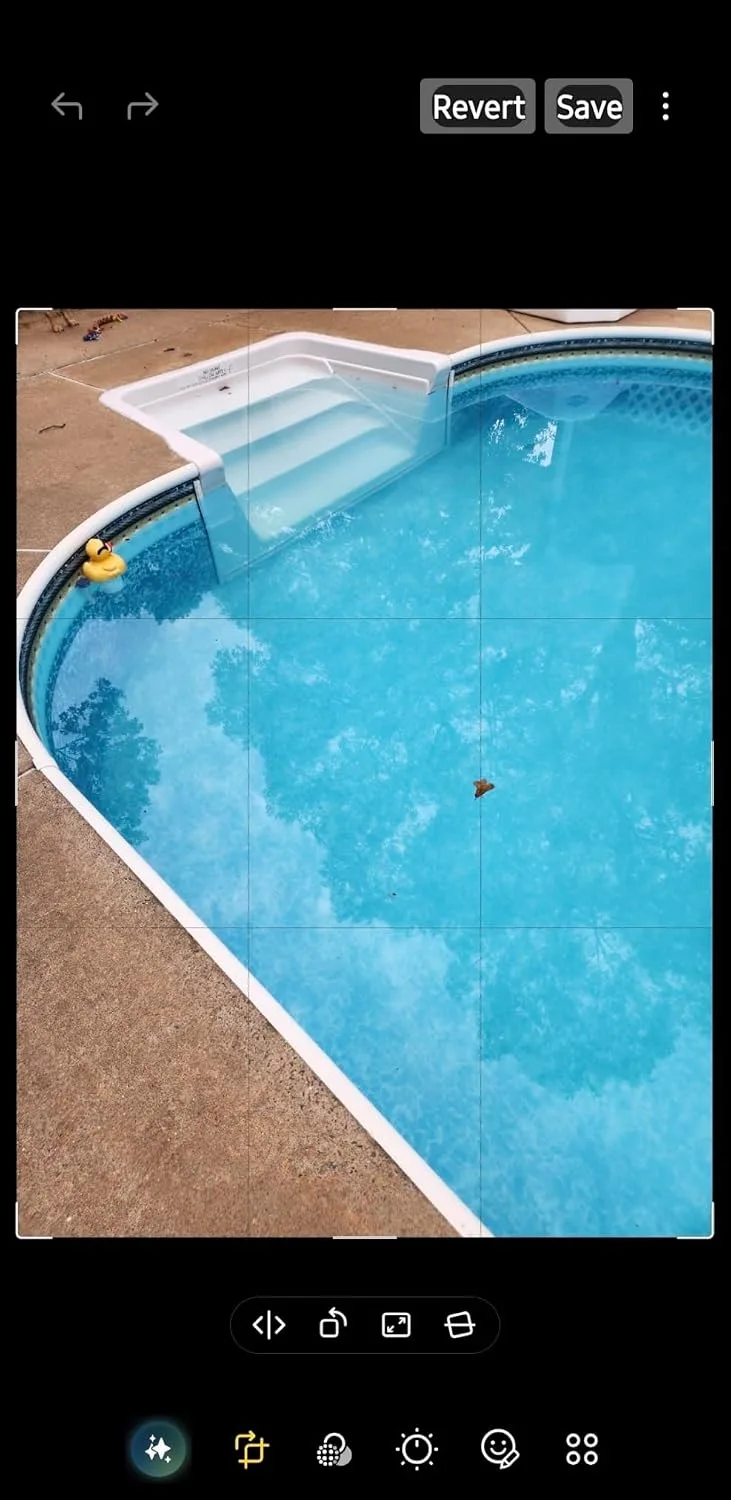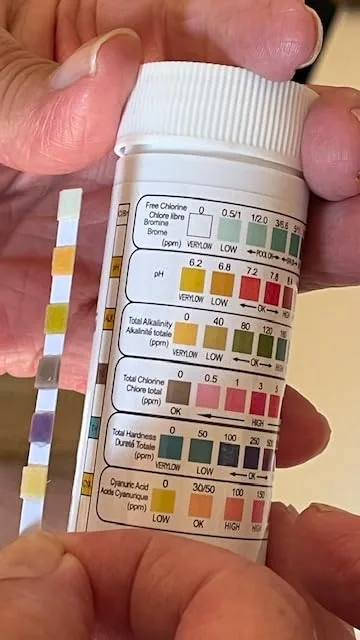
I’ve managed pools for resorts and HOA communities across the Southwest for over a decade, and I can tell you exactly what a Tuesday afternoon in July looks like: you’re crouched by the equipment pad, test kit in hand, realizing your chlorine has dropped again even though you just dosed the pool yesterday. So you add more. Then you check the stabilizer. Then you notice a faint green tinge near the steps, so you shock the whole thing, wait 24 hours, and start over on Wednesday. Rinse and repeat — all summer long. I’ve watched pool owners spend entire weekends chasing chemistry instead of actually swimming in their pools. Their kids come out with red eyes and itchy skin. Their favorite swimsuits fade after three weeks. And they still end up calling me because there’s algae blooming in the shallow end after one cloudy day. If any of this sounds familiar, I want to talk to you about something that genuinely changed the way I approach residential pool maintenance: a solar pool ionizer to reduce chlorine use without sacrificing water quality.
Why the Chemical Treadmill Is Worse Than You Think
Most pool owners know chlorine can be irritating. What they don’t always realize is how much damage the chemical treadmill is quietly doing — to their equipment, their budget, and their bodies over time.
Here’s the thing about chlorine: it doesn’t just evaporate into thin air. In the presence of sunlight and organic matter — sunscreen, sweat, body oils, leaves — free chlorine converts into chloramines, which are the actual culprits behind that harsh “pool smell” and eye irritation. The more bathers, the faster chlorine gets consumed. In a warm, sunny Southwest pool sitting at 85°F, you can lose 1–2 ppm of free chlorine in a single afternoon. That means you’re not just adding chlorine weekly — you’re adding it multiple times per week during heavy swim season.
Now add the cost. A typical residential pool running 1.0–3.0 ppm free chlorine through peak summer might go through $300–$600 worth of chlorine and shock products between Memorial Day and Labor Day. I’ve seen HOA pools spend two to three times that. And that doesn’t account for stabilizer (cyanuric acid), algaecide, pH adjusters, and clarifiers — all the supporting cast that chlorine demands.
The equipment angle is one most people miss entirely. High chlorine levels — especially when pH drifts above 7.8 or below 7.2 — accelerate corrosion in heater elements, pump seals, and pool surfaces. I’ve seen plaster surfaces that looked five years older than they should because of chronic chemical imbalance. Vinyl liners become brittle. Salt cells in saltwater systems get scaled and damaged faster when the overall chemistry is swinging wildly.
And for people with chlorine sensitivity — kids with eczema, adults with asthma, anyone whose skin just doesn’t tolerate high chemical exposure — the conventional approach isn’t just inconvenient. It genuinely limits how much they can enjoy their own pool. That’s the real cost, and it’s one that doesn’t show up on a receipt.
What to Look For in a Solar Pool Ionizer That Can Actually Reduce Chlorine
Not all ionizers are built the same. I’ve evaluated a handful of these devices over the years, and the differences between a quality unit and a cheap knockoff become obvious within about three weeks of use. Here’s what actually matters when you’re shopping.
Solar Panel Output
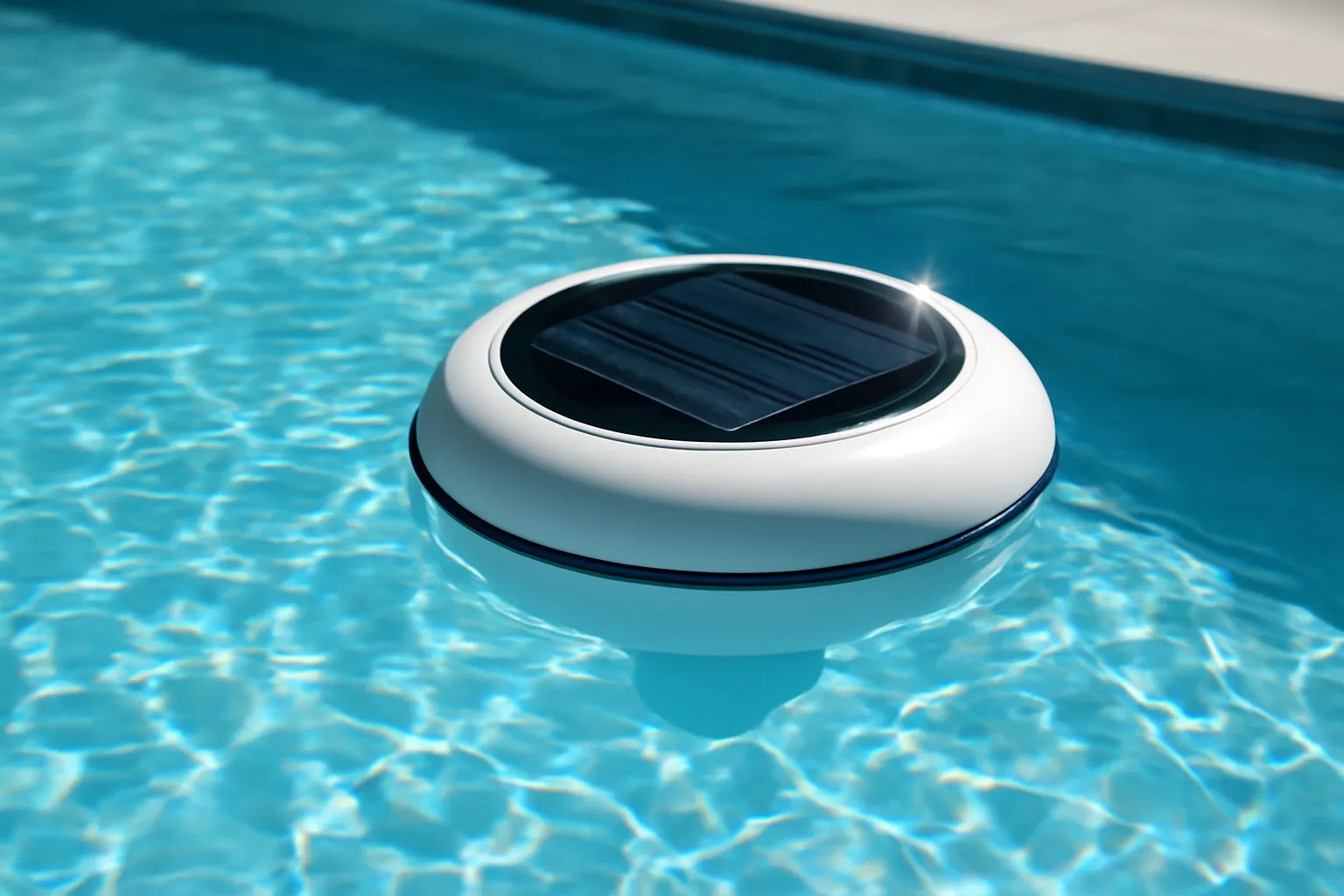
The solar panel is the engine of the whole system. Underpowered panels produce inadequate ion output, which means your copper and silver levels never climb into the effective range. Look for at least 1.5–1.8 watts of solar output. Anything less and you’re essentially floating a decorative pool toy.
Anode Material and Weight
The anode is where the ions actually come from. Copper ions (Cu²⁺) destroy algae by disrupting their cell walls — essentially punching holes in the cell membrane so the algae can’t function or reproduce. Silver ions (Ag⁺) work differently; they bind to bacterial enzymes and disable the bacteria’s ability to replicate. This is the same science behind NASA’s copper-silver ionization system developed for the Apollo missions, where astronauts needed safe, chemical-light drinking water in space. A heavier anode means longer lifespan before replacement. A 1 lb copper anode is the benchmark to look for in a residential-grade unit.
Coverage Capacity
Verify the rated pool volume. For most residential pools — which run between 10,000 and 30,000 gallons — you want a unit rated comfortably above your pool size. Undersizing is one of the most common mistakes I see.
The Ionizer That Finally Broke My Weekly Shock Cycle
After years of chasing chlorine levels, I realized I was treating the symptom, not the cause. A solar ionizer works differently—it reduces the chlorine demand itself by introducing copper and silver ions that kill algae and bacteria before they spike your sanitizer needs.
What works
- Chlorine consumption actually drops week-to-week—I’m testing and dosing half as often as I used to, which means fewer Tuesday afternoon panic checks.
- The solar panel means it runs for free once installed; no electricity bill creep, no monthly operating costs piling up like chemical purchases used to.
- The copper anode lasts a full season in most pools, so you’re not replacing parts constantly—install it in May and forget it until September.
What doesn’t
- It’s not a complete replacement for chlorine—you still need residual sanitizer, so don’t expect to eliminate testing entirely or switch to zero-chemical pools.
- Installation and anode replacement require you to be comfortable opening your equipment or calling a tech; it’s not a drop-in-and-done solution like adding shock.
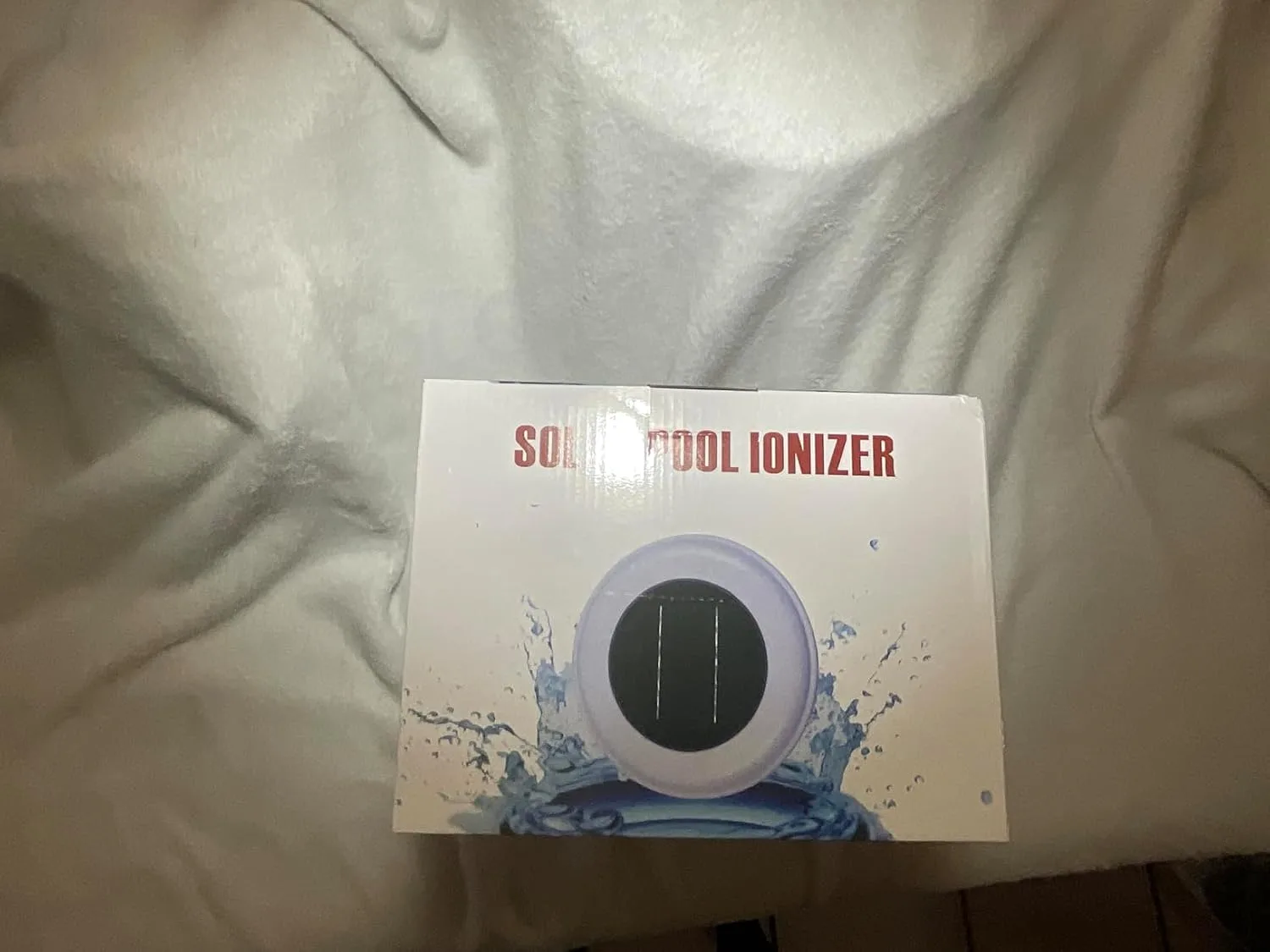
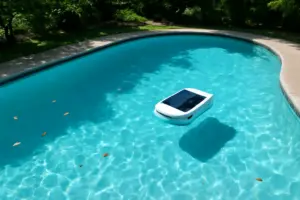
I was skeptical the first month—my chlorine readings didn’t drop overnight, and I almost convinced myself I’d wasted money on pool gadgetry. Then July hit, I tested the water, and realized I hadn’t shocked in three weeks. That’s when it clicked. Solar Pool Ionizer with Upgraded 1.8W Solar Panel and Long-Lasting 1lb Copper Anode
This post contains affiliate links. As an Amazon Associate, I earn from qualifying purchases at no extra cost to you.