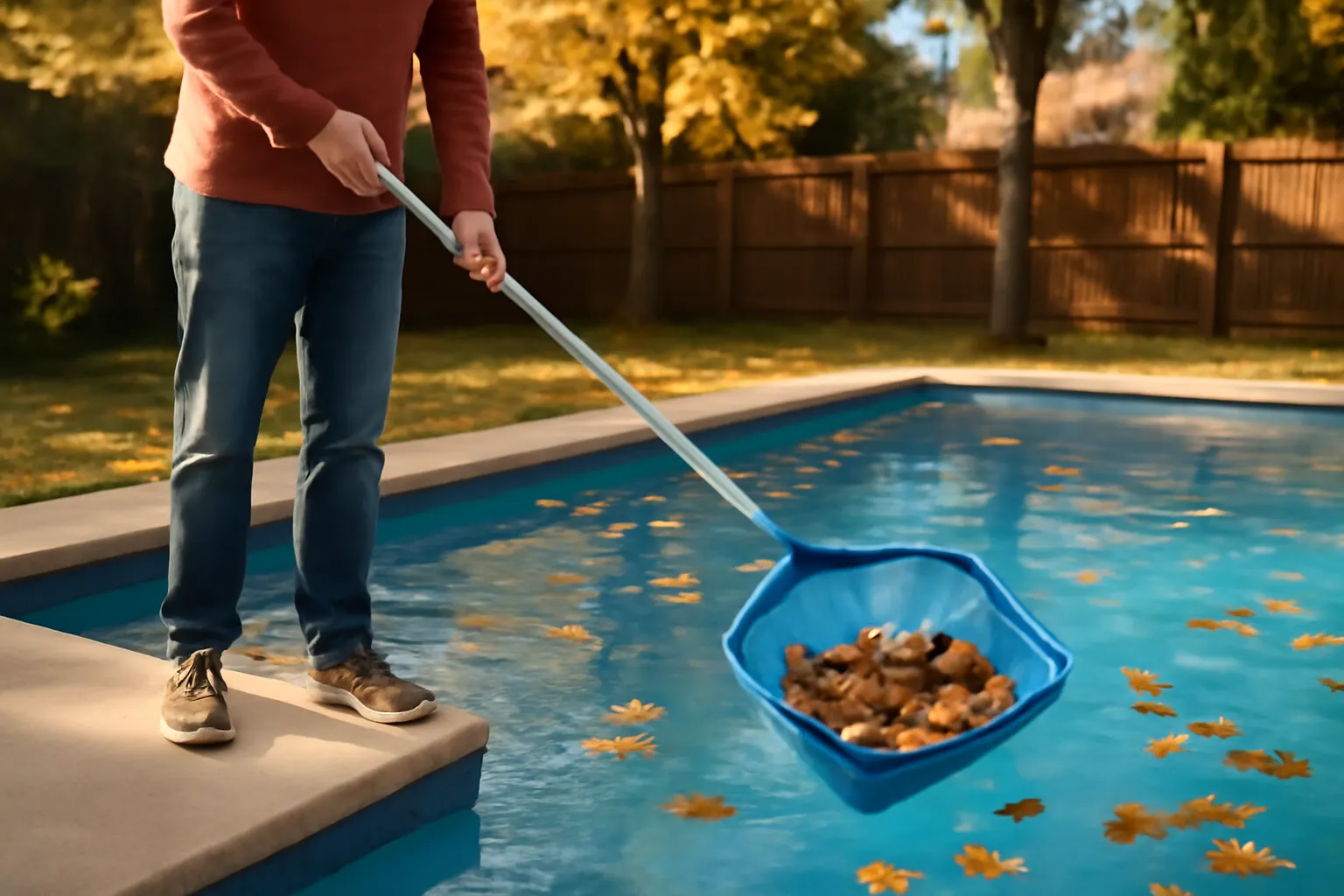
Let me paint you a picture. It’s 7 a.m., the overnight wind dropped a full tree’s worth of oak leaves into your pool, and you’re standing at the edge with that flimsy little flat skimmer net that came rubber-banded to your pole when you bought your starter kit. You drag it across the surface, watch it collect maybe a third of the debris, and then — the moment you lift it out of the water — half of everything you just gathered slides right back in. Sound familiar? I’ve been a certified pool operator for over a decade, managing everything from 25,000-gallon resort pools in Arizona to busy HOA community pools in New Mexico, and I can tell you with complete confidence: that cheap flat net is the single most universally hated piece of equipment in every pool owner’s arsenal. The frustration is real, it’s widespread, and — here’s the good news — it’s entirely fixable once you understand the difference between pool skimmer net flat vs deep bag designs and which one actually belongs in your hand for each job.
Why This Problem Is Worse Than You Think
I know what you’re thinking: it’s just some leaves. How bad can it really be? After managing commercial pools, I’ve watched “just some leaves” turn into genuinely expensive problems more times than I can count. Here’s what’s actually happening beneath the surface — literally.
When organic debris like leaves, acorns, flower petals, and grass clippings sits in your pool water, it begins decomposing. That decomposition process consumes your free chlorine at an alarming rate. On a hot summer day in the Southwest, a heavy leaf load can drop your free chlorine from a healthy 3 ppm down to near zero in a matter of hours. That means you’re dumping extra chlorine into the water just to chase a problem you could have scooped out in five minutes. Over a season, I’ve seen pool owners spend an additional $80 to $150 on chemicals purely because they weren’t removing debris efficiently.
There’s also a phosphate problem. Decomposing organic material releases phosphates into the water, and phosphates are algae food. Once your phosphate levels creep above 500 ppb, you’re fighting an uphill battle against algae blooms no matter how much sanitizer you add. Bringing phosphate levels back down requires a dedicated phosphate remover treatment — another $20 to $40 expense that a good skimming habit could have prevented.
Then there’s your filtration equipment. Leaves that make it past your surface and sink to the bottom get pulled toward your pump intake and skimmer basket. Heavy debris loads clog skimmer baskets faster, reduce flow rate, and put strain on your pump motor. I’ve seen pump impellers damaged by debris that should have been caught at the surface weeks earlier. Pump repairs start around $150 and go up fast.
The time cost compounds too. Debris that sits on the surface for a few hours is easy to skim. Debris that sinks and settles requires vacuuming — a 30-to-45-minute job versus a 5-minute skim. That’s the math that should convince you to take your skimming tool seriously. And the reason most people don’t skim consistently? Their net makes the job harder than it needs to be.
Pool Net Types Explained: Flat Skimmer vs. Deep-Bag Leaf Rake
Before we talk about what to buy, let’s settle the pool net types explained once and for all, because there’s genuine confusion out there about what each tool is actually designed to do.
Flat Skimmer Nets
A flat skimmer net is exactly what it sounds like — a shallow, flat frame with a mesh screen stretched across it. The frame sits maybe half an inch to an inch deep. These are purpose-built for light, daily surface skimming: bugs, pollen, a few flower petals, and the thin film of dust and sunscreen residue that accumulates on still water. They glide across the surface effortlessly, and for that specific job, they do it well. They’re also easy to rinse clean. If you’re doing a quick 3-minute morning pass on a pool that doesn’t have heavy tree coverage, a flat net gets the job done.
What they absolutely cannot do is hold any meaningful volume of debris. The moment you load a flat net with a handful of wet leaves, physics works against you. The second you lift the net out of the water, the weight of the leaves combined with the shallow lip means everything slides off the edge. You’ve caught it and lost it in the same motion. I have watched new pool staff repeat this cycle four or five times on the same section of water before giving up entirely.
Deep-Bag Leaf Rakes
A deep-bag leaf rake — sometimes just called a leaf net or pool rake — has a rigid frame (usually rectangular or slightly curved) with a fabric or mesh bag that drops anywhere from four to eight inches below the frame. That depth is everything. When you scoop debris, it falls into the bag and stays there when you lift the net out of the water. The bag holds it. This is the tool you reach for after a windstorm, during fall cleanup, or any time you’ve got real volume to deal with.
Even better: a quality deep-bag rake isn’t just a surface tool. You can angle it downward and push it along the pool floor, dragging settled debris into the bag before it can fully decompose. It’s genuinely a two-in-one tool when it’s built well.
The honest answer to flat pool skimmer vs leaf rake is that most pool owners need both — the flat net for daily light maintenance and the deep bag for weekly heavy cleaning or post-storm recovery. But if you could only have one and you have any trees anywhere near your pool? Get the deep bag. Every time.
What to Look For in a Heavy Duty Pool Skimmer Net
Not all deep-bag rakes are created equal. I’ve gone through my share of cheap ones that lasted one season before the frame bent or the mesh tore, so let me walk you through what actually matters when you’re evaluating a heavy duty pool skimmer net.
Frame Material
This is the single biggest quality differentiator. Plastic frames are light and inexpensive, but they flex and eventually crack — especially in high-UV environments like the Southwest where sun exposure is intense year-round. Aluminum frames are rigid, corrosion-resistant, and hold their shape under load. In my experience, a quality aluminum-framed rake will last four to five times longer than a comparable plastic frame. It’s a meaningful difference when you’re using the tool weekly.
Mesh Size and Material
Fine mesh catches everything — pollen, sand, even small insects — but it clogs faster and creates more water resistance when you’re pushing it through the pool. Coarse mesh moves easily but lets smaller debris slip through. For most residential pools, a medium-fine nylon mesh hits the sweet spot: it catches the debris that matters without dragging like a parachute every time you push it forward. Nylon is preferable to polyester for pool use because it resists the UV degradation and chlorine exposure better over time.
Bag Depth
More depth means more capacity before you need to empty it. For a heavily wooded yard, you want at least five to six inches of bag depth. This is the spec that separates “best pool skimmer net for leaves” from everything else — because leaves are bulky, and a shallow bag fills up fast.
Pole Compatibility
Check that the head connects via standard thread-and-lock or cam-lock pole attachment. Most quality telescoping poles use a universal connection point, but it’s worth confirming before you buy.
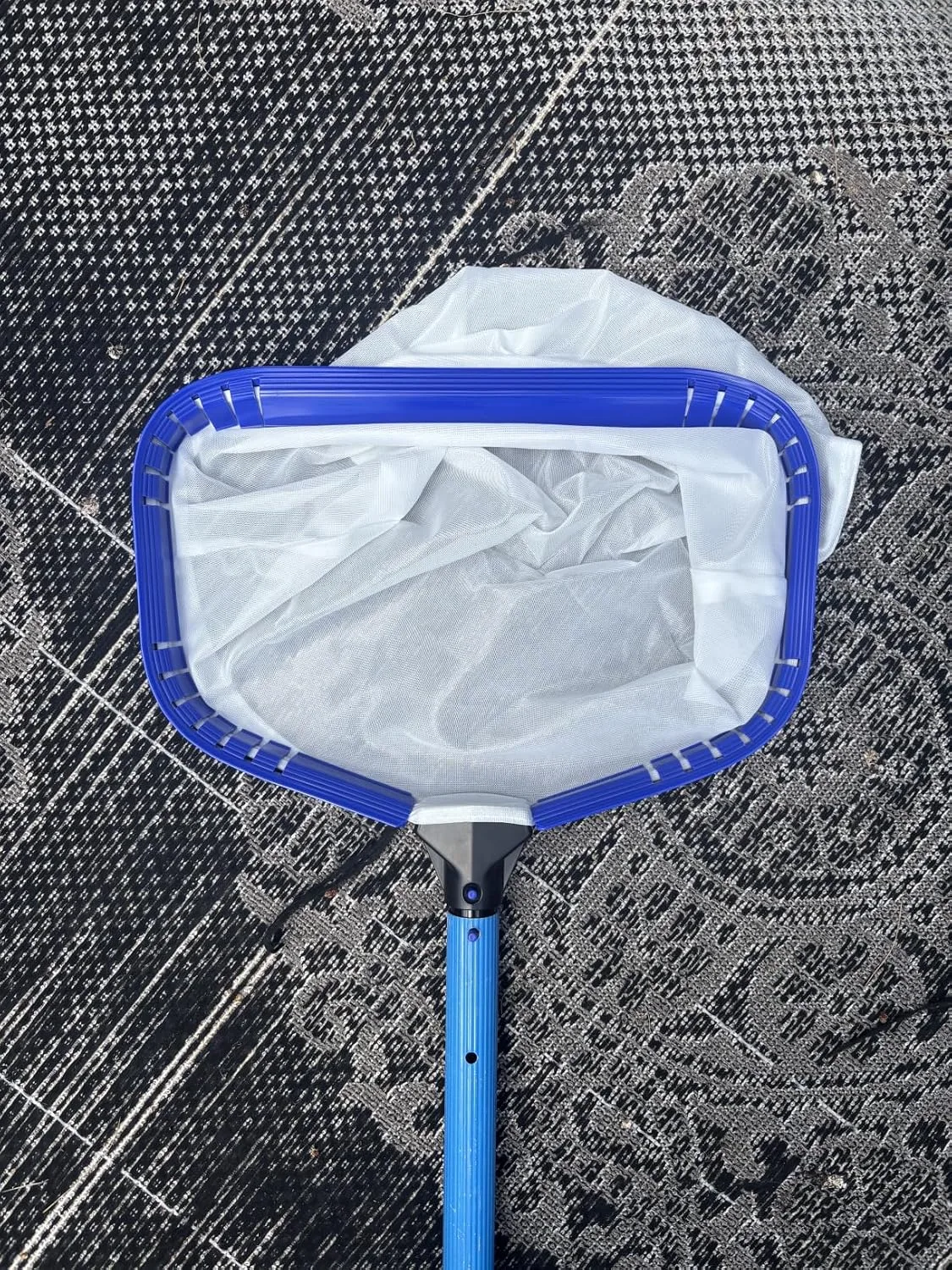
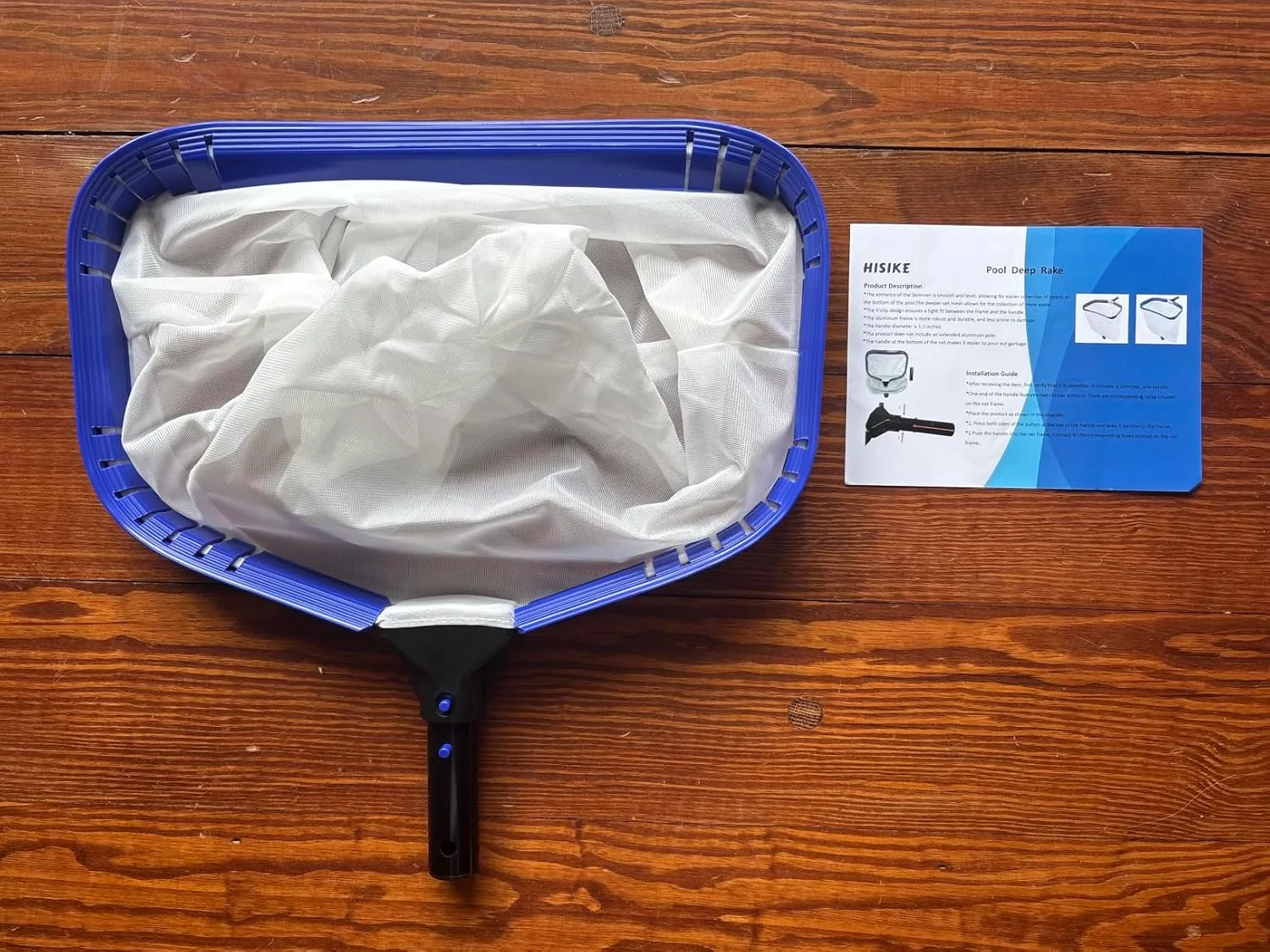
The Deep Bag That Finally Stops Debris From Sliding Back Out
That flimsy starter net isn’t just frustrating—it’s costing you time every single morning. A deep bag skimmer with actual mesh integrity changes the entire debris-removal game, especially when you’re facing heavy leaf fall or overnight wind damage.
What works
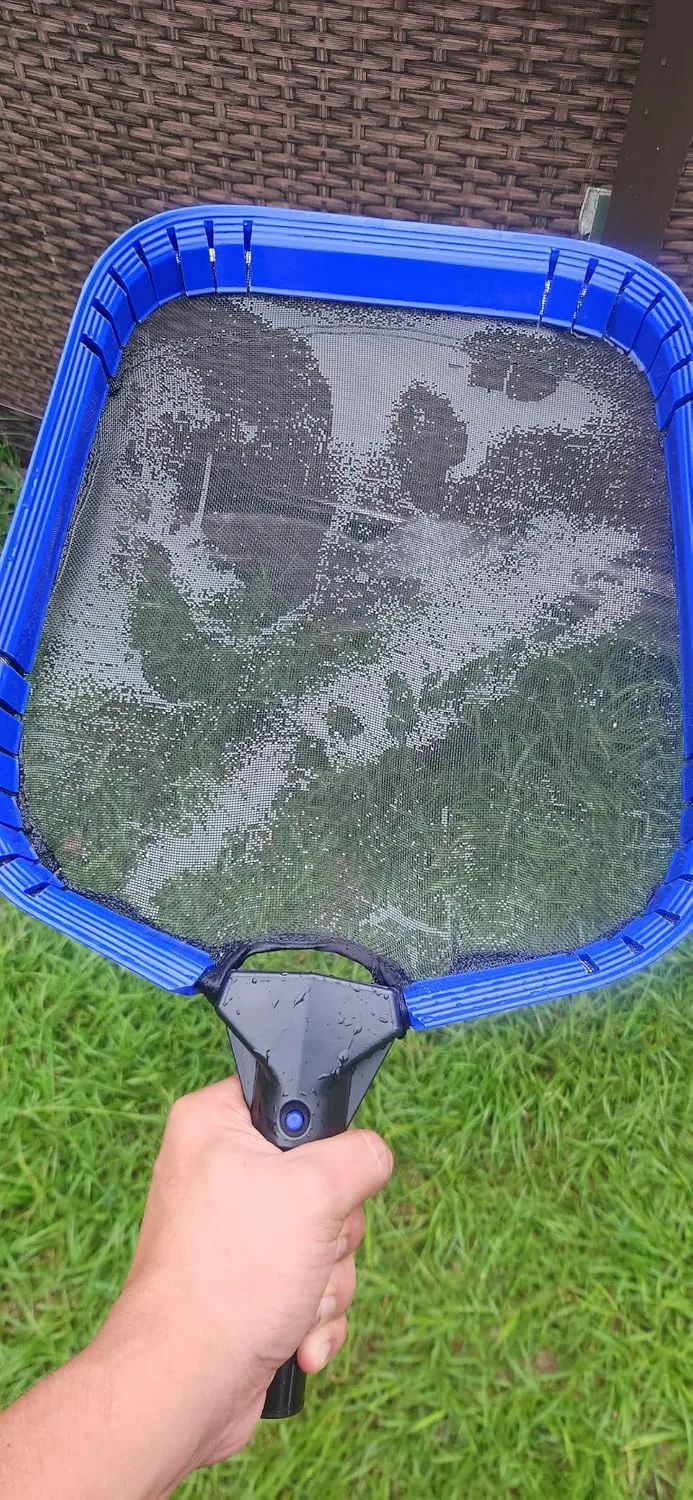
- The deep bag design holds everything you scoop—no more backslide as you lift the net out of the water, which means fewer trips across the pool.
- Heavy-duty mesh actually survives repeated scraping against pool walls and doesn’t tear or fray after a season of oak leaves and pine needles.
- The wider frame coverage means you’re catching debris in one pass instead of three, which matters when you’re skimming before work or doing a quick evening cleanup.
What doesn’t
- The deeper bag takes longer to drain completely, so you’ll hang it over the deck edge for 30 seconds longer than you might expect.
- It’s noticeably heavier when fully loaded, which becomes obvious during a heavy leaf season if you’re doing multiple passes.
I was skeptical that a $30 skimmer net would make that big of a difference—I’d already resigned myself to the slide-back ritual as just part of pool ownership. Once I switched, I realized I’d been wasting 10 minutes every morning just compensating for a bad tool. HISIKE Heavy Duty Deep Bag Pool Skimmer Net
This post contains affiliate links. As an Amazon Associate, I earn from qualifying purchases at no extra cost to you.