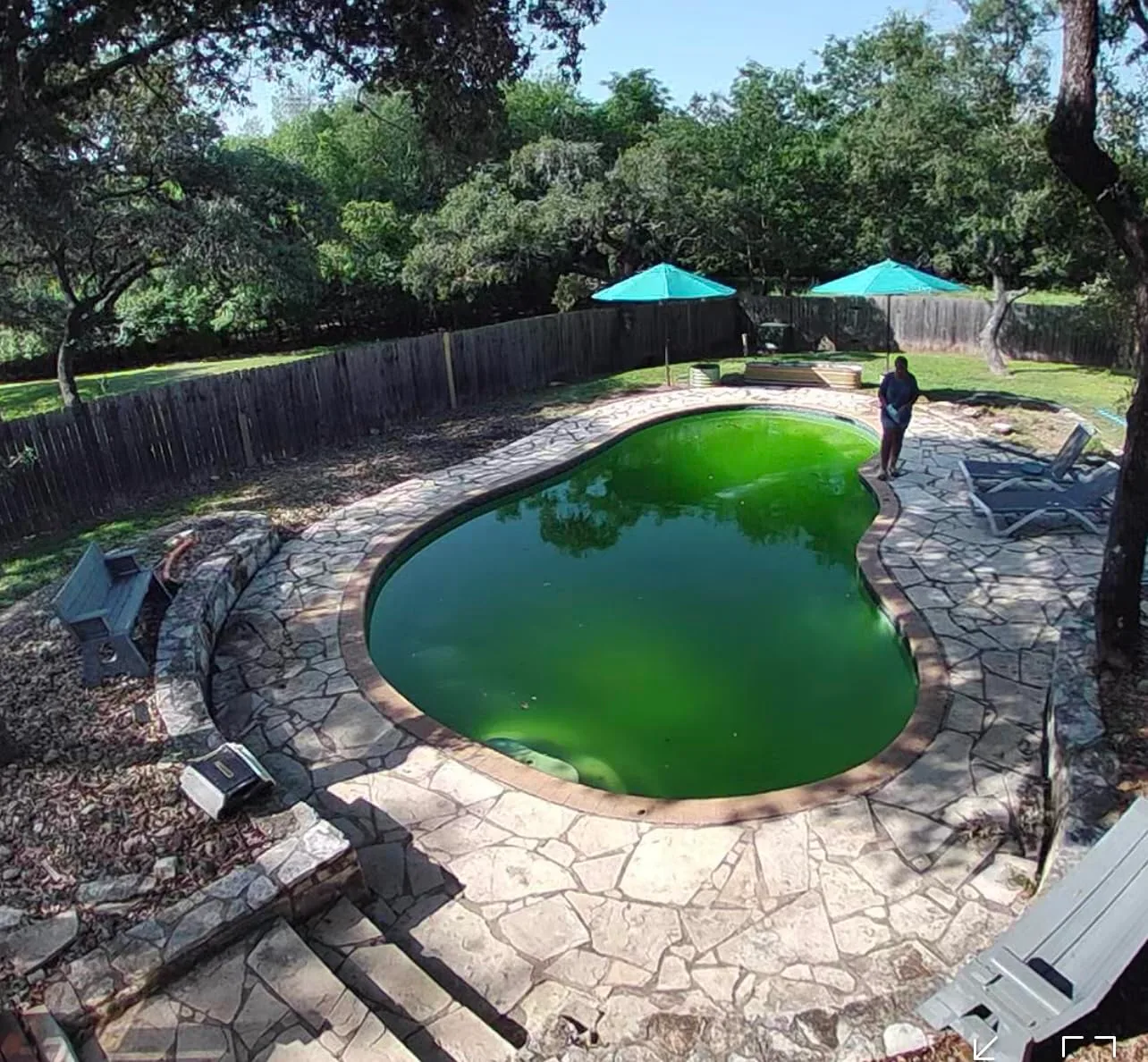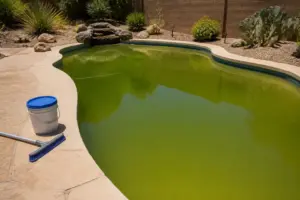
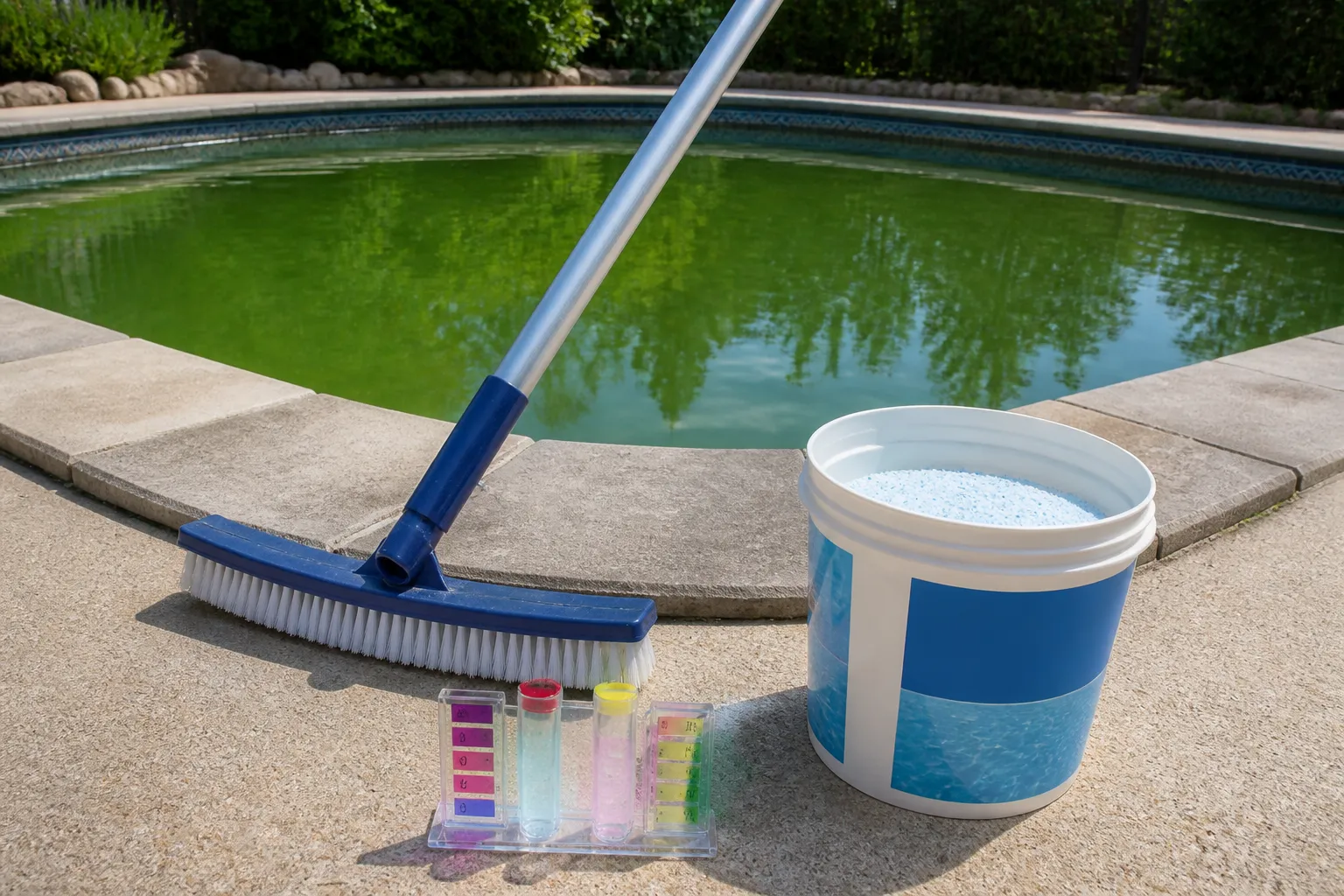
It’s late April, you pull back the winter cover, and stare at what looks like pea soup. Your pool—the one you closed in November with perfectly balanced chemistry—is now a murky green swamp, and you’re wondering if you should just call a pool service and write a check for $800.
Don’t. I’ve managed pools for three resorts and two large HOAs across Arizona and Nevada, and I can tell you with absolute certainty: a green pool in spring is almost always fixable by a motivated pool owner without professional help. The process takes 3–7 days of consistent attention, not expertise. The key is doing things in the right order.
I’ve watched pool owners panic-buy shock at 2 p.m., dump it in without testing pH, skip brushing, and then wonder why their filter is clogged by dinner. I’ve also watched owners follow a systematic approach and pull clear water out of green soup in five days flat. The difference isn’t luck or pool chemistry wizardry—it’s sequence and patience.
This guide walks you through the exact steps to opening a green pool, the assessment you need before adding anything, what product to use and why, and the order that actually works. By the end, you’ll know whether you’re dealing with a two-day recovery or a week-long project, and you’ll have a shopping list that keeps you from wasting money on the wrong chemicals.
Why This Problem Is Worse Than You Think
A green pool isn’t just ugly—it’s a water chemistry catastrophe that gets worse the longer you wait, and it will punish your equipment if you handle it wrong.
When you close a pool in fall, you’re (hopefully) shutting down a balanced system. During winter, without light and with circulation stopped or minimal, algae spores that survive in the water or lurk on surfaces begin to wake up in spring. If the cover lets light in, or if water pooled on top of the cover and created a tiny algae farm for six months, you’ve got a head start on trouble. Add in the fact that many pools winter with elevated pH and alkalinity, and you’ve created perfect conditions for algae to explode the moment circulation restarts.
The real danger isn’t the green color itself—it’s what happens next if you skip steps or do them out of order:
- Your filter clogs in hours, not days. A heavily algae-laden pool can double filter pressure in 4–6 hours. If you’re not checking pressure every few hours, you’ll run the system blind until it shuts down from high pressure—and then algae stops moving through the filter and the whole system gets worse.
- Shock without pH control is money burned. If your pH is 8.2 (common after winter), the hypochlorous acid in shock ionizes into hypochlorite ion, which is weak at killing algae. You’re throwing expensive chlorine at a problem it can’t solve efficiently. I’ve seen pool owners add double shock doses because they didn’t test pH first—and nothing happened except their chlorine bill doubled.
- Algaecide added too early is wasted. Algaecide works best when free chlorine is above 5 ppm but below 10 ppm. Add it during the initial shock phase when chlorine is 15+ ppm, and the chlorine will destroy the algaecide before it ever touches an algae cell. I’ve watched owners add $60 worth of algaecide only to have it neutralized in minutes.
- Dead algae suspended in water feels like failure. Once algae die, they turn grey-blue and stay suspended for 24–48 hours while they’re being filtered. New pool owners think this means the shock failed. It doesn’t. It means the process is working. But if you panic and add more chemicals, you overcorrect and the recovery takes twice as long.
- Your equipment takes damage you won’t see for months. A sand filter that’s been sitting all winter often develops channeling—water finds paths through sand gaps instead of filtering evenly. If you don’t backwash before starting treatment, and then you run a green pool through that compromised filter without monitoring pressure, you’re forcing algae into a clogged system. The filter may never perform the same way again. I’ve replaced $2,000 filters because owners didn’t address channeling during opening.
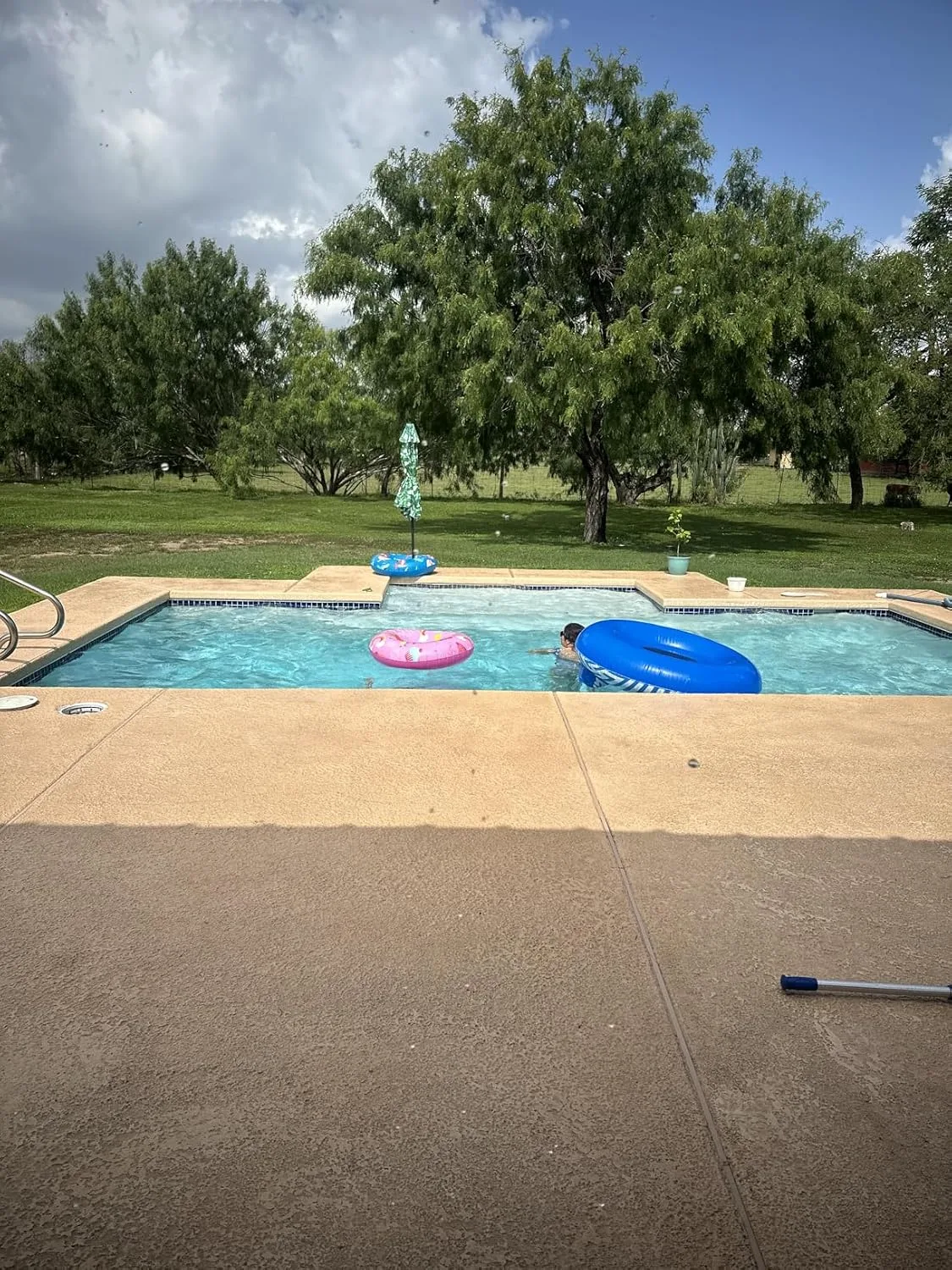
The good news: if you follow the steps to opening a green pool in the right sequence, you avoid all of this. The bad news: there’s no shortcut. You’re going to be testing water, brushing surfaces, and checking filter pressure for three to seven days straight.
The Shock That Finally Cleared My Pool in 36 Hours Instead of a Week
When you’re staring at that green water in late April, time matters—you want your pool swimmable before the first real heat hits. The right shock treatment is the backbone of any spring recovery, and it has to be concentrated enough to handle serious algae bloom without requiring a second dose halfway through.
What works
- Pro-grade concentration means you’re not dumping half a bucket per 10,000 gallons—a single dose handles the job in most spring reopenings without overdoing it.
- Fast kill rate on established algae colonies; I’ve watched the cloudiness break in under 36 hours when dosed correctly, versus the 5–7 day slog with standard shock.
- Dissolves cleanly without the gritty residue that settles on the floor, which means less vacuuming and fewer filter backwashes during recovery.
What doesn’t
- It’s stronger than what most big-box stores stock, so you have to be precise with your dosing—if you’re guessing on gallonage, you risk over-shocking and creating unnecessary wait time before swimming.
- Cost per dose is higher upfront than generic shock, though you’ll use less of it overall and recover faster, which actually saves money in the long run.
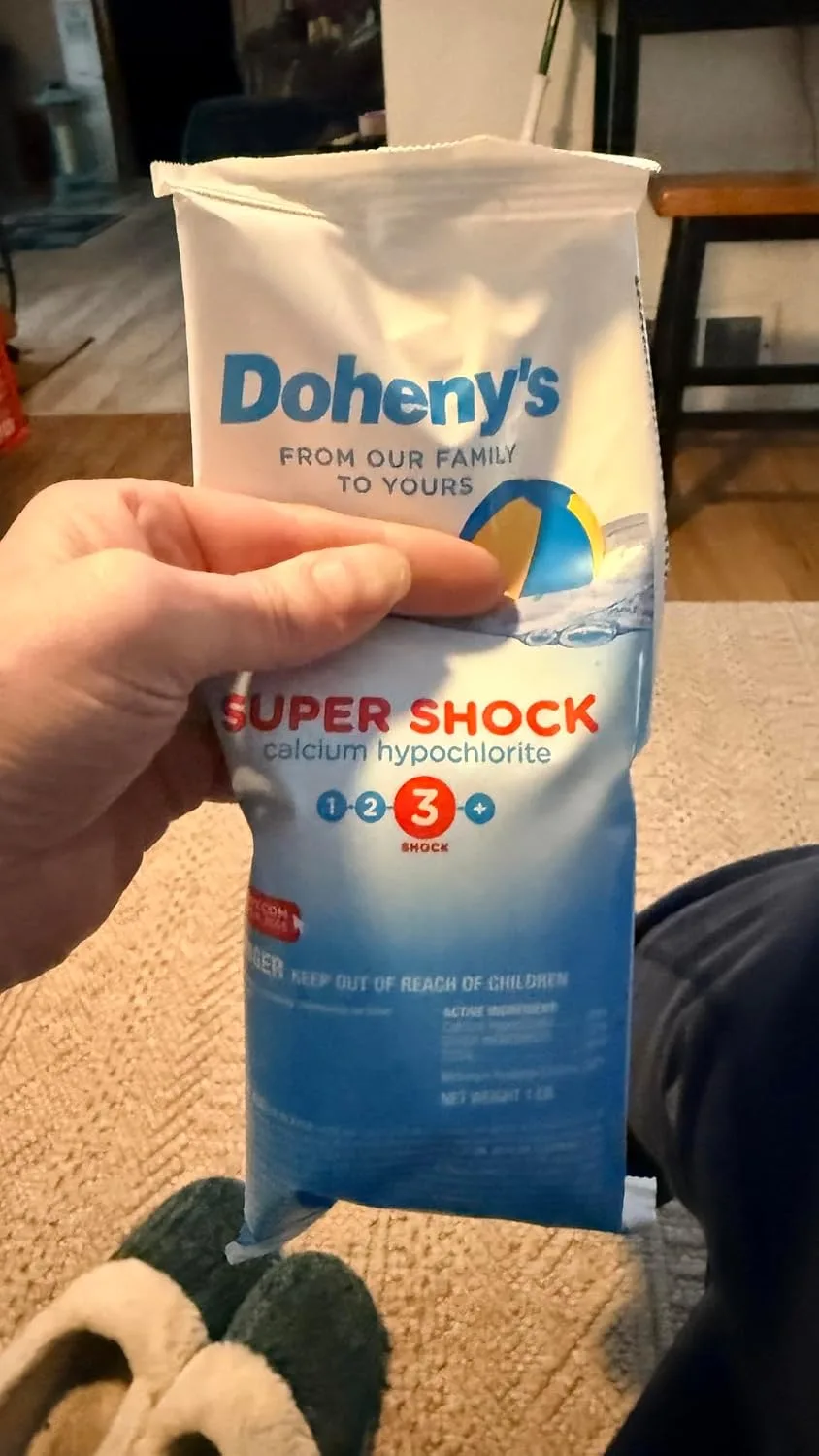
I’ll admit: the first time I ordered this instead of the 50-pound bucket from the warehouse store, I second-guessed myself standing poolside with the math running through my head. But those 36 hours of clarity proved the math right. Grab Doheny’s Super Pool Shock—Pro-Grade Chlorine Shock and dose by your actual water volume—the payoff is a swimmable pool before Memorial Day without the guesswork.
This post contains affiliate links. As an Amazon Associate, I earn from qualifying purchases at no extra cost to you.