I’ve been staring at this resort pool for twenty years, and I can tell you with absolute certainty: the worst pool maintenance mistake I see isn’t neglect. It’s misunderstanding what that sharp, chemical smell actually means.
Last summer, a homeowner called me in a panic. “My pool reeks,” she said. “It’s like a locker room. My kids’ eyes are burning. Something’s wrong with my chlorine.” I grabbed my test kit, ran the numbers, and found exactly what I expected: total chlorine at 3 ppm, but free chlorine at barely 1.5 ppm. She wasn’t over-chlorinated. She was under-chlorinated—and drowning in combined chlorine.
That smell? Not too much chlorine. It’s chlorine doing its job so poorly that your pool is basically a bacteria breeding ground with a pungent warning label. And your test strips probably missed it entirely.
Over the next fifteen years managing commercial pools for resorts and HOAs across Arizona and Nevada, I learned that combined chlorine is the invisible villain most pool owners have never even heard of. But once you understand it, everything changes—and your pool maintenance becomes infinitely easier.
Why This Problem Is Worse Than You Think
Here’s the thing about combined chlorine that most pool owners don’t realize: it doesn’t just smell bad and sting eyes. Those are symptoms. The real problem is that your pool isn’t as safe as you think it is.
Let me break down the chemistry, because it matters for your family’s health.
Free chlorine is the active, working sanitizer—the hypochlorous acid (HOCl) and hypochlorite ion (OCl⁻) that actually kills bacteria, viruses, and algae. This is your pool’s immune system. Target levels are 1–3 ppm for pools and 3–5 ppm for hot tubs.
Combined chlorine (also called chloramines) is what happens when free chlorine reacts with nitrogen-containing compounds from swimmers—ammonia from sweat and urine, amino acids from body oils, nitrogen compounds from sunscreen. Here’s the kicker: chloramines are roughly 80 times less effective at sanitizing than free chlorine. But they’re extremely effective at irritating your eyes, lungs, and mucous membranes while creating that infamous “chlorine smell.”
Total chlorine is the sum of free chlorine plus combined chlorine. And this is where the confusion starts. Your basic test strip reads total chlorine only. So when your strip says 3 ppm, you have no idea how much of that is actually working sanitizer and how much is useless, irritating chloramine sludge.
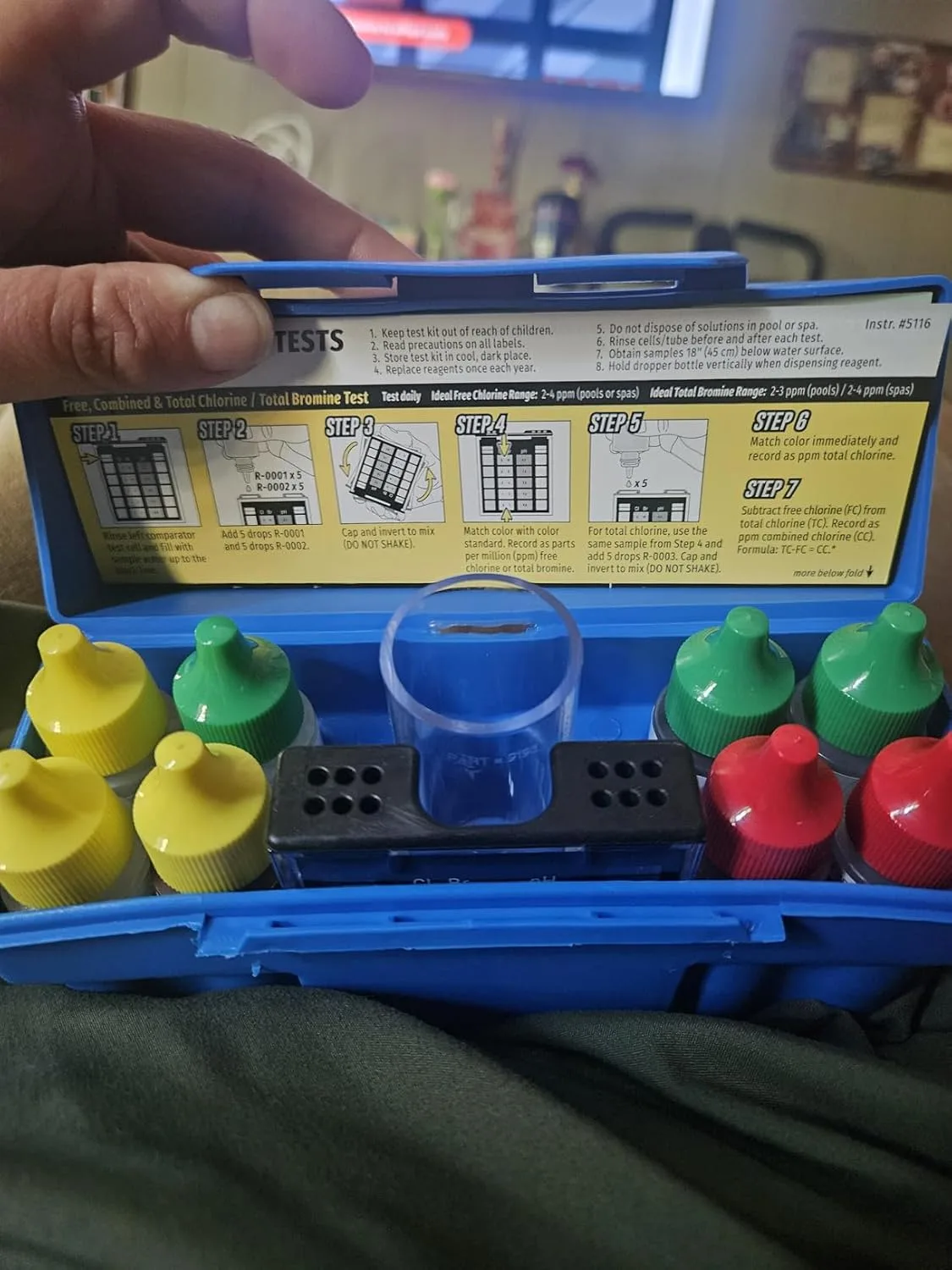
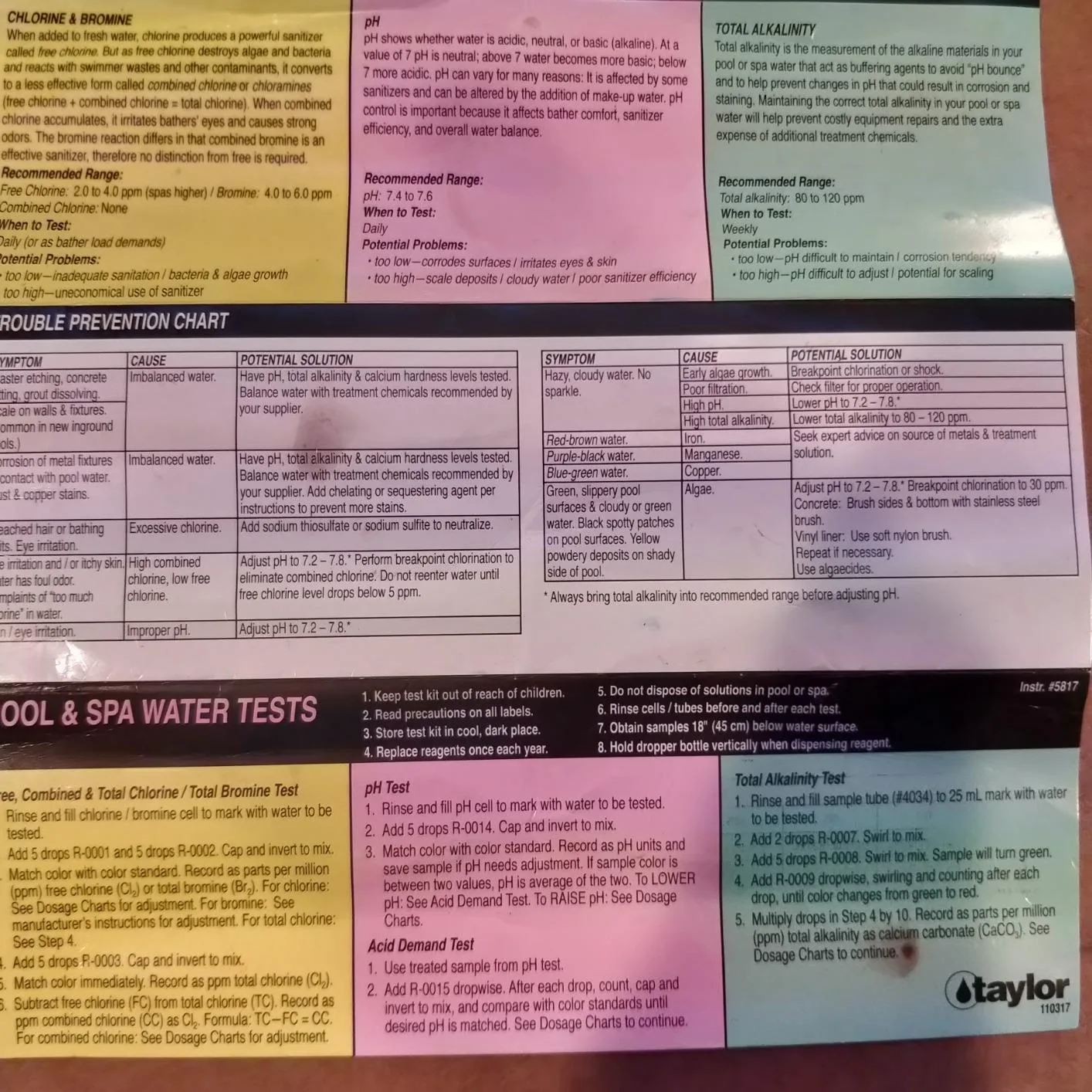
The math is simple: Combined Chlorine = Total Chlorine minus Free Chlorine. If your total reads 3 ppm and your free chlorine is 1 ppm, you have 2 ppm of combined chlorine. The CDC’s Model Aquatic Health Code (MAHC) sets the maximum for public pools at 0.4 ppm. You’re five times over the safe threshold. And you won’t know it from your strips.
For residential pools, that 0.4 ppm threshold is still a good target. Once combined chlorine creeps above 0.2 ppm, swimmers will start noticing the smell and irritation. Above 0.4 ppm, you’re looking at genuine safety concerns—and a pool that’s working against you instead of for you.
The frustrating part? This is completely preventable. But you can’t prevent what you can’t measure. And you can’t measure combined chlorine with test strips alone.
The Test Kit That Finally Revealed What That Smell Actually Meant
That sharp, chemical odor the homeowner complained about? It wasn’t a sign of strong chlorine—it was proof that her chlorine wasn’t working. You can’t trust your nose to tell you the difference, and that’s where most pool owners fail. A real test kit separates what you think is happening from what’s actually happening.
What works
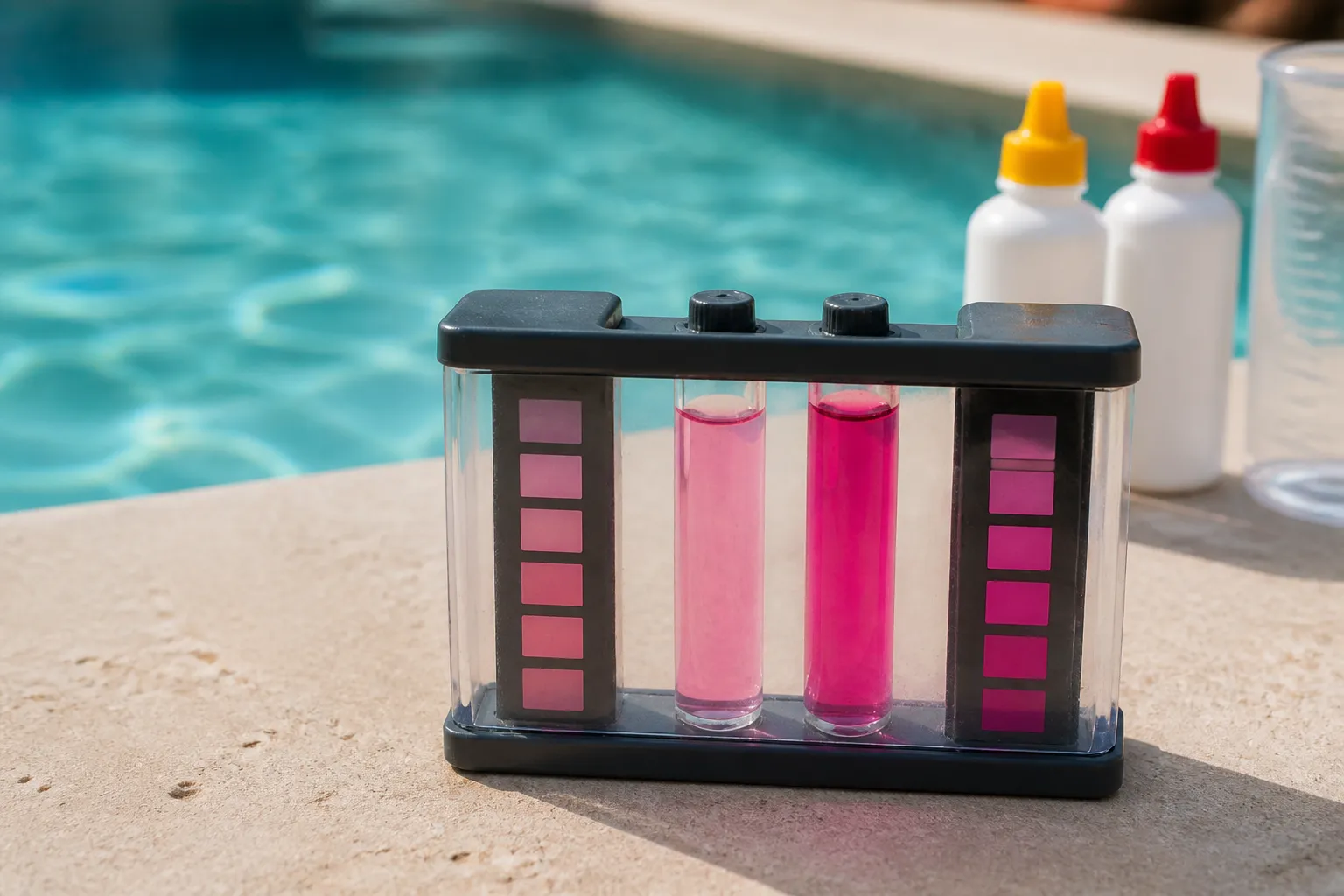
- The DPD color-matching method catches the gap between total and free chlorine instantly—no waiting for digital readouts or second-guessing faded color cards.
- Six tests in one kit (chlorine, pH, alkalinity, acid demand, calcium hardness, and cyanuric acid) means you’re not making treatment decisions blind or buying separate tools.
- The reagents are stable and reliable across seasons, so you’re not constantly wondering if your old kit is still trustworthy.
What doesn’t
- You have to replace reagent bottles every couple of seasons, which adds ongoing cost beyond the initial purchase.
- Color-matching in bright sunlight or poor lighting can be frustrating—you’ll need consistent conditions to read results accurately.
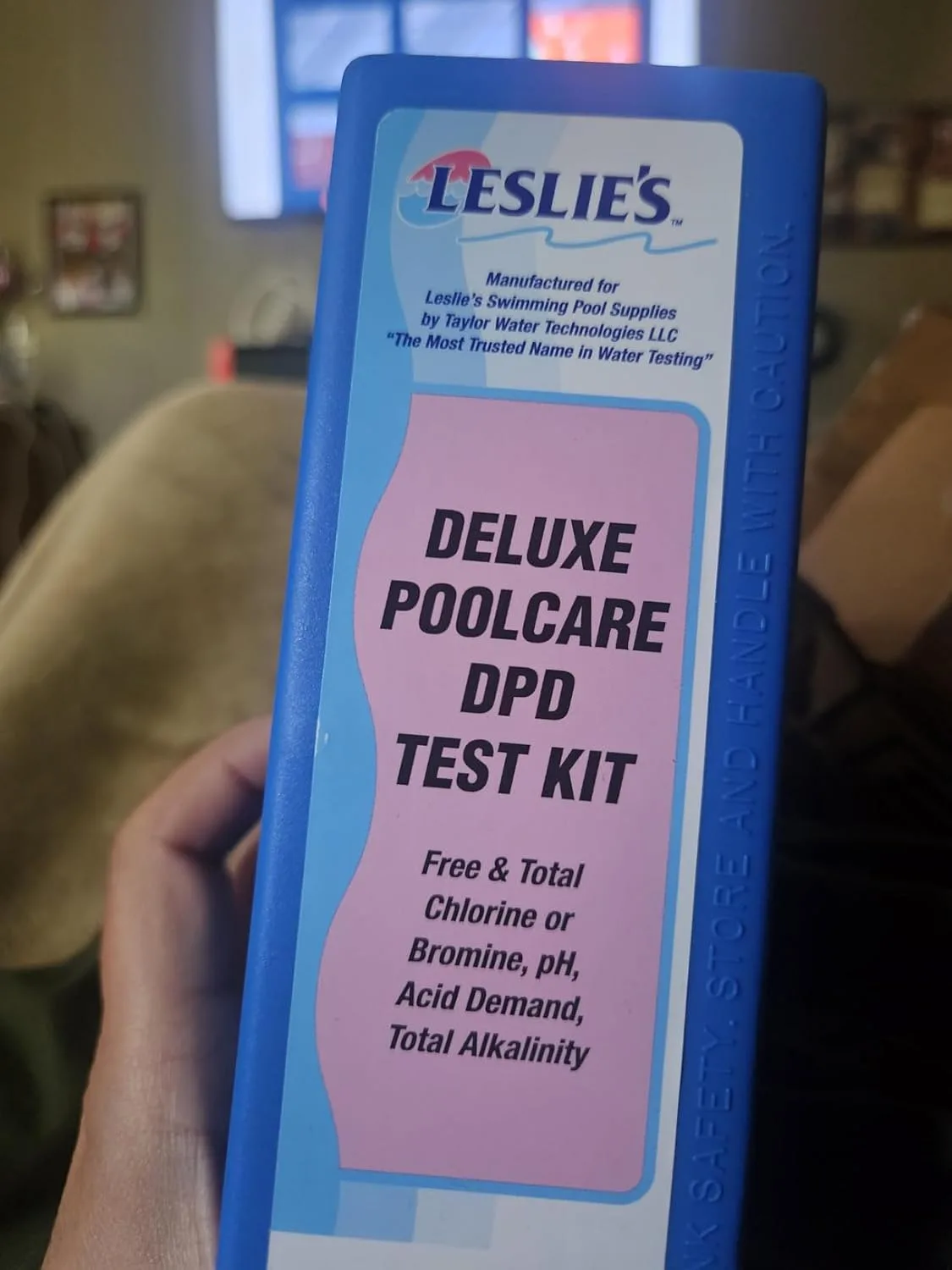
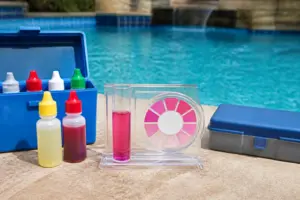
I almost didn’t buy this kit when I started, thinking my eyes and a pool store test strip were enough—until I realized how many times I’d been treating symptoms instead of root causes. The Taylor K-1004 DPD, 6-in-1 Pool Test Kit changed that for me and every homeowner I’ve recommended it to.
This post contains affiliate links. As an Amazon Associate, I earn from qualifying purchases at no extra cost to you.