I’m sitting in the equipment room of a 15,000-gallon resort pool on a Tuesday morning, and I’m looking at the same problem I’ve seen a hundred times: an “Inspect Cell” light blinking on the salt chlorinator control panel, a pool that’s starting to cloud up despite solid salt readings, and a pool operator who’s convinced the whole system is broken. It’s not. The cell just needs cleaning.
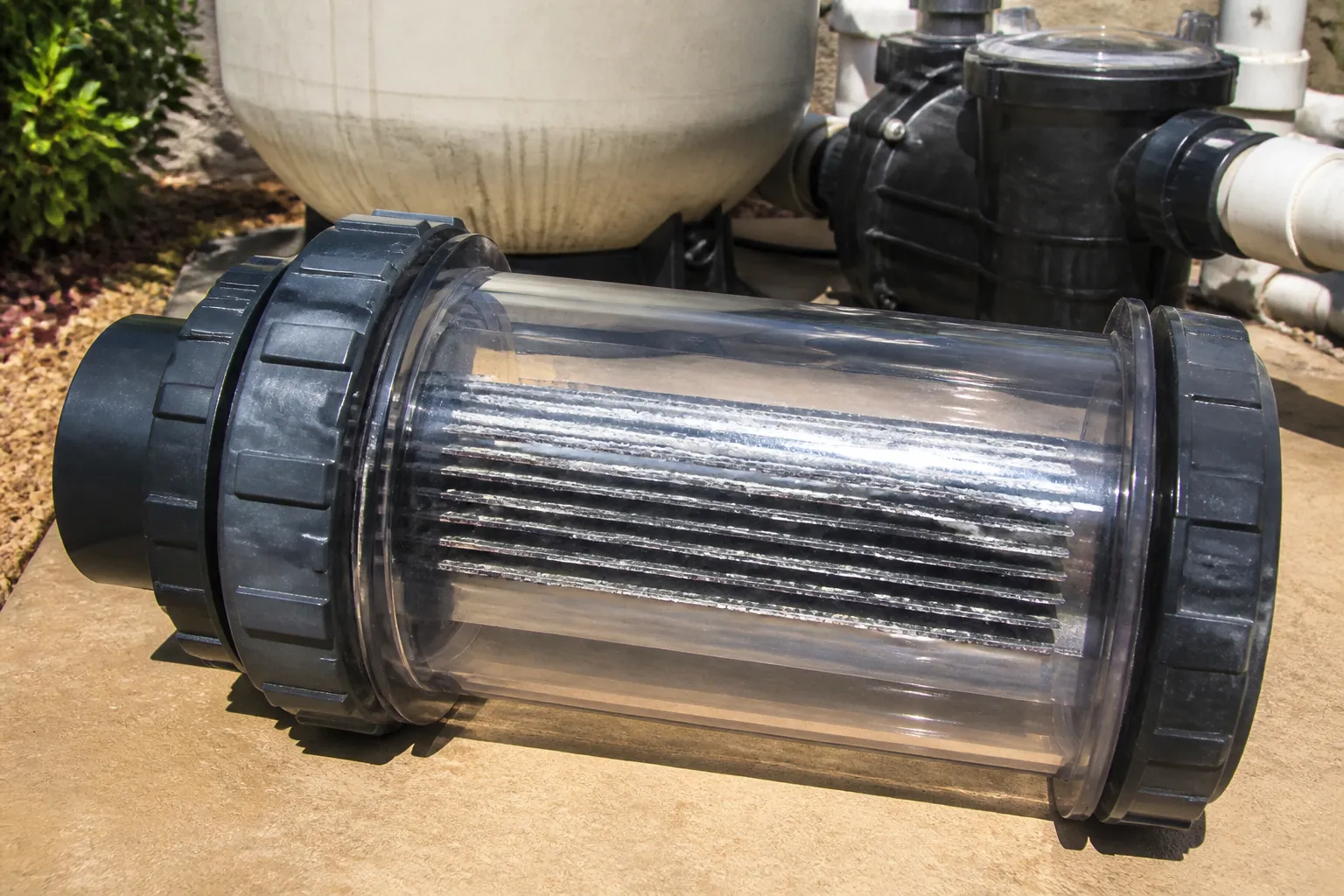
Here’s what most pool owners don’t realize: that salt chlorine generator cell buried in your equipment pad is doing something genuinely remarkable. It’s converting plain dissolved salt into hypochlorous acid — actual chlorine — through electrolysis. But those titanium plates with their fancy ruthenium-iridium coating? They’re under siege. Hard water minerals, especially calcium carbonate, coat those plates in scale, and when that happens, the cell can’t do its job. The pool starts looking tired, your chlorine levels drop despite perfect salt levels, and you’re suddenly wondering why you spent $700 on this thing.
The good news: this is almost always fixable. The better news: it’s preventable with proper salt cell maintenance. I’ve managed pools across the Southwest for resorts and HOAs, and I’ve learned that understanding your salt cell’s lifespan — and knowing when to clean it — is the difference between a crystal-clear saltwater pool and one that’s a constant source of frustration. Let me walk you through what I’ve learned.
Why This Problem Is Worse Than You Think
When a salt chlorine generator cell starts accumulating scale, it doesn’t fail dramatically. It fails quietly. And by the time you notice, you’ve already lost weeks of proper chlorine production and your pool chemistry has started to spiral.
Here’s the chemistry: your salt cell’s titanium plates work through electrolysis. When electricity passes through the cell, the sodium chloride (salt) in the water becomes sodium hypochlorite and hypochlorous acid — the chlorine forms your pool actually needs for sanitation. But calcium carbonate scale acts as an insulator. It’s like trying to charge your phone through a blanket. The electrical contact weakens. Chlorine production drops. And because the system’s salt sensor still shows adequate salt levels, most pool owners keep blaming something else — they think the salt itself isn’t working, or they assume the cell is dead.
The real consequences are worse than just cloudy water:
- Water quality deteriorates fast: Low chlorine means algae has room to grow. Once green algae takes hold, you’re looking at days of aggressive chemical treatment, potential equipment damage, and in commercial settings, liability exposure. I’ve seen HOA pools closed for a week because cell maintenance was skipped.
- Equipment damage accelerates: When chlorine production drops, you often respond by raising the cell output percentage. The system works harder, plates corrode faster, and you’re shortening the cell’s lifespan from 5-7 years down to 3-4. That $500 replacement cost starts looking preventable.
- You waste time and money: Most pool owners don’t know why their pool is struggling, so they start adding liquid chlorine, testing more often, adjusting alkalinity, and calling service techs. I’ve watched people spend $300 on service calls for something a $30 cell cleaning solution would have fixed.
- Scale buildup compounds itself: The longer calcium deposits sit on the plates, the harder they are to remove. Light scale washes off with a mild acid solution in 5-10 minutes. Heavy, years-old deposits require stronger treatment and risk plate damage.
This is why regular salt cell maintenance isn’t optional — it’s the single best investment you can make in a saltwater pool’s longevity and your own sanity.
The Cleaner That Brought My “Dead” Cell Back to Life in 20 Minutes
When your cell gets that chalky calcium and mineral buildup, it stops producing chlorine even though the salt levels look perfect—and that’s when most pool owners panic and order a $400 replacement. A good acidic cell cleaner dissolves that scale without damaging the plates, and it’s honestly the first thing I try before scheduling a cell swap.
What works
- Cuts through calcium scale and mineral deposits fast—I’ve watched cloudy pools clear up the same afternoon after a cell soak and reinsertion.
- Buys you 1–3 extra years of cell life if you catch buildup early, which means you’re not replacing cells every season on a hard-water pool.
- Safe enough for you to do yourself in 30 minutes without voiding most warranties or needing a service call.
What doesn’t
- Won’t fix a cell with actual plate damage or corrosion—if the cell is truly worn out, cleaning just delays the inevitable.
- Requires you to pull the cell safely, handle the chemical, and reinstall it correctly, so it’s not a completely hands-off solution if you’re uncomfortable working with your equipment.
I almost bought a full replacement cell online before I remembered to check the manufacturer’s cleaning protocol first—and I’m glad I did, because a $30 bottle of salt cell cleaning solution like BioGuard Mineral Springs Cell Cleaner saved me hundreds that week.
This post contains affiliate links. As an Amazon Associate, I earn from qualifying purchases at no extra cost to you.