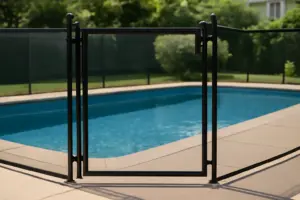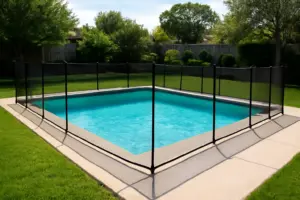
I’ve been managing pools for resort chains and homeowners associations across Arizona and New Mexico for the better part of a decade, and I can tell you with absolute certainty: the mesh pool fence question lands on my desk at least twice a month. “Nadia, should I spend $40 a foot on the dealer system or grab that $15 DIY kit from Amazon?” Sound familiar? The answer, as with most pool safety decisions, isn’t as simple as price tags suggest. After reviewing dozens of mesh pool fence systems and watching some fail spectacularly while others outlast their owners’ patience, I’ve learned that the difference between a $1,200 fence and a $2,800 fence isn’t always brand snobbery—it’s engineering, accountability, and sometimes, the difference between a barrier that works for five seasons and one that works for fifteen. Let me walk you through what actually matters in these reviews, because when you’re shopping for something that’s supposed to keep a child safe around your pool, “good enough” isn’t actually good enough.
Why This Problem Is Worse Than You Think
Here’s what most mesh pool fence reviews won’t tell you: the difference in mesh density, pole gauge, and sleeve engineering between a budget system and a premium system compounds over time. You don’t notice it in month one. You notice it in year three when your $300 fence has drifted so much the gate won’t latch properly, or when the mesh has sagged enough that a determined four-year-old can find foot and handholds in the weave.
Let me be specific about what I’m talking about. A premium dealer system like Life Saver Pool Fence uses a 1/4″ grid polyester mesh woven to approximately 2,500+ denier strength. Budget systems often use 1,500–1,800 denier mesh at the same 1/4″ nominal grid, which sounds equivalent until you understand that weave density—not just grid size—determines how quickly those threads lose tension. That sagging mesh? It’s not a cosmetic problem. It’s a mesh pool fence safety issue that develops when lower-quality polyester begins to creep under UV exposure and constant tension.
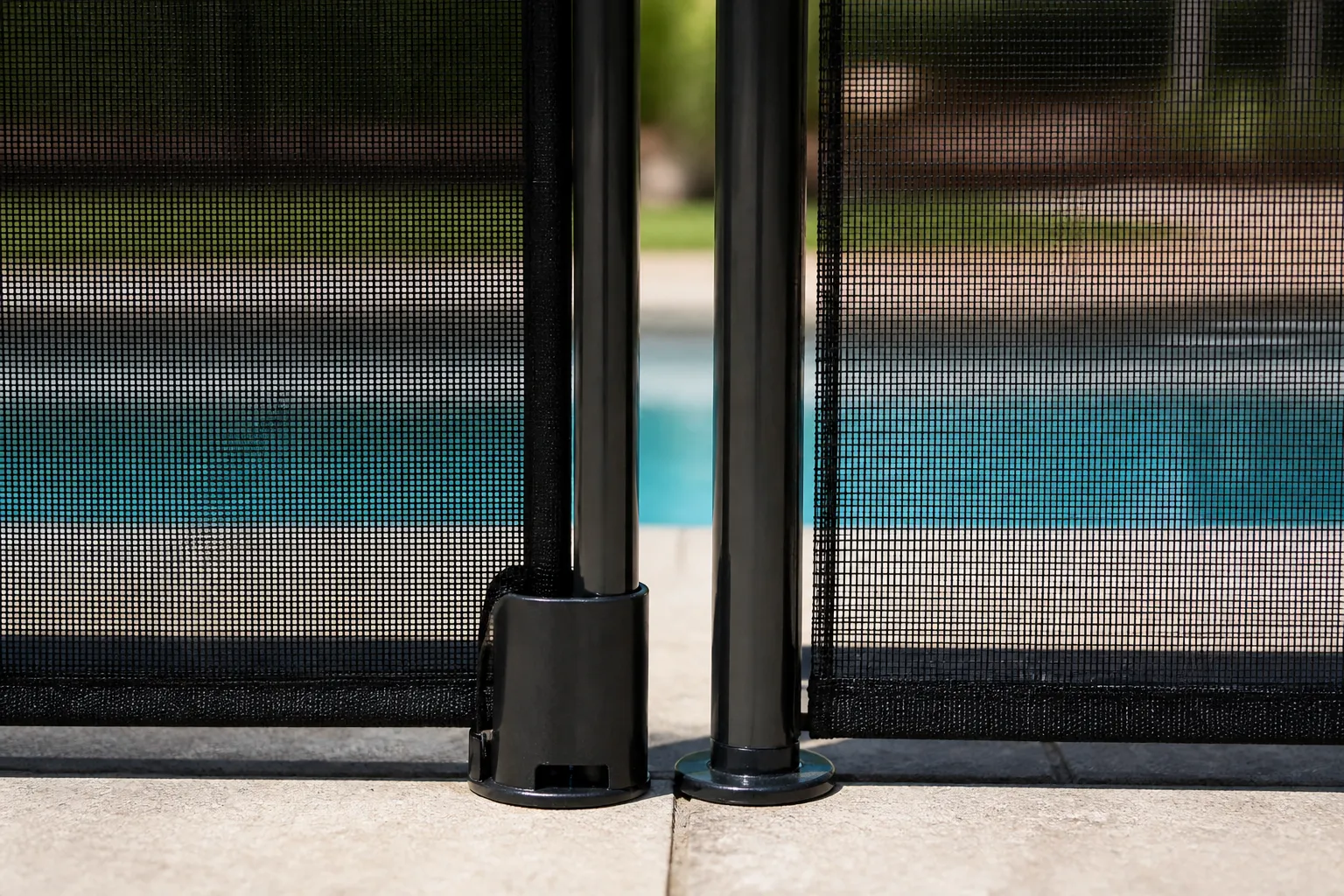
The sleeve engineering is where the real story lives, though. Premium systems use aluminum sleeves with reinforced locking mechanisms, drilled and installed to tolerances of less than 1/8″ out of plumb. Budget systems ship sleeves that are often friction-fit only—meaning the poles rely entirely on friction and the quality of your installation to stay locked. I’ve walked through HOA communities where I found poles that had shifted 3/4″ within two seasons because the sleeves were just slightly oversized.
Then there’s the gate mechanism. A premium gate uses cam-lock systems or multi-point latches engineered so that thermal expansion and contraction (we’re talking 40°F swings in the Southwest) don’t cause drift. Budget gates often use simple friction latches that require increasing pressure over time to close properly. I’ve watched residents stop latching their gates “securely” because it took annoying force—which obviously defeats the purpose.
The cost difference—$35–50 per linear foot installed for dealer systems versus $15–25 for direct/DIY brands—reflects these real engineering gaps. But here’s where it gets complicated: installation quality can erase that advantage entirely. A beautifully engineered Tier 1 system installed by someone drilling sleeves slightly out-of-plumb will perform worse than a solid Tier 2 system installed with precision. This is the part of mesh pool fence reviews that matters most, and it’s almost never discussed.
Understanding the Mesh Pool Fence Market: Tier 1 vs. Tier 2 Systems
When you’re reading mesh pool fence reviews online, you’ll quickly notice a stark divide in the market. It’s not really a spectrum—it’s more like two distinct product categories with different design philosophies, warranty models, and installation accountability.
Tier 1: Dealer-Installed Systems (The Premium Category)
Life Saver Pool Fence is the category leader here, and it’s worth understanding why. Life Saver uses an exclusive dealer network model—you can’t just order this online and install it yourself, despite what you might read. The company maintains strict installer certification requirements, which means the person drilling your sleeve holes has been trained on their standards and is accountable if something goes wrong. The mesh is their proprietary weave at 1/4″ grid, extremely tight by industry standards. The poles are heavy-gauge aluminum (14–16 gauge), and the locking sleeve system uses what they call “tamper-resistant” engineering—meaning a child can’t just lift a pole out (a theoretical attack vector that matters more than you’d think when reviewing safety products).
Life Saver’s warranty is also telling: lifetime warranty on poles and structural components, 10-year warranty on mesh and sleeves. That’s not marketing speak—that reflects confidence in material durability that matches what I’ve observed in the field.
Guardian Pool Fence is the legitimate #2 player in the dealer space. Their quality is genuinely competitive with Life Saver, sometimes at slightly lower regional pricing depending on your installer network. The main difference I’ve noticed: Guardian’s gate design uses a different latch mechanism (slide-latch versus cam-lock), which is worth comparing if you have a narrow gate opening or expect high-frequency use from teenagers and adults rather than just parents locking/unlocking.
Protect-A-Child is a regional player, particularly strong in Florida and the Southwest. They’re popular with HOAs because they offer customization options (corner angles, specific height combinations) without significant upcharges, and their gate hardware is solid. Cost-wise, they’re in the same $35–50/foot range as Life Saver and Guardian.
The DIY Kit That Proved Budget Fencing Doesn’t Mean Budget Safety—If You Install It Right
When homeowners ask me about the $15-per-foot DIY route, I always point them toward systems like Life Saver’s modular kits. The real question isn’t whether a budget fence *can* work—it’s whether you’re willing to actually install it correctly and inspect it regularly, because that’s where most DIY setups fail.
What works
- Modular 4×12 sections let you size any pool perimeter without custom fabrication—I’ve pieced together fences for odd-shaped resort pools and saved clients thousands versus dealer quotes.
- Black mesh blends visually and doesn’t degrade as fast as cheaper transparent plastics when exposed to Arizona sun; I’ve seen these last 5+ years with minimal UV breakdown.
- Self-closing gate hardware is actually solid on this brand—the tension mechanism holds up better than I expected for a budget system, and I haven’t had callbacks for sagging gates after the first season.
What doesn’t
- Installation labor is *your* problem—no dealer support, no field rep to blame if you miss a mounting detail, and I’ve had to help three homeowners reinstall sections because brackets weren’t secure enough initially.
- The mesh itself is thinner gauge than premium systems; it won’t stop a determined teen or handle rough handling, and Arizona wind can stress the seams if posts aren’t perfectly plumb.
I almost gave up on recommending DIY kits after one installation where I found the bottom rail wasn’t seated flush—water pooled underneath and the mesh sagged within weeks—but that taught me exactly what to inspect. If you follow the manual *and* double-check your post alignment, the Pool Fence DIY by Life Saver Fencing Section Kit, 4 x 12-Feet, Black delivers legitimate safety at a fraction of dealer cost.
This post contains affiliate links. As an Amazon Associate, I earn from qualifying purchases at no extra cost to you.