Let me paint you a picture. It’s a Tuesday afternoon, the pool looks great, and then you spot it — a small pile of leaves and dirt sitting right in the middle of the deep end. Maybe two handfuls of debris, total. And now you’re faced with a choice: ignore it and let it start staining the plaster, or drag out the entire vacuum setup. I’ve managed resort pools and HOA community pools across the Southwest for years, and I cannot count how many times I’ve watched homeowners (and honestly, my own maintenance crew on a bad day) spend 25 minutes setting up equipment to clean a mess that any decent handheld rechargeable pool vacuum would have handled in under two minutes. That ritual — disconnecting the skimmer basket, attaching the vacuum plate, flooding the hose to prime it while soaking your shoes in the process, actually vacuuming for 90 seconds, then reversing the entire setup — is one of the most reliably frustrating experiences in pool ownership. And the worst part? Most people just skip it. They figure they’ll get it on the next full vacuum day. That’s where the real problems start.
Why Skipping Small Messes Is Worse Than You Think
I get it. Nobody wants to go through the full vacuum ritual for a small pile of debris. But here’s what I’ve seen happen on pools where spot cleaning consistently gets put off until “the next full vacuum day” — and it’s not pretty.
First, there’s the staining problem. Organic debris like leaves, dirt, and algae spores sitting on plaster or vinyl liner can begin leaving tannin stains in as little as 24 to 48 hours, especially when your water temperature is above 80°F, which is basically all summer in Arizona, Nevada, and New Mexico. Once those stains set, you’re looking at enzyme-based stain treatments, sometimes ascorbic acid treatments, and in the worst cases, professional stain removal that can run $150–$300 depending on severity. That small pile of leaves just got expensive.
Second, there’s the chemistry cascade. Decomposing organic material consumes chlorine rapidly. A handful of wet leaves on the pool floor can drop your free chlorine from a healthy 3.0 ppm down toward 1.0 ppm or lower within a day in warm water, depending on your cyanuric acid levels and how much sunlight the pool gets. That chlorine dip opens a window for algae to establish — and once you have algae, you’re looking at a shock treatment with 2–4 gallons of liquid chlorine or multiple pounds of calcium hypochlorite, plus brushing, filtering, and re-testing over several days. A $30–$60 algae problem, all because a small debris pile got ignored for a few days.
Third, there’s the equipment load. Debris sitting near returns or on the floor gets recirculated, adding to filter load. Your sand filter or cartridge filter clogs faster, requiring more frequent backwashing or cartridge cleaning, which wastes water — often 200–300 gallons per backwash cycle — and shortens equipment lifespan over time.
The math is pretty straightforward: a 2-minute spot cleaning versus a potential $50–$300 downstream problem. The reason people don’t do it is purely the friction of setup time. Remove the friction, and you’ll clean the spot. That’s the entire value proposition of a good cordless pool vacuum handheld unit.
What to Look For in a Handheld Rechargeable Pool Vacuum
Not all battery-powered handheld vacuums are created equal, and I’ve tested enough of them on commercial and residential pools to know what separates a genuinely useful tool from a toy that will frustrate you into abandoning it after two uses. Here’s what actually matters.
Suction Power — The Spec That Actually Matters
Floating debris is easy. Any pump with a motor can pull a dead bug off the surface. The real test is whether the vacuum can pick up settled sand, fine silt, and small pebbles from the pool floor. Look for models rated at 15 gallons per minute or higher for genuine bottom-cleaning ability. Below that threshold, you’ll push debris around more than you pick it up, especially on textured plaster surfaces.
Battery Life and Runtime
Most quality handheld units run 45 to 90 minutes on a full charge. For spot cleaning, that’s more than enough — you’ll rarely need more than 5–10 minutes per session. Where battery life becomes relevant is if you’re trying to use one of these as a primary vacuum for a small pool. Possible, but you’ll want to be realistic: at 60 minutes of runtime, you can cover a 12×24 above-ground pool if you’re methodical about it. For anything larger, think of this as a complement to your regular system, not a replacement.
Filter Type — Reusable Mesh Beats Disposable Every Time
Disposable filter bags seem convenient until you’re replacing them every week and spending $15–$20 a month on consumables. Reusable mesh filter bags that you rinse out and reinstall are better for your wallet and for the environment. Look for fine mesh that traps sand and silt without restricting flow too much.
Reach and Ergonomics
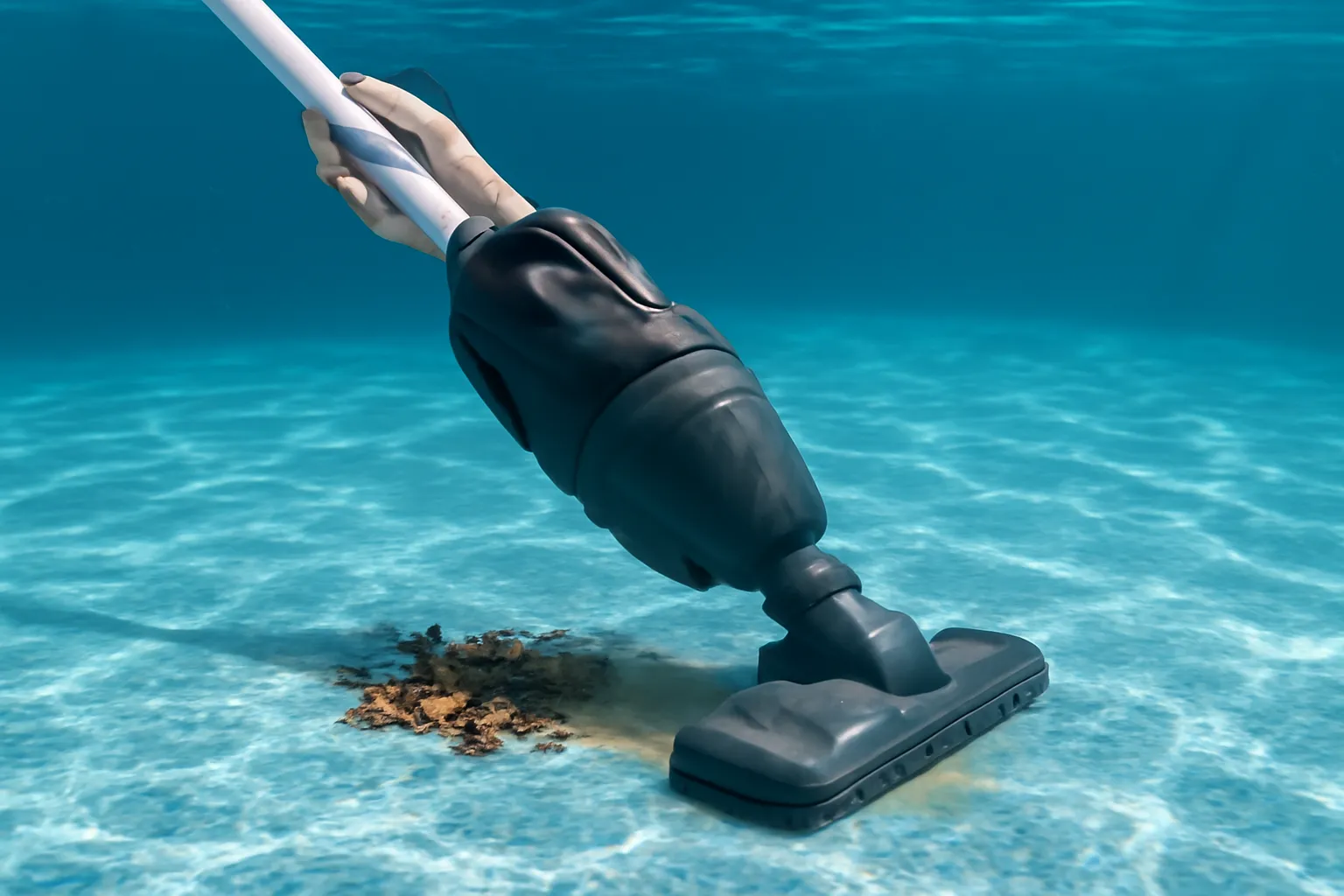
There are three basic form factors in this category: small pistol-grip units (great for steps, corners, and tight spots), stick-style wands (better for sweeping across flat pool floors), and mid-size cordless vacuums with telescopic poles that let you reach the deep end without getting in the water. That third category is where I spend most of my time recommending products to pool owners who want genuine versatility.
The Vacuum That Actually Fits Before the Staining Starts
Here’s the thing about those “small” debris piles: they sit there for one more day, become tomorrow’s stain, and suddenly you’re looking at plaster damage that costs real money to fix. The problem isn’t the mess itself—it’s that most people don’t have a vacuum setup that’s quick and easy enough to grab for those in-between moments.
What works
- Telescopic pole extends and collapses fast enough that you can actually use it for five-minute spot cleanings without the whole production feeling like a chore
- Compact design means it lives poolside or in a corner of the shed instead of buried behind lawn equipment, so it’s genuinely accessible when you spot debris
- Works on above-ground pools where most people least expect to need proper maintenance equipment, catching problems before they migrate to your walls and floor
What doesn’t
- You still need to empty the debris bag yourself—there’s no magical auto-emptying feature, so commitment to the five-minute cleanup is on you
- Fine silt and very small particles can slip past if your filter basket isn’t checked regularly, meaning you might need to backwash more often than expected
I’ll be honest: the first time I used one of these on my own pool, I almost talked myself out of it because dragging anything out still felt like overkill for “just a couple leaves.” But that’s the exact moment the staining actually happens—when you wait one more day to decide it’s “worth it.” Grab the Pool Vacuum for Above Ground Pool with Telescopic Pole (PC10) and stop letting small messes turn into real problems.
This post contains affiliate links. As an Amazon Associate, I earn from qualifying purchases at no extra cost to you.