I’ve managed pools for some of Arizona’s biggest resorts and HOAs, and I can tell you with absolute certainty: the #1 question every new hot tub owner asks me is “bromine vs chlorine hot tub—which one should I use?”
And honestly? The conflicting advice out there is ridiculous. The spa store pushes bromine. Your neighbor swears by chlorine. Someone on Reddit claims bromine smells like a science experiment, while another person says chlorine turned their eyes into fire. Everyone’s partially right, I spent my first month flip-flopping between chlorine and loose bromine powder, frustrated by inconsistent results and cloudy water. It wasn’t until I committed to a tablet-based bromine system that things finally clicked. and that’s exactly what makes this so confusing.
Here’s the truth I’ve learned from years of hands-on management: both sanitizers work, but one is almost always the smarter choice for hot tub chemistry specifically. And it’s not the one you’d think if you’re coming from pool experience.
The answer depends entirely on how you use your spa—and more importantly, on how water chemistry behaves at 100-104°F (a temperature that fundamentally changes the game). Let me walk you through what I’ve seen work and what I’ve seen fail, so you can make an informed decision instead of guessing.
Why This Problem Is Worse Than You Think
If you’ve owned a pool, you might think hot tub chemistry is just pool chemistry with warmer water. That’s like saying a sports car is just a sedan with a bigger engine. The fundamentals are completely different.
Here’s what most people don’t understand: chlorine is far less stable at high temperatures. In a 75°F swimming pool, chlorine does its job and sticks around. In a 102°F hot tub, chlorine off-gasses into the air at a dramatically accelerated rate—sometimes 2-3 times faster than in a pool. This means you’re constantly chasing your chlorine residual, adding more, watching it spike, then watching it plummet again. It’s exhausting and expensive.
But here’s where it gets worse: that off-gassing happens inside a small, enclosed space that’s usually covered. All those chlorine fumes get trapped above the water, and when you open the cover to get in, you’re inhaling concentrated chlorine vapor. Not fun.
And the real culprit behind that awful “chemical smell” most people associate with hot tubs? It’s not chlorine itself—it’s chloramines, which form when chlorine reacts with sweat, body oils, sunscreen, and urine (yes, people pee in hot tubs). Chloramines are irritating, they stink, and they’re what actually causes red eyes and skin irritation, not the chlorine doing its job. In a small hot tub with a cover trapping the air, chloramine buildup gets intense fast.
There’s also the pH issue. Hot tub water naturally wants to rise in pH due to aeration and bather load. Chlorine works best in a narrow pH range of 7.2-7.6. If your pH drifts outside that window—which it will, frequently—you’re constantly dosing acids or pH adjusters. Each dose takes time, money, and increases the risk of overcorrection.
Skip the learning curve. Use the right sanitizer from day one, and you’ll save money, time, and your sanity.
Why Hot Tub Chemistry Is Fundamentally Different From Pool Chemistry
I need to be clear about something: bromine vs chlorine hot tub debates happen because the two sanitizers behave completely differently in hot water.
Chlorine was developed and tested primarily in pool environments—cooler water, larger volumes, outdoor or well-ventilated spaces. When manufacturers and chemists talk about chlorine stability and efficacy, they’re typically referencing 75-80°F water. A hot tub at 102°F is a fundamentally different chemical environment.
At higher temperatures, chlorine molecules move faster and break apart more easily. This increased molecular activity causes off-gassing—chlorine literally evaporates into the air instead of staying in the water to do its job. In a pool, this is manageable because there’s so much volume. In a 300-gallon hot tub with a cover, it’s a constant problem.
Bromine, by contrast, is more stable at elevated temperatures. It doesn’t off-gas nearly as fast. This means your sanitizer residual stays more consistent, you’re not constantly re-dosing, and your chemical costs are more predictable.
There’s also the byproduct issue. When chlorine reacts with organic material (sweat, oils, etc.), it forms combined chlorine compounds called chloramines. These smell terrible and irritate skin. When bromine reacts with the same organic material, it forms bromamines—which are still sanitizing but far less irritating and odorous. This is huge. The reason that hot tub smells “like chemicals” is almost always chloramines, not chlorine.
Finally, there’s pH flexibility. Bromine works effectively across a wider pH range (7.0-8.0) compared to chlorine (7.2-7.6). Since hot tubs naturally drift upward in pH, bromine means fewer pH adjustment doses and less risk of over-correction.
These aren’t minor differences. They compound over weeks and months of ownership.
The Bromine Tablets That Finally Stopped My 104°F Water From Turning into a Chemistry Experiment
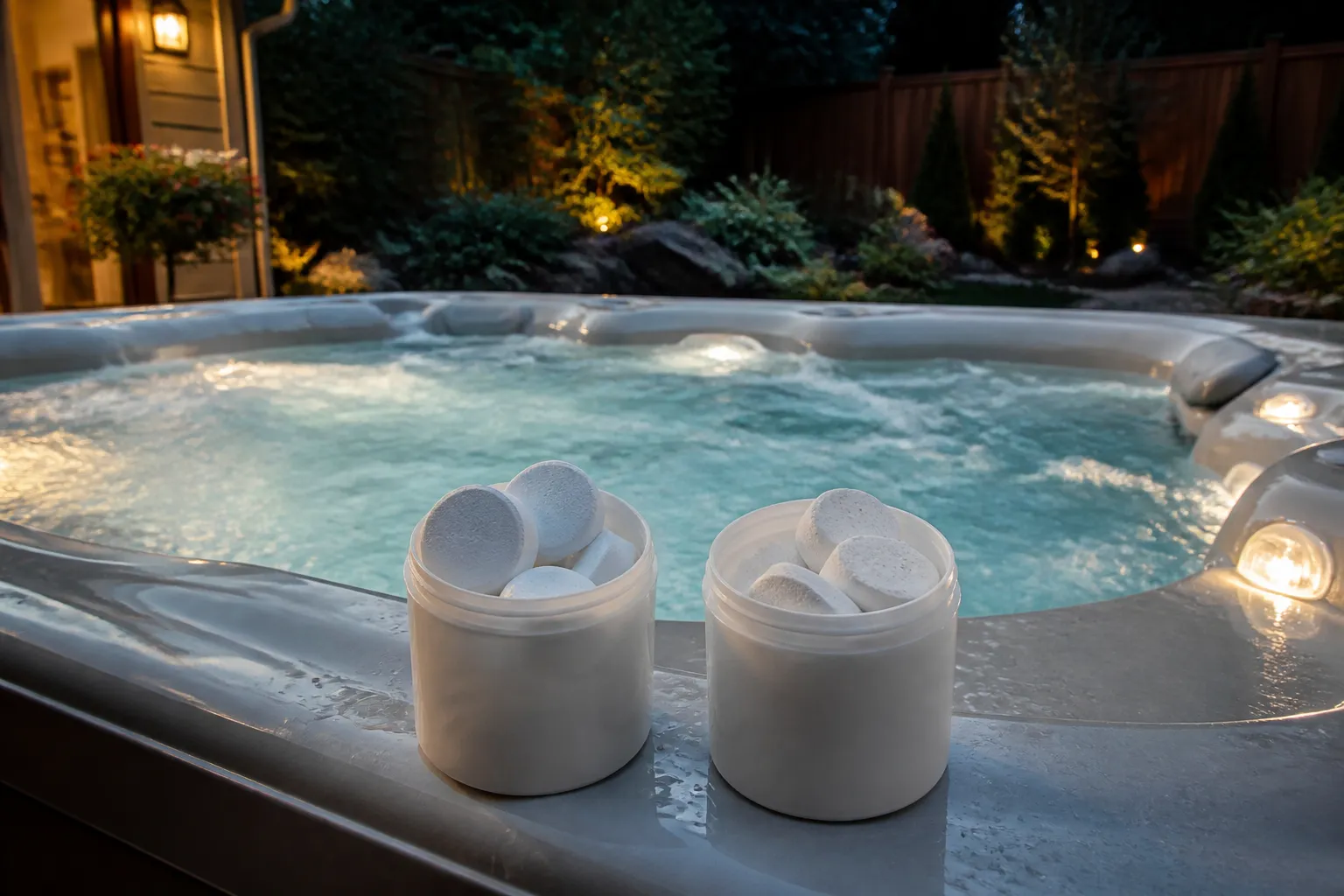
If you’re running a hot tub at spa temperature, standard chlorine tablets can off-gas and lose potency faster than you’d expect—especially once water hits 100°F and above. I spent my first month flip-flopping between chlorine and loose bromine powder before realizing I needed a stable, tablet-based bromine system designed specifically for heat.
What works
- Tablets dissolve slowly and consistently in hot water, maintaining stable residual levels without wild spikes that trigger that “science experiment” smell people complain about
- No ammonia compounds form as easily as they do with chlorine at elevated temperatures, so your water stays clearer and your eyes don’t burn after a 20-minute soak
- Less frequent testing and adjustment needed once you dial in the routine—I went from daily monitoring to every 2–3 days
What doesn’t
- Tablet format means you’re locked into one dissolution rate—if your tub runs at different temperatures on different days, you can’t adjust as quickly as you can with powder
- Upfront cost per ounce is higher than bulk chlorine powder, which stung my wallet until I realized I was buying it less often
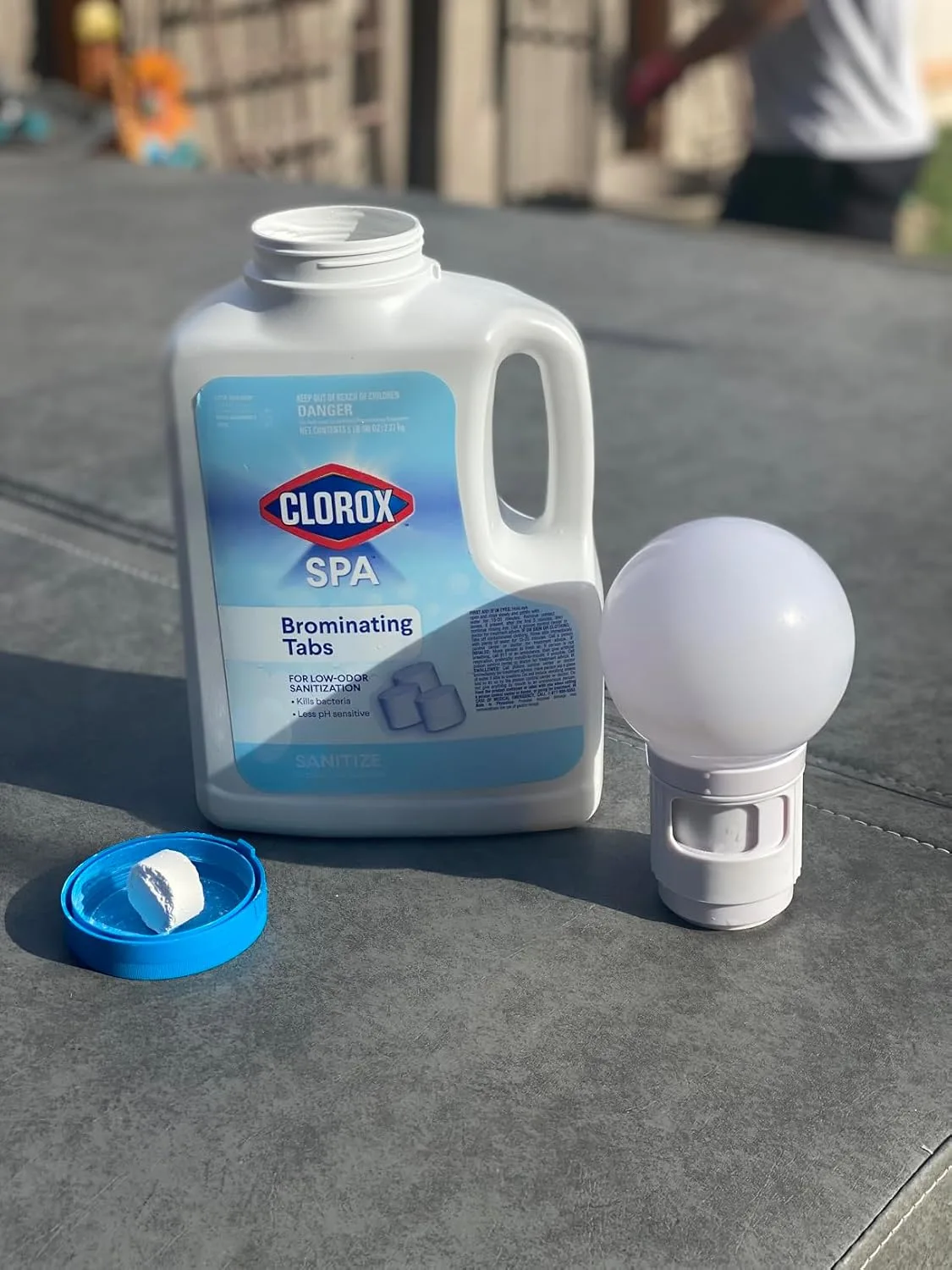
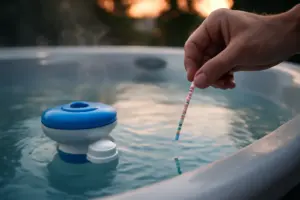
I almost switched back to chlorine after my first tablet lasted longer than expected and I second-guessed whether it was actually working—but a quick test strip proved the residual was exactly where it needed to be. That’s when I realized the real win: bromine tablets work so quietly you forget you’re treating your water at all. If you’re tired of chasing numbers and fighting chemistry, grab a bucket of Clorox® Pool&Spa™ Spa Bromine Tablets and give your hot tub routine the upgrade it deserves.
This post contains affiliate links. As an Amazon Associate, I earn from qualifying purchases at no extra cost to you.