Let me paint you a picture I’ve seen a hundred times across the HOA communities and resort properties I’ve managed out here in the Southwest. A perfectly clean, well-maintained above-ground pool — water balanced to a textbook 7.4 pH, free chlorine holding steady at 2.0 ppm, cartridge filter running like a champ — and then you look at the entry situation. A four-foot metal wall rising out of the lawn, a wobbly ladder that rattles every time someone climbs it, and a stretch of dead grass underneath from all the dripping water. The pool itself? Fantastic. The setup around it? Looks like it arrived last Tuesday and might leave by Sunday. I’ve watched homeowners invest thousands in pool equipment, chemicals, and landscaping, and then completely neglect the one thing that would transform the whole backyard: a proper deck around above ground pool. If that sounds familiar, keep reading — because this is fixable, and it doesn’t have to cost a fortune.
Why That Wobbly Ladder Is a Bigger Problem Than It Looks
Here’s what most above-ground pool owners don’t fully appreciate: the entry and exit situation isn’t just an aesthetic annoyance. It’s a genuine safety liability, a pool chemistry problem, and a long-term equipment issue all rolled into one awkward metal ladder.
Let’s start with safety, because this is where I get serious. According to the Consumer Product Safety Commission, a significant portion of residential pool injuries happen at the point of entry and exit — slips, falls, missed rungs. A freestanding ladder leaning against a pool wall that flexes slightly every time someone puts weight on it is not a stable entry system. When kids are running and jumping (and they always are), a ladder that shifts or tips isn’t just inconvenient, it’s dangerous. Any elevated platform over 30 inches high legally requires a railing in most U.S. jurisdictions, and most above-ground pools sit right at that threshold or above it.
Then there’s the chemistry angle, which most people miss entirely. Every time someone climbs a wet ladder and drips chlorinated water down the outside of the pool wall, that water is pooling at the base of the uprights, sitting against the metal frame, and accelerating corrosion. I’ve seen pool frames on three-year-old above-ground pools that looked like they were ten years old, entirely because of water constantly channeling down the exterior. A proper deck with good drainage directs that water away from the pool structure.
And then there’s the grass situation. That dead zone under and around the ladder? That’s not just ugly — it’s a mud patch waiting to happen after any rain, and mud tracked into your pool means your filter is working overtime and your water clarity suffers. I’ve tested pool water in yards with poor entry setups and consistently seen higher particulate loads and faster filter clogging cycles than pools with clean, hard-surface entries.
The good news is that there’s a whole spectrum of solutions here, from a modest entry platform all the way up to a full wraparound deck. Understanding your options — and the real costs — makes the decision a lot easier.
Your Deck Around Above Ground Pool Options: From Budget to Full Transformation
Before we talk about the product I recommend for getting started, let me walk you through the three main approaches I see homeowners take — because the right answer depends entirely on your budget, your yard, and how serious you are about the transformation.
Option 1: Freestanding Platform Deck (Most Popular)
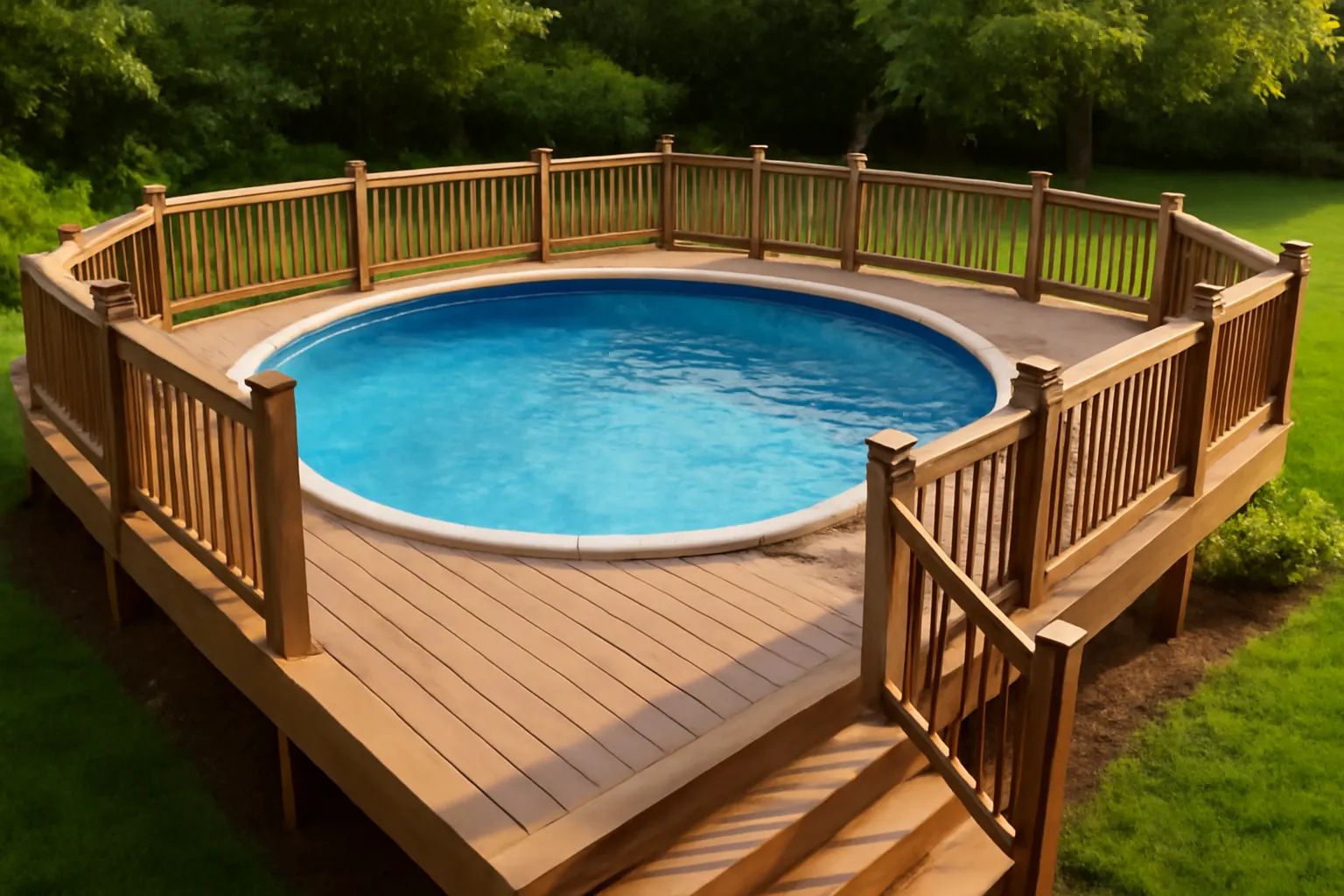
A freestanding deck above ground pool is a standalone structure built to pool-wall height on one or more sides. It’s not attached to your house, which means permits are often simpler (check your local municipality — always check). This is by far the most common approach I see, and for good reason. DIY cost typically runs $1,500–$5,000 depending on size and materials; professional installation bumps that to $3,000–$10,000. For materials, you’ve got a few choices:
- Pressure-treated lumber — cheapest option at roughly $2–$4 per board foot. Requires annual staining and sealing, can splinter over time, especially when it stays wet. Gets the job done but demands ongoing maintenance.
- Composite decking (Trex, TimberTech) — $5–$10 per board foot but genuinely worth the upcharge on a pool deck specifically because it stays wet constantly. Zero splintering, no rotting, and you skip the annual sealing ritual. This is what I spec for any managed pool property.
- Aluminum deck kits — pre-engineered systems that bolt together without cutting, typically $2,000–$6,000 for a basic kit. Low maintenance and lightweight, but you’re limited to the manufacturer’s configurations.
One non-negotiable regardless of material: proper footings. Concrete piers or sono tubes, set below frost line. Never build on blocks or bare ground next to water. I’ve seen “temporary” block-supported decks that were still there five years later, rotting at the base and tilting toward the pool wall. Don’t be that person.
Option 2: Wraparound Deck
A wraparound deck above ground pool surrounds the pool entirely and creates an experience that honestly rivals an in-ground setup. It’s the most dramatic visual transformation possible — but also the most expensive, running $5,000–$15,000+ depending on pool size and materials. Requires serious structural engineering since you’re designing for crowd loading, not just a couple of chairs. If you have the budget and the commitment, it’s spectacular. If you’re still testing whether you’ll keep this pool for more than a few years, start smaller.
Option 3: Partial Entry Platform (Budget Sweet Spot)
This is where most people should start: an 8×10 or 10×12 platform on one side of the pool, with a proper gate and steps into the water. DIY cost runs $800–$2,500 and this is genuinely achievable in a weekend for a competent DIYer working from above ground pool deck plans DIY designs available from most lumber yards or online. You get the safety improvement, the aesthetic upgrade, and a real entry system — without taking out a second mortgage. And this is exactly where the product I want to tell you about fits in perfectly.
The Ladder That Finally Stopped Me From Holding My Breath Every Time a Guest Climbed It
A wobbly ladder isn’t just annoying—it’s a liability that turns every pool day into a minor safety concern. I spent two seasons telling myself I’d replace mine, but the right solution felt either too flimsy or too expensive until I found an entry system that actually handles the weight and movement without drama.
What works
- Rock-solid stability even under full adult weight—no more metallic rattling or side-to-side flex that makes you wince
- Modular design means you can adjust it to fit your pool’s specific wall height and ground conditions without custom installation nightmares
- The step guard actually prevents that dead-grass ring around your pool base, which saves you from explaining brown patches to neighbors
What doesn’t
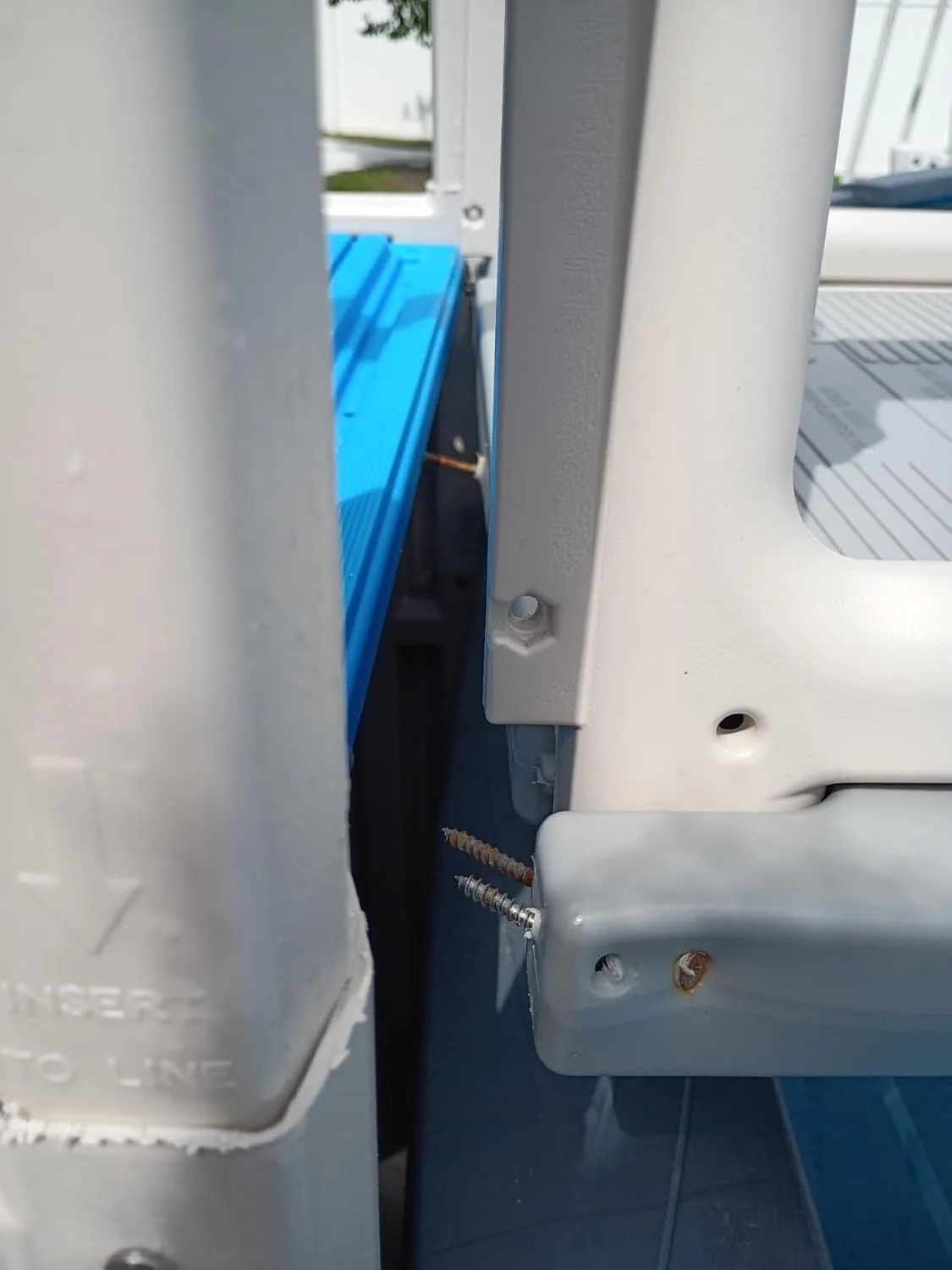
- Assembly takes longer than I expected—you’ll want a second person and a couple hours, not the quick 30-minute job the box suggests
- If your ground is uneven, you’ll need to shim or level it first, which means you can’t just unbox and install
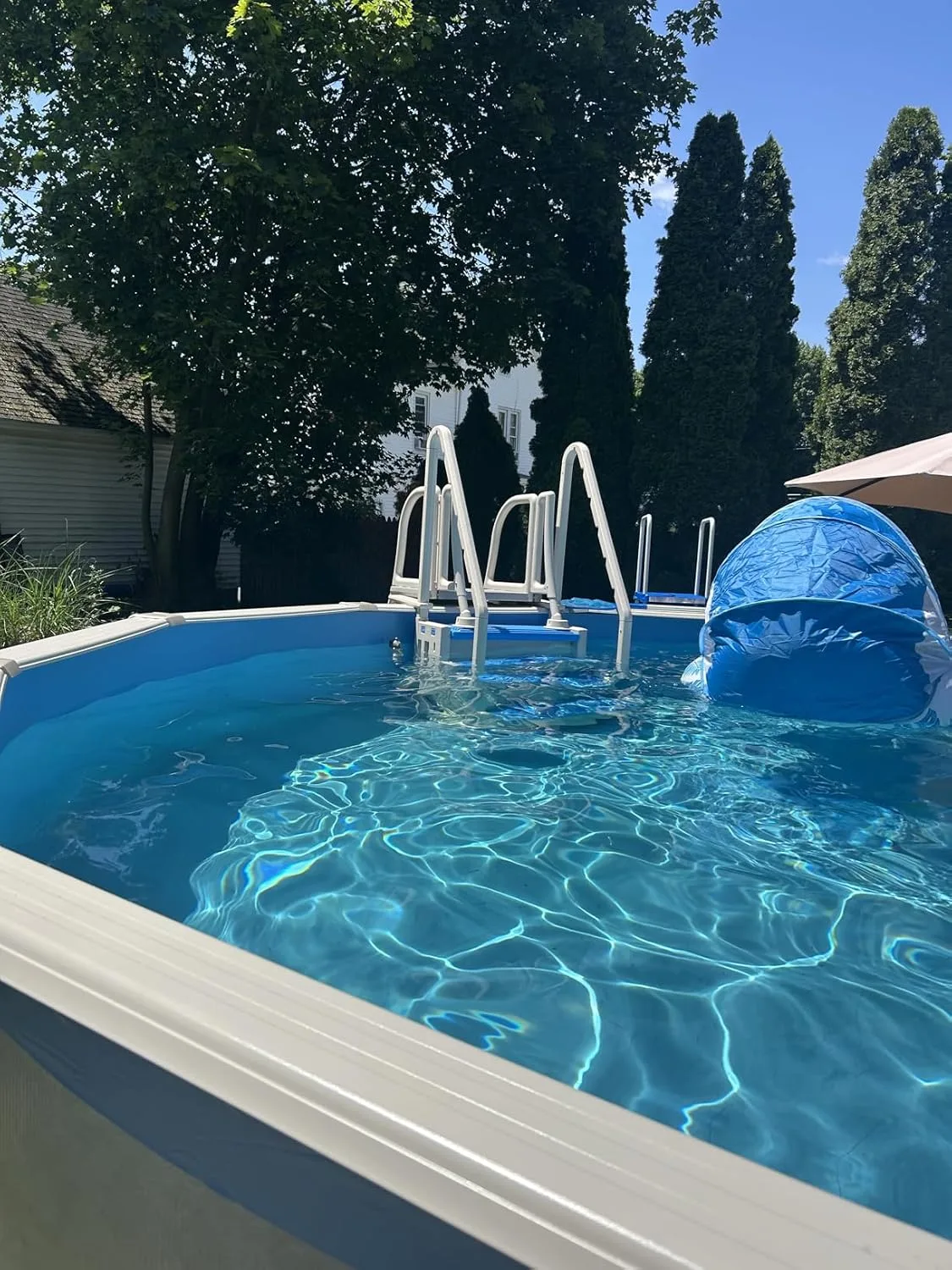
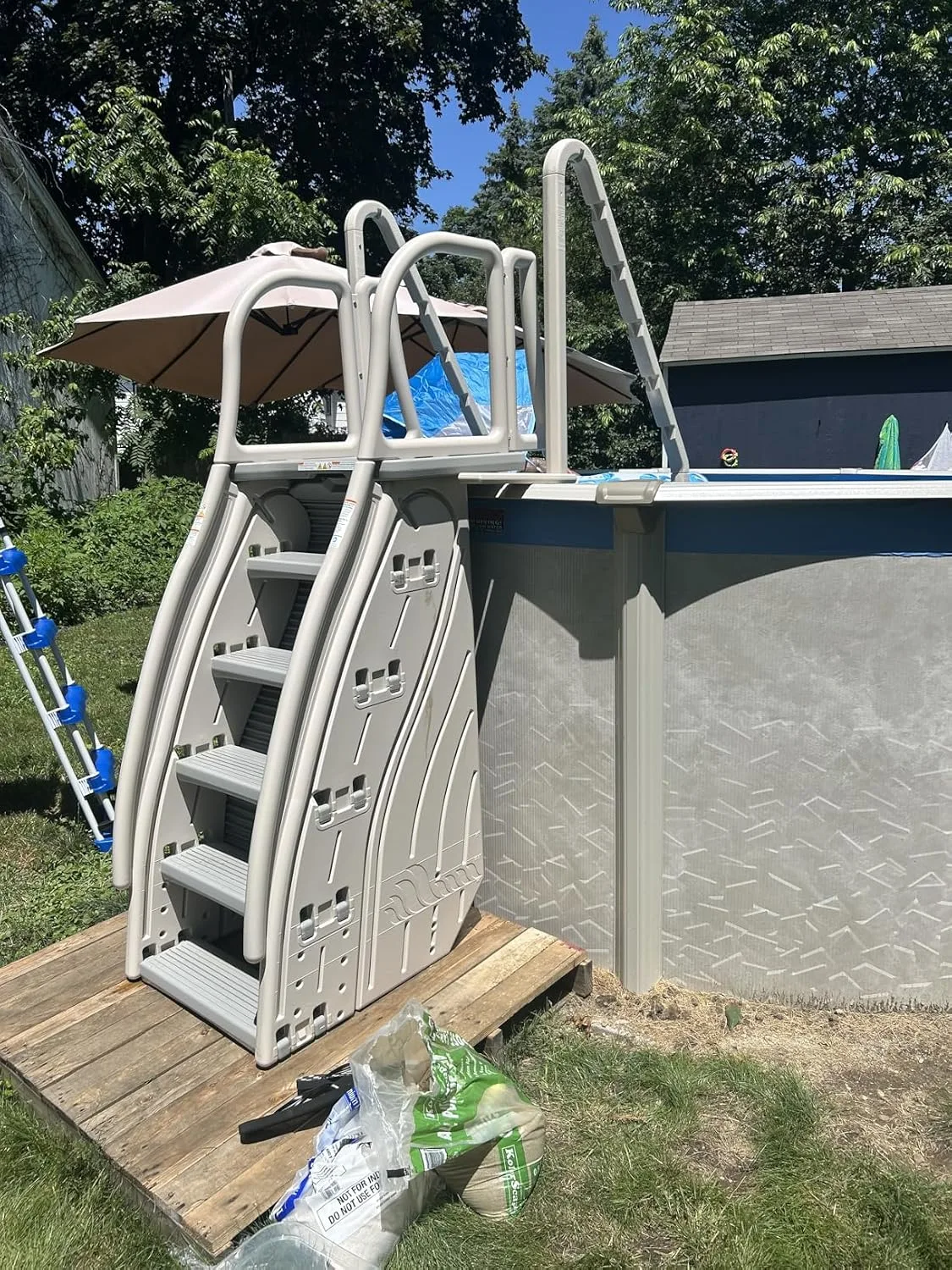
I almost talked myself out of upgrading because I figured any above-ground pool ladder would feel the same, and I didn’t want to waste money on something that wouldn’t really solve the wobble. But after installing the Confer Plastics 9300 Roll-2-Guard Modular & Adaptable Above Ground Pool Entry System (9300 with Step-1X), I realized how much that ladder anxiety had been quietly eating into my pool enjoyment.
This post contains affiliate links. As an Amazon Associate, I earn from qualifying purchases at no extra cost to you.