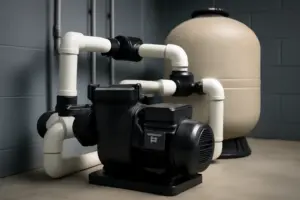
I’ve stood next to more frustrated pool owners than I can count — arms crossed, staring at water that looks like diluted skim milk, chemistry test strip in hand showing perfectly balanced chlorine and pH. “Nadia, I’ve done everything right,” they say. And honestly? They usually have. Chlorine is at 2-3 ppm. pH is sitting at 7.4. Alkalinity is textbook perfect. But the water still looks dull, hazy, or just not quite right. Here’s what I tell them every single time: your pump moves the water, but your filter is what makes it clear. Chemicals sanitize. The filter clarifies. If your filter is undersized, the wrong type for your pool, or just plain worn out, no amount of chemistry is going to give you that glass-bottom sparkle you’re after. Understanding the differences between pool filter types sand vs cartridge vs DE is the single most overlooked piece of the pool clarity puzzle — and getting it wrong costs you time, money, and a whole lot of chemical frustration.
Why a Bad Filter Is Worse Than You Think
Most pool owners treat a struggling filter like a minor inconvenience. The pressure gauge creeps up, they note it, and they keep swimming. I managed a 150,000-gallon resort pool in Arizona for three seasons, and I can tell you with absolute certainty: ignoring your filter is one of the most expensive mistakes you can make. Let me explain why.
When a filter is undersized or clogged, your pump has to work significantly harder to push water through. That increased resistance — what we call head pressure — causes your pump motor to run hotter and longer, dramatically shortening its lifespan. A quality variable-speed pump runs $800–$1,500. A filter problem that could have been solved with a $75 cartridge replacement or a $40 bag of DE powder has now turned into a four-figure repair. I’ve seen it happen more times than I’d like to admit, always preceded by the same thing: a pressure gauge that had been reading 8–10 PSI above normal for weeks or months.
Beyond equipment damage, a failing filter throws your water chemistry into chaos. Algae spores, dead organic matter, sunscreen residue, and body oils that should be getting trapped in the filter media are instead recirculating through the water. Your chlorine — which should be spending its time sanitizing the pool — gets consumed fighting that suspended organic load instead. So your FC drops faster, you add more chlorine, and you’re still not getting clear water. It’s a frustrating and expensive loop.
There’s also a legitimate safety dimension here. The CDC recommends pool water with visibility down to the bottom of the deepest point at all times — that’s not just an aesthetics standard, it’s a drowning prevention standard. Cloudy water means a lifeguard (or a parent) can’t see a child on the bottom. Properly sized, properly functioning filtration is the foundation of a safe swimming environment. This isn’t me being dramatic. It’s something I genuinely communicate to every HOA board I work with.
The fix usually isn’t complicated. It starts with understanding what kind of filter you have, whether it’s right for your pool, and whether it’s actually doing its job. That’s what the best pool filter type comparison always comes down to: matching the right technology to your specific situation.
Pool Filter Types Sand vs Cartridge vs DE: A Real-World Breakdown
Let’s get into the actual technology. I’m going to be straight with you about what each system does well, what it doesn’t, and who it’s actually right for — because the answer isn’t the same for everyone.
Sand Filters
Sand filters are the oldest residential pool filtration technology still in wide use, and there’s a reason they’ve stuck around. A tank filled with #20 silica sand traps particles as water is pushed through it. Simple, durable, and nearly bulletproof from a mechanical standpoint.
- Filtration capability: 20–40 microns
- Maintenance: Backwash every 1–2 weeks (wastes 200–500 gallons of water each cycle); replace sand every 5–7 years ($30–$50 for fresh sand)
- Cost: $200–$600 for the filter unit
- Best for: Vacation homes, rental properties, high-debris pools (lots of trees nearby), anyone who wants to minimize hands-on maintenance
- Honest limitation: 20–40 microns is the least fine filtration of the three options — your water will be clear, but not sparkling
Cartridge Filters
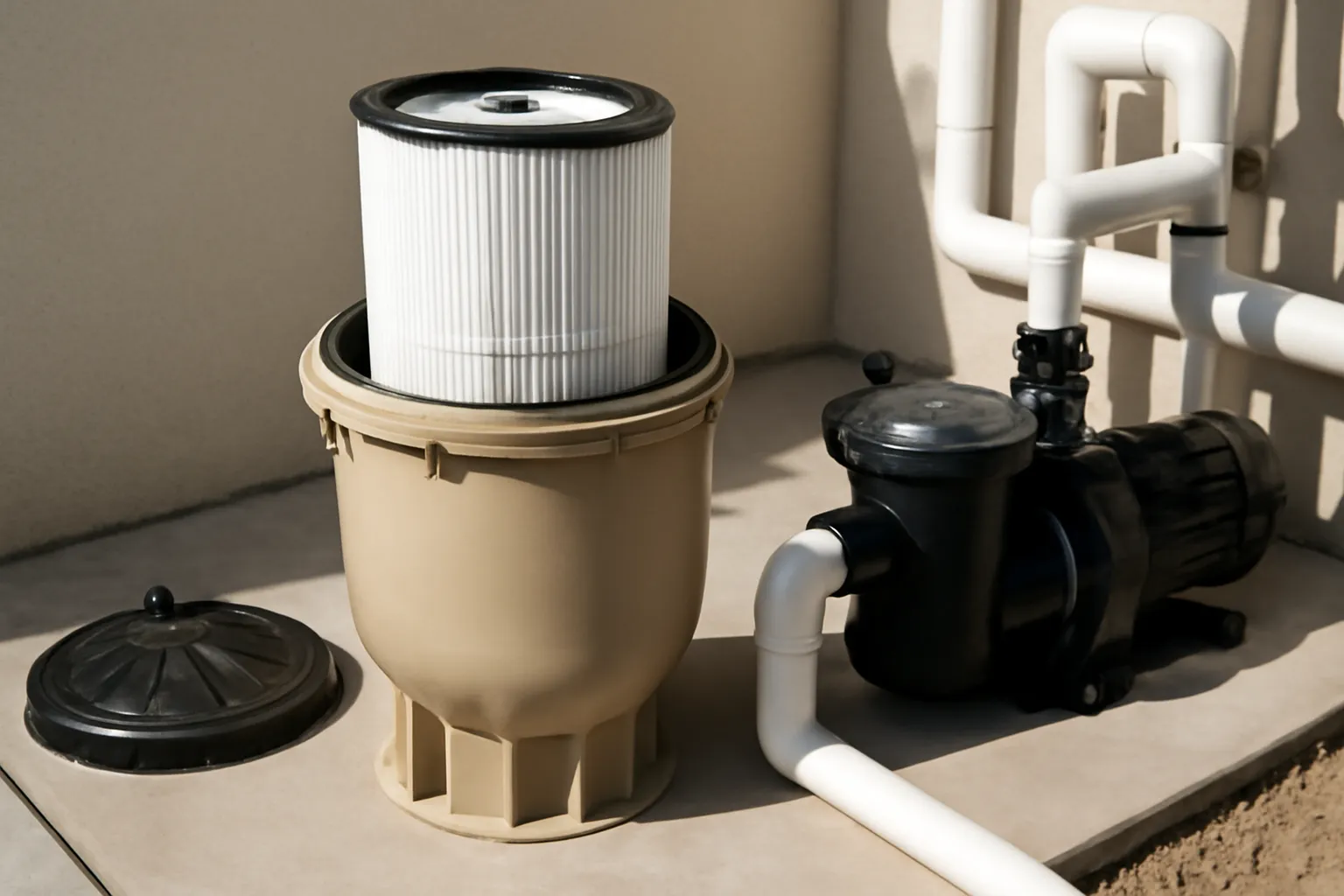
In my professional opinion, cartridge filters are the best all-around choice for most residential pools. Water passes through a pleated polyester fabric cartridge that catches particles at 10–15 microns — two to four times finer than sand. No backwashing means no water waste, the footprint is smaller, and the lower operating pressure actually puts less strain on your pump over time.
- Filtration capability: 10–15 microns
- Maintenance: Remove and hose down every 2–4 weeks; soak in filter cleaner quarterly; replace cartridge every 1–3 years ($50–$150 per cartridge)
- Cost: $200–$500 for the filter housing
- Best for: Most residential pool owners who want genuinely clear water with manageable maintenance
- Honest limitation: Cartridges need real, regular cleaning — this is the most hands-on of the three systems, and they clog faster in high-debris environments
DE Filters (Diatomaceous Earth)
DE filters are the gold standard for water clarity, full stop. Fossilized diatom skeletons — DE powder — coat a series of grids inside the filter. The result is filtration down to 2–5 microns. For reference, most bacteria are 1–10 microns. You will notice a difference in a DE-filtered pool the first time you swim in one.
- Filtration capability: 2–5 microns
- Maintenance: Backwash and recharge with fresh DE powder every 1–2 months; full grid disassembly and deep clean 1–2 times per year; replace grids every 3–7 years
- Cost: $400–$800 for the filter unit; $20–$40 per bag of DE powder
- Best for: Pool owners obsessed with water clarity, competitive swimmers, pools that get heavy use
- Honest limitation: Most expensive, most complex maintenance, DE powder is a mild respiratory irritant (always wear a mask when adding it), and some municipalities restrict DE in backwash water due to sewer clogging concerns
One thing that applies regardless of type: size your filter correctly. The rule I use is at least 1 square foot of filtration area per 10,000 gallons of pool water — and bigger is always better. An undersized filter in an otherwise perfect setup will still disappoint you every time.
What to Look For in a Pool Cartridge Filter Element Replacement
If you’ve landed on cartridge filtration — which, again, I recommend for most residential pools — then the quality of your replacement cartridge element matters enormously. I’ve seen pool owners spend $400 on a quality filter housing and then install the cheapest aftermarket cartridge they could find. It defeats the purpose. Here’s what I evaluate when recommending a pool filter replacement cartridge.
Pleat Count and Fabric Density
More pleats means more surface area. More surface area means finer filtration, longer cycles between cleanings, and less stress on your pump. A quality cartridge will have tightly packed, uniform pleats made from a dense polyester fabric — not loosely spaced pleats that let fine particles slip through.
End Cap Quality
The end caps are where cheap cartridges fail. They need to seal completely and resist the thermal stress of going from cold rinse water to warm pool water and back again, over and over. Look for cartridges with solid, tight-fitting end caps — any gap there means water bypasses the filter media entirely, which makes the whole thing pointless.
Dimensional Accuracy
This is more important than most people realize. A replacement cartridge that’s even slightly off-dimension won’t seat properly in the housing, creating bypass channels. Always confirm the length and outside diameter match your housing specs exactly.
The Filter That Finally Proved My Chemistry Wasn’t the Problem
I spent two seasons chasing phantom chemistry issues before I realized my old filter had become a silent saboteur—trapping particles so inefficiently that no amount of perfect chlorine levels could compensate. A cartridge filter that’s either degraded or undersized for your pool’s turnover rate will leave you staring at cloudy water no matter how textbook your test strips look.
What works
- Handles high turnover rates without creating backpressure—I’ve watched the gauge stay steady even in peak summer when my pump is running 24/7.
- Cartridge design traps smaller particles than sand filters, which means that hazy water clears noticeably within 12–24 hours of a proper backwash cycle.
- Cleaning intervals are predictable and manageable; I rinse mine monthly and do a deep soak twice a season instead of constantly fighting rising pressure.
What doesn’t
- Cartridges are a consumable—after 2–3 years of regular use, you’ll replace the element itself, which adds to your long-term maintenance budget.
- If you let the pressure gauge creep above 20 psi without cleaning, the filter efficiency drops sharply, and you’ll see that murky water return within days.
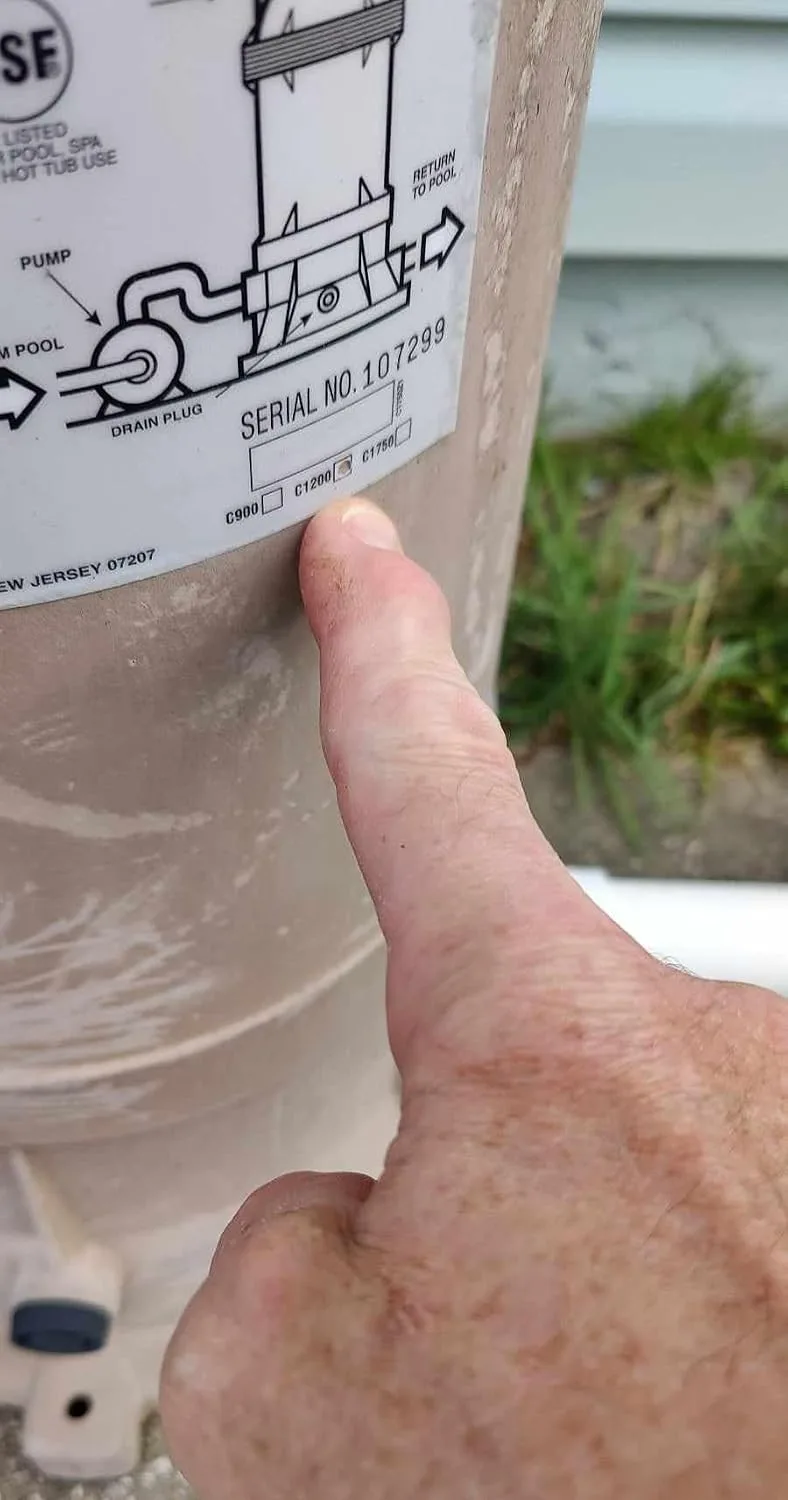
I almost gave up on this whole project last summer when the cloudiness came back after three weeks—until I checked the filter pressure and realized I’d missed my cleaning window. That one wake-up call made me a believer; I grabbed the POOLPURE C1200 Pool Filter and stuck to a real maintenance rhythm.
This post contains affiliate links. As an Amazon Associate, I earn from qualifying purchases at no extra cost to you.